
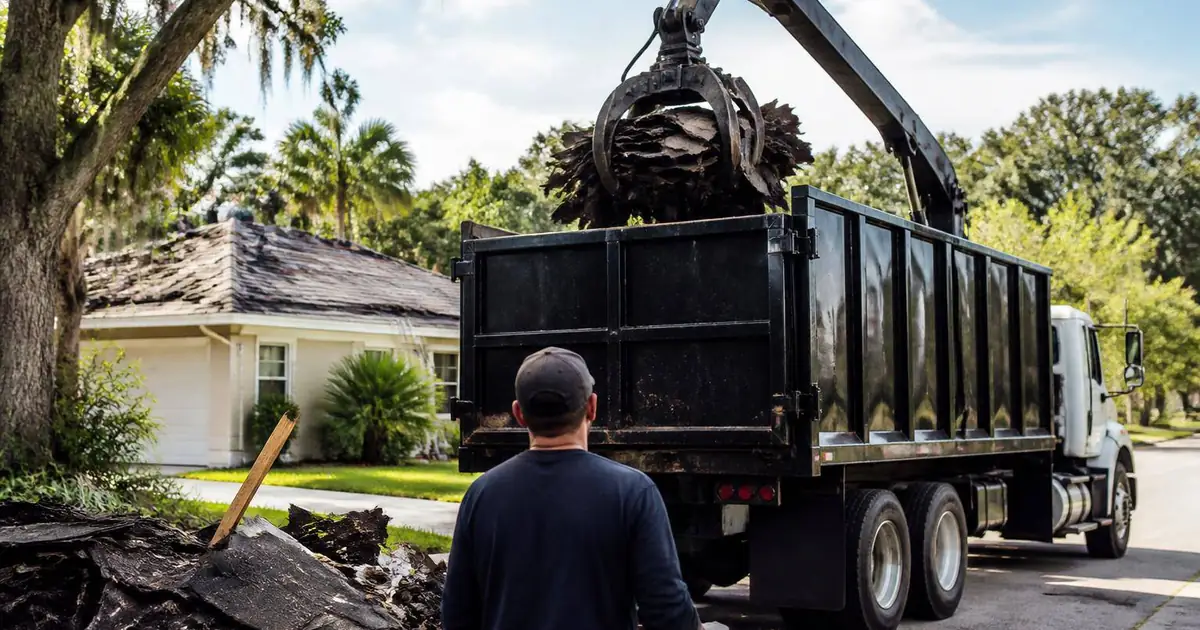
To arrange a roofing debris grapple truck pickup in DeLand, first confirm that a hauler serves your address. Then describe the roofing debris, share where it sits, and ask what access and timing details the hauler needs. Confirm local disposal rules before setting out material, since rules can vary by material and location.
How Do You Plan Roofing Debris Grapple Truck Pickup in DeLand?
Start by checking whether a hauler can serve your DeLand address. Next, describe the roofing debris and its location, then ask what details are needed to plan a pickup. A clear request helps both sides discuss access, material, timing, and local disposal rules before you set debris out.
The phrase roofing debris grapple truck describes the kind of pickup you want to ask about. It does not confirm that a provider serves your address or accepts every roofing material. Confirm those points directly before you plan around a pickup.
Give the provider the street address and a short account of the work. Say what kind of roofing material is present, how it is gathered, and where it sits. If you do not know the material or amount, say so instead of guessing.
Ask what details the provider needs to judge the request. The roofing debris planning guide can help you organize those questions. Keep the discussion focused on your actual site, since access and debris placement can differ from one property to another.
A useful first call or message can stay simple. Explain the project, ask whether the address is in the service area, and ask what information is needed next. Do not treat a general description of hauling as proof that a specific pickup is available.
What Details Should You Share About the Roofing Debris?
Describe the material, rough amount, and current location of the roofing debris. Tell the provider if the pile contains mixed materials or if you are unsure what it contains. These details help the provider explain what to confirm before planning a pickup, without assuming that every load has the same handling needs.
Use plain words rather than a technical guess. You can describe what the roofing crew removed and whether the debris is in one pile or spread across the site. If packaging, wood, or other waste is mixed in, mention that too.
A rough estimate is still useful when an exact amount is not known. Explain how the pile looks and where it sits, but do not state a weight or volume unless you have a sound basis for it. Ask what kind of estimate the provider can use.
These points make a clear material summary:
The list does not decide what a provider can accept. It gives you a starting point for a direct conversation. Ask the provider to identify any material limits or extra details that matter for the specific load.
For general debris planning, FEMA's public debris planning questions offer a related planning angle. Local handling rules can differ, so use that general guidance alongside answers from the relevant local authority and provider.
- Name the roofing material if you know it, and say when you are uncertain.
- Explain whether the debris is in one pile or spread across the property.
- Mention any other waste mixed with the roofing debris in the pile.
- Share a rough size estimate only when you can describe its basis.
What Should You Ask About Site Access?
Explain where the debris sits and ask what access information the provider needs. Describe the approach to the pile, nearby obstacles, and any limits you know about. Do not assume a vehicle can reach a particular spot. The provider needs to assess the details and tell you what arrangement may work.
A pile may be easy to see but hard to reach. Share the route from the street to the debris, along with any narrow areas, gates, parked vehicles, or overhead features you already know about. Keep the description factual and avoid saying that access is clear if you are unsure.
Ask whether the provider needs photos, measurements, or another way to review the site. Do not send information that you cannot verify. If the layout changes before pickup, tell the provider and ask whether the new arrangement changes the plan.
The DeLand pickup planning steps can help frame a practical access discussion. Ask what must remain open and where debris should be placed, if placement guidance is provided. Do not move material into a new area until you understand the site's rules and the provider's instructions.
Access is a planning question, not a reason to make a promise about a particular truck or lift. Ask the provider to review the conditions and explain any limits. If a building, property, or safety concern needs expert judgment, consult the appropriate qualified person before changing the site.
- Describe the route from the street to the debris pile in plain terms.
- Point out known gates, tight turns, parked vehicles, or overhead features.
- Ask whether the provider needs photos or measurements to review access.
- Tell the provider if the pile or route changes before the planned visit.
How Should You Discuss Pickup Timing?
Ask the provider what timing information is available and what could affect the plan. Share when the roofing work is expected to produce debris, but do not treat that estimate as a confirmed pickup date. Keep the work crew and provider informed if the amount or readiness of the pile changes.
Roofing work can create debris over time or leave a pile after a job stage ends. Explain which situation applies to your project. Ask when the provider needs the pile to be ready and how changes should be shared.
Avoid relying on an assumed arrival time. Ask the provider to explain its current scheduling process and what confirmation it can give. If the work date shifts, contact the provider instead of assuming the earlier plan still applies.
Before you discuss a pickup window, check the steps the provider wants you to follow:
A planning window can depend on the provider's schedule and the site's readiness. The available facts here do not establish a response time or pickup commitment. Treat timing as something to confirm with the provider, not something to infer from a general service description.
If the roofing crew is working at the same time, agree on who will share updates. One contact can reduce mixed messages about the pile, access, and readiness. Confirm any changes in a written message if that is useful for your project.
- Tell the provider when the roofing work may create the debris pile.
- Ask what date or timing details the provider can confirm.
- Share changes to the work plan or pile readiness as soon as you can.
- Make sure the crew and provider have the same current pickup details.
Which Local Disposal Rules Should You Check?
Check local waste guidance for the material and location before setting debris out. Collection and disposal rules may vary by material, place, and date. Ask the relevant local authority what applies to your project, and ask the provider what it can accept. Do not assume one answer covers every roofing load.
Volusia County's solid waste guidance covers county waste and recycling information, while noting that rules can vary by material, location, and date. Check its current information for your situation. A general county page does not confirm that a private hauler accepts a certain material.
The county waste guidance(county waste guidance) is a useful place to begin checking local questions. For broader context, the U.S. EPA's disaster debris planning resource discusses general planning. It does not establish local pickup availability or the rules for your particular load.
Keep separate questions separate. Ask the local authority about current disposal or collection rules. Ask the provider about accepted materials, load preparation, and any limits for its pickup. If the answers differ, request clarification from the source responsible for that decision.
Do not make a safety or building decision based on a hauling article. If you are unsure how to handle a material or whether it needs special care, stop and seek advice from the relevant qualified authority. This is especially important when the material is unknown or the work area raises a safety concern.
What Should You Confirm Before Pickup?
Before the planned pickup, review the address, material description, pile location, access notes, and timing discussion with the provider. Ask what should happen if the pile changes or cannot be reached as described. A final check helps catch mismatched details, but it does not replace the provider's own instructions.
A short review can prevent avoidable confusion. Confirm that the provider has the right address and the same description of the debris you gave earlier. Ask if it needs anything else before the planned visit.
Check that the pile and route match what you described. If they do not, contact the provider before changing the plan. Do not place material where local rules or site conditions make placement uncertain.
Use this final check as a prompt for a conversation:
Once the provider has reviewed the details, follow its directions for the arrangement it has discussed with you. Keep a note of any limits or open questions. If you still lack a clear answer about accepted material, access, or timing, ask before relying on the plan.
For a related planning perspective, the roofing pickup checklist covers another local planning angle. Each property and load can differ, so use any checklist as a prompt rather than proof of service or approval.
- Confirm that the provider has the correct DeLand address and contact details.
- Review the material description and tell the provider about any changes.
- Check that the pile location and access still match your earlier description.
- Ask how to share a delay or a change in site conditions.
Questions about next steps? Call Daytona Grapple Trucks at (386) 481-7913 or review debris.
Frequently Asked Questions
Does a grapple truck provider serve every address in DeLand?
Do not assume that it does. Ask the provider to check your street address and confirm whether it serves that location. A city name alone does not establish service at every property. Confirm the address before you schedule work or move debris to a pickup point.
Can I mix roofing debris with other project waste?
Ask the provider and check local waste guidance before combining materials. The acceptable mix can depend on the material, location, and current rules. Describe anything already mixed into the pile. If you are unsure what a material is, say so and seek direction before treating it as ordinary roofing waste.
What if I do not know how much debris the roof work will create?
Tell the provider that the amount is uncertain. Describe what work is planned, where the debris will sit, and whether the pile is expected to grow over time. Ask what estimate or update the provider needs. Avoid giving a precise weight or volume when you do not have a reliable basis.
Should I move the debris to the street before asking for pickup?
First ask the provider where it wants the debris placed, if it gives placement instructions. Also check local rules and any property limits that may apply. A street or curb may not be an approved location. Do not move the pile until you have checked the relevant directions.
What should I do if the roofing work date changes?
Contact the provider and share the revised work date and expected debris timing. Ask whether the current plan still fits or needs an update. Do not assume the earlier timing remains active after a change. Keep the crew informed so the pile and access details stay clear.
Sources
- Solid Waste and Recycling, Volusia County
- Planning for Natural Disaster Debris, U.S. EPA
- Debris Removal Guidelines Help You and Your Community, FEMA
Call (386) 481-7913 to talk through next steps.