
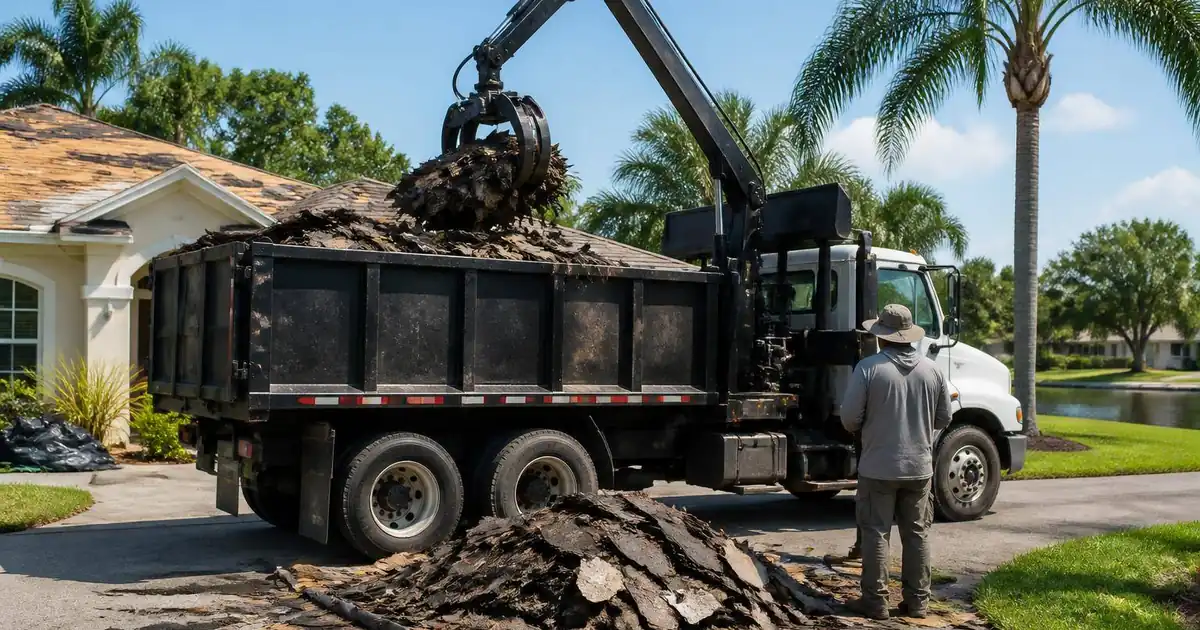
A roofing debris grapple truck quote can depend on the debris, the amount, site access, and the work requested. Ask for a clear breakdown before you make plans. For Bunnell projects, confirm what materials can be handled, what insurance documents are available, and which disposal rules apply to your debris.
What Shapes Roofing Debris Grapple Truck Costs?
Roofing debris grapple truck costs can vary with material, load size, site access, and the requested work. Ask how each factor affects the quote. The Daytona Beach roofing debris planning guide and pickup planning in Ormond Beach( Ormond Beach pickup planning ) offer related planning points.
A quote is easier to compare when it states what the work includes. Ask if the quoted amount covers pickup, hauling, disposal, or other listed tasks. Do not assume that one quote includes every part of the job.
The debris itself can matter. Roofing work may leave different materials, and a provider may need details before deciding what can be handled. Describe the materials as clearly as you can. Ask about items that are mixed together, sharp, unusually heavy, or difficult to reach.
The amount and placement also matter when someone reviews the job. Share a careful estimate of the debris and explain where it sits. A pile near a clear work area may raise different questions than debris spread across a site. Confirm any limits before relying on an estimate.
Use the table as a question guide, not a price list. It does not predict a quote. A provider must review the facts of the actual job before stating what may apply.
| Factor | Why ask | Useful question |
|---|---|---|
| Material | Accepted debris may vary. | Which materials can you handle? |
| Amount | A quote may depend on load details. | What estimate of volume do you need? |
| Access | The pickup area may affect the work. | What site details should I share? |
| Disposal | Rules can vary by material and place. | How will disposal be addressed? |
| Scope | Quotes may cover different tasks. | What work does this quote include? |
What Should You Ask Before Comparing Quotes?
Compare quotes by scope, assumptions, and stated limits, rather than by one number alone. Ask each provider the same questions so you can spot gaps. The roof debris planning guide and pickup questions for Ormond Beach( Ormond Beach pickup questions ) can help you prepare.
Start by asking what information the provider needs to review the job. Give the same description to each provider. Include the material types, estimated amount, where debris sits, and any known access limits. If a detail is uncertain, say so instead of presenting a guess as fact.
Then ask what the quote covers and what could change it. A written quote may state its assumptions or exclusions. Read those terms and ask for plain explanations of unclear points. Avoid comparing a broad quote with a narrow one as if they cover identical work.
Ask how the provider wants changes handled if the debris differs from your description. A larger pile, added materials, or changed access may affect the work. Get the process in writing when possible. Keep the answer with the quote so you can refer to it later.
A low figure may leave out an important task, while a higher figure may include different work. The quote alone does not show which arrangement suits your project. Compare the stated scope and ask questions before you choose.
- Ask each provider to list the work included in its quote.
- Share the same debris and access details with every provider.
- Ask which assumptions could change the stated quote.
- Keep written answers with the quote for later review.
What Insurance Details Should You Confirm?
Ask what insurance documents the provider can share and what work they relate to. Then verify details with the provider or the insurer, as needed. The roofing debris planning guide and pickup planning in New Smyrna Beach( New Smyrna Beach pickup planning ) cover related preparation.
Insurance terms can be hard to read, and a document may not answer every question about a job. Ask for current documentation and check that the named business matches the company you are considering. Ask who can explain the document if a term is unclear.
Do not assume that a general insurance document settles every issue for your property or project. Coverage can depend on policy terms and other facts. For a decision about your own risk, speak with your insurer or another qualified adviser who can review the details.
Ask whether the provider can explain how its coverage relates to the work described in the quote. You can also ask who is responsible for answering questions if the scope changes. Get clear answers before work begins, and keep relevant records together.
If a contractor, property manager, or insurer has set document needs, ask that party what it requires. Requirements can differ by agreement and situation. This article cannot determine which documents your project needs or whether any policy applies.
Keep insurance and job scope connected
Use the same written scope when you discuss insurance and hauling. That helps people see what work you are asking about. If the scope changes, ask whether the documents or answers need review again.
Save the quote, insurance documents, and written answers in one place. Note who supplied each document and when you received it. If you are unsure what a document means, do not rely on a guess. Ask the issuer or your insurer.
How Can You Prepare Roofing Debris for Review?
Give a clear account of the debris and pickup area before you arrange work. Ask what photos or details the provider needs, and do not move hazardous material without qualified guidance. The Daytona Beach planning guide and Deltona service planning points( Deltona planning points ) may help.
Make a short written inventory of the visible material. Separate items by type only when you can do so safely and within local rules. Do not assume that mixed debris can be accepted as one load. Ask the provider how it wants unusual or uncertain materials described.
Describe where the debris sits and how someone would reach it. Mention gates, narrow paths, soft ground, overhead items, or other visible limits. Do not claim that access is clear if you have not checked it. Ask what space and conditions the provider needs.
Photos may help explain the site, but ask before sending them. A photo cannot show every detail of a pile or access route. Use it as added context, not as proof that the area is safe or suitable for equipment.
Before the review, keep other people away from active work areas. If you find a material that may pose a health or safety risk, stop handling it and seek guidance from the proper qualified authority. Do not sort or move it based on this general article.
- Write down the types of roofing debris you can identify.
- Estimate the amount and mark uncertain details as estimates.
- Describe the debris location and any visible access limits.
- Ask which photos or records the provider wants to review.
- Seek qualified guidance before handling material that may be hazardous.
Which Disposal Questions Matter in Bunnell?
Disposal rules can vary by material, place, and date, so confirm the current requirements for your debris. Do not assume that one destination accepts every roofing material. The roofing debris planning guide and Edgewater planning information( Edgewater debris planning ) offer general context.
Volusia County's Solid Waste and Recycling information says collection rules vary by material, location, and date. Check with the relevant local authority for current rules that apply to your property and debris. Do not treat county guidance as proof that a particular pickup service is available.
Ask the provider how it plans to handle each material in your description. Ask whether you need to separate any items or make another arrangement. Get a clear answer before a pickup is scheduled. If the answer depends on a local rule, confirm that rule with the proper authority.
FEMA and the U.S. EPA offer general guidance for disaster debris planning and sorting. That guidance can help readers think about debris categories and planning steps. It does not establish local pickup availability, disposal permission, or the services of a particular business.
If the project includes debris from storm damage, ask about local instructions before moving it. Government response steps may change with the event and location. Follow current directions from the responsible authority, and ask a qualified professional about material or safety concerns.
How Do You Plan Timing Without Assuming Availability?
Ask about the provider's current scheduling process, the details it needs, and what could affect timing. Do not rely on an assumed pickup date until it is confirmed. The roof debris planning guide and pickup planning in Ormond Beach( Ormond Beach pickup planning ) provide useful planning prompts.
This site information does not establish a response time or current appointment space. Contact the provider to ask what dates are open and what information it needs to review the job. A requested date is not the same as a confirmed date.
Ask how long the quote remains current and whether a change in debris or access may affect the plan. If roofing work has its own schedule, share the dates that matter. Ask the roofing contractor or property manager to confirm how the hauling plan fits their work.
Allow time to check local disposal rules and any insurance documents your project requires. Those steps may need input from more than one party. Keep the plan flexible until the provider, contractor, and relevant authority have answered the questions that apply to them.
If work dates change, update the provider rather than assuming the old plan still applies. Confirm any revised scope or timing in writing. This simple record can help everyone work from the same information.
What Should You Confirm Before Pickup?
Before pickup, confirm the agreed scope, debris details, site access, and any instructions from the provider. Check that all open questions have an answer. The Daytona Beach roofing debris guide and Ponce Inlet pickup checklist can support a final review.
Read the quote again and compare it with the debris now on site. If the amount, materials, or location have changed, tell the provider and ask whether the quote or plan needs review. Do not rely on an earlier description when it no longer fits.
Confirm the pickup area and any preparation the provider has asked for. Do not clear, move, or sort material in a way that could create a hazard. Ask the provider what it expects, and use qualified help if a safety question is outside your knowledge.
Keep copies of the quote, insurance information, and messages about scope or timing. Share relevant instructions with the people involved in the project. If a contractor or property manager oversees the work, confirm who will be present and who can answer site questions.
Make a final check for local disposal directions and material limits. County and other public guidance can change or apply differently to different materials. When in doubt, ask the authority responsible for the rule instead of relying on a general planning article.
- Confirm that the debris matches the description used for the quote.
- Ask the provider to restate the agreed work and any stated limits.
- Check that the pickup area follows the provider's instructions.
- Keep relevant messages, documents, and local guidance together.
Questions about next steps? Call Daytona Grapple Trucks at (386) 481-7913 or review debris.
Frequently Asked Questions
Can a quote be final if I only know the debris amount roughly?
A rough estimate may help start the discussion, but it may not answer every question. Tell the provider that the amount is uncertain and ask what it needs to review the job. Ask how a change in amount could affect the quote, and get the answer in writing before you rely on it.
Does an insurance document prove that my project is covered?
A document alone may not settle whether a policy applies to your project. Policy terms and job facts matter. Ask the provider or insurer to explain the document, and speak with your own insurer or a qualified adviser about your risks. Do not treat a general certificate as a personal coverage decision.
Should I separate roofing debris before asking for a quote?
Ask first. The right approach can depend on the material, local rules, and the provider's process. Describe what you see and ask whether separation is needed. Do not handle material that may be hazardous or unsafe. Contact the proper qualified authority for guidance about those materials.
Does general disaster debris guidance confirm local pickup service?
No. FEMA and U.S. EPA materials offer general planning information, while local rules and actual service availability are separate questions. Check current instructions with the responsible local authority and ask the provider what it can handle. Do not read public debris guidance as confirmation of a business service or approval.
Sources
- Solid Waste and Recycling, Volusia County
- Planning for Natural Disaster Debris, U.S. EPA
- Debris Removal Guidelines Help You and Your Community, FEMA
Call (386) 481-7913 to talk through next steps.