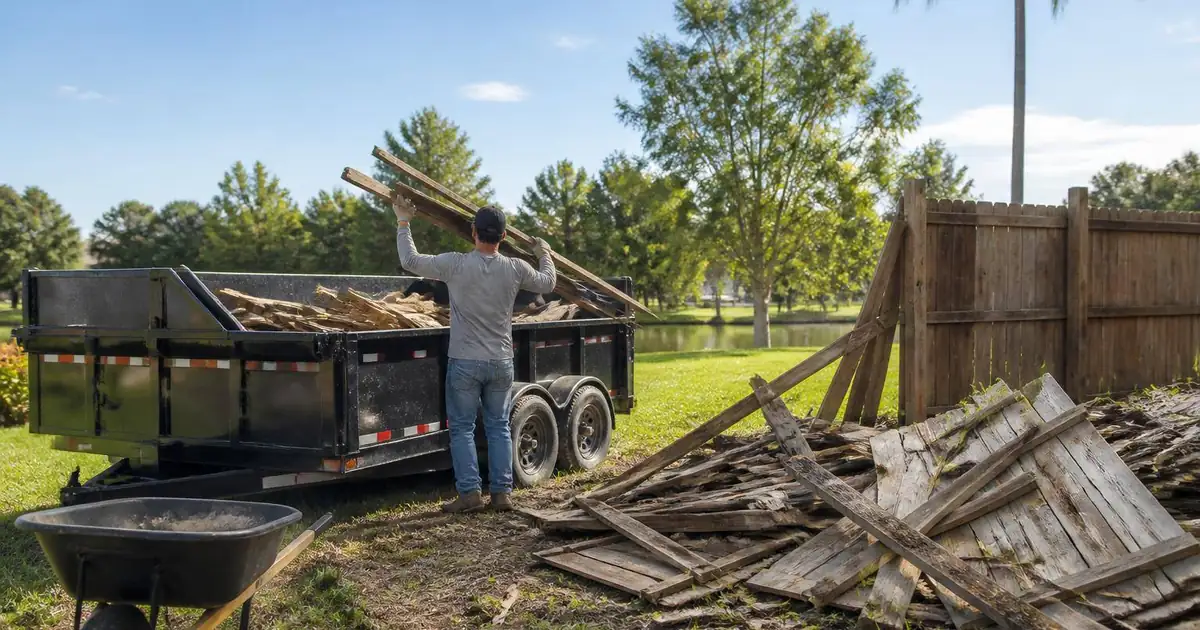
Fence demolition debris hauling starts with a clear picture of the material, access, and disposal needs. In Deltona, list what the fence contains and how much debris the work may create. Then confirm hauling availability, site access, accepted materials, and disposal rules with the provider and the proper local authority.
How should fence demolition debris hauling be planned?
Start by defining the fence work and the debris it will create. Fence demolition debris hauling can involve different materials, sizes, and site conditions, so a clear scope helps with planning. See the fence hauling planning guide and local planning steps(local planning steps) for related considerations.
Walk the fence line before setting a hauling plan. Note its length, height, number of sections, and any gates or posts. These details help you describe the work. They do not, by themselves, confirm a truck size or service fit.
Look for changes in material along the fence. A single property may have wood panels, metal sections, concrete posts, or mixed debris. Do not assume that all items can go into one load. Ask how the provider handles each material.
Check the work area for narrow gates, soft ground, low branches, parked cars, and nearby structures. These features can affect where debris can be staged and where a vehicle can reach. Share them before making an arrangement.
Set a rough work sequence with the person doing the removal. Decide when debris will be ready and how it will stay out of walkways. If removal and hauling happen on different days, plan where the pile can sit without blocking access or creating a hazard.
What details should you gather before asking about hauling?
Gather facts that let a provider review the job without guessing. Describe the fence materials, debris volume as best you can, access route, and expected timing. Keep your notes factual, and ask what else is needed to assess the request. The job detail checklist and hauling arrangement questions offer related prompts.
Photos can help explain a fence line, gate, or debris pile. Take clear views from more than one angle, and include the access path. A photo is only a planning aid. It does not replace a site review if one is needed.
Describe what has already been removed and what remains. Say if the debris is still attached, stacked, or mixed with other items. Do not label a pile as clean wood or metal unless you know what is in it.
Give a realistic range for when the work may take place. If the schedule is not set, say so. Ask how timing is handled and what notice is needed. Availability must be confirmed directly, since no schedule or response time is established here.
Use a short written summary when you contact a provider. Include the location in Deltona, the type of fence, access limits, and your main questions. This makes it easier to spot missing details before you make plans.
- List each fence material you can identify, and mark anything you cannot confirm.
- Describe the gate width, route length, and obstacles between the street and debris.
- Estimate the amount of debris without treating the estimate as a confirmed load size.
- Ask which photos or added details the provider needs to review the request.
How can you plan access and a safe staging area?
Choose a staging area that keeps debris and work traffic away from people and clear paths. Check whether a vehicle can reach that spot, then explain any limits before the work begins. The access and staging checklist and Deltona planning guide can help organize the discussion.
Keep the planned pile in a place that does not block a door, driveway, sidewalk, or emergency route. The right location depends on the property and the work. Ask the person managing the removal to set clear boundaries for the pile.
Do not assume a hauling vehicle can enter a yard or cross a lawn. Ground strength, slope, overhead branches, and turning space may matter. Describe what you see, and let the provider state what access is workable.
Keep children, pets, and other visitors away from active removal and staged debris. Use a clear route for people who need to pass through the property. If the site has a shared path, agree on how to keep it open.
Separate the removal plan from the hauling plan. The person taking down the fence may control how materials are cut and stacked. The person handling hauling may have different needs for access and loading. Confirm who is responsible for each step.
- Mark a staging area that keeps debris clear of doors, walkways, and vehicle paths.
- Point out low branches, narrow turns, soft ground, and other access limits.
- Keep people and pets away from the active work zone and debris pile.
- Confirm who will move debris from the fence line to the agreed staging area.
How should you sort fence materials and check disposal rules?
Identify materials and ask how each type should be handled before the debris is moved. Disposal rules can vary by material, location, and date, so do not rely on a general assumption. Review county waste guidance and disaster debris planning advice(disaster debris planning advice), then confirm current local requirements.
Wood, metal, concrete, and mixed items may be treated differently by a receiving site. The available source guidance does not establish which materials a particular hauler accepts. Ask the provider what it can take, and ask the receiving facility or local authority about its current rules.
Keep unknown or potentially restricted items separate until someone qualified can advise you. Do not hide them in a mixed pile. If you are unsure what a material is, describe it plainly and ask the right local authority or waste facility how to proceed.
Volusia County publishes solid waste and recycling guidance, but collection rules can vary by material, location, and date. Check the current guidance for the specific debris and property. Do not treat general county information as confirmation that a particular hauling service is available.
Federal disaster debris guides offer general planning and sorting information. They do not set local pickup options for a fence project. Use them as background, then check local rules that apply to your site and the planned disposal route.
What should you confirm before choosing a hauling arrangement?
Confirm the job scope, accepted materials, access plan, timing, and any terms before you agree to an arrangement. Ask what happens if the debris differs from your description. The arrangement comparison guide and cost and insurance questions can help you prepare questions without assuming a particular service or price.
There may be different ways to coordinate removal and hauling. One person might arrange both parts, or the removal and hauling work may be planned separately. The right fit depends on the property, the people involved, and what a provider actually offers.
Ask whether the provider reviews the site or relies on details you send. If an on-site review is offered, ask what it covers. Do not assume a visit, written quote, insurance term, or specific equipment is included unless the provider confirms it.
Discuss what counts as included work. Clarify who loads debris, who moves it to the staging area, and what materials are outside the agreed scope. Ask how changes are handled if the actual pile differs from your description.
Write down the key terms after the discussion. Include the agreed materials, access point, timing, and each party's role. If something is unclear, ask before work starts. A clear record can reduce confusion, but it cannot replace advice from a qualified professional when a legal or insurance decision matters.
- Describe the fence work, debris types, and any items that remain uncertain.
- Ask which materials are accepted and which rules govern their disposal.
- Confirm the access route, staging point, loading role, and expected timing.
- Review written terms and ask about any change in scope before work starts.
What can you do if the plan changes on removal day?
Pause and review the plan if the debris, access, or timing differs from what you described. Tell the provider what changed and ask how that affects the arrangement before moving ahead. The fence removal planning scenario and common hauling questions(common hauling questions) cover related planning issues.
A fence can reveal unexpected materials or conditions once removal begins. The pile may be larger than expected, or a gate may limit access. Do not rely on an earlier estimate as proof that the changed job fits the same plan.
Stop work in the affected area if people could be exposed to an immediate hazard. Keep others clear, then contact the person responsible for the work. For safety questions that need expert judgment, use a qualified professional or the relevant authority.
Tell the provider what changed in plain terms. Share a new photo if it helps explain the difference. Ask whether the provider can handle the revised scope, what steps should happen next, and whether any separate local disposal rule applies.
If the schedule shifts, confirm the new timing and how the debris will be managed in the meantime. Keep paths open and do not leave a pile where it creates an access problem. Make a new plan with the people responsible for removal and hauling.
Questions about next steps? Call Daytona Grapple Trucks at (386) 481-7913 or review debris.
Frequently Asked Questions
Can I assume a grapple truck provider accepts every type of fence debris?
No. The available site facts identify the business category as grapple truck debris hauling, but they do not list accepted materials or confirm a specific fence service. Ask the provider about each material in your pile. Confirm disposal rules with the relevant local authority or receiving facility before you make a final plan.
Should the fence be taken down before I arrange hauling?
That depends on the provider's process and the removal plan. Ask whether the provider needs debris already down and staged, or whether it can discuss another arrangement. Confirm who will do the removal, who will move the pieces, and when the pile should be ready. Do not assume one party covers both tasks.
What if I cannot tell what some fence materials are?
Keep uncertain items separate and describe what you can see. Do not mix unknown pieces into a pile labeled as one material. Ask the provider, receiving facility, or relevant local authority what information they need. For a safety concern that requires expert judgment, contact a qualified professional.
How can I prepare if the work date is not set?
You can still gather fence dimensions, material details, access notes, and photos. Ask what timing information a provider needs and how availability is confirmed. Avoid promising a removal date to others until the people involved agree on a schedule. Check that the staging area will remain clear and usable.
Which local rules apply to fence demolition debris in Deltona?
Rules can depend on the material, location, and date. Check current information from the relevant local authority and any receiving facility involved. Volusia County's solid waste guidance is one source for county waste and recycling information, but it does not confirm a specific hauling service or every rule for a particular property.
Sources
- Solid Waste and Recycling, Volusia County
- Planning for Natural Disaster Debris, U.S. EPA
- Debris Removal Guidelines Help You and Your Community, FEMA
Call (386) 481-7913 to talk through next steps.