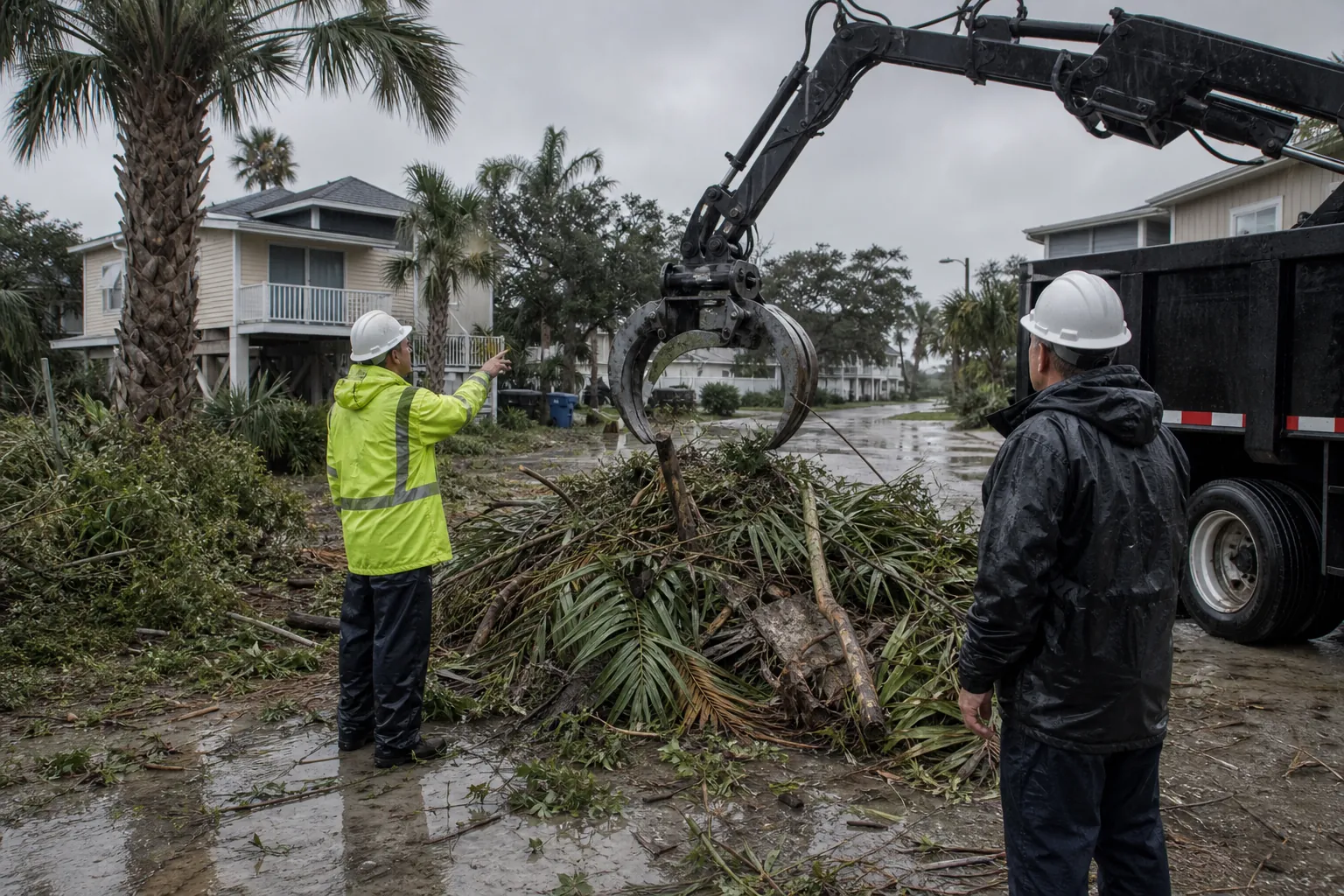
Before arranging prestorm grapple hauling in Daytona Beach, confirm exactly what is in your debris pile, where it sits, and whether a truck can reach it safely. Photos, approximate dimensions, and a clear description help the hauling provider determine whether the material fits the requested service.
Do not assume that everything placed beside branches can be collected together. Vegetation, demolition debris, soil, appliances, and potentially hazardous items raise different handling questions. Material confirmation is the step that separates a useful pickup request from an uncertain load.
This guide focuses on prestorm grapple hauling material confirmation in Daytona Beach, not a current storm forecast or an emergency response promise. It provides evergreen preparation advice for Florida properties. For a broader seasonal checklist, see our hurricane-season yard readiness guide for Northeast and Central Florida.
What Should You Confirm Before Requesting Grapple Hauling?
Confirm the material type, quantity, location, and access conditions before asking for a pickup. These details give Daytona Grapple Trucks a clearer picture of the job and help identify questions that need answers before loading.
A grapple truck uses a mechanical grapple to lift suitable debris into its hauling body. That does not mean every loose item, heavy object, or mixed pile is appropriate for the equipment or disposal destination. Acceptance must be confirmed for your actual load.
- Identify each material category rather than describing the entire pile as yard debris.
- Estimate the pile's length, width, and height, and explain whether those measurements include empty spaces between branches.
- Describe where the pile sits in relation to the street, driveway, buildings, and overhead lines.
- Disclose hidden items, including buried concrete, metal, bags, containers, or material underneath vegetation.
- Ask whether the load needs separation, repositioning, or additional photos before a pickup can be arranged.
Use plain descriptions. Saying that a pile contains palm fronds, cut branches, and two root balls is more useful than calling it a small cleanup. If you cannot identify an item, photograph it separately and say that its composition is unknown.
Which Materials Need Separate Confirmation?
Every category needs confirmation, but mixed loads deserve particular attention. A pile containing both vegetation and renovation waste should not be presented as a vegetation-only pickup.
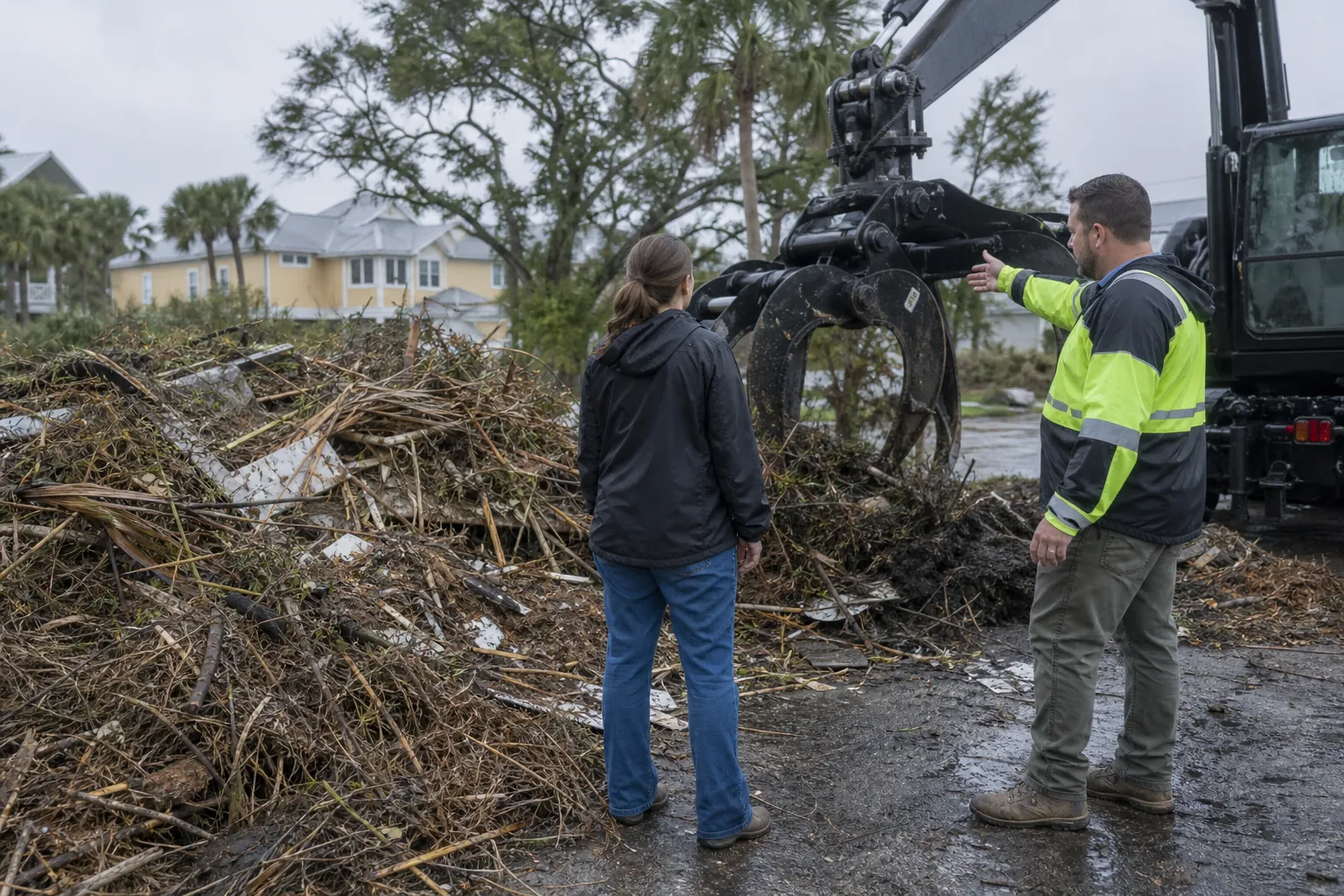
Keep the following categories distinguishable while you discuss the job. This is a disclosure checklist, not a statement that Daytona Grapple Trucks accepts every listed item.
- Describe branches, logs, palm fronds, and brush as vegetation, and note unusually large or dense pieces.
- Identify stumps and root balls separately because attached soil and their shape can change handling considerations.
- List lumber, drywall, roofing, fencing, and concrete separately from natural yard material.
- Point out furniture, appliances, tires, and other household items instead of hiding them inside a general debris description.
- Keep paint, chemicals, fuel containers, batteries, and unknown liquids out of the proposed pile until you have appropriate disposal guidance.
Loose soil, sand, and rubble can make a pile substantially different from what its surface suggests. Explain whether roots still hold soil and whether broken masonry lies below the branches.
For projects involving building materials, review our Daytona Beach demolition debris hauling guide. For uprooted or removed trees, our tree stump hauling guide addresses a more specific material category.
If a container is leaking, has an unreadable label, or may contain hazardous material, do not open it merely to improve your description. Keep people away and seek suitable local disposal or emergency guidance as the situation warrants.
How Do You Create A Useful Material Confirmation Record?
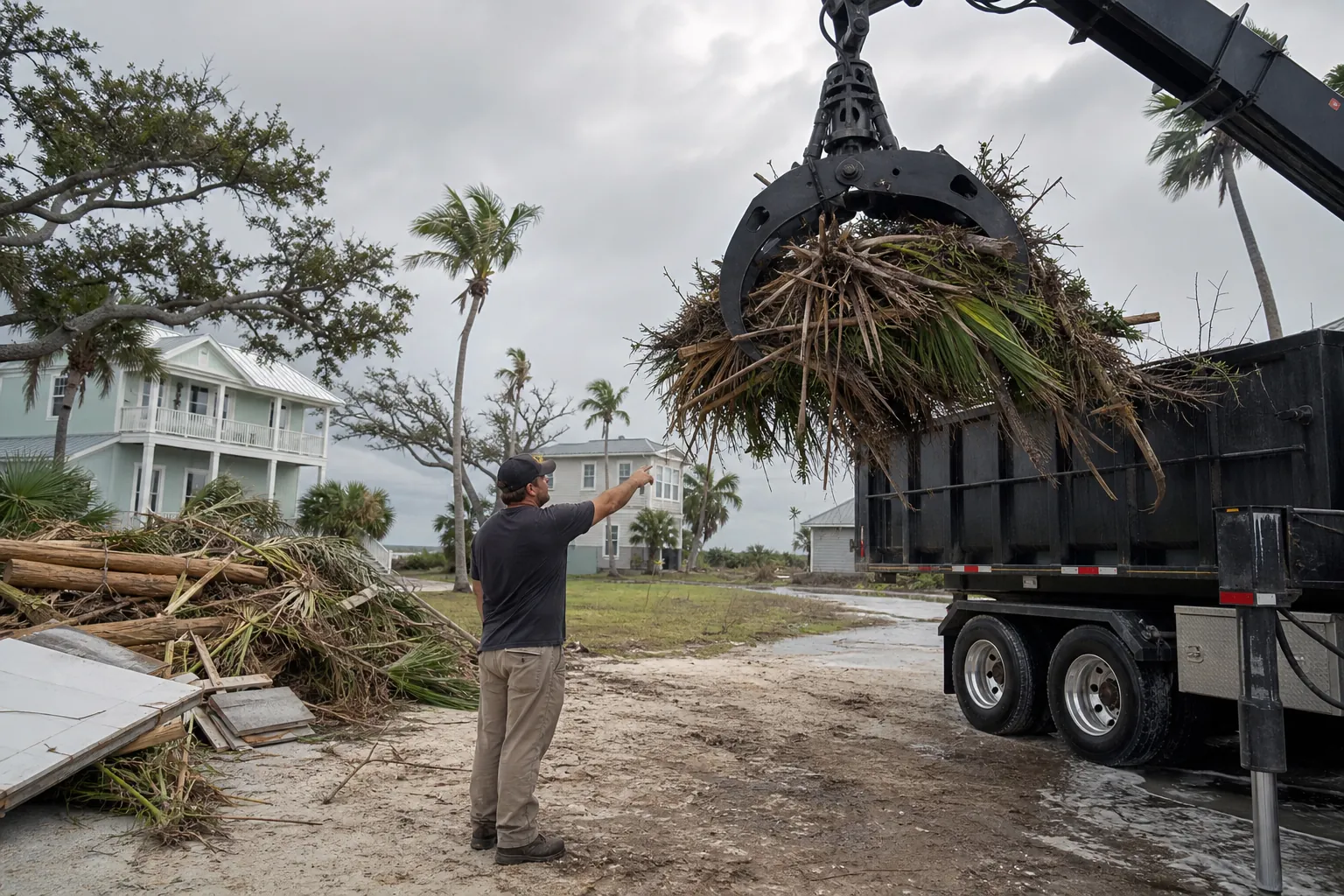
Create one short record that combines photos, measurements, and material notes. The goal is to show both the visible pile and the conditions around it without requiring anyone to guess.
Take photographs only from safe positions on your property or another location you are authorized to use. You do not need to climb the pile, enter traffic, or stand beneath unstable limbs.
- Take a wide photograph showing the entire pile and its relationship to the available truck approach.
- Photograph the pile from a second angle so depth and nearby obstacles are easier to understand.
- Take close photographs of each distinct material category, especially items partly concealed by branches.
- Measure or reasonably estimate length, width, and height, and label estimates as approximate.
- Write a material list that includes anything you cannot identify confidently.
- Describe gates, parked vehicles, soft ground, overhead lines, and other access restrictions.
- Ask the provider to confirm the proposed materials and staging arrangement before treating the pickup plan as settled.
A useful message might read: The pile contains cut branches and palm fronds, with one stump stored separately. Its approximate dimensions are listed below. Photos show the driveway approach, and there is an overhead line near the street.
Keep the record current. If a contractor adds fencing or concrete after you send the photos, the earlier confirmation may no longer describe the load. Report additions before pickup instead of assuming they are covered by the original discussion.
Where Should You Stage Debris Before Heavy Rain Or Wind?
Stage debris only in a location that the provider confirms is suitable and that you are authorized to use. Prioritize drainage, access, and separation from hazards rather than choosing the closest roadside spot automatically.
A visible location is not necessarily a safe loading location. A grapple needs working room, and the truck needs a suitable place to position itself. Nearby lines, trees, fences, and vehicles can limit that space.
- Keep material away from storm drains, drainage swales, and routes that normally carry runoff.
- Leave sidewalks, driveways, and access routes clear instead of spreading debris across them.
- Do not place the pile beneath overhead utility lines or against utility equipment.
- Keep debris separated from mailboxes, walls, fences, parked vehicles, and landscaping you want to preserve.
- Ask about the proposed position before moving a heavy pile that would be difficult to relocate.
These are general staging precautions, not a substitute for property-specific instructions or local requirements. Verify any restrictions that apply to a public right-of-way, shared access area, or managed community before placing material there.
Keep small loose items secured separately while their disposal route is being determined. Do not add them to branches merely to keep everything in one place. If outdoor work becomes unsafe, stop rather than trying to complete staging under worsening conditions.
How Can Rain Change The Pickup Plan?
Rain can change access conditions even when the material list remains the same. Soft ground, standing water, and obscured edges can require a fresh discussion about where the truck can operate.
This is general operational advice, not a claim about a particular storm affecting Daytona Beach. Check current official weather information when deciding whether outdoor preparation is safe, and do not rely on a hauling appointment as a weather decision.
Tell the provider if water collects between the street and the pile, if a driveway edge has softened, or if the proposed truck position requires crossing turf. Do not describe a route as firm solely because a passenger vehicle used it earlier.
Rain also makes it harder to see what lies beneath a pile. Leaves may cover containers, and puddles may conceal ruts or broken material. Update your photos when the location changes visibly, but do not enter standing water to inspect the load.
If the staging location becomes unsuitable, ask whether a different arrangement is possible. Avoid moving debris into a drainage route to create a drier loading spot. Keeping water pathways open remains important whether or not hauling can proceed.
What Should You Ask About Access And Loading?
Ask the provider to evaluate the actual approach and loading area, not just the street address. An accessible front entrance does not establish that a truck can safely reach debris behind a building or through a narrow gate.
Describe the route from the road to the proposed operating position. Mention shared driveways, tight turns, slopes, low branches, and places where the truck would need to reverse. Photographs can reveal restrictions that are difficult to explain by phone.
- Ask whether the pile can be reached from the proposed truck position without crossing an unsuitable surface.
- Explain whether gates, parked equipment, or other obstacles will still be present on pickup day.
- Identify overhead lines and nearby structures before discussing grapple reach.
- Ask what access must remain clear and who should be available to answer site questions.
- Confirm whether the provider needs additional measurements or a different staging location.
Do not offer to guide equipment near utility lines or move an unknown cable yourself. If wires are down or appear damaged, keep away and contact the appropriate utility or emergency service.
Our grapple truck debris removal guide explains the broader pickup process. This material-confirmation checklist adds the load details needed before that process can be planned.
How Does Material Confirmation Help With A Quote?
Material confirmation helps a provider assess the scope of work more accurately. It does not establish a price by itself, but it reduces uncertainty about what must be loaded and hauled.
Two similarly sized piles can differ substantially. One may contain mostly loosely stacked branches, while another contains dense logs, root balls, or building material. Access restrictions and the disposal requirements of the actual materials can also affect the job assessment.
Share the full material list before comparing estimates. Ask what the proposed service includes, what assumptions were used, and what changes would require another review. Avoid comparing a vegetation-only estimate with one based on a mixed load.
For a fuller explanation of the variables involved, see our Daytona Beach grapple pickup cost factors guide. No general checklist can replace an assessment of your particular pile and site.
What Changes For Commercial Properties And Regional Readers?
Commercial properties need the same material confirmation, plus a clear contact and a staging plan that respects ongoing site activity. Property managers should identify who controls the debris area and who can authorize access.
Separate landscape cleanup from tenant waste or construction waste in your description. If several crews contribute to one pile, ask each crew what it added. A shared pile is difficult to confirm when no one knows its complete contents.
Keep loading discussions separate from public access and delivery needs. Our commercial storm debris staging guide covers site coordination, while our construction site cleanup guide focuses on active project debris.
Readers in Jacksonville and Duval County, St. Augustine and St. Johns County, or Palm Coast and Flagler County can use these general material-documentation steps. The same applies to readers in New Smyrna Beach and elsewhere in Volusia County, and Titusville, Cocoa, and Melbourne in Brevard County.
Those regional references are preparation advice, not a statement of Daytona Grapple Trucks service coverage. Confirm service availability for your exact address. Also distinguish private hauling from any municipal or county collection program, since one arrangement does not establish eligibility for another.
Frequently Asked Questions About Material Confirmation
Can I describe the pile as storm debris?
You can use that description as context, but you still need to identify its contents. Explain whether the pile contains vegetation, fencing, roofing, household items, or other materials so the provider can assess the actual load.
Are photos enough to confirm a pickup?
Photos help, but they may not show hidden materials, weight, or access restrictions. Include approximate measurements and written notes, then ask whether additional information is needed before the arrangement is confirmed.
Should I mix branches with construction debris?
Do not combine them without explicit guidance. Keep the categories distinguishable and ask whether they require separate staging or handling. A mixed pile can change the assessment and may need to be reorganized.
What if I find something unknown under the pile?
Stop adding material and disclose the item. If it may be hazardous, leaking, sharp, or electrically energized, keep away and seek appropriate guidance rather than attempting to uncover or relocate it yourself.
Does prestorm preparation guarantee pickup before weather changes?
No. Material confirmation is a planning step, not a timing guarantee. Ask about scheduling directly and keep a separate safety plan for loose items if hauling cannot be arranged before outdoor conditions become unsuitable.
Do I need to update the provider after adding more debris?
Yes. New material, a larger pile, or a changed location can alter the original assessment. Send updated photos and explain what changed before relying on the earlier pickup discussion.
Confirm The Load Before You Move It
The most useful prestorm hauling request is specific: it identifies the materials, shows the pile, explains access, and flags uncertainties. That information helps you avoid unnecessary restaging and gives the provider a sound basis for discussing the work.
For a Daytona Beach property, call Daytona Grapple Trucks at (386) 481-7913 to discuss your material list and proposed staging location. Ask about acceptance, address coverage, access, and scheduling before treating the plan as confirmed.
You can also review our Daytona Beach grapple truck service guide. Keep your preparation focused on safe access, clear drainage, and an honestly described load, rather than rushing unidentified debris into one pile.
Call (386) 481-7913 to talk through next steps.