Prepare your yard for hurricane season by removing loose debris, checking drainage paths, securing outdoor items, and planning how bulky material will leave the property. A tidy yard alone cannot prevent storm damage, but thoughtful preparation reduces avoidable clutter and makes later cleanup easier.
For homeowners and property managers researching hurricane season yard readiness in Northeast and Central Florida, the most useful starting point is a property walk. Look for material that could move in wind, obstruct water flow, or block the access needed for cleanup equipment.
This guide provides regional preparation advice for the Atlantic corridor from Jacksonville through Melbourne. Geographic references are not a statement of Daytona Grapple Trucks' service coverage. Call to confirm whether your location, debris type, and pickup conditions fit an available hauling arrangement.
What Should You Remove Before Heavy Rain And Wind?
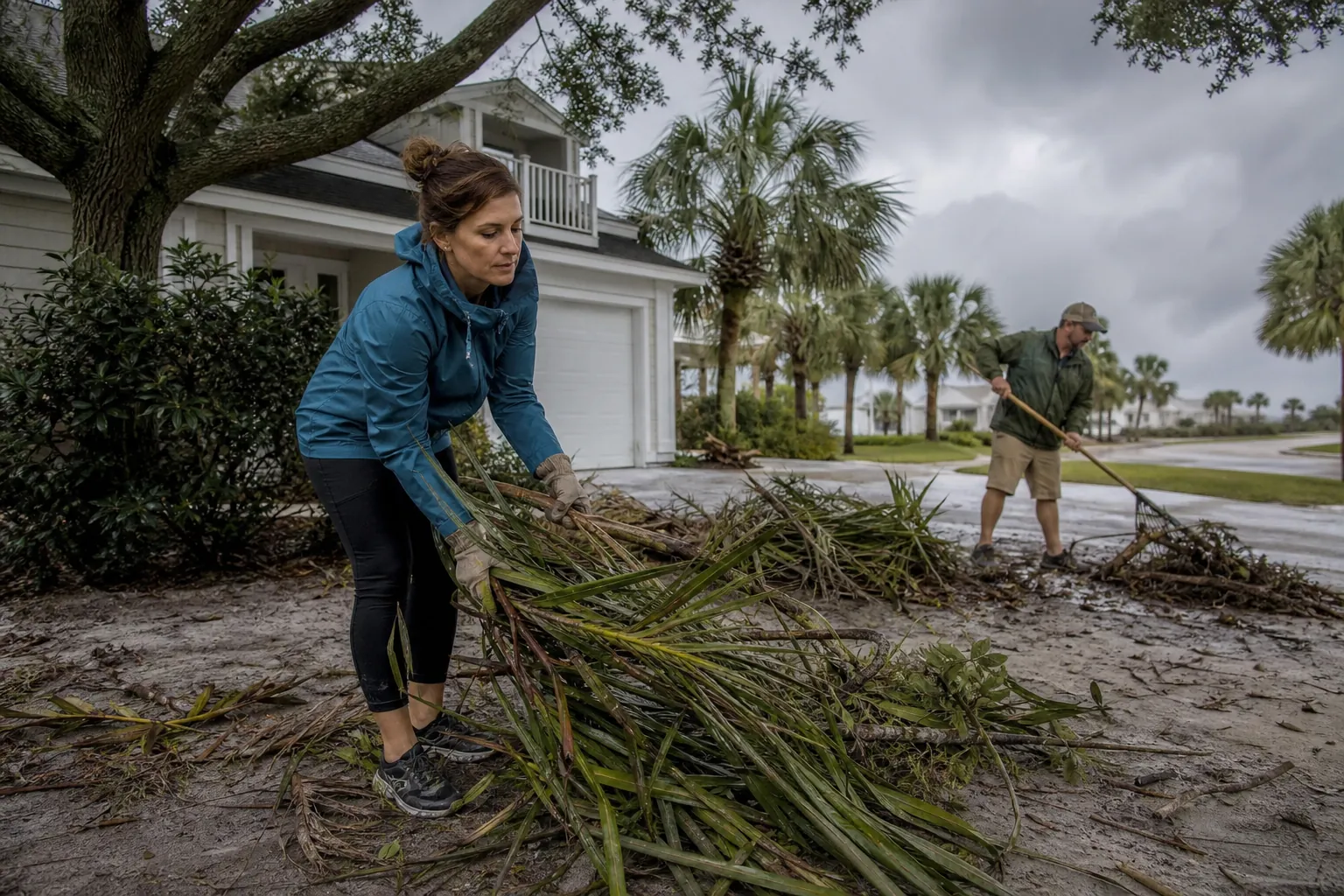
Remove loose yard debris and unnecessary outdoor clutter first. Focus on existing material you can safely collect, rather than creating a large new debris pile through rushed pruning or landscaping.
Walk around sheds, fences, patios, parking areas, and the back of the property. Old branches, discarded landscape edging, broken furniture, and leftover project materials often collect in places that receive little routine attention.
Keep reusable items separate from waste. Patio furniture, planters, tools, and irrigation accessories may need secure storage rather than disposal. Follow manufacturer instructions when securing equipment, and do not obstruct exits or utility access.
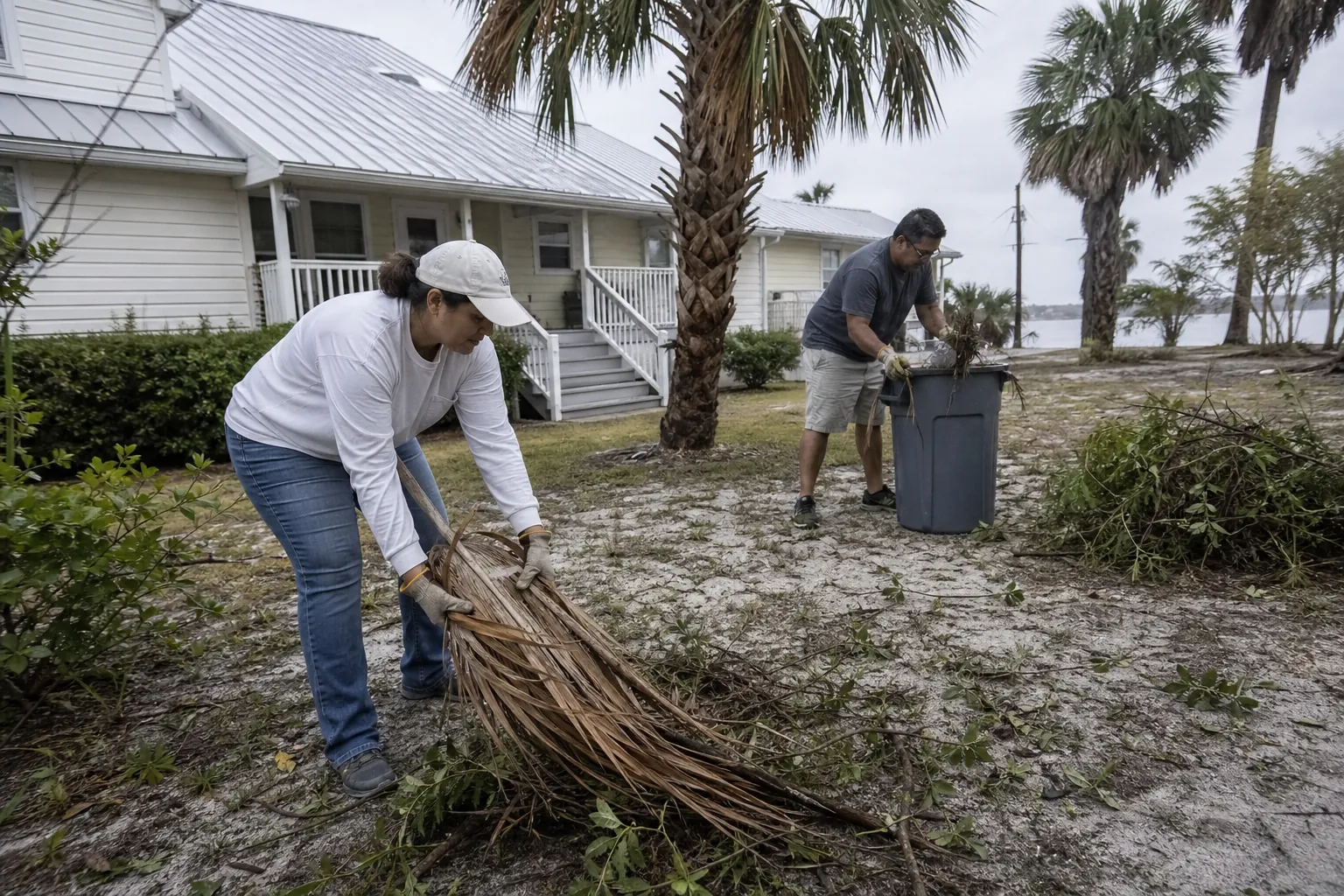
- Collect loose branches and palm fronds from walkways, lawn areas, and accessible drainage routes.
- Move small tools, lightweight containers, and removable decorations into suitable enclosed storage.
- Separate landscape waste from household trash and construction debris before arranging removal.
- Identify unstable limbs or leaning trees for assessment by a qualified tree professional instead of attempting risky cutting yourself.
- Check vacant corners and areas behind outbuildings for forgotten material that could become difficult to retrieve after rain.
Do not assume that fresh pruning automatically improves hurricane readiness. Cutting substantial limbs creates an immediate hauling need, and inappropriate pruning can harm trees. Schedule professional tree assessment and resulting debris removal as coordinated tasks.
If landscaping is already underway, plan the waste exit before work begins. Our guide to grapple truck hauling for landscaping debris explains the separate planning considerations for material generated by landscape projects.
How Can You Check Drainage Without Making Flooding Worse?
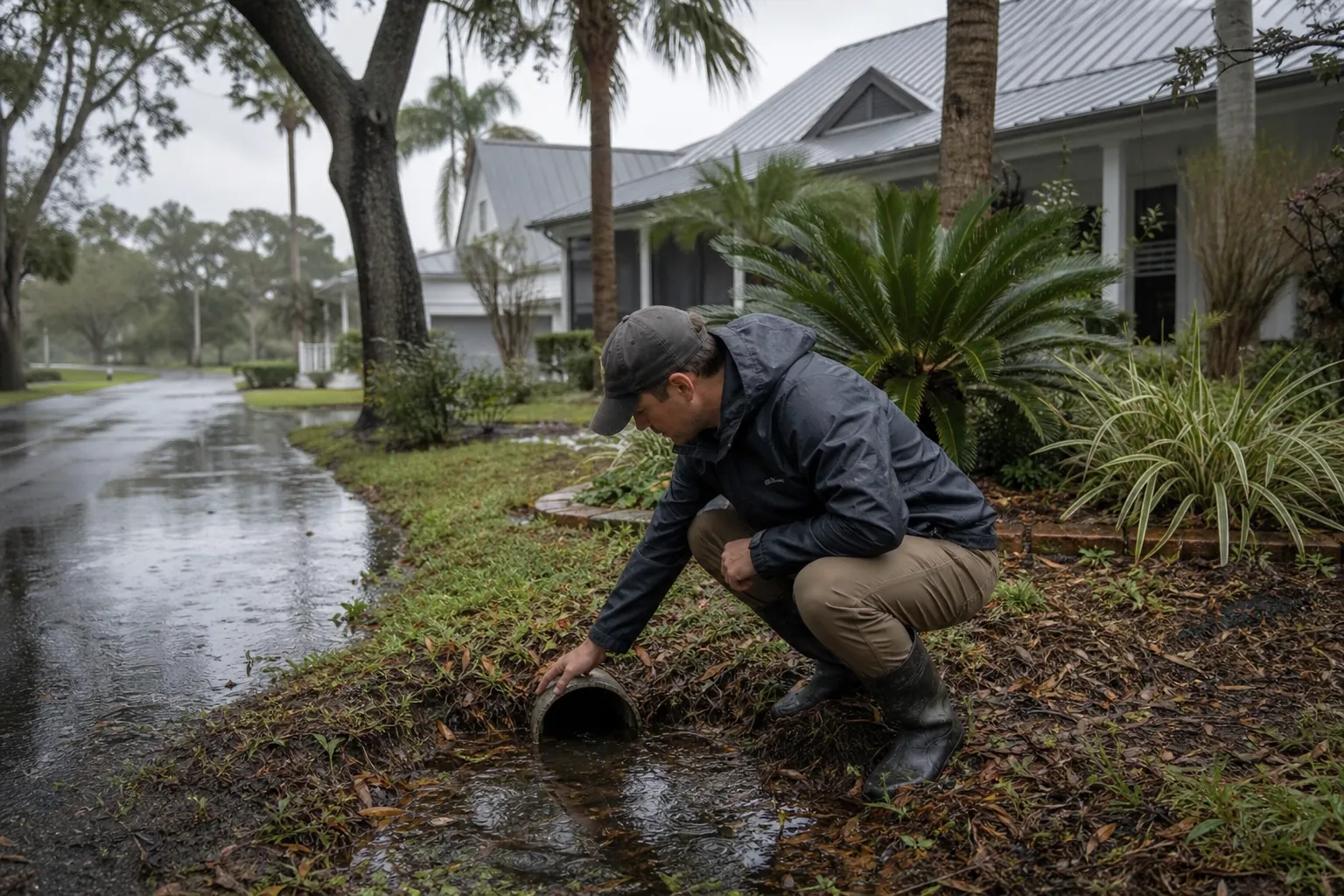
Inspect visible drainage routes and remove accessible surface litter without changing grades or entering drainage structures. Yard readiness means preserving existing water pathways, not improvising a drainage construction project.
Start at roof runoff locations and follow the apparent route water takes toward approved drainage features. Look for leaves covering grates, mulch piled against outlets, and branches resting in shallow swales. Observe from stable ground and avoid areas with uncertain footing.
Gutters and downspouts also deserve attention, but ladder work has its own risks. Use a suitable professional when access is difficult. Do not climb onto a roof simply to finish a preparation checklist.
- Remove loose surface leaves from accessible drain covers when doing so is safe and permitted.
- Keep debris piles out of swales, ditches, low spots, and the discharge paths of downspouts.
- Report suspected blockages in public drainage infrastructure to the responsible agency rather than opening or entering structures.
- Check that stored materials do not divert runoff toward buildings or neighboring properties.
- Ask a qualified drainage professional about recurring ponding instead of assuming debris hauling will solve it.
Grapple truck cleanup can remove appropriate bulky material, but it is not a substitute for drainage diagnosis, pumping, or flood remediation. A yard can remain vulnerable to ponding even after every visible branch has been removed.
Never enter moving water or use electrical equipment in standing water. If access becomes flooded, pause cleanup and reassess conditions from a safe location. Personal safety takes priority over keeping the preparation schedule.
Where Should Yard Debris Be Staged For Pickup?
Stage debris only in a location confirmed with the hauler and consistent with applicable property and public-space rules. The right spot must accommodate the truck, lifting equipment, nearby utilities, and the material being collected.
A convenient location for a wheelbarrow may be unsuitable for a grapple truck. Overhead wires, low branches, fences, parked vehicles, and narrow approaches can complicate an otherwise straightforward pickup.
Before moving a large pile, photograph the proposed area from several angles. Include the road approach, overhead space, adjacent structures, and any gate. Share those photographs when discussing pickup so access concerns can be addressed before additional handling.
- Keep material clear of utility poles, guy wires, overhead lines, and ground-level utility equipment.
- Leave mailboxes, sidewalks, hydrants, driveways, and emergency access routes unobstructed.
- Avoid staging against fences, tree trunks, vehicles, or buildings where equipment cannot safely separate the pile.
- Keep drainage openings visible and free of scattered branches or loose material.
- Confirm whether collection is allowed at the proposed location before placing debris near a street or shared access area.
Do not place a pile beneath a wire and assume the operator can work around it. See our separate guide to debris pile safety near utility lines for utility-focused staging considerations.
When wind or heavy rain is approaching, avoid leaving newly generated loose debris outside without a confirmed removal plan. If pickup cannot be arranged under safe conditions, ask about appropriate temporary storage rather than creating an exposed roadside pile.
Can A Grapple Truck Reach Your Property Safely?
Safe access depends on the entire approach, not just whether a gate opens. Confirm the route, working area, overhead clearance, and surface condition with the hauler before assuming equipment can reach an interior pile.
Measure the clear gate opening and describe bends, slopes, branches, and obstacles along the route. Do not use a generic gate-width number as a guarantee. Truck dimensions and operating requirements vary, and the actual equipment must be considered.
Our grapple truck gate and access guide addresses access evaluation in more detail. This readiness guide focuses on identifying those constraints early enough to change the preparation plan.
- Describe whether the approach is paved, gravel, grass, or another surface.
- Tell the hauler about septic systems, irrigation components, buried features, and surfaces that should not carry equipment.
- Identify low limbs and overhead utilities along both the travel route and proposed loading area.
- Explain how parked vehicles, delivery activity, or shared driveways could limit access.
- Recheck conditions after rainfall because a previously firm surface may no longer be suitable.
Never direct a heavy truck onto saturated ground simply because it was accessible earlier. The operator needs to assess conditions and may require a different staging location or a postponed pickup.
If the pile sits behind a building or inside a narrow enclosure, discuss who will relocate it to an accessible area. Grapple truck hauling should not be assumed to include tree cutting, hand-carrying material, fence removal, or entry into every part of a property.
Which Materials Need Separate Handling?
Keep vegetative debris, construction material, household waste, and potentially hazardous items separate until disposal requirements are confirmed. A mixed pile can make identification harder and may require different handling arrangements.
Branches and brush are not equivalent to broken concrete, drywall, paint containers, or damaged appliances. Tell the hauler what is present, including anything partly hidden beneath the visible yard debris.
For landscape projects involving substantial green waste, the bulk yard waste planning guide for Edgewater landscaping projects covers project-generated debris. Its local project focus is distinct from this regional hurricane-season checklist.
- Keep brush, limbs, and palm fronds together when the hauler confirms that grouping is appropriate.
- Set concrete, bricks, pavers, and other masonry apart from vegetative debris.
- Identify drywall and other renovation waste rather than covering it with branches.
- Keep fuels, chemicals, batteries, pressurized containers, and unknown liquids out of ordinary yard debris piles.
- Ask about large stumps, root balls, and soil-heavy material before adding them to a pickup request.
Read the separate guides to concrete and masonry debris handling and drywall debris handling when those materials are involved. Do not assume that one truck visit means every material belongs in one pile.
If a container leaks or a material is unidentified, stop handling it and seek appropriate disposal guidance. Avoid opening, draining, crushing, or concealing suspicious items to make the pile look easier to collect.
What Is A Practical Hurricane-Season Preparation Schedule?
Use a staged checklist: inspect first, resolve access and disposal questions next, then complete safe removal before conditions deteriorate. Last-minute preparation is less effective when it creates more debris than you can manage.
There is no universal deadline for every property. Base your decisions on current official weather information, safe working conditions, and the confirmed availability of any contractor or hauler involved.
- Document the property. Photograph existing debris, drainage obstructions, access routes, and areas needing professional assessment.
- Sort the work. Separate simple housekeeping from tree work, drainage repair, hazardous-material concerns, and bulky hauling.
- Confirm the removal plan. Describe the debris and location, ask about accepted materials, and agree on a suitable staging area.
- Complete manageable cleanup. Collect loose material safely, secure reusable outdoor items, and keep exits and drainage paths open.
- Check the final layout. Make sure the pile has not blocked utilities, pedestrian access, or the truck's approach.
- Pause when conditions become unsafe. Stop outdoor work when weather, flooding, visibility, or unstable material creates a hazard.
For rental properties and commercial sites, assign responsibility for tenant communication, vehicle relocation, and contractor access. Make clear who can authorize a pickup and who will verify that the work area is ready.
The commercial property debris hauling guide discusses site coordination separately. A written property checklist helps avoid duplicated work and contradictory instructions.
How Should Advice Differ Along Florida's Atlantic Corridor?
The core yard-readiness tasks remain similar across the corridor, but collection rules, site conditions, and responsible agencies vary. Use local official guidance rather than assuming a neighboring county's instructions apply.
These are regional planning considerations, not claims about a particular storm, local impact, or confirmed business service area.
- For Jacksonville and Duval County properties, verify the applicable collection program and whether the address falls under a municipal or other collection arrangement.
- For St. Augustine and St. Johns County properties, confirm the rules that apply to the specific address, including shared or managed-property arrangements.
- For Palm Coast and Flagler County properties, identify the responsible collection authority before placing material beside a roadway.
- For Daytona Beach, New Smyrna Beach, and other Volusia County properties, coordinate private hauling with site access and any applicable public collection instructions.
- For Titusville, Cocoa, Melbourne, and other Brevard County properties, verify address-specific collection requirements and review current official weather information.
Do not presume a public storm-debris collection program is active, or that it accepts every material. Confirm any announced program directly with the responsible authority. Keep private hauling plans separate from assumptions about possible public collection.
Frequently Asked Questions About Yard Readiness
Should I prune every tree before hurricane season?
No. Start with a qualified assessment of concerns such as damaged limbs or structural instability. Unnecessary pruning can create avoidable debris, and large or elevated cutting should not become a rushed do-it-yourself task.
Can I put yard debris in a drainage ditch?
No. Keep debris out of drainage routes and confirm a different staging location with the hauler. Material in a ditch can obstruct water movement and may interfere with maintenance or violate applicable placement rules.
Can wet branches still be hauled?
Ask the hauler to assess the material and access conditions. Wet branches alone do not answer whether a pickup is feasible; saturated ground, standing water, hidden waste, and equipment access also matter.
Does grapple truck hauling include cutting fallen trees?
Do not assume it does. Explain whether material is already cut and accessible, and confirm the scope of work. Tree cutting, unstable-tree assessment, and utility hazards may require separate qualified professionals.
What information should I provide when requesting pickup?
Provide the address, material types, approximate pile dimensions, clear photographs, proposed staging location, and known access constraints. Mention mixed waste, overhead lines, gates, and soft ground so the pickup can be evaluated accurately.
What should I do with debris after severe weather?
First check for immediate hazards and follow official safety instructions. Once conditions are safe, document damage and separate material carefully. Our post-hurricane yard debris staging guide for Daytona covers the distinct cleanup phase.
Make A Clear Plan Before Moving A Large Pile
The best preparation sequence is simple: remove loose clutter, protect drainage routes, separate materials, and confirm safe hauling access. Avoid creating a large exposed pile without knowing how and when it can be removed.
For help discussing storm debris hauling and grapple truck cleanup options, call Daytona Grapple Trucks at (386) 481-7913. Share your location and debris photographs to confirm service availability, material suitability, and staging requirements before committing to a pickup plan.
Call (386) 481-7913 to talk through next steps.