
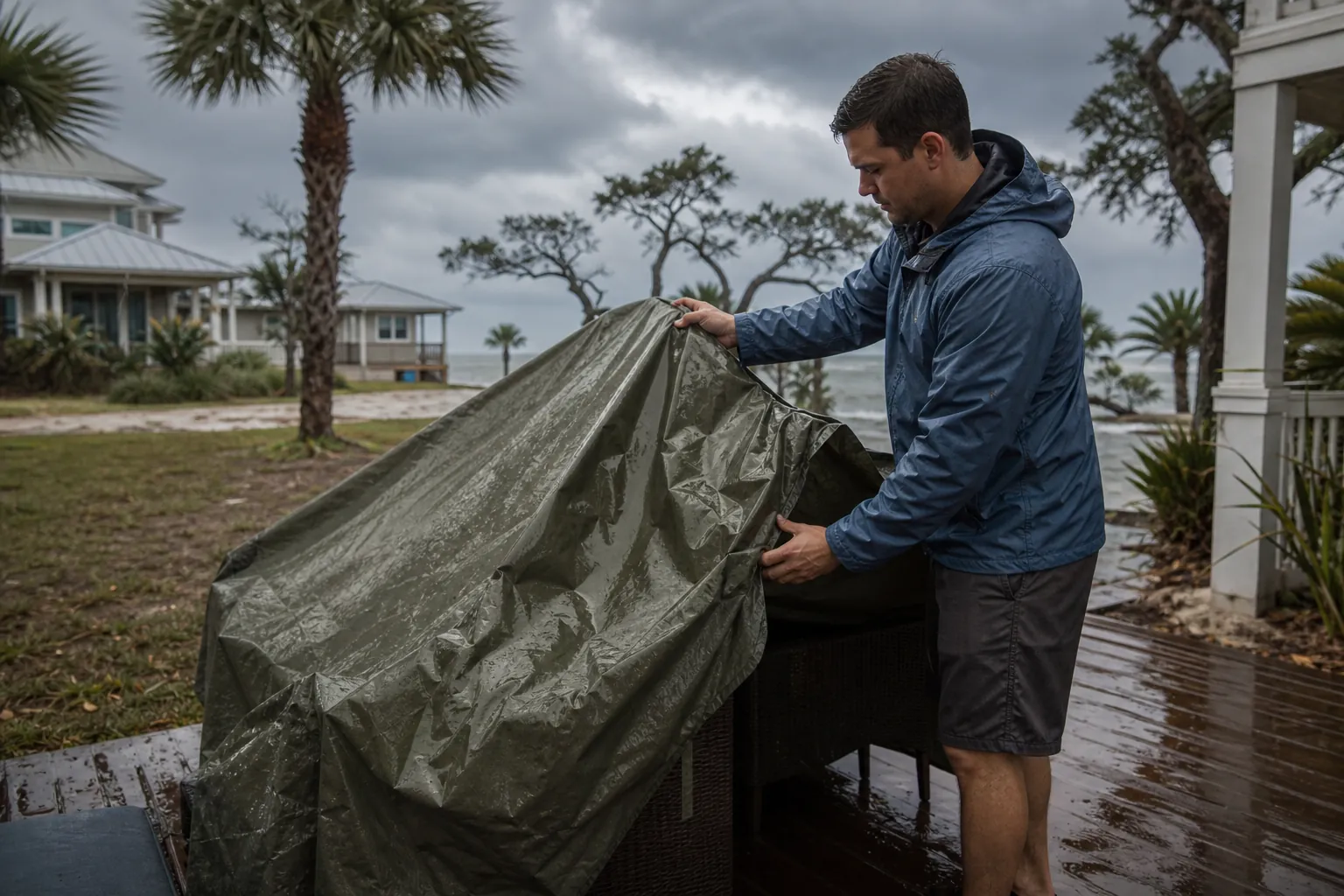
Secure outdoor yard items before storms in Jacksonville by bringing lightweight belongings indoors, properly anchoring items that must remain outside, and removing loose debris before conditions deteriorate. Start with objects that can roll, tip, float, or blow away, then check access routes and drainage paths.
This guide focuses on practical property preparation, not a storm forecast. It offers regional advice for Jacksonville and Duval County without implying that Daytona Grapple Trucks provides service there. For broader seasonal planning across Northeast and Central Florida, see our hurricane-season yard readiness guide.
The goal is not to make every outdoor object immovable. It is to reduce avoidable hazards, keep loose material out of water pathways, and leave a safer, more manageable property for inspection afterward.
What should you secure first in a Jacksonville yard?
Secure small, lightweight objects first because they are usually easiest to relocate and easiest to overlook. Walk the entire property, including side yards, porches, pool areas, and spaces behind sheds.
Look beyond furniture. Empty planters, plastic watering cans, hose attachments, toys, grill accessories, and unused landscaping materials can create a surprising amount of loose material.
- Bring cushions, umbrellas, folding chairs, and lightweight tables into an enclosed storage area.
- Collect toys, sports equipment, pet bowls, and portable decorations from lawns and patios.
- Move empty pots, watering cans, and small garden tools indoors or into secure storage.
- Remove loose accessories from grills, outdoor kitchens, and patio furniture.
- Check gates, fence hardware, and shed doors for loose fittings before worsening weather makes repairs unsafe.
Prioritize items near windows, parked vehicles, entrances, and neighboring properties. A forgotten bucket beside a gate deserves attention just as much as a chair on the main patio.
Take photographs before moving larger objects. They can help you remember the original arrangement and identify belongings during a later property inspection.
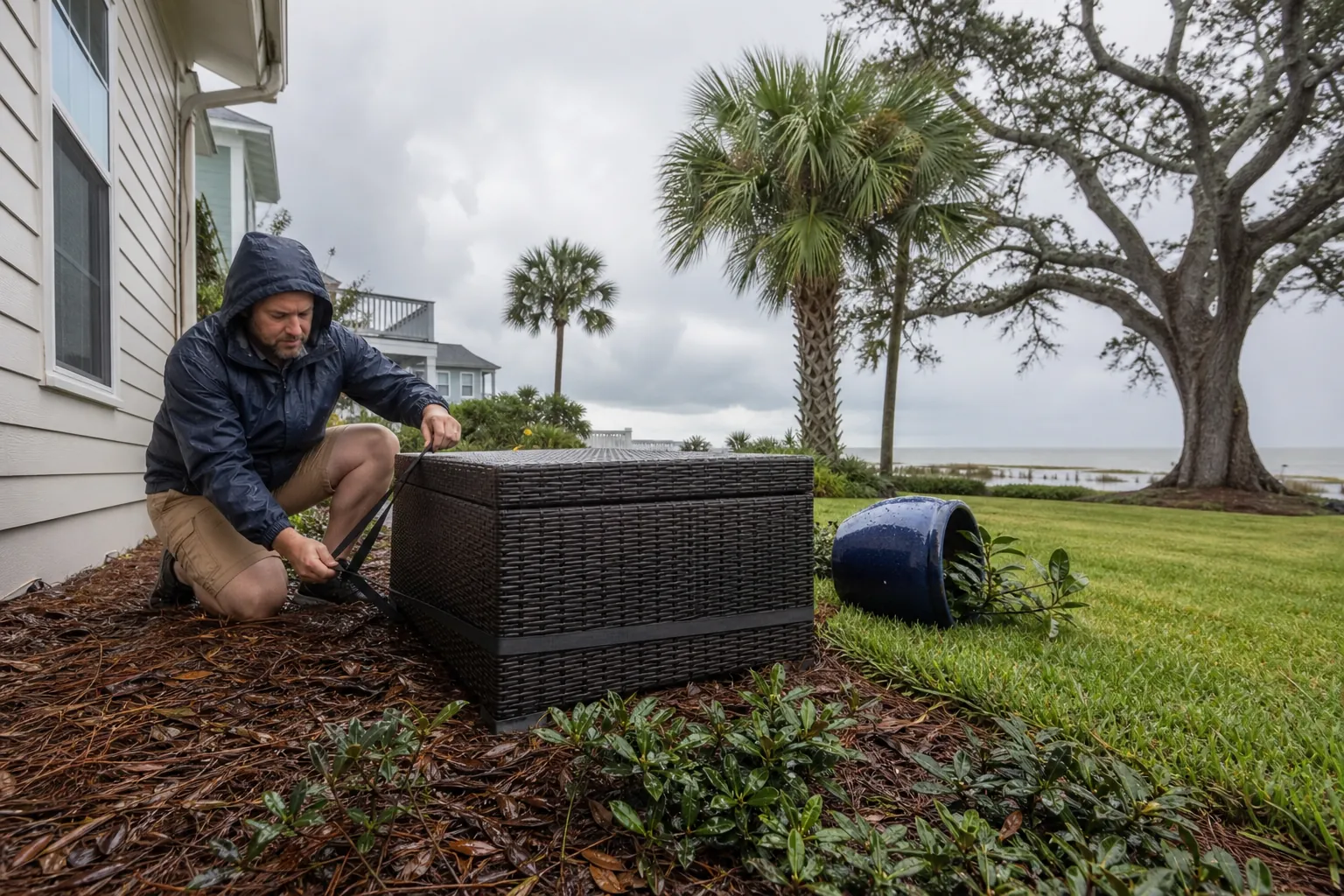
Should outdoor furniture be stored or tied down?
Indoor storage is generally the simplest choice for portable furniture. Anchoring is a fallback for items that cannot reasonably be moved and should follow the manufacturer's instructions for the furniture and anchoring system.
A covered porch is not the same as an enclosed storage space. Furniture under a roof can still shift if wind enters from the sides, and lightweight pieces can move even when stacked.
Use a garage, enclosed shed, or other suitable space without blocking exits, electrical panels, or equipment access. Do not move wet or muddy items onto slick interior walking surfaces without protecting the route.
- Fold and store portable chairs rather than relying on their weight to keep them in place.
- Close umbrellas and remove them from stands when the manufacturer allows safe disassembly.
- Store cushions separately so they do not become waterlogged or detach from frames.
- Use anchoring hardware rated for the application rather than improvised rope or deteriorated straps.
- Keep stored furniture away from garage door tracks and household emergency supplies.
Do not assume a tree, fence panel, or decorative railing is a suitable anchor. If you cannot confirm a safe attachment method, consult the product instructions or an appropriate professional.
A tarp protects against some rain exposure but does not secure the objects underneath. Loose tarps can also become additional material to retrieve later.
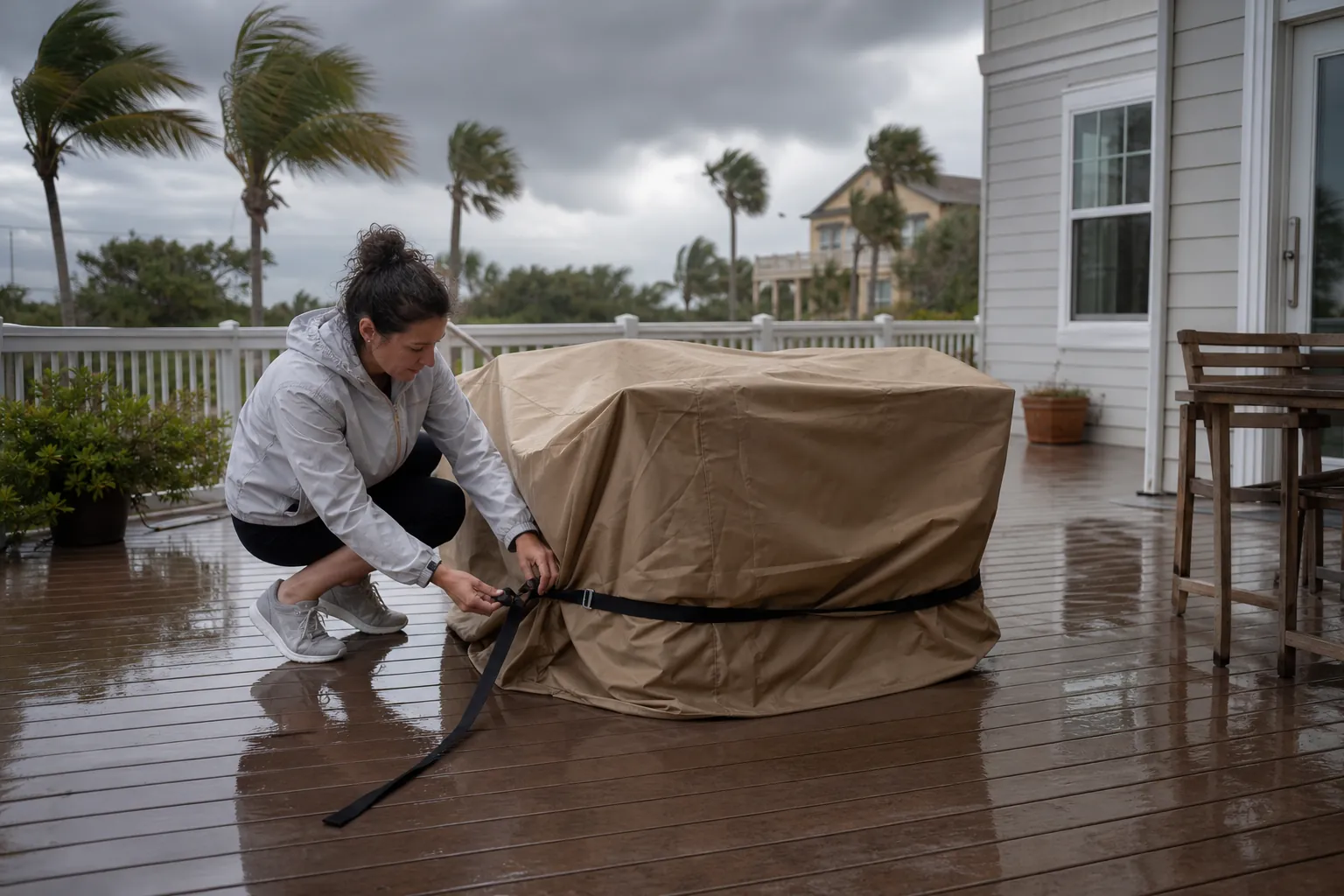
How do you handle grills, propane cylinders, and outdoor equipment?
Secure outdoor equipment according to its manufacturer's guidance, and treat fuel-containing equipment differently from ordinary patio belongings. Do not move a propane cylinder into a home or enclosed garage simply to keep it dry.
Turn off equipment and allow hot surfaces to cool before handling anything. Remove portable accessories where appropriate, and check that doors, lids, and removable trays are secured as the manufacturer recommends.
For propane storage and positioning, follow the cylinder label, appliance instructions, and guidance from the supplier. If a cylinder, valve, or connection appears damaged, avoid using it and contact a qualified provider.
- Disconnect and store electric yard tools only after turning them off and following their instructions.
- Keep batteries and chargers in a dry location suitable for the specific product.
- Remove loose grill utensils and serving trays from outdoor cooking areas.
- Secure wheeled equipment using an appropriate method instead of relying solely on a small wheel lock.
- Keep fuel containers away from living spaces, ignition sources, and locations where water could move them.
Never operate a grill, generator, or other combustion-powered equipment inside a garage or enclosed space. Preparation should not introduce a carbon monoxide or fire hazard.
What should you do with planters, garden materials, and play equipment?
Move small planters into secure storage and evaluate larger items individually. A heavy container may still tip, break, or slide, especially if its base is unstable or it sits near an edge.
Do not strain yourself trying to relocate oversized pottery. Use suitable moving equipment or assistance, and keep clear of the direction an object could fall.
Bagged soil, mulch, spare pavers, and edging should not remain scattered around the yard. Store manageable supplies in a sheltered, stable location without creating excessive loads on shelving or blocking drains.
- Move hanging baskets and removable plant stands out of exposed areas.
- Bring small containers inside a suitable storage space while protecting floors from drainage.
- Collect loose pavers and edging pieces so they do not obstruct walking routes.
- Store pool floats and removable recreational accessories away from open water.
- Follow manufacturer guidance for trampolines, play structures, and portable basketball equipment.
Large play equipment needs advance planning. If disassembly requires tools, multiple people, or professional help, do not leave it until unsafe weather is approaching.
Avoid improvised changes that compromise a structure. Removing a component or adding a tie-down without understanding the assembly can create a different hazard.
How can you keep loose yard debris out of drainage paths?
Collect accessible leaves, small branches, and landscaping leftovers before they enter low spots or block surface water routes. Focus on ordinary maintenance that can be performed safely from the ground.
Walk the property and identify where water normally travels. Check driveway edges, shallow swales, patio drains, and the spaces around downspout outlets. Do not assume a dry-looking depression will remain dry during heavy rain.
- Remove loose leaves and litter from accessible drain grates without lifting heavy covers.
- Keep branch piles out of swales and away from downspout discharge points.
- Move bags and lightweight containers away from places where runoff could carry them.
- Leave existing drainage channels open rather than filling them with soil or yard waste.
- Report suspected public drainage problems to the responsible local agency rather than modifying public infrastructure.
Do not enter standing water to clear a drain. Water can conceal holes, sharp debris, damaged electrical equipment, and other hazards.
Yard cleanup does not guarantee flood prevention. Drainage performance depends on conditions beyond the property, including rainfall, surrounding elevations, and the capacity of drainage systems.
The useful objective is narrower: reduce loose material and avoid creating an additional obstruction where water needs to move.
Which debris should be removed before weather deteriorates?
Remove existing loose debris when there is enough time to arrange safe handling. Old pruning piles, broken outdoor furniture, and landscaping leftovers should not become an emergency relocation project.
Separate material by type before deciding how it will leave the property. Vegetation, household junk, construction remnants, and hazardous materials may require different collection or disposal arrangements.
Check current municipal or county collection instructions directly. Do not assume normal collection schedules, preparation requirements, or accepted materials remain unchanged when weather disrupts operations.
- Keep branches and brush separate from metal furniture and household discards.
- Set aside paint, chemicals, batteries, and fuel containers for an appropriate disposal channel.
- Remove loose plastic wrapping and packaging from landscaping piles.
- Ask the intended hauler which materials are accepted before combining different waste types.
- Keep any temporary pile away from drainage paths and places where it obstructs visibility.
Grapple truck debris hauling can help with compatible bulky material, but acceptance, access, and loading conditions must be confirmed. A pile's size alone does not determine whether it is suitable for pickup.
For a separate example focused on landscaping leftovers in a Volusia County community, read our Edgewater bulk yard waste guide. That article is not a statement of Jacksonville service coverage.
What is a practical step-by-step yard preparation plan?
Use a repeatable sequence so you do not spend all your available time on one difficult object. Complete easy, high-value tasks first, then address larger items while conditions remain safe.
- Walk the property and make a short list of loose objects, debris piles, and blocked access routes.
- Choose enclosed storage locations and clear enough space without obstructing exits or emergency equipment.
- Bring lightweight furniture, cushions, toys, and accessories into those locations.
- Secure remaining equipment using its approved anchoring or storage instructions.
- Collect accessible loose vegetation and separate it from household or construction waste.
- Clear ordinary surface debris from accessible drainage routes without entering water or altering infrastructure.
- Confirm any collection or hauling arrangements directly with the provider before placing material for pickup.
- Complete a final ground-level check, then stop outdoor work when conditions become unsafe.
Keep gloves, sturdy footwear, drinking water, and a charged phone available during preparation. Work with another adult when moving awkward items, and do not climb ladders to finish a task in deteriorating conditions.
If time becomes limited, prioritize personal safety and official instructions. Furniture and debris can be replaced; a last-minute outdoor task is not worth an injury.
How should shared properties organize outdoor preparation?
Assign responsibility by area and keep residents or staff informed about storage locations. Shared properties often have scattered items that no single person considers their responsibility.
Apartment courtyards, rental properties, and commercial grounds may contain resident belongings alongside maintenance equipment. Identify ownership before removing anything, and document work through the property's established process.
- Assign one person to inspect common seating areas and another to inspect maintenance storage.
- Keep evacuation routes, accessible paths, and fire equipment unobstructed.
- Label approved storage areas so relocated items remain easy to identify.
- Communicate collection plans without promising schedules that a hauler has not confirmed.
- Record unresolved hazards for the property manager rather than attempting unsafe repairs.
For a distinct property-management topic in Daytona Beach, our apartment complex debris removal guide discusses cleanup coordination. Jacksonville managers should verify their own provider's coverage and requirements.
What should you inspect before arranging cleanup afterward?
Inspect from a safe position first. Do not begin moving debris until you have checked for downed lines, unstable trees, damaged structures, and water that could hide hazards.
Keep people and pets away from questionable areas. Contact the appropriate utility or emergency authority when you encounter a downed line or an immediate safety concern.
Photograph damaged items before moving them when it is safe and useful for your records. Then distinguish material you can safely handle from work requiring specialized equipment or a qualified professional.
- Leave hanging limbs and unstable trees to an appropriate tree professional.
- Do not cut or move debris touching utility lines or electrical equipment.
- Keep sharp metal and broken glass separate from ordinary vegetation.
- Ask the hauler about safe pile placement before dragging material toward the road.
- Preserve clear access to gates, driveways, meters, and drainage features.
For Volusia-area planning, see our Daytona debris staging guide. Its location-specific focus should not be treated as a substitute for Jacksonville collection instructions.
Frequently asked questions about securing outdoor yard items
Is a covered patio enough protection for loose furniture?
No. A roof does not prevent wind from reaching furniture through open sides. Move portable pieces into an enclosed space or follow suitable manufacturer-approved anchoring instructions.
Should I put yard debris at the curb before a storm?
Only follow a confirmed collection plan and current local instructions. An uncollected pile may remain exposed, obstruct drainage, or interfere with access. Do not assume putting it outside guarantees pickup.
Can I use a tarp to secure a brush pile?
A tarp alone is not a dependable securing method. It can loosen, collect water, or become loose debris itself. Arrange appropriate removal or discuss temporary storage with the intended provider.
Should propane cylinders go in the garage?
No. Do not use an enclosed garage or living space as propane-cylinder storm storage. Follow the supplier's safety instructions and the cylinder's labeling for an appropriate outdoor location.
Does clearing leaves guarantee that my yard will not flood?
No. Clearing accessible debris can reduce a preventable blockage, but flooding depends on multiple conditions. Avoid standing water and follow official safety guidance if water rises.
Can a grapple truck take every type of outdoor debris?
No. Accepted materials depend on the provider and disposal requirements. Confirm vegetation, furniture, construction materials, and any mixed loads separately, and disclose hazardous items before scheduling.
Does this Jacksonville guide confirm Daytona Grapple Trucks service there?
No. This article provides regional preparation advice, not a Jacksonville coverage claim. Contact Daytona Grapple Trucks to confirm whether your property location and debris type fit available service.
When should you contact Daytona Grapple Trucks?
Contact Daytona Grapple Trucks while you can still discuss the project calmly and describe the material accurately. Have the property location, approximate pile dimensions, material types, and access details ready.
For a relevant local resource, see our Daytona Beach yard debris pickup guide. Jacksonville readers should confirm coverage rather than assuming a regional article means service is available at their address.
Call (386) 481-7913 to ask about debris hauling, accepted materials, and location eligibility. Keep preparation simple: secure belongings, separate loose debris, protect drainage paths, and leave unsafe work to the appropriate professionals.
Call (386) 481-7913 to talk through next steps.