
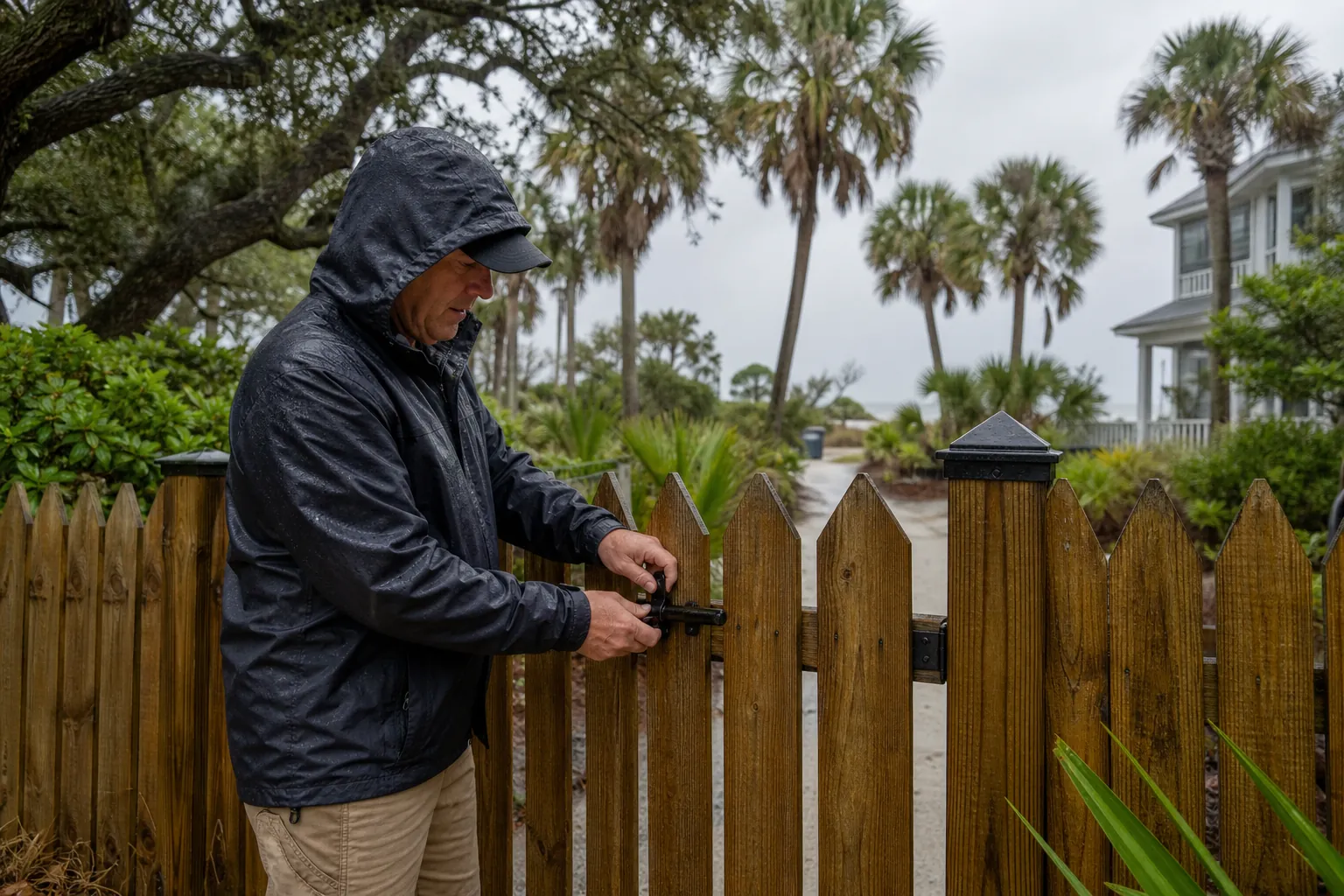
Prepare a fence gate for storm season by checking its latch, hinges, posts, and closing alignment, then removing loose debris around the opening. A latch cannot compensate for a leaning post or damaged frame. Keep the gate secure without blocking an exit, and plan how cleanup crews could reach debris afterward.
For homeowners researching fence gate latch storm preparation in St. Augustine, the practical goal is simple: reduce avoidable movement while preserving safe access. This guide focuses on that gate-level task and the debris staging decisions connected to it, rather than a whole-property storm readiness plan.
Daytona Grapple Trucks provides a debris-hauling perspective: a usable entrance and an organized staging area matter when arranging removal of branches, fence sections, and other approved material. The St. Augustine guidance here is regional advice, not a confirmation of service availability at a particular address.
This is an evergreen preparation checklist, not a current weather bulletin. Check current official forecasts and emergency instructions before deciding whether outdoor work is safe. Do not delay evacuation or other protective action to repair a gate or organize debris.
What Should You Check Before Securing A Gate Latch?
Start with the entire gate assembly, not just the latch. A latch works properly only when the gate leaf and receiving post remain aligned. Close the gate slowly, observe where the latch meets its receiver, and look for movement at the hinges and posts.
A latch that catches only when you lift or push the gate suggests an alignment problem. Tightening the latch alone may hide the symptom without correcting the cause. Avoid forcing hardware into place or adding fasteners to visibly rotten wood.
- Check that the latch fully engages when the gate closes normally, without lifting the frame.
- Look for missing screws, loose bolts, cracked boards, and corrosion that interferes with movement.
- Inspect the hinge side for sagging, split attachment points, or hardware pulling away from the post.
- Check whether the receiving post moves under light hand pressure, and stop testing if the assembly appears unstable.
- Confirm that the gate clears the ground throughout its swing and does not scrape against roots or accumulated sediment.
- Make sure someone inside the property can open any required exit without searching for a tool or key.
Keep children and pets away during inspection. A heavy gate can drop or swing unexpectedly when compromised hardware shifts. Structural damage, unstable posts, and unfamiliar gate mechanisms are reasons to consult a qualified fence professional rather than improvise.
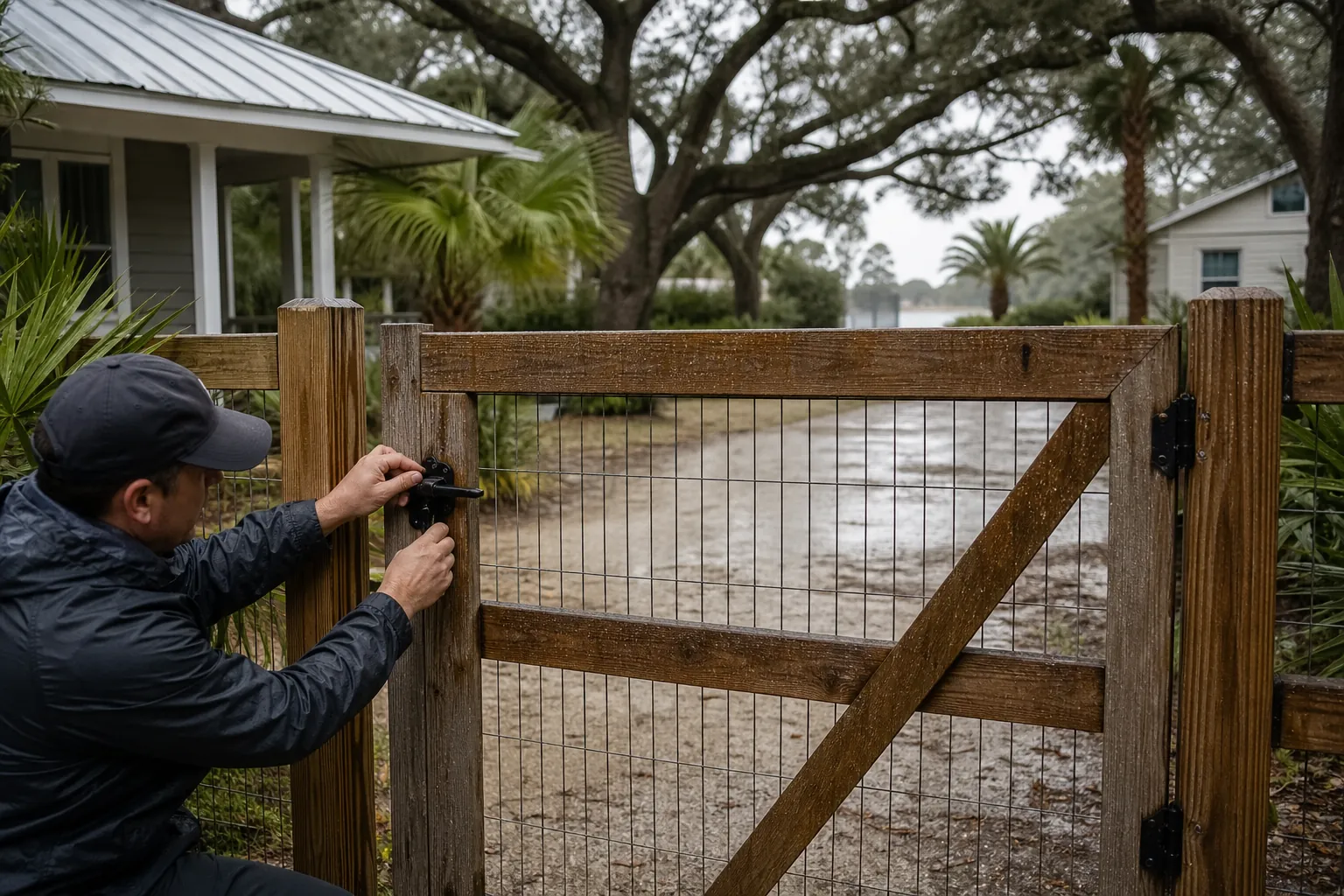
How Can You Secure The Latch Without Creating An Exit Hazard?
Use the gate's intended closing hardware and manufacturer-approved securing method. The aim is to keep the gate closed while retaining safe operation, not to make it impossible to open. Extra restraint should never replace a functioning latch or sound supporting structure.
If the hardware includes a compatible locking point, confirm how that lock affects access from both sides. A backyard gate may serve as an escape route or a necessary entrance for caregivers and responders. Discuss access with household members before changing the closure.
Do not lash a gate to a tree, attach it to a utility structure, or use a vehicle as an anchor. Those arrangements introduce separate hazards and can obstruct later cleanup. Avoid adding improvised coverings that increase the gate's surface area.
- Follow the latch manufacturer's instructions for any secondary pin, lock, or retaining component.
- Keep release mechanisms accessible to the people who need to use the entrance.
- Remove temporary decorations and hanging objects that interfere with the latch or gate swing.
- Leave automatic gate safety devices operational, and follow the manufacturer's instructions for manual release.
- Do not change pool barrier hardware without checking applicable safety requirements and professional guidance.
There is no universal latch attachment suitable for every wood, vinyl, metal, or chain-link gate. Match replacement hardware to the gate material, frame, and intended use. If you cannot identify a safe repair, secure the surrounding area and seek professional help.
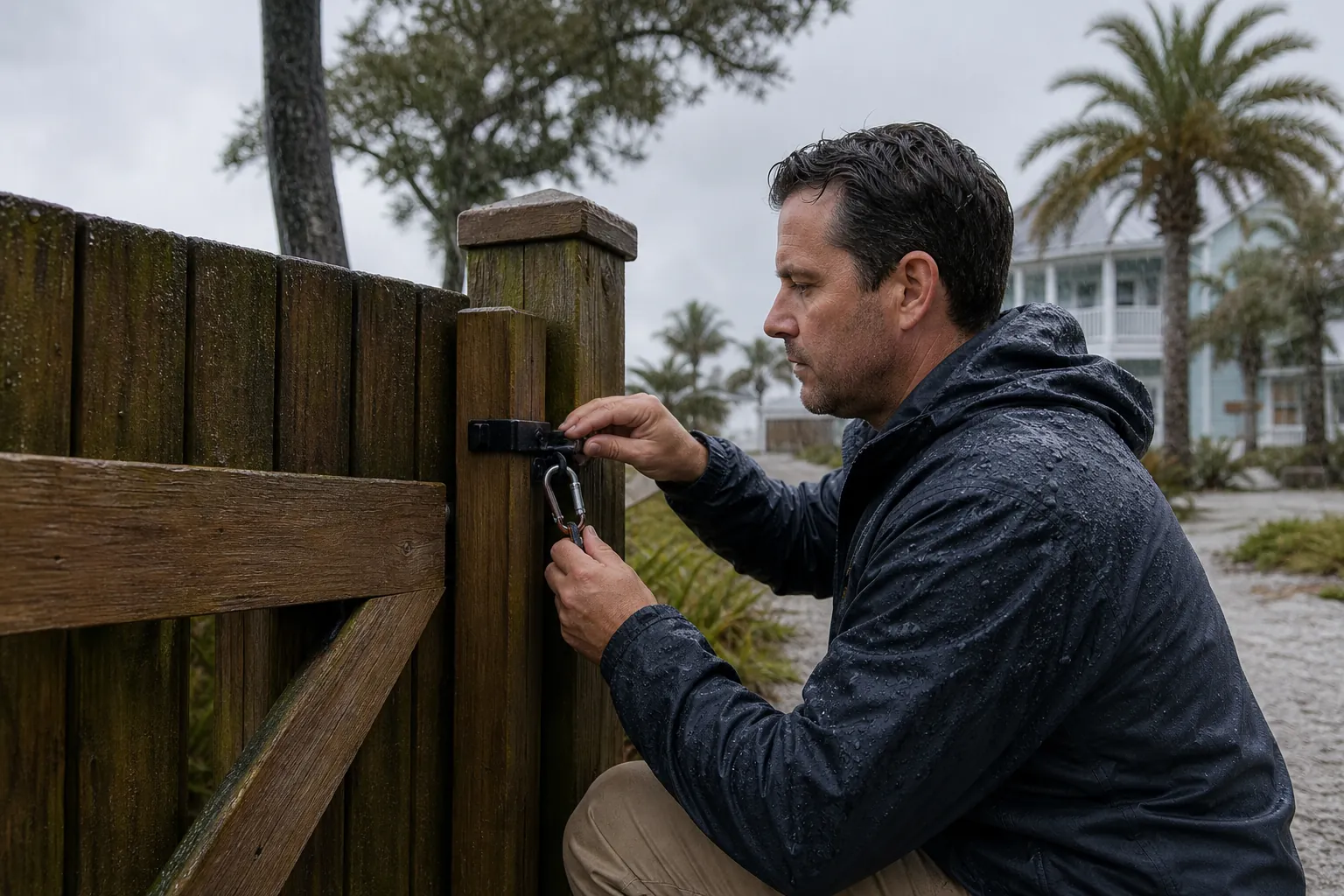
Which Gate Repairs Should Happen Before Yard Cleanup?
Address instability and access problems before moving bulky debris through the opening. Otherwise, repeated trips can worsen a sagging gate, damage the latch receiver, or place people beside an unstable fence section.
Begin with modest tasks you can safely perform using the correct tools, such as removing vegetation from the latch path or tightening an accessible fastener according to the hardware instructions. Stop if tightening causes wood to split or exposes a damaged attachment point.
Replacement posts, heavy gate realignment, electrical gate work, and repairs involving tensioned components deserve professional attention. A gate that looks closed is not necessarily supported correctly. Photographs can help a repair professional understand the problem before a visit.
For debris planning, distinguish an intact gate awaiting repair from a detached panel ready for disposal. Do not dismantle a standing fence merely to create hauling access without considering property boundaries, safety, and restoration needs. Removal can leave sharp fasteners, unsupported adjoining sections, and an unsecured yard.
If a repair and a pickup are both needed, coordinate their sequence. Ask whether debris can be moved to a safe alternative staging location before scheduling either task. This avoids making the truck's access dependent on a repair that has not been completed.
How Should You Prepare The Ground Around The Gate?
Clear the swing path, latch approach, and nearby drainage routes before the gate becomes difficult to use. Loose objects and wet organic material can obstruct the entrance even when its hardware remains intact.
Pick up small movable items first. Store tools, empty containers, toys, and loose decorative pieces in a suitable enclosed location. Keep materials away from drains and avoid creating a pile that narrows the gate opening.
Remove routine leaf buildup where it can be reached safely, but do not enter drainage structures or alter public drainage infrastructure. If standing water hides the ground, postpone inspection until you can see the surface and avoid electrical hazards.
- Keep the latch side free of stacked boards, planters, and other objects that prevent a person from standing safely.
- Move loose branches out of the gate's swing rather than pushing them against the fence.
- Keep debris away from visible drain openings and established runoff paths.
- Identify uneven ground, soft soil, and trip hazards before moving a loaded cart through the entrance.
- Store cut material where it will not obstruct sidewalks, neighboring entrances, or required exits.
A gate may bind when sediment collects beneath it or surrounding ground becomes soft. Do not automatically trim the gate bottom to solve a temporary obstruction. First determine whether the problem is debris buildup, a shifting post, or damaged hinges.
What Is A Practical Pre-Storm Gate Checklist?
Use a short, repeatable sequence while conditions are safe. Completing the inspection early gives you time to arrange repairs and debris removal without rushing through unfamiliar work.
- Photograph the entrance. Take clear pictures of the latch, hinges, posts, gate opening, and nearby staging area so you have a baseline for later comparison.
- Test normal operation. Open and close the gate gently, noting whether it drags, swings unexpectedly, or requires lifting to latch.
- Resolve obvious defects. Complete only repairs within your ability, and arrange professional assessment for unstable or damaged structural parts.
- Clear the immediate area. Remove loose objects, routine leaf buildup, and branches that obstruct the gate or nearby drainage.
- Confirm the closure plan. Use compatible hardware, preserve necessary exit access, and explain the arrangement to household members.
- Plan debris access. Record the clear opening, approach conditions, overhead obstructions, and a possible staging location for a hauling discussion.
- Set a stopping point. Finish outdoor work before conditions become unsafe, and follow current official protective instructions.
Keep repair notes with the photographs. A simple description such as 'latch misses receiver unless gate is lifted' is more useful than assuming the latch itself is defective. Note whether the problem changes after routine rainfall or ground saturation.
Does The Gate Need To Be Wide Enough For A Grapple Truck?
Not necessarily. The key question is whether approved debris can be staged in a location the hauling equipment can safely reach. A residential gate should not be assumed to accommodate a truck, even if a person or small cart fits through it.
Measure the narrowest clear opening with the gate fully open. Include projecting hardware, posts, nearby walls, and any other restriction. Also describe the approach, turning space, ground condition, and overhead wires or branches.
A width measurement alone cannot establish access suitability. Soft ground, private utilities, septic components, irrigation, and tight turns may rule out a route that appears wide enough. Do not direct heavy equipment onto an unconfirmed surface.
For a more detailed access discussion, read how gate width relates to grapple truck access. Then share photographs and measurements with the hauling provider instead of assuming a particular truck can enter.
Moving approved debris to an agreed pickup point may eliminate the need for vehicle access through the gate. Confirm the location before carrying material, especially if it would cross a sidewalk, shared driveway, or property boundary.
How Should Fence Debris Be Staged For Pickup?
Separate damaged fence material from vegetation and other waste, then ask the hauler which materials are accepted and where they should go. Organized piles make it easier to describe the job and identify hidden hazards.
Only move material that is stable and safe to handle. A detached panel can contain protruding nails, sharp wire, splinters, or heavy hardware. Wear suitable protective equipment, and leave large or unstable sections for appropriately equipped help.
- Keep wood fence pieces separate from branches when the provider requests separate material categories.
- Identify metal posts, wire, hinges, and other hardware instead of hiding them inside a vegetation pile.
- Tell the provider about painted or treated wood, concrete footings, and mixed materials before scheduling.
- Do not place batteries, fuel containers, chemicals, or unidentified hazardous waste in a fence debris pile.
- Keep piles away from utility equipment, overhead lines, drainage openings, and the working gate.
- Confirm that the proposed pickup location is appropriate before placing debris outside your property.
Do not assume every fence component belongs in the same load. Acceptance and disposal arrangements depend on the material and the job. For related planning, see fence and wood debris hauling considerations in Volusia.
For a damaged-fence cleanup example within Daytona Beach, review storm-damaged fence debris pickup planning. These resources explain preparation topics without establishing pickup coverage at a St. Augustine address.
What Should You Check After Unsafe Weather Has Passed?
Inspect from a safe distance first, and approach only when conditions and official instructions allow. Look for leaning posts, loose panels, downed lines, standing water, and branches resting on the fence before touching the latch.
Do not try to free a gate pinned by a large limb or tangled with utility lines. Keep people away and contact the appropriate utility or emergency service for electrical hazards. A latch inspection can wait.
If the area is safe, compare the gate with your earlier photographs. Check whether the receiver has shifted, hinges have loosened, or soil around a post has changed. Avoid repeatedly forcing a gate that no longer aligns.
Photograph damaged material before moving it when documentation is needed. Then separate repair decisions from disposal decisions: retaining a panel for assessment may be sensible even if other loose material is ready for removal.
Before booking hauling, use the grapple truck pickup preparation checklist to organize access details, material descriptions, and questions for the provider.
Frequently Asked Questions About Gate Latches And Storm Cleanup
Should I leave my fence gate open during storm preparation?
Use the gate's intended closed and latched position unless its manufacturer or a qualified professional advises otherwise. An unsecured open gate can move unpredictably. Preserve safe exit access and do not improvise an anchoring arrangement.
Will a padlock fix a gate that will not latch?
No. A padlock does not correct sagging hinges, a leaning post, or a damaged receiver. Identify the alignment or structural problem first, and use only compatible locking hardware after the gate operates properly.
Can I pile branches against the gate until pickup?
No. Keep branches away from the opening and latch. A pile can block access, conceal sharp material, and prevent inspection. Ask the hauling provider to approve a separate staging location before moving a large quantity.
Can a grapple truck reach debris behind a fence?
Possibly, but do not assume it can. Reach depends on equipment, placement, obstructions, and site conditions. Provide photographs and ask the provider to assess the pickup arrangement before scheduling.
Should I remove a damaged gate myself?
Only consider work you can perform safely with appropriate tools and knowledge. Heavy, unstable, electrically operated, or entangled gates require qualified help. Keep the area isolated if removal could destabilize adjacent fencing.
Does this guide confirm St. Augustine hauling service?
No. This is regional preparation guidance for St. Augustine and St. Johns County. Contact Daytona Grapple Trucks with your address, debris type, and access details to ask about availability rather than assuming coverage.
How Can You Make The Cleanup Call More Useful?
Have your location, photographs, approximate debris quantity, and gate measurements ready. Explain whether material remains behind the fence or has been moved to a proposed staging point. Mention unstable panels, sharp hardware, soft ground, and overhead obstructions.
For a calm discussion of debris hauling and pickup preparation, call Daytona Grapple Trucks at (386) 481-7913. Ask about service availability for your address and accepted materials before scheduling. Safe gate access and clearly described debris help turn a general cleanup request into a practical plan.
Related guide: Get Florida Outdoor Fixtures Ready For Storm Season.
Call (386) 481-7913 to talk through next steps.