
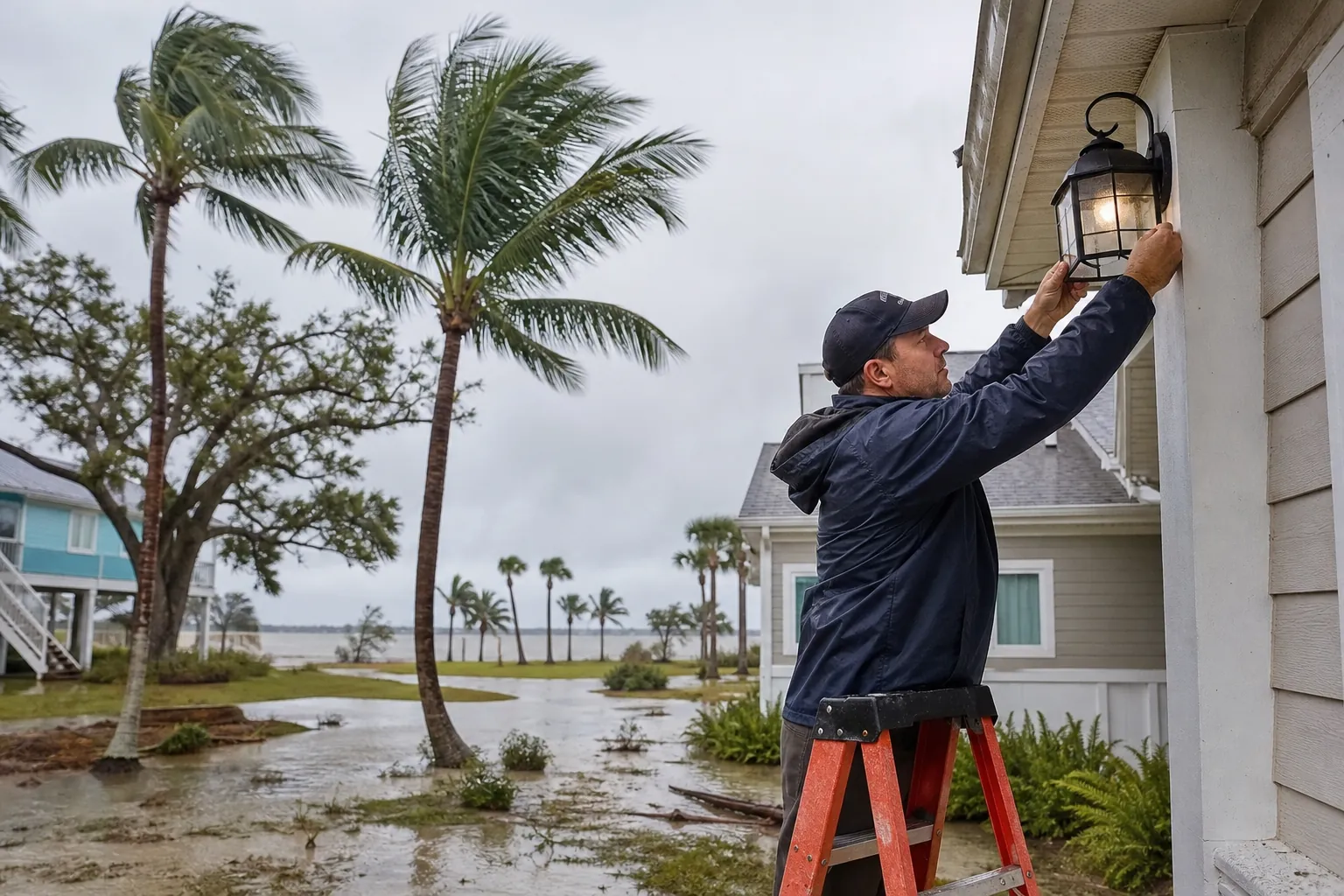
Florida outdoor fixture storm readiness starts with securing loose items, checking permanent fixtures, keeping drainage routes clear, and deciding where removable yard debris can safely go. Complete those tasks before hazardous weather arrives, not while wind, lightning, or rising water makes outdoor work unsafe.
This guide connects practical property preparation with storm debris hauling and grapple truck cleanup. It covers furniture, planters, lighting, fences, landscape features, access routes, and debris piles. Daytona Grapple Trucks can discuss debris hauling needs, but fixture repairs, electrical work, and unsafe tree conditions require the appropriate specialist.
This is an evergreen preparation guide, not a current weather advisory. Follow current official forecasts and emergency instructions when deciding whether outdoor work is safe. Regional examples along Florida's northeast and central Atlantic corridor are planning guidance, not a statement of service availability or current storm conditions.
What Should You Secure First Around A Florida Property?
Start with objects that are loose, lightweight, elevated, or already damaged. A portable chair is usually simpler to move than a failing fence panel, but both deserve attention. Prioritize work by hazard and difficulty rather than by how visible an item is from the street.
Walk the property while conditions are safe. Look at patios, side yards, pool areas, parking edges, service courts, and storage spaces. Check behind sheds and landscaping, where forgotten containers and discarded materials often accumulate.
- Move portable furniture, umbrellas, toys, and decorative items into suitable enclosed storage before hazardous weather begins.
- Empty and store lightweight plant containers when practical, and move heavy planters only with safe lifting methods.
- Inspect gates, fence panels, screens, and attached fixtures for visible looseness, damage, or missing hardware.
- Remove unused loose materials from the yard rather than relying on a last-minute debris pile.
- Keep doors, evacuation routes, utility equipment, and drainage features accessible throughout preparation.
Use this initial walk-through to create three lists: items you can store, fixtures needing professional attention, and debris needing removal. That separation prevents a hauling appointment from becoming an improvised repair project.
For a broader seasonal checklist, see our hurricane-season yard readiness guide for northeast and central Florida. This pillar focuses on outdoor fixtures and the cleanup decisions surrounding them.
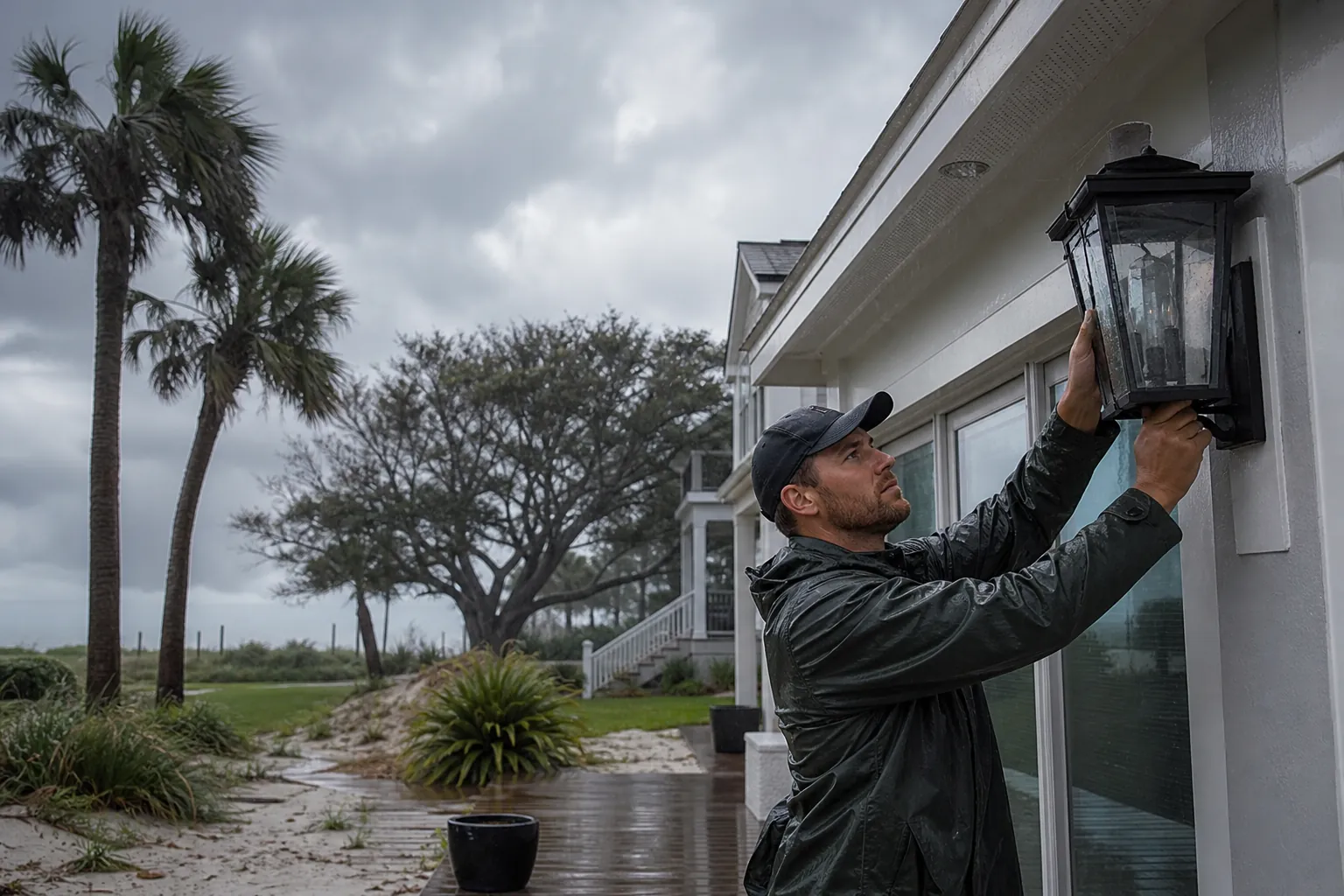
How Do You Check Fixed Fixtures Without Creating More Risk?
Check fixed fixtures from a safe position and use their installation instructions as the starting point. A visual inspection can identify obvious problems, but it does not prove that an attachment, foundation, or electrical connection is sound.
Look for cracked mounting surfaces, corrosion, leaning posts, loose brackets, exposed wiring, and fixtures that shift during normal use. Do not climb onto an unstable structure or pull on damaged components to test their strength.
Outdoor lights, powered gates, fountains, and landscape electrical equipment need particular care. If wiring is damaged or equipment has been exposed to water, avoid touching or operating it until a qualified professional determines the appropriate next step.
- Arrange repair of loose wall-mounted fixtures through a professional familiar with the fixture and its mounting surface.
- Follow manufacturer instructions for awnings, umbrellas, shade systems, and other retractable equipment.
- Have damaged fences and gates evaluated before depending on them to contain loose outdoor items.
- Keep fuel containers and chemicals in storage appropriate to the product label, not inside a mixed debris pile.
- Do not attach temporary restraints to utility equipment, trees with visible defects, or unstable structures.
Permanent anchoring is not interchangeable with a rope wrapped around a fixture. The suitable method depends on the object, its mounting location, and the supporting structure. When those details are uncertain, seek professional guidance rather than improvising.
Photograph existing damage from a safe location. Clear photos help explain the repair need and distinguish a fixture problem from a debris removal task.
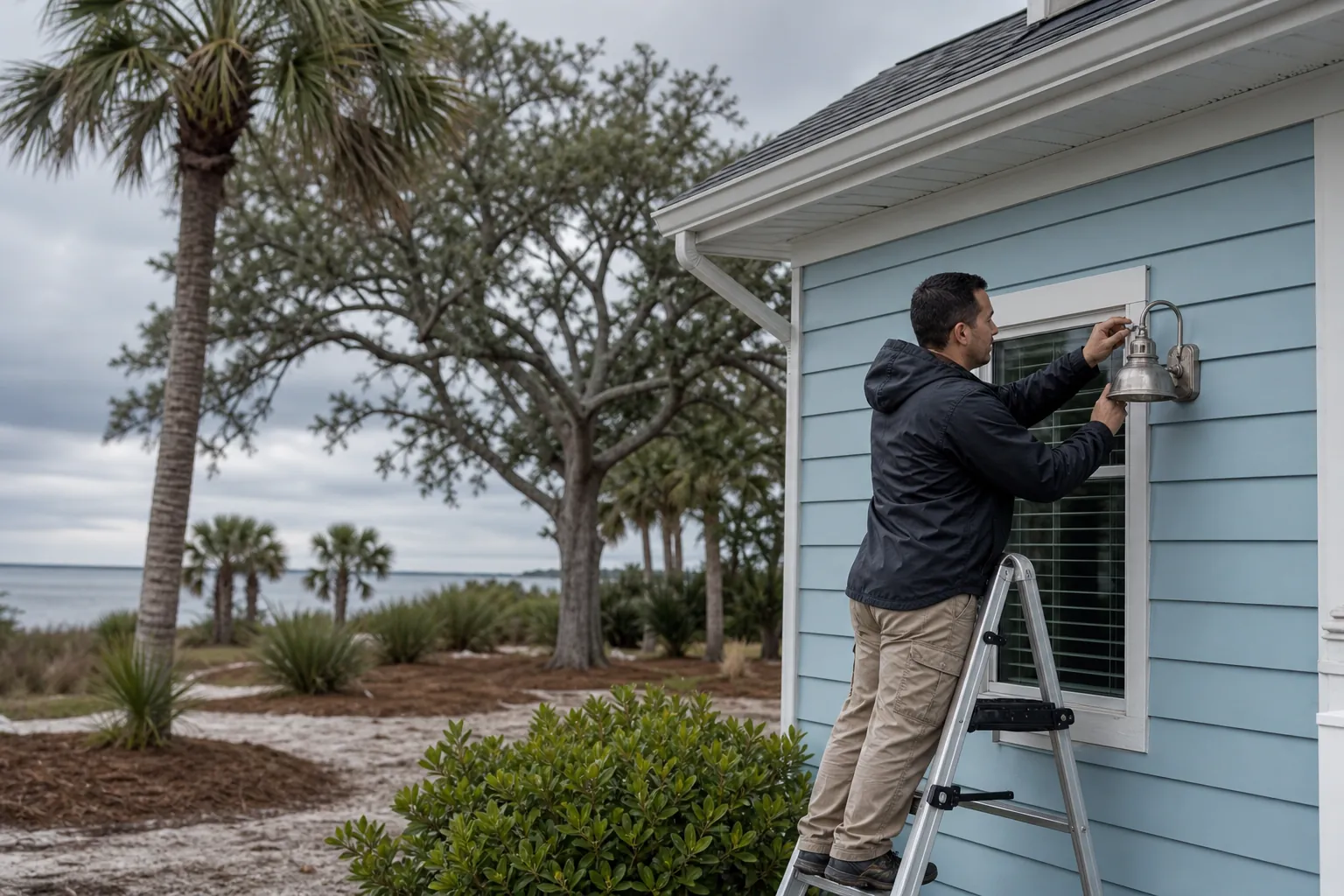
How Can You Prepare Yards For Heavy Rain And Wind?
Prepare for heavy rain and wind by reducing loose material and keeping existing drainage pathways unobstructed. Do not treat debris hauling as a substitute for drainage repairs or assume that clearing a yard eliminates flooding risk.
Check accessible gutters, downspout outlets, surface drains, and low areas where leaves collect. Remove ordinary loose debris only where you can work safely. Leave underground drainage changes, damaged systems, and uncertain outfalls to an appropriate professional.
Look beyond the drain opening itself. A pile beside a swale, a stack of boards across a runoff route, or bags pressed against an inlet can obstruct water movement. Move storage and staging areas away from those features.
- Collect loose branches and yard waste before they spread across walkways or drainage openings.
- Keep downspout discharge areas clear without redirecting water onto neighboring property.
- Avoid placing debris in ditches, swales, retention areas, or on top of drain covers.
- Store outdoor supplies where they will not block access to pumps, shutoffs, or electrical equipment.
- Stop outdoor preparation when lightning, unsafe wind, flooding, or official instructions make continued work inappropriate.
Tree preparation also requires judgment. Ground-level collection of small fallen branches is different from cutting overhead limbs, climbing, or working near wires. Use a qualified tree professional for hazardous tree work, and plan how the resulting material will be removed.
For water-related cleanup concerns, read our flooding and yard debris safety guide. It addresses why standing water changes the way property owners should approach cleanup.
What Is A Practical Order For Storm Readiness Tasks?
Use a sequence that handles repairs and removal before the final storage check. The goal is to avoid leaving difficult work until conditions deteriorate or debris accumulates beside the very fixtures you are trying to protect.
- Inspect the property in safe weather and record loose objects, damaged fixtures, drainage obstructions, and access limitations.
- Assign specialist work early, including hazardous tree evaluation, electrical concerns, and structural fixture repairs.
- Separate removable debris by material and ask the intended hauler which materials can be accepted.
- Confirm a safe staging location and arrange removal with enough flexibility to account for access and weather restrictions.
- Move portable outdoor items into suitable storage and secure remaining fixtures according to appropriate instructions.
- Complete a final ground-level check of exits, drains, gates, and essential equipment before outdoor work becomes unsafe.
Keep the plan simple enough that another household member or property employee can follow it. Identify who can authorize hauling, who controls gate access, and where photos or material notes are stored.
For commercial properties, include tenants and maintenance staff in the process. A shared plan helps prevent someone from putting furniture outside after it has been stored or adding unsuitable waste to a prepared pile.
Repeat the checklist after landscaping projects or outdoor renovations. New planters, replaced fencing, and temporary construction storage can change the property's preparation needs.
Where Should You Stage Debris For Grapple Truck Pickup?
Stage debris only in a location that the hauler confirms is suitable and that does not interfere with utilities, traffic, drainage, or pedestrian access. A pile that looks convenient from the ground may still be difficult or unsafe for grapple equipment to reach.
Discuss both the truck's approach and the equipment's working area. Narrow entrances, tight turns, overhead branches, wires, soft ground, parked vehicles, and nearby fixtures all affect the plan. Do not assume equipment can safely operate from every driveway or roadside position.
- Keep debris away from overhead lines and utility equipment, and disclose nearby service connections before pickup.
- Keep mailboxes, signs, fences, irrigation components, and landscaping features clear of the loading area.
- Do not block sidewalks, travel lanes, neighboring driveways, or emergency access while waiting for removal.
- Ask whether the pile needs to be relocated or divided before adding more material.
- Tell the hauler about soft surfaces, concealed drainage structures, and any access restrictions.
There is no universal staging distance or gate width that fits every truck, property, and material. Confirm the requirements for the actual job rather than copying dimensions from another site.
Our grapple truck access and gate width guide explains access planning. The separate debris pile utility line safety guide focuses on hazards around utility infrastructure.
For Daytona Beach commercial sites, see commercial storm debris staging guidance. Confirm applicable collection and placement requirements with the responsible authority or contracted provider before using a public-facing staging area.
Which Materials Should Stay Out Of A Mixed Yard Debris Pile?
Keep vegetation separate from construction debris, household contents, chemicals, and uncertain materials until the receiving provider confirms what can be handled. Mixing waste can complicate disposal and hide hazards from the person loading it.
Outdoor fixture preparation can generate several different waste streams. Trimmed branches are not the same as a broken concrete planter, damaged light fixture, fence hardware, or water-damaged building material.
- Keep branches and other accepted vegetation together, without hiding metal or household waste beneath them.
- Set concrete, brick, and masonry aside for a separate discussion about handling and disposal.
- Keep damaged electrical fixtures, batteries, chemicals, and fuel containers out of ordinary yard debris.
- Disclose sharp objects, broken glass, nails, and unusual materials before anyone starts loading.
- Do not place unidentified containers or potentially contaminated material into a pile for routine pickup.
If outdoor damage also affects a building, avoid treating every removed material as interchangeable storm debris. Our guides to concrete and masonry debris and drywall debris hauling address separate material considerations.
Describe the pile honestly when requesting hauling. Photos should show the full pile, its surroundings, and any distinct material groups. If the contents change after the initial discussion, update the provider before pickup.
How Should Cleanup Change After Flooding Or Property Damage?
After flooding or damage, safety assessment comes before sorting or hauling. Stay away from standing water with unknown hazards, downed lines, unstable fixtures, and structures that may have been compromised.
Do not assume an outdoor light, gate motor, or outlet is safe because the water has receded. Electrical and structural concerns need evaluation by the appropriate professional. Follow official access restrictions and emergency guidance.
When the area is safe to enter, document conditions before moving debris if doing so is appropriate for your insurance or property records. Photograph fixture damage, access limitations, and the types of material needing removal.
Work in manageable stages. First preserve safe paths and identify hazards. Then separate materials and confirm a loading location. Finally, coordinate removal without crowding repair workers or blocking necessary equipment access.
Wet ground can change a pickup plan even when the debris itself is ready. Let the hauler know about saturation, erosion, damaged pavement, or newly exposed drainage features. Do not direct a truck onto uncertain ground simply to shorten the reach.
How Does This Planning Apply Along Florida's Atlantic Corridor?
The same inspection and staging principles apply from Jacksonville and Duval County through St. Augustine and St. Johns County, Palm Coast and Flagler County, Daytona Beach and New Smyrna Beach in Volusia County, and Titusville, Cocoa, and Melbourne in Brevard County.
These locations are regional planning examples, not a claim that every address is served. Property layout, collection arrangements, weather instructions, and access conditions must be checked locally.
A condominium courtyard may require coordinated storage and pedestrian access. A retail property may need a loading area kept open. A residential yard may have a narrow gate and limited room to separate debris. Adapt the checklist to the site rather than assuming one pile location works everywhere.
Commercial managers can also use our commercial property debris hauling guide to organize material descriptions and access information before contacting a provider.
Frequently Asked Questions About Outdoor Fixture Storm Readiness
Should I leave patio furniture outside if it is heavy?
Weight alone does not establish that furniture is secure. Store it when practical or follow suitable manufacturer guidance, without blocking exits or placing restraints on unstable supports.
Can a grapple truck remove every damaged outdoor fixture?
No. Acceptance depends on the material, condition, loading access, and disposal arrangement. Attached fixtures may need safe disconnection or dismantling by an appropriate professional before hauling can be considered.
Can I put branches beneath overhead utility lines?
Do not choose that location without discussing utility hazards and equipment access with the hauler. If lines are down or damaged, stay away and contact the utility or emergency services as appropriate.
Should I move debris while floodwater is present?
Avoid entering standing water with unknown electrical, contamination, or physical hazards. Wait for safe access and obtain professional guidance when damaged equipment or structures are involved.
Does this guide confirm current warnings or service coverage?
No. It provides evergreen regional preparation advice. Check current official weather information separately, and confirm service availability for your exact address directly with the provider.
What should I have ready when requesting debris hauling?
Provide the property location, clear photos, material descriptions, approximate pile dimensions, and access concerns. Include nearby wires, gates, soft ground, and fixtures that need protection.
How Can You Plan The Next Debris Removal Step?
Begin with a safe inspection, separate repair needs from hauling needs, and confirm staging before building a pile. Removing loose material and protecting access are useful steps, but they do not replace evacuation instructions or professional hazard assessment.
To discuss debris hauling with Daytona Grapple Trucks, call (386) 481-7913. Share your location, materials, and access conditions so service availability and a practical removal plan can be discussed without assuming every fixture or debris type is suitable for pickup.
Call (386) 481-7913 to talk through next steps.