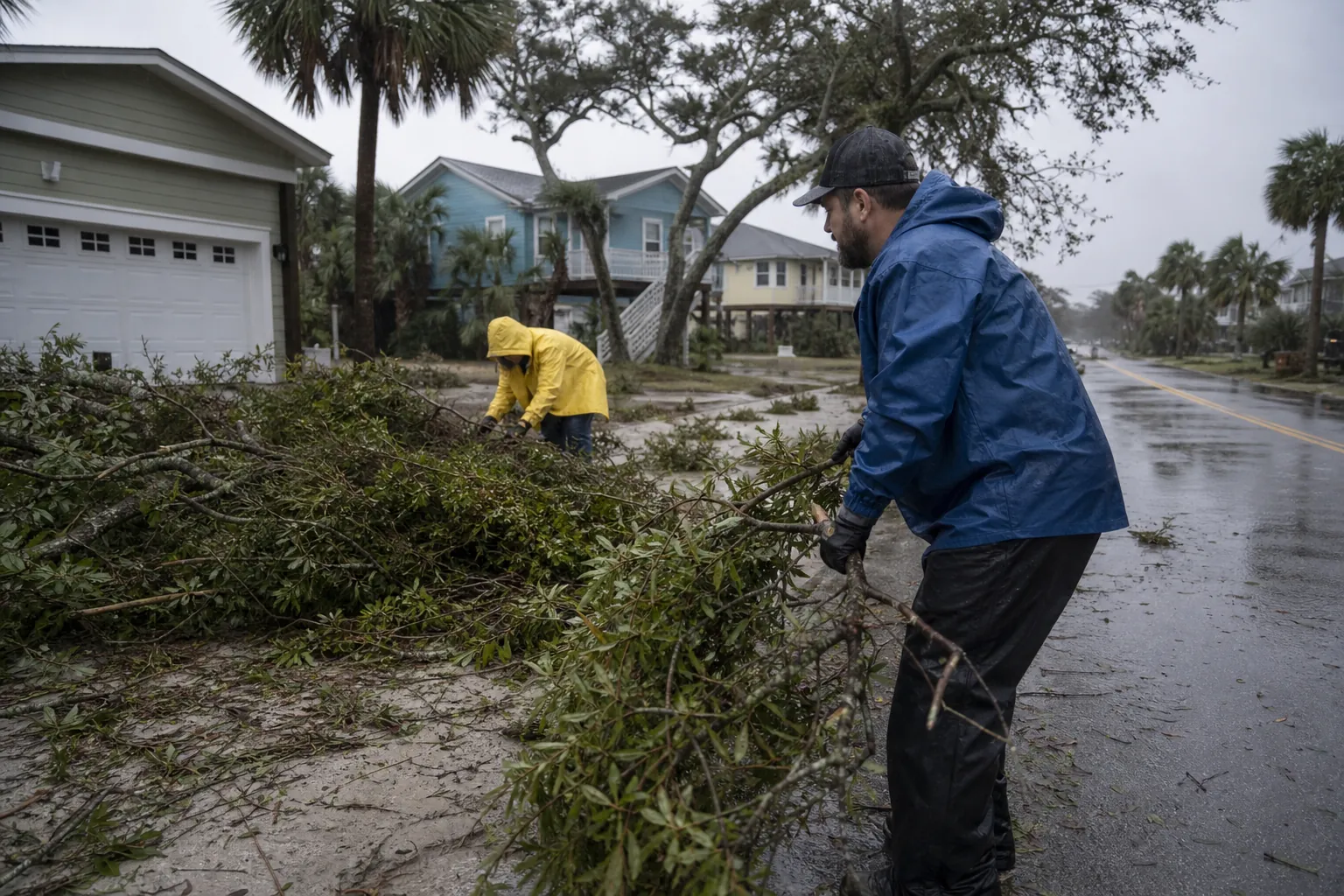
The safest way to handle yard debris around flooding is to clear accessible drainage paths before rain arrives, stay out of standing water, and delay hauling until the ground and truck access are safe. Branches, leaves, loose outdoor items, and mixed cleanup piles can obstruct runoff or hide hazards once water rises.
For Florida property owners, cleanup starts with deciding what can be moved safely and what should remain untouched until conditions improve. A grapple truck can help remove accumulated debris, but it cannot make flooded ground, an unstable tree, or a downed utility line safe.
This guide focuses on debris decisions before and after heavy rain, rather than current storm forecasts. For broader seasonal preparation, see our hurricane-season yard readiness guide for Northeast and Central Florida. Follow current official weather updates and local emergency instructions separately from your hauling plan.
Why Does Yard Debris Make Flooding Cleanup More Difficult?
Loose vegetation can collect at low spots, driveway drainage openings, and other places where water needs to pass. A pile that seems harmless on dry ground may shift, spread, or become waterlogged during heavy rain.
Debris also makes it harder to judge the ground beneath it. Leaves can conceal a broken irrigation fitting, a washout, sharp metal, or a displaced cover. Saturated branches and tangled vines are awkward to lift and may shift unexpectedly when pulled.
The practical goal is not to remove every leaf immediately. It is to keep avoidable material away from drainage routes and avoid turning a manageable pile into a safety problem.
- Keep loose leaves and cut vegetation out of visible drainage openings that you can reach safely from dry ground.
- Move lightweight outdoor items into secure storage before conditions deteriorate.
- Keep debris away from doors, walkways, gates, and emergency access routes.
- Leave public drainage structures and unfamiliar underground systems to the responsible authority.
Never enter moving water or reach into a flooded drain to retrieve debris. A blocked opening is not worth exposure to hidden depth, sharp objects, or an unexpected current.
What Should You Move Before Heavy Rain Arrives?
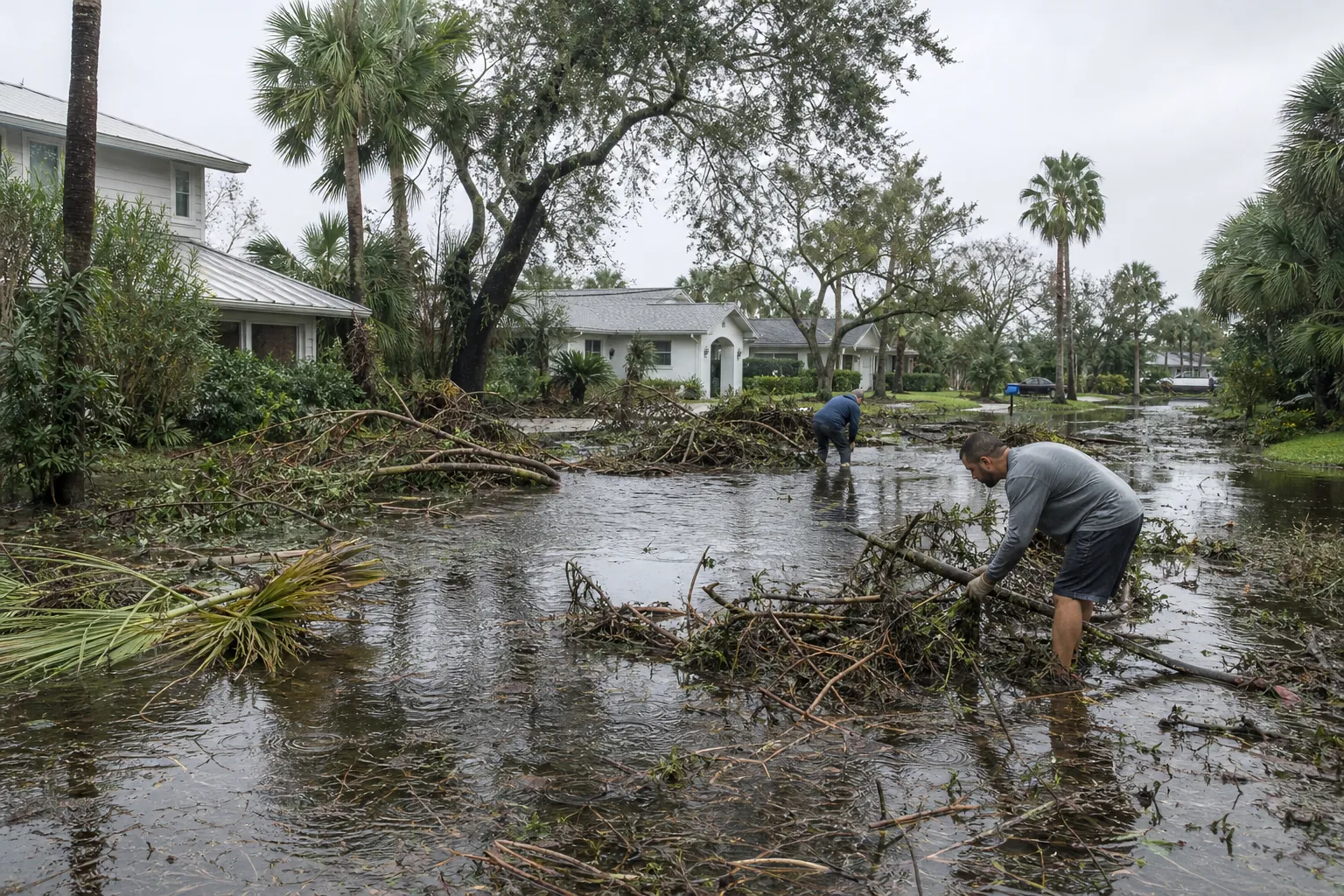
Start with material that is already loose and accessible. Bagged leaves, small cut branches, empty planters, unsecured furniture, and leftover landscaping materials are easier to manage before they become soaked or scattered.
Do not start a major pruning project simply to create a last-minute cleanup pile. Cutting large limbs adds fall hazards and may leave you with material that cannot be collected before conditions worsen. Tree work near buildings or utilities needs appropriate professional assessment.
Walk the property while conditions are dry. Look for places where vegetation is already accumulating, and identify a temporary staging area that does not block water movement.
- Secure tools, buckets, garden decorations, and other movable objects in an enclosed storage area when possible.
- Move existing piles away from drainage swales, low channels, and driveway crossings without changing the grade of the land.
- Keep cut branches on your property rather than pushing them into a street or neighboring lot.
- Check that occupants can reach exits without stepping over cleanup material.
- Contact your hauling provider before building a large pile so placement and accepted materials can be discussed.
If pickup cannot be arranged before rain, ask about a safe interim location. Do not assume a roadside pile will remain contained or that municipal collection rules match a private hauling arrangement.
How Can You Check Drainage Without Entering Floodwater?
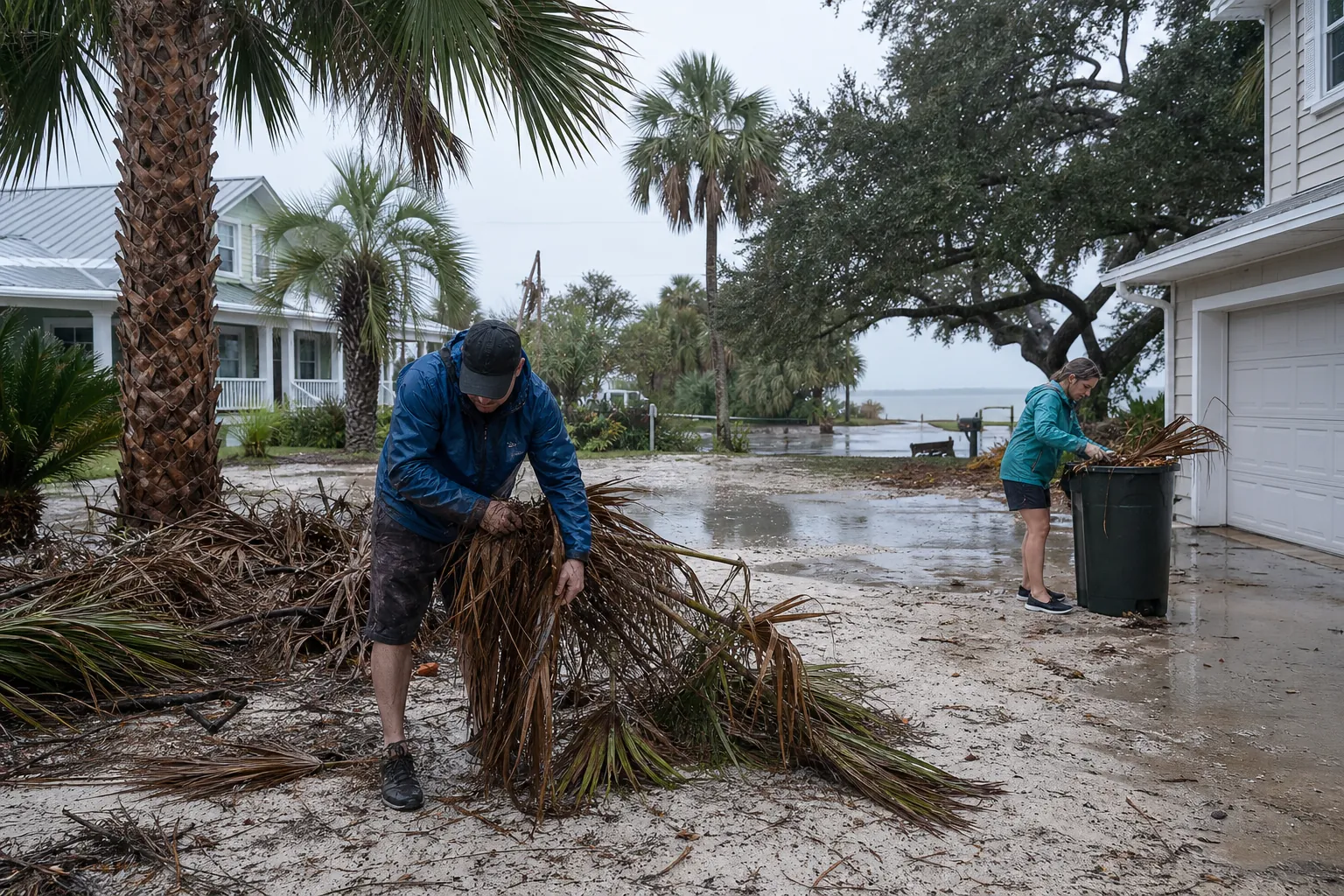
Observe drainage from a safe, dry location. Before rain, identify visible surface routes where water ordinarily travels. After rain, look for backed-up areas without stepping into them.
Removing dry leaves from an accessible surface opening is different from repairing a drainage system. Avoid opening heavy covers, entering culverts, digging around buried pipes, or modifying a swale without knowing who owns it and what requirements apply.
Where standing water obscures a drain, wait or contact the responsible property manager, public works office, or drainage professional. Do not probe blindly with a rake or shovel.
- Photograph visible blockages from stable ground so you can explain the problem without approaching it again.
- Keep children and pets away from pooled water and debris-covered low spots.
- Do not pump water toward a neighboring property or public route without checking the appropriate requirements.
- Ask a drainage professional about recurring pooling that continues after accessible loose debris is removed.
Debris hauling removes material. It does not diagnose failed drainage, correct grading, or establish whether a flooded area is safe to cross. Treat those as separate decisions.
When Is It Safe To Start Post-Rain Yard Cleanup?
Begin only when weather conditions, footing, and access allow the work to proceed safely. Receding water does not automatically mean a yard can support people, equipment, or a loaded truck.
Check the area from firm ground first. Watch for leaning trees, hanging limbs, displaced structures, exposed wires, and washed-out surfaces. If electrical equipment or lines are involved, stay away and contact the utility or emergency services as appropriate.
Use this sequence before organizing a cleanup crew or pickup:
- Confirm that you are allowed to enter the property and that no evacuation or access restriction prevents cleanup.
- Inspect the work area from a stable location, without entering standing water or approaching damaged utilities.
- Identify unstable trees, overhead limbs, damaged fences, and other hazards that require separate professional attention.
- Check whether the driveway and proposed staging area are firm, visible, and free of obvious washouts.
- Separate accessible debris by material type without disturbing suspicious containers or electrical equipment.
- Send photographs and access details to the hauling provider before confirming the loading location.
- Keep people and pets outside the loading area when equipment arrives.
Stop if a branch is under tension, a pile shifts, or the footing becomes uncertain. Cleanup progress is not a reason to keep working through changing conditions.
How Should You Sort Flood-Affected Yard Debris?
Separate vegetation from construction materials, household items, and potentially hazardous waste. Flooding can bring unrelated materials together, so a pile that looks mostly like branches may contain items that need different handling.
Tell the hauling provider what you can see and what you cannot identify. Do not describe a mixed pile as clean yard waste just because leaves cover the top.
- Place ordinary branches and landscaping vegetation in a separate pile when it is safe to handle them.
- Keep lumber, fencing, roofing, and other building materials separate from vegetation.
- Keep concrete, brick, and masonry out of a general yard debris pile unless the provider has specifically approved the arrangement.
- Set aside identifiable household items rather than burying them under limbs.
- Leave chemicals, fuel containers, batteries, unknown liquids, and suspicious sealed containers undisturbed until proper guidance is available.
Different materials affect loading and disposal decisions. Our guides to concrete and masonry debris and drywall debris hauling explain why those materials should not be treated like ordinary vegetation.
If water may have contacted sewage or chemicals, avoid direct handling and seek appropriate cleanup guidance. Gloves and boots do not make contaminated floodwater safe.
Where Should You Place A Pile For Grapple Truck Pickup?
Choose a location only after discussing reach, access, overhead clearance, and ground conditions with the hauling provider. The closest spot to the road is not necessarily the safest loading spot.
A grapple truck needs an appropriate place to position and operate. Soft shoulders, narrow entrances, low branches, overhead wires, and hidden drainage structures can make an otherwise convenient pile difficult or unsafe to collect.
Keep material away from utility equipment, parked vehicles, mailboxes, buildings, and fences. Do not pile debris beneath power lines or around poles. Read our debris pile and utility line safety guide before choosing a location near overhead infrastructure.
- Keep the intended truck route clear of parked vehicles and loose items.
- Tell the provider about septic systems, buried irrigation, private drainage pipes, and other known features near the proposed work area.
- Do not place debris on a drain cover, utility box, or area where water normally flows.
- Leave enough separation between material piles for the operator to identify their contents.
- Ask whether saturated vegetation or tangled branches need a different staging arrangement.
Do not repeatedly drag heavy branches through a wet lawn to improve the pile's appearance. A photo and a placement conversation may prevent unnecessary work and additional ground damage.
What Should You Tell A Hauling Provider Before Scheduling?
Describe the debris, the property, and the access conditions as clearly as possible. Useful information helps the provider assess whether grapple truck loading is appropriate and what questions remain before pickup.
Photographs should show the entire pile, its surroundings, the entrance, and overhead conditions. Take them from safe locations. Include a wider view rather than only close-ups of individual branches.
- State the property address and ask whether service is available there.
- Explain whether the pile contains only landscaping vegetation or includes mixed materials.
- Describe any remaining standing water, soft ground, or damaged driveway surfaces.
- Identify visible overhead wires, low limbs, gates, and tight turns.
- Explain whether access requires coordination with a tenant, manager, association, or neighboring property owner.
- Ask what preparation is needed and which materials are not accepted.
For routine landscape cleanup, our grapple truck landscaping debris guide provides additional planning context. Do not assume every material or every loading location is suitable simply because a grapple can lift bulky items.
How Do Shared Properties Need A Different Cleanup Plan?
Commercial sites, rental properties, and shared grounds need a clear separation between pedestrian access, debris staging, and equipment movement. Cleanup should not create a new obstacle for residents, customers, deliveries, or emergency responders.
Assign one person to communicate with the hauling provider. That person should know which areas are accessible, where occupants need to travel, and who can authorize the proposed staging location.
- Keep accessible routes and building exits clear throughout staging and pickup.
- Notify occupants about the work area without promising a loading time that has not been confirmed.
- Use appropriate barriers to keep visitors away from debris and equipment operations.
- Document debris before removal when it is safe and useful for property records.
- Confirm who is responsible for reopening gates and checking the site after pickup.
Our commercial property debris hauling guide covers broader site coordination. Flood-related cleanup still requires separate attention to wet ground, contamination concerns, and damaged utilities.
Does This Advice Apply Across Florida's Atlantic Corridor?
These safety principles apply regionally to properties around Jacksonville and Duval County, St. Augustine and St. Johns County, Palm Coast and Flagler County, Daytona Beach and New Smyrna Beach in Volusia County, and Titusville, Cocoa, and Melbourne in Brevard County.
That regional guidance does not establish Daytona Grapple Trucks service availability in every named community. Confirm your address, material types, and access needs directly before scheduling.
Collection procedures can differ by jurisdiction, neighborhood, property ownership, and material. Check applicable local instructions instead of assuming that guidance from another city applies to your pile. Private hauling and public collection may also require different staging arrangements.
Frequently Asked Questions About Flooding And Yard Debris
Can I move branches while my yard is still flooded?
No. Wait until you can assess the ground and hazards without entering standing water. Hidden sharp objects, contamination, and electrical hazards can make a familiar yard unsafe.
Will removing debris solve my drainage problem?
It may remove an obstruction, but it does not guarantee proper drainage. Recurring pooling can involve grading, damaged pipes, or other conditions that need separate professional evaluation.
Can a grapple truck drive onto a wet lawn?
Do not assume it can. Tell the provider about saturated ground and discuss the loading position. Safe access must be assessed before equipment enters an uncertain surface.
Should I mix damaged fencing with tree limbs?
Keep them separate unless the hauling provider approves another arrangement. Fencing may contain nails, metal, or treated materials that change handling and disposal requirements.
Can I put a debris pile beside a power pole?
Choose another location and discuss clearance with the provider. Keep debris away from poles, wires, and utility equipment, and never approach a downed or sagging line.
What if I cannot safely move the debris myself?
Leave it in place and explain the situation when you call. Send photographs only from a safe location, and identify any hazards that need a utility, tree professional, or other specialist first.
Plan A Safer Pickup Before Moving More Material
Keep drainage routes clear where you can do so safely, separate debris by type, and avoid staging material on wet or uncertain ground. A short planning conversation is often more useful than building a large pile in the wrong place.
Call Daytona Grapple Trucks at (386) 481-7913 to discuss your address, debris materials, and pickup access. Confirm service availability and loading requirements before moving additional material. If floodwater, damaged utilities, or unstable trees remain, address those hazards before hauling begins.
Call (386) 481-7913 to talk through next steps.