
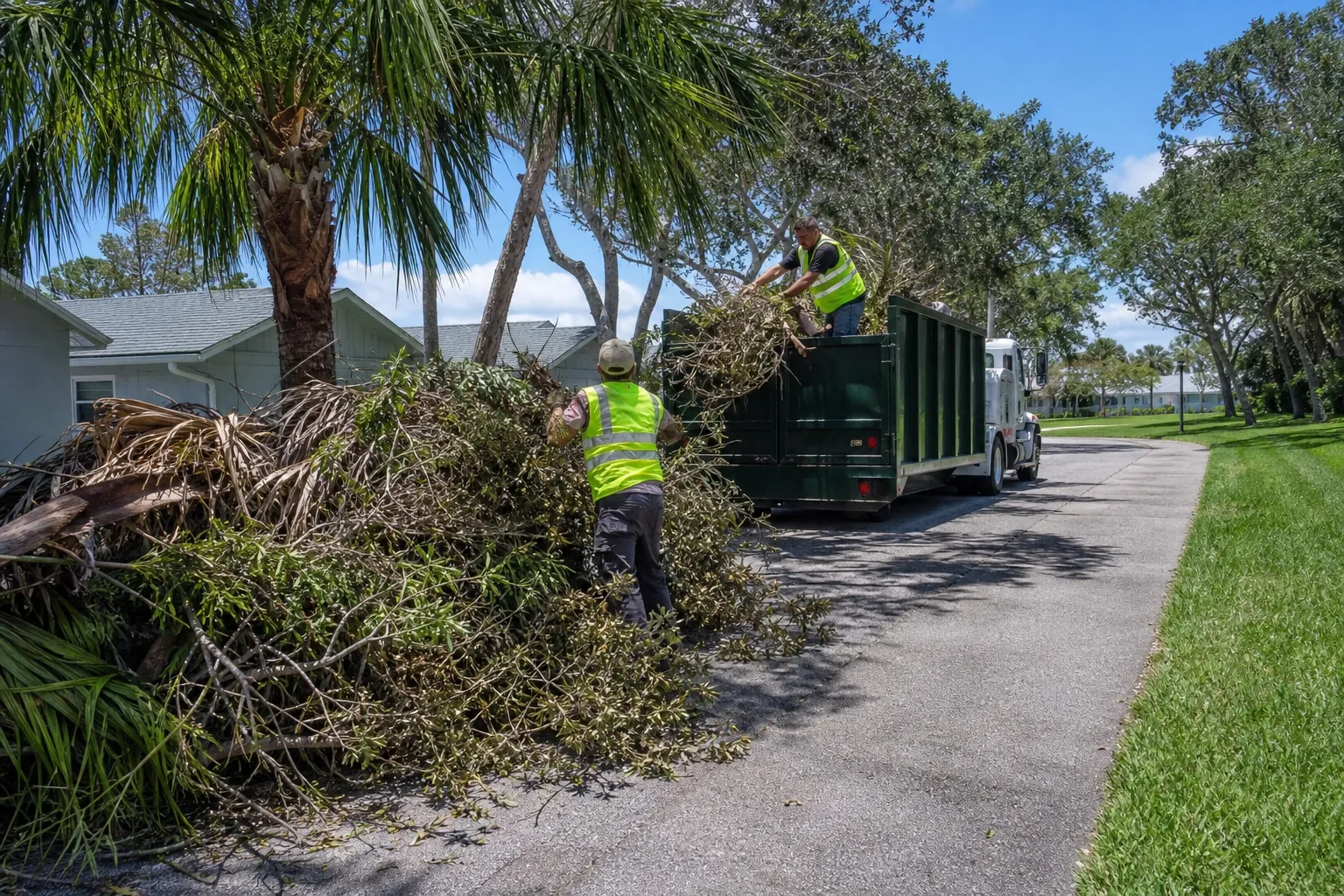
For hoa common area debris pickup daytona, start with a clear scope, board contact, and site photos. For a Holly Hill HOA, confirm who controls each pile and pickup point. Then ask the hauler to review materials, access, loading limits, and disposal needs before work is booked.
How do you plan HOA common area debris pickup?
Plan HOA common area debris pickup around shared property, clear authority, and known materials. Start with a walk-through and one lead contact. Use the Florida storm debris cleanup guide for storm context and the photos for a hauling estimate guide to build a useful request before seeking a pickup date.
A shared lawn can hold debris from several sources. Some may come from HOA trees, while other piles came from private lots. Mark those differences before asking anyone to load them.
For a Holly Hill property, use a simple site map. Label each pile with a letter and note nearby paths. Include gates, parking rows, and the street used to reach the site.
Choose one person to collect questions and approve scope changes. That person might be a manager or board member. Their role should be clear to the board, residents, and prospective hauler.
Keep the first request focused on facts rather than a promised finish date. Describe what needs removal and where it sits. Ask which details still need a site review before scheduling.
The U.S. EPA's Planning for Natural Disaster Debris supports planning before removal begins. Its general guidance does not establish local pickup service. Treat public collection and private hauling as separate matters to confirm.
- Mark each common area pile on a simple site map.
- Name one HOA contact who can resolve scope questions.
- Gather current photos that show materials and nearby access.
- Ask the hauler to confirm scope before setting the work date.
Which piles belong in the HOA pickup scope?
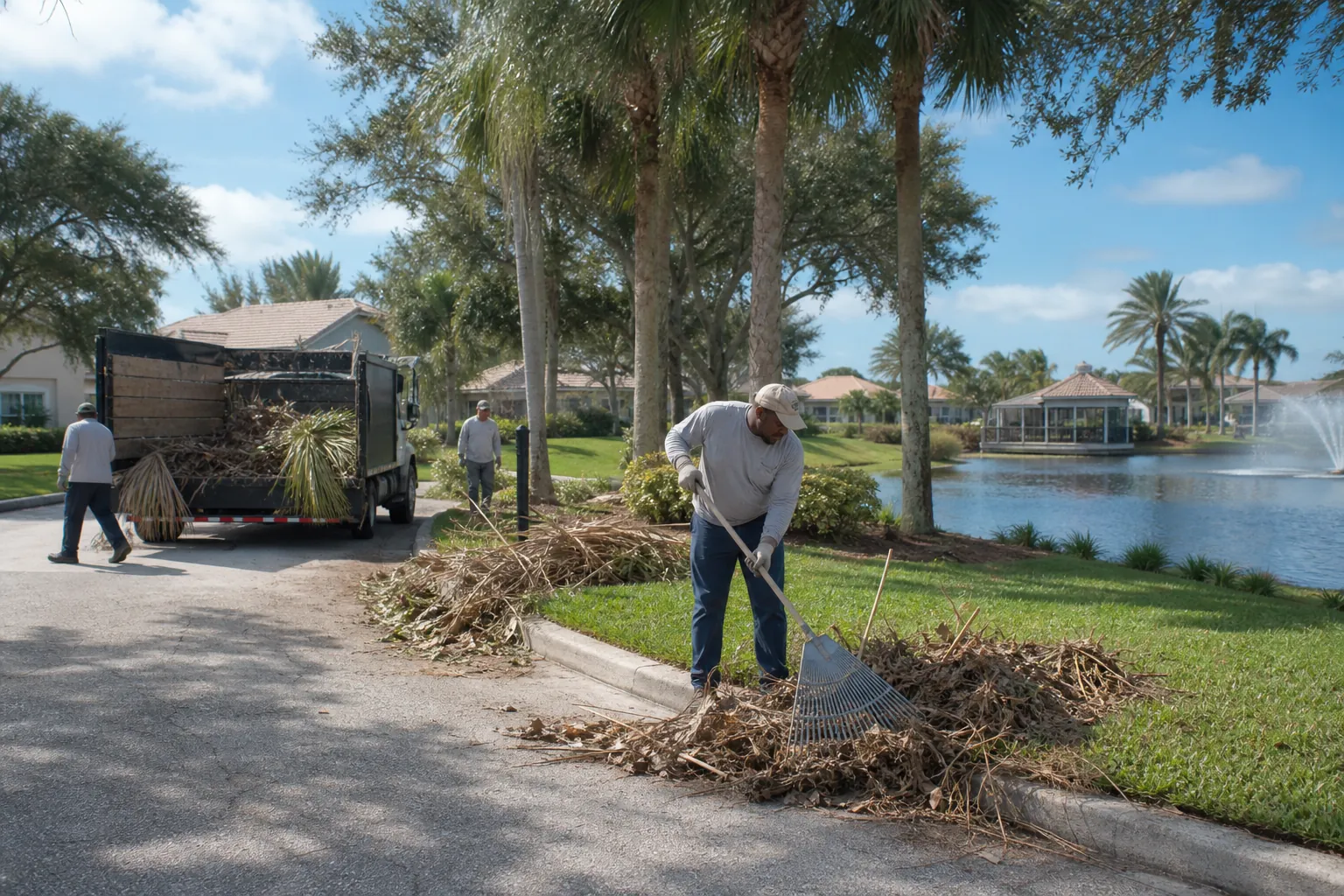
Include only piles the HOA has authority to arrange for removal. Separate common property debris from resident piles and public land. The Florida construction debris pickup rules guide helps frame material questions, while the Volusia County storm debris sorting guide helps organize piles without assuming every material is accepted.
Start with property records and the board's approved scope. A pile beside a shared road may still sit on private land. A manager should resolve uncertain boundaries before directing a crew.
Write down where each pile came from, if known. Tree limbs from a common lawn need a different description than boards from a repair job. Do not label an unknown mixed pile as clean yard debris.
- Ask residents to report debris rather than add it to shared piles.
- Fence panels, roofing scraps, and loose building parts may need separate review.
- The table below is a planning record, not a list of accepted materials.
This keeps the scope from changing after photos are sent. It also reduces disputes over whose material was included.
Keep repair waste visible in the request. The hauler must confirm what it accepts and how each load will be handled.
Use it to spot gaps before seeking a quote. Leave uncertain details marked as unknown until someone checks them.
| Pile location | Record needed | Question to resolve |
|---|---|---|
| Shared lawn | Source and material | Did this come from common property? |
| Private lot edge | Owner and boundary | Who can approve removal? |
| Repair work area | Known waste types | Will these materials be accepted? |
| Street edge | Land control | Do local placement rules apply? |
How should the HOA sort storm debris?
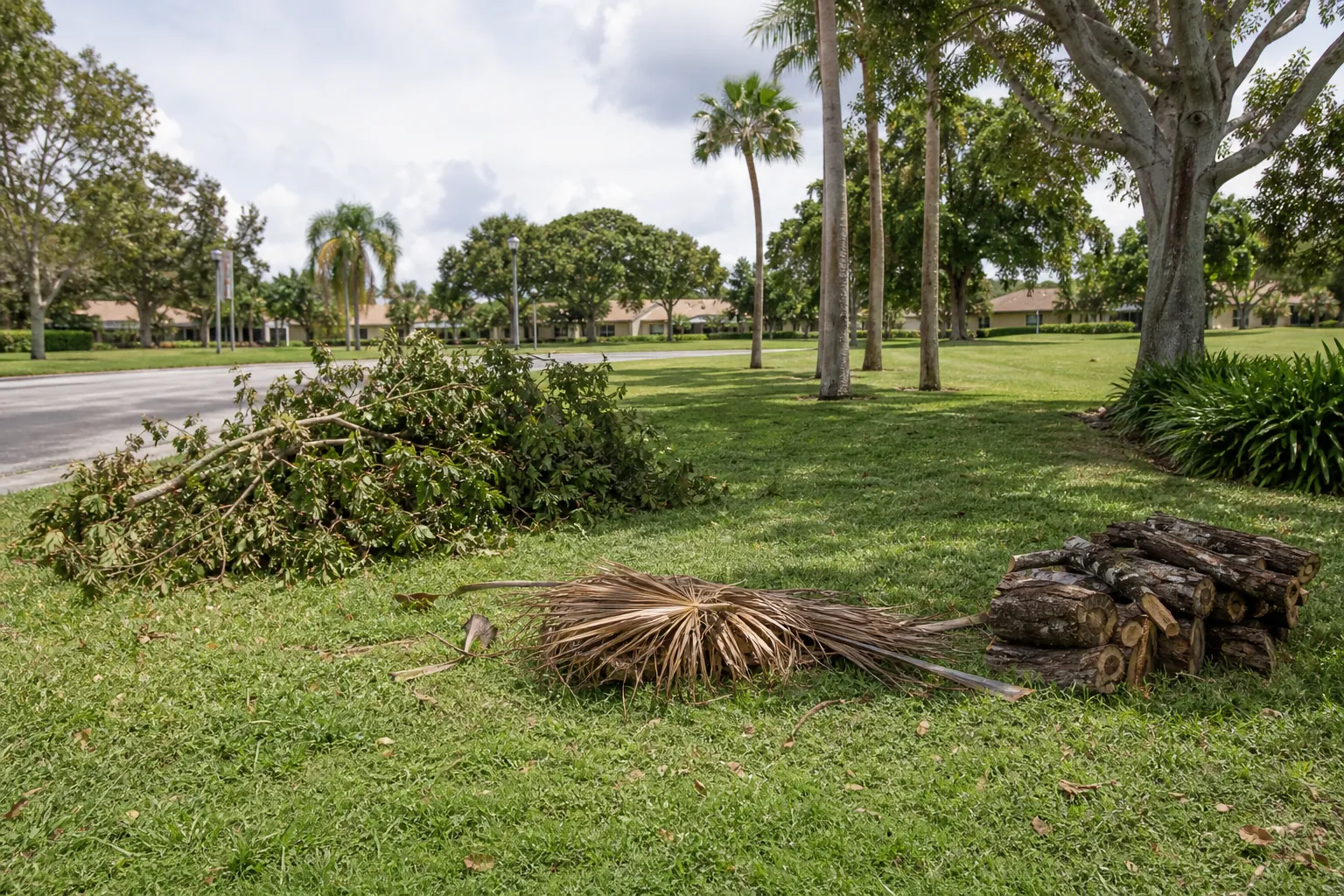
Keep known material groups separate, and ask about anything unknown before moving it. Local instructions and the hauler's accepted materials both matter. Review the Volusia County storm debris sorting guide alongside the Florida storm debris cleanup guide to plan questions without treating general guidance as local pickup approval.
Volusia County's Solid Waste and Recycling guidance is the local source to check. Collection rules can vary by material, location, and date. Confirm current instructions rather than relying on an old neighborhood notice.
FEMA's Debris Removal Guidelines Help You and Your Community offers general sorting guidance. It does not prove that a specific HOA pile qualifies for public collection. Local rules still control that question.
Avoid mixing yard waste with repair scraps simply to reduce pile count. Mixed loads can make the scope harder to assess. Tell the hauler when a pile contains several material types.
Do not ask volunteers to handle unknown containers, damaged equipment, or suspect waste. Keep people away and seek guidance from the right local authority. Report urgent hazards through the proper emergency channel.
Sorting should not require residents to enter risky areas. A photo and a clear note may be enough for initial review. Ask the hauler what can be assessed remotely and what needs inspection.
- Keep known yard debris separate from loose repair materials.
- Flag mixed piles clearly when sending photos for review.
- Report unknown items without opening containers or moving suspect waste.
- Check current local instructions before placing debris for public collection.
What photos and details help define the work?
Send photos that show both the pile and its setting. Include the approach, nearby objects, and any access limits. The photos for a hauling estimate guide helps structure the request, while the Florida construction debris pickup rules guide helps flag repair waste that needs separate discussion.
Take a wide photo from a safe, clear spot. Show the full pile and the space around it. Add closer views only when needed to show the material mix or hidden items.
Match photo labels to your site map. For example, use Pile A for the lawn beside the clubhouse. This helps the board and hauler discuss the same location without confusion.
Include rough dimensions only when someone can obtain them safely. Label them as estimates, and state how they were made. Do not turn a rough visual guess into an exact load count.
- A gate may stay locked during the day, or parked cars may block access.
- State when the photos were taken and if the pile changed.
- Leave faces, license plates, and private details out when practical.
Describe what the camera misses. Note soft ground, narrow turns, or low branches without judging equipment clearance yourself.
A storm, new cleanup work, or added resident waste can alter the scope. Send an update instead of reusing photos that no longer match.
Share the images through the HOA's chosen contact process. Keep a copy with the scope so later changes have a clear record.
What access details should the hauler review?
The hauler should review the route, loading area, and nearby obstacles before work is set. The HOA should report limits without declaring the site suitable. Use the photos for a hauling estimate guide to show access and the Florida storm debris cleanup guide to keep storm planning tied to site conditions.
Start at the property entrance and trace the proposed route. Note gate controls, visitor parking, and turns near shared buildings. Ask who must be present to open access on the workday.
Describe surfaces along that route without making load claims. A paved drive, lawn edge, and private bridge raise different review questions. Equipment suitability and ground conditions belong with the hauler and qualified site professionals.
Show overhead lines, branches, signs, and nearby structures in photos from safe locations. Do not estimate safe working distances or offer clearance approval. The crew must assess the conditions for its equipment and work.
Discuss how residents will use shared spaces during loading. Paths, mail areas, and parking rows may overlap the proposed work zone. Ask the hauler what temporary access controls it needs before issuing resident notices.
Do not move piles near drains, utility equipment, or traffic lanes without approval. Placement can affect more than loading convenience. Ask the property manager and relevant authority about site restrictions where needed.
- Share gate instructions through the agreed contact rather than public notices.
- Identify parked vehicles that may block the planned access route.
- Point out nearby lines, drains, signs, and shared walkways.
- Ask the hauler to review loading space before residents move debris.
What should the board confirm before booking?
Confirm authority, written scope, site access, and the process for changes before booking. Ask what the proposed work includes and excludes. The Florida construction debris pickup rules guide supports material questions, while the photos for a hauling estimate guide helps keep the written request tied to actual piles.
Use the HOA's own approval process for shared property work. A board member's informal request may not settle spending authority. Ask the manager or qualified adviser when governing documents leave that unclear.
Request a written description of the piles included. It should match the labels on your map and photos. Ask how newly found items or added waste will be reviewed before loading.
Clarify the end point of the job. Removing debris does not automatically include sweeping, soil repair, stump work, or landscaping. Include such questions in the request, without assuming the hauler provides those tasks.
- Weather, access, disposal rules, and site conditions can affect the plan.
- When contacting Daytona Grapple Trucks, keep the request tied to this specific property.
- Have the proper adviser review insurance or contract questions when needed.
Ask how scheduling changes will be shared. Do not announce a firm resident access window until the hauler confirms what is known.
Confirm current service coverage, accepted materials, equipment fit, and scheduling directly. This post does not establish acceptance of a particular pile or date.
A board should not infer coverage from a truck, business name, or proposal alone. Keep any requested records with the approved work scope.
How should the HOA document completed pickup?
Check the agreed pile locations after the crew finishes and site access resumes. Record what was removed, what remains, and any unresolved scope items. Use the Florida storm debris cleanup guide for the broader cleanup plan and the Volusia County storm debris sorting guide for remaining material questions.
Compare the finished site with the approved map, not memory. Take after photos from the same safe viewpoints when possible. This creates a clear record without making claims about unseen disposal steps.
If material remains, ask why before calling the job incomplete. It may fall outside the scope or require a different process. Record the reason and request a written next step from the responsible party.
Check shared access areas once the crew says work is done. Note visible debris or blocked paths and report them promptly. Do not enter an active work area to inspect progress or take close photos.
Keep the proposal, approval, changes, and final invoice together. Retain disposal records if supplied or required for the job. Do not assume every project produces the same paperwork or reporting duties.
- Send residents a brief closeout note with facts they need.
- Review what caused delays or confusion while the details are fresh.
- Call Daytona Grapple Trucks at (386) 481-7913 or review debris.
State which shared areas have reopened and where questions should go. Avoid sharing private account details or making unsupported claims about waste handling.
Better pile labels or earlier gate planning may help next time. Update the HOA's checklist so future boards can use the same clear process.
Questions about next steps?
Frequently Asked Questions
Can residents add private yard debris to an HOA pile?
Residents should wait for written HOA approval before adding private debris. Added material can change the agreed scope and create ownership disputes. The board should also confirm acceptance with the hauler. If additions are allowed, set a clear cutoff and explain which materials still need separate review.
Can the HOA rely on public storm pickup instead?
The HOA should check current local guidance before relying on public pickup. A nearby collection route does not establish eligibility for private common property. Ask the relevant local office about the address, material, and placement rules. Keep that answer in the project file before deciding what private hauling remains needed.
What if debris is still attached to a tree or structure?
- Tell the hauler that the material remains attached rather than describing it as a loose pile.
- An urgent request does not settle who can authorize work or control the site.
- Close out the temporary collection point in resident notices once pickup ends.
Cutting, tree work, demolition, and loading are distinct tasks. Do not assume a debris pickup request includes them. Ask the appropriate qualified professional to assess attached material and define any work needed before hauling.
Follow the HOA's process for urgent decisions and seek qualified advice when authority is unclear. For an immediate threat, contact the proper emergency service. Keep routine hauling requests separate from emergency response and hazard assessment.
Explain where future debris questions should go and remove outdated instructions. Use signs or access measures only through the HOA's approved process. If new waste appears, document it and review the response before arranging another removal.
Sources
- Solid Waste and Recycling, Volusia County
- Planning for Natural Disaster Debris, U.S. EPA
- Debris Removal Guidelines Help You and Your Community, FEMA
Call (386) 481-7913 to talk through next steps.