
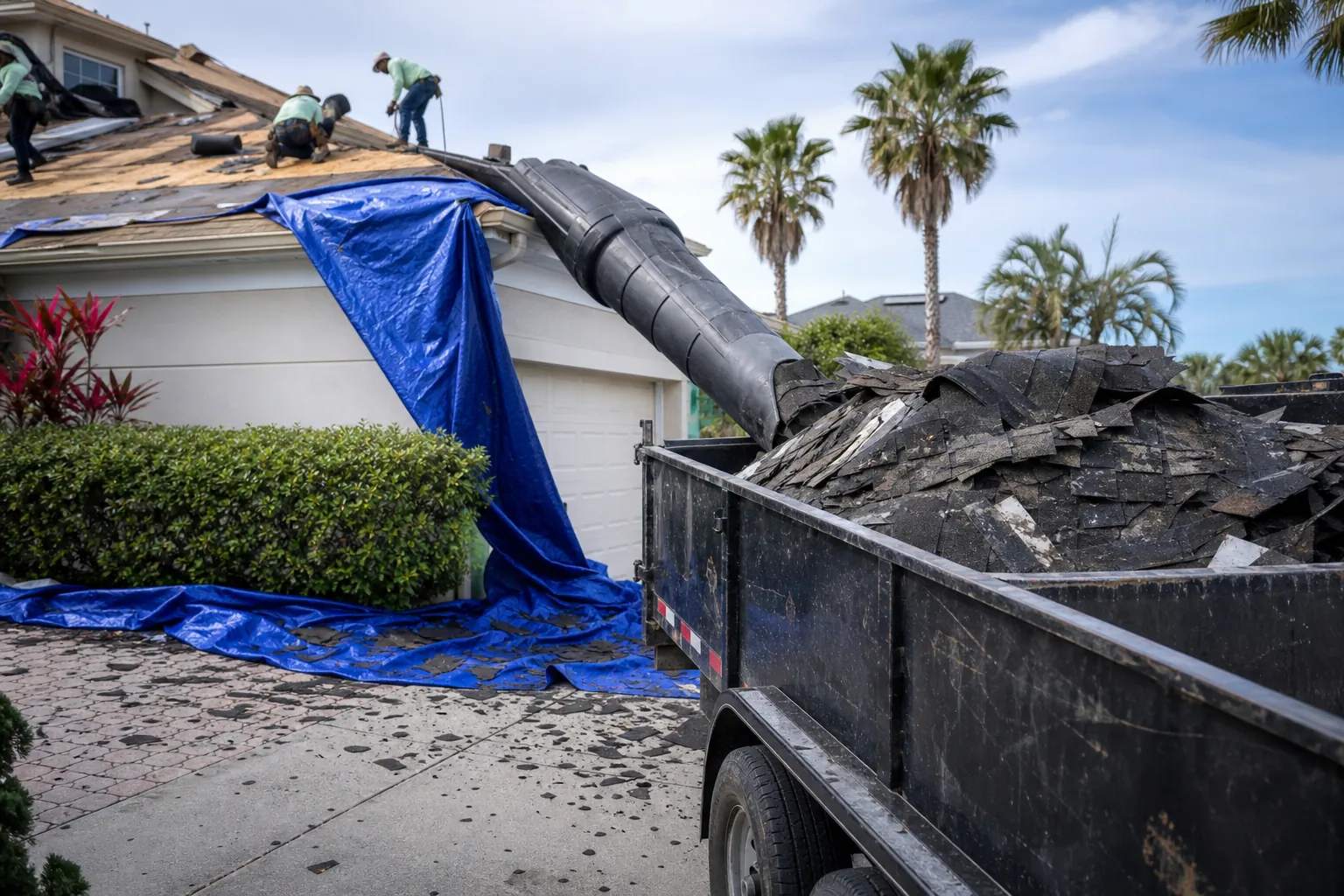
Roof tear off debris removal starts with identifying the roofing waste, confirming who will haul it, and agreeing on loading access. A search for “roof tear off debris removal daytona” should lead to those checks. For an Ormond Beach project, confirm material acceptance and disposal terms before the roof work begins.
What does roof tear off debris removal include?
Roof tear off debris removal covers the waste scope agreed upon for your project. It may involve several materials with different handling needs. Start with the Florida construction debris pickup rules and use photos for a hauling estimate to describe the pile. Neither step confirms that a hauler accepts your materials.
A roof tear off can leave shingles, underlayment, flashing, and wood. Your project may create only some of these materials. Ask the roofer what will come off before seeking hauling terms.
Define where each firm's work starts and ends. The roofer may include waste handling in the roof contract. If a separate hauler is involved, identify who gathers loose waste and prepares it for loading.
Do not treat hauling as a complete jobsite cleanup unless that scope is written down. Loading a pile differs from collecting scattered scraps across a yard. Ask who handles nails, small pieces, driveway cleanup, and any final ground check.
Give the same scope to each firm you contact. State the job address in Ormond Beach, the roof materials, and the expected pile location. Confirm service for that address rather than assuming coverage from a search result.
Daytona Grapple Trucks is identified as a grapple truck debris hauling business. That fact alone does not establish acceptance of roof waste. Ask about the exact material and job conditions before making plans around that hauling method.
How should roofing waste be sorted?
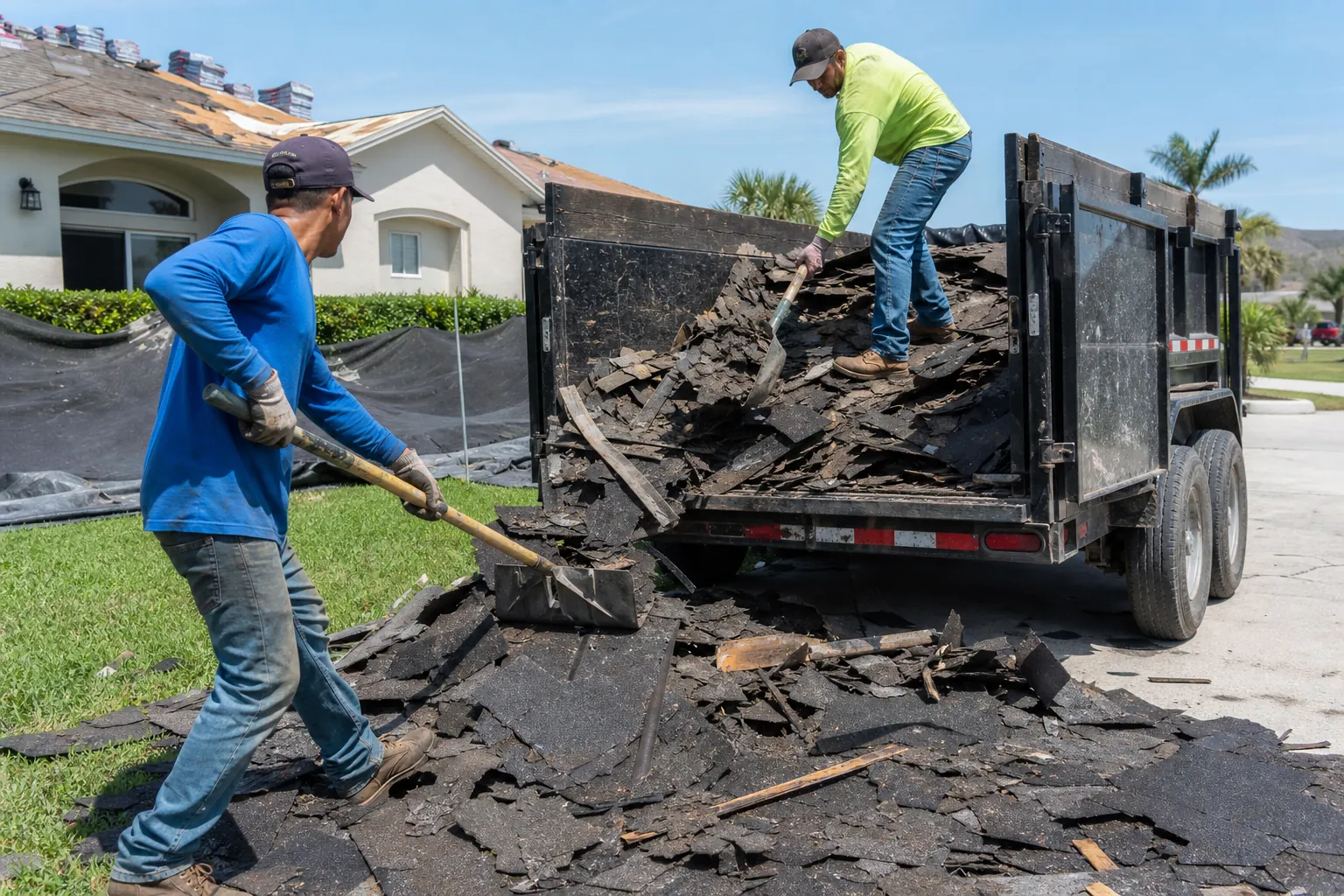
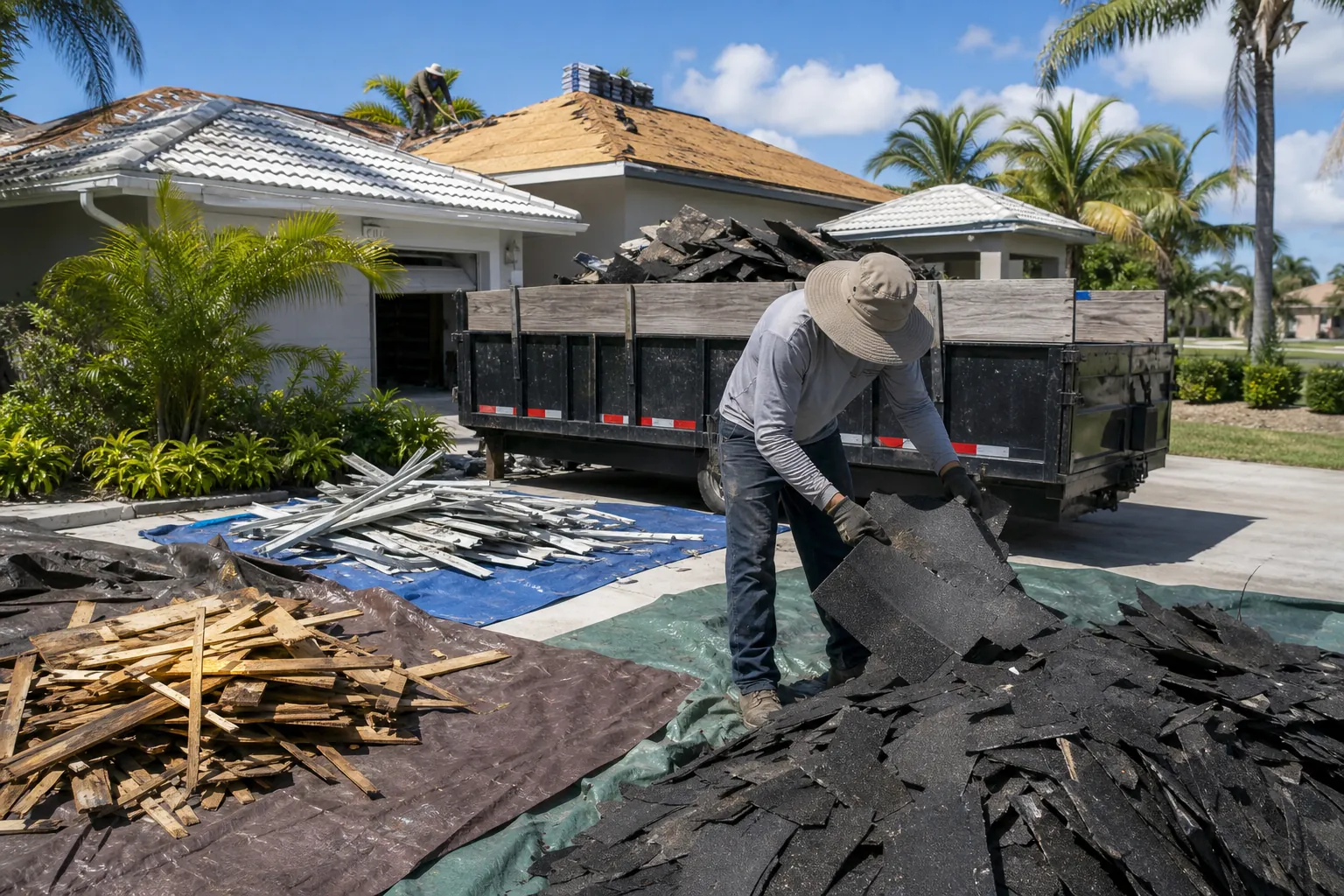
Sort the proposed waste by material before asking how it should be staged. Roofing, wood, metal, and yard debris may need separate handling. Review the Volusia County debris sorting guide alongside the Florida construction debris pickup rules. Confirm current instructions before mixing materials or moving anything to the curb.
Start with a material list from the roofer. Terms such as roof debris can hide several waste types. Photos help, but a written list gives the hauler a clearer basis for reviewing the job.
Volusia County's Solid Waste and Recycling guidance is a starting point for local waste questions. Collection rules vary by material, location, and date. Check current guidance rather than relying on a neighbor's past pickup.
Use the list below to describe what is present. These are reporting groups, not instructions to handle unknown material yourself. Ask the roofer to identify anything you cannot name.
- Describe shingles and underlayment as roofing materials in the written waste list.
- Identify wood pieces separately, including any decking the roofer expects to replace.
- Note metal flashing and other metal parts without assuming separate recycling is available.
- Flag unknown materials for review before anyone includes them in a pickup plan.
Keep storm waste separate from project waste
A storm may damage a roof and leave branches nearby. That does not make both piles the same waste stream. FEMA's debris guidance supports sorting debris, while local rules control the accepted groups and placement.
Do not assume a storm collection program will take contractor roofing waste. Ask the local program directly about that material. Keep the roofer and hauler informed if public collection is part of your plan.
Should the roofer, a container, or a hauler handle removal?
Choose a removal plan based on scope, staging space, and who manages the waste. First check what your roofing contract includes. Then use Florida construction debris pickup rules and photos for a hauling estimate to frame questions. A separate hauling plan should fill a clear gap in the roofing contract.
Begin with the roof proposal, not the equipment choice. A contract may assign loading and disposal to the roofer. Ask for plain terms if the proposal only says cleanup or debris removal.
A container plan and a staged pickup create different site needs. With a container, waste must reach the container as work proceeds. With a staged pile, someone must choose and maintain a suitable loading area.
A grapple truck should not be assumed suitable for every roof waste pile. Material, loose pieces, site access, and disposal acceptance all need review. Ask the hauler to confirm the method after seeing the job details.
Compare plans using the same waste scope. One proposal may cover the roof waste but leave scattered scraps to others. Another may depend on the roofer placing all material within a defined area.
The table shows questions to settle, not services offered by any named business. Ask the responsible firm to explain each handoff in writing. That helps prevent a gap between roof work and waste removal.
| Removal plan | Scope to confirm | Site question |
|---|---|---|
| Roofer manages removal | Loading, hauling, and cleanup | Where will waste stay during work? |
| Container plan | Accepted waste and loading duties | Where may the container be placed? |
| Separate hauling plan | Pile acceptance and remaining scraps | Can the hauler assess loading access? |
What information helps a hauler review the job?
Give the hauler a clear view of the waste and the proposed loading area. Include material details, rough dimensions, and the roofer's work plan. Use photos for a hauling estimate with the Florida construction debris pickup rules to prepare a useful request. Ask what further details the hauler needs.
Photos should explain the job rather than make the pile look tidy. Take views from places you can safely reach without climbing. Include the full pile and the area around it, if the waste already exists.
If tear off has not begun, say so clearly. Send the roofer's waste description and show the proposed staging area. Do not present an empty driveway photo as proof that loading will be straightforward.
Rough dimensions can help describe a pile, but they do not establish its weight. State how you obtained any measurements. Ask the roofer for project details instead of guessing the amount from ground views.
Keep your request focused on facts the hauler can review. The goal is to expose missing details before agreeing to a scope. Include the following points in one message when possible.
Ask what could change the reviewed scope after work starts. Extra roof layers, replaced wood, or added waste may require another review. Keep photos and written updates together so each firm works from the same information.
- State the project address and ask the hauler to confirm service there.
- List known roofing materials and flag anything the roofer has not identified.
- Explain who will gather the waste and where it will be staged.
- Describe the proposed route from the street to the loading area.
- Share the expected work window without treating it as a confirmed pickup.
When should removal be arranged?
Discuss removal before tear off begins, then confirm the plan as work details become clear. Avoid treating a requested date as an accepted booking. The photos for a hauling estimate guide helps with preparation. For storm-related work, the Florida storm debris cleanup guide provides broader context without establishing local pickup availability.
Start by learning when the roofer expects to create waste. Ask if the work will happen in one stage or several. That affects how long debris might remain at the site and who manages it.
Next, ask the removal provider what it needs before confirming a date. A roof schedule alone does not confirm hauling. The provider may need a material review, site details, or a revised scope.
Keep one person responsible for passing along changes. A changed roof start can affect container placement or a separate pickup request. Tell each firm about changes rather than assuming they will coordinate directly.
Use a short sequence to keep the plan clear. Each step should close an open question before the next decision. This is a planning order, not a promise of any work timeline.
For storm work, separate your private contract from any public debris program. The U.S. EPA's disaster debris planning guidance addresses planning, not local service availability. Check the current local program before relying on public removal.
- Confirm which firm is responsible for each part of the waste removal.
- Send the material list and proposed staging details for review.
- Ask for written confirmation of scope and the agreed scheduling terms.
- Report changes to the roof work before relying on the earlier plan.
Where should the debris be placed for pickup?
Agree on the staging area with the roofer and hauler before placing debris. Do not assume curbside space or a driveway is suitable. Use photos for a hauling estimate to show the area, and check the Volusia County debris sorting guide for local waste questions. Site approval still needs direct confirmation.
A useful site review shows more than the pile location. Explain how equipment would reach it and what else uses that space. Include shared driveways, nearby parking, and access needs without making your own equipment clearance judgment.
Ask who must approve placement on shared or managed property. A property owner, association, or other authority may need to be involved. Confirm the applicable terms rather than assuming one person's consent covers every part of the site.
Placement and loading method should be reviewed together. Ask the hauler what site details it needs and what conditions could prevent loading. The operator must assess equipment use; a homeowner's photo does not settle that decision.
Do not move waste into a road, sidewalk, or drainage area based on a generic guide. Ask the appropriate local authority about placement rules. Ask the roofer to manage jobsite handling and worker safety within its scope.
Also settle who handles surface concerns before work starts. Describe the proposed ground or driveway area and ask about limits. Avoid assuming a loading method will leave every surface unchanged. Record the agreed placement so the crew follows the reviewed plan.
What should be checked when removal is complete?
Compare the completed work with the agreed scope before closing the job. Confirm what was loaded, what remains, and who handles any excluded waste. Refer back to the Florida construction debris pickup rules and your photos for a hauling estimate. Those records help explain changes, but they do not replace written terms.
Start with the waste area, viewed from a safe place. Check if the agreed pile has been removed. Do not assume that an empty staging spot means every cleanup task in the roof contract is complete.
Ask the roofer about its final ground check and cleanup duties. A hauler's loading scope may differ from the roofer's cleanup scope. If scattered scraps remain, identify the responsible firm from the contract before requesting extra work.
If material was left behind, ask why it was excluded. It may differ from the waste described before pickup. Get a clear account of the issue and the next step rather than folding it into another pile.
Ask what disposal or job records are included in your agreement. Do not assume a specific receipt or report will be supplied. Keep whatever records are provided with the roof contract and the hauling terms.
Finally, note any scope changes while the details are fresh. Save the updated material list, relevant photos, and written messages. A clear record helps resolve questions about work left open. It also gives the next firm useful facts if further removal is needed.
Questions about next steps? Call Daytona Grapple Trucks at (386) 481-7913 or review debris.
Frequently Asked Questions
Can old shingles be recycled instead of disposed of?
Ask about recycling before the waste is mixed or loaded. Do not assume a nearby facility accepts shingles or your specific roof material. Confirm acceptance rules with the receiving facility and ask the hauler about the proposed destination. If recycling matters to your project, include that request in the written scope.
What if the roofer finds more layers during tear off?
Tell the removal provider as soon as the waste scope changes. Extra layers may change the amount or makeup of the pile. Ask the roofer to describe the newly found material and update the photos when useful. Then confirm any revised hauling terms before assuming the original plan still applies.
Does homeowners insurance decide how roof debris is removed?
Do not infer debris removal coverage from the roof work itself. Ask your insurer or a qualified insurance professional about your policy and claim. Keep the roofing and hauling scopes clear so you can describe the work accurately. A hauler can explain its work terms, but policy decisions belong with the appropriate insurance contact.
What if the roof waste contains an unknown material?
Do not ask a standard hauling plan to resolve an unidentified material issue. Have the roofer explain what was found and seek a qualified assessment when needed. Tell the hauler that identification is pending. Confirm the handling and acceptance plan before adding that material to the waste described for pickup.
Can neighboring roof projects share one removal plan?
Ask the hauler to review that proposal rather than combining waste first. Each property may have different materials, access terms, and cleanup duties. Confirm who can authorize the work and who manages each pile. Separate written records help keep one property's waste scope from becoming an unclear part of another job.
Sources
- Solid Waste and Recycling, Volusia County
- Planning for Natural Disaster Debris, U.S. EPA
- Debris Removal Guidelines Help You and Your Community, FEMA
Call (386) 481-7913 to talk through next steps.