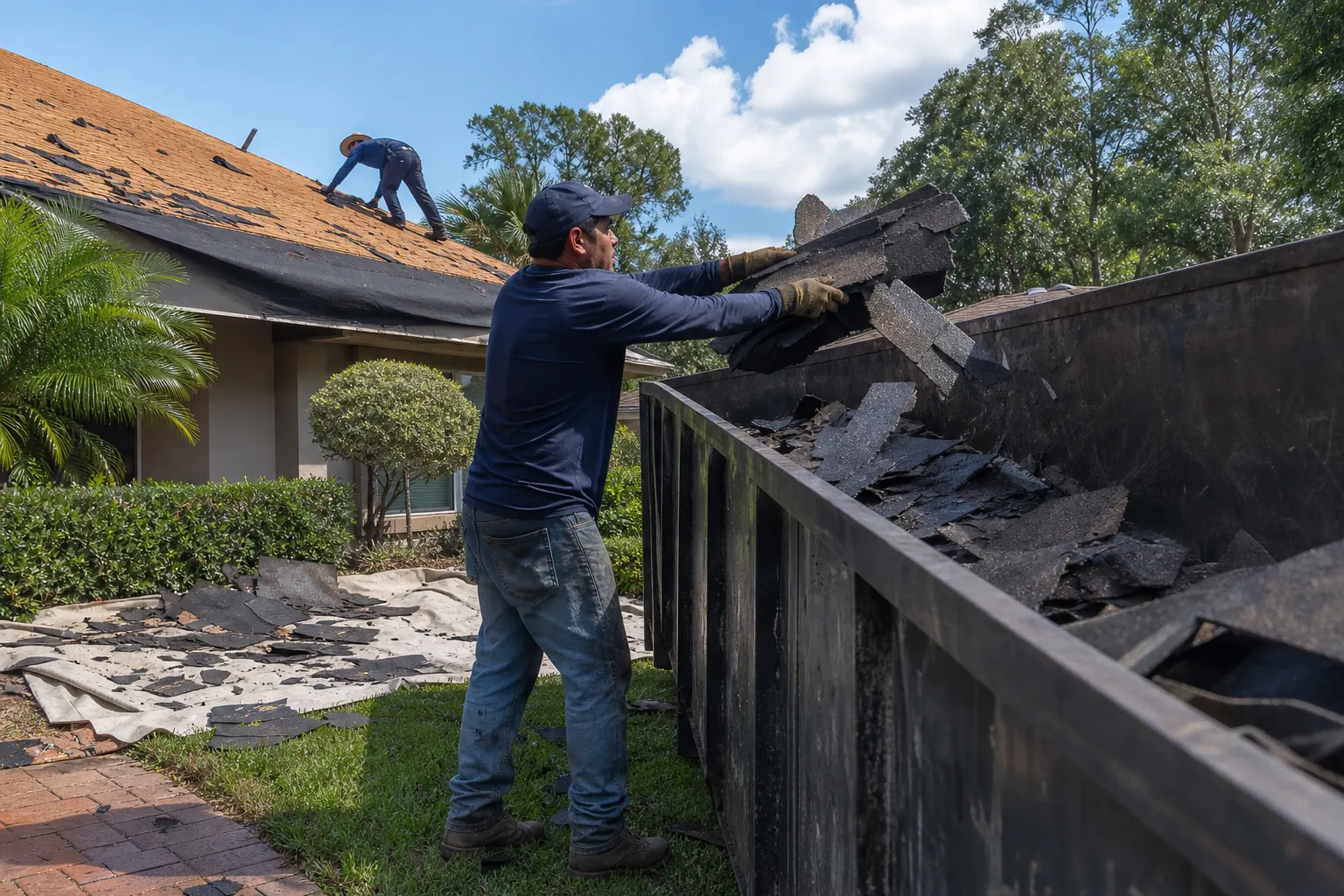
Plan roofing waste removal before tear off starts, then confirm accepted materials, access, and pickup scope. For anyone searching roof tear off debris removal daytona, the key is a clear disposal plan. In Port Orange, ask the roofer and hauler who handles each step before waste reaches the ground.
How should roof tear off debris removal be planned?
Start with the roofing scope, the waste types, and a shared cleanup plan. Confirm who will contain, load, haul, and dispose of each material. Review Florida construction debris pickup rules for planning questions. Use photos for a hauling estimate to show the site before asking about pickup.
Roof work creates waste in stages. Old roofing comes down before new materials go up. Wrap, pallets, and offcuts may appear later. A plan should cover both streams without assuming one pickup includes everything.
Ask the roofer if debris hauling is part of the written scope. Some job plans assign this work to another party. Get that division in writing so two crews do not each expect the other to act.
- Describe the roof materials as closely as you can.
- Daytona Grapple Trucks is described as a grapple truck debris hauling business.
- Keep one shared plan for the owner, roofer, and hauler.
Tell the hauler about shingles, tile, metal, wood, or mixed waste. Unknown layers can change the load. Ask how new findings should be reported once tear off begins.
That fact alone does not establish acceptance of every roofing material. Confirm the specific load, site access, and work scope before treating a pickup as arranged.
It should name the contact for each step. Include the proposed pile area and a way to report changes. This helps prevent gaps between roof work and ground cleanup.
What roofing waste needs to be identified and sorted?
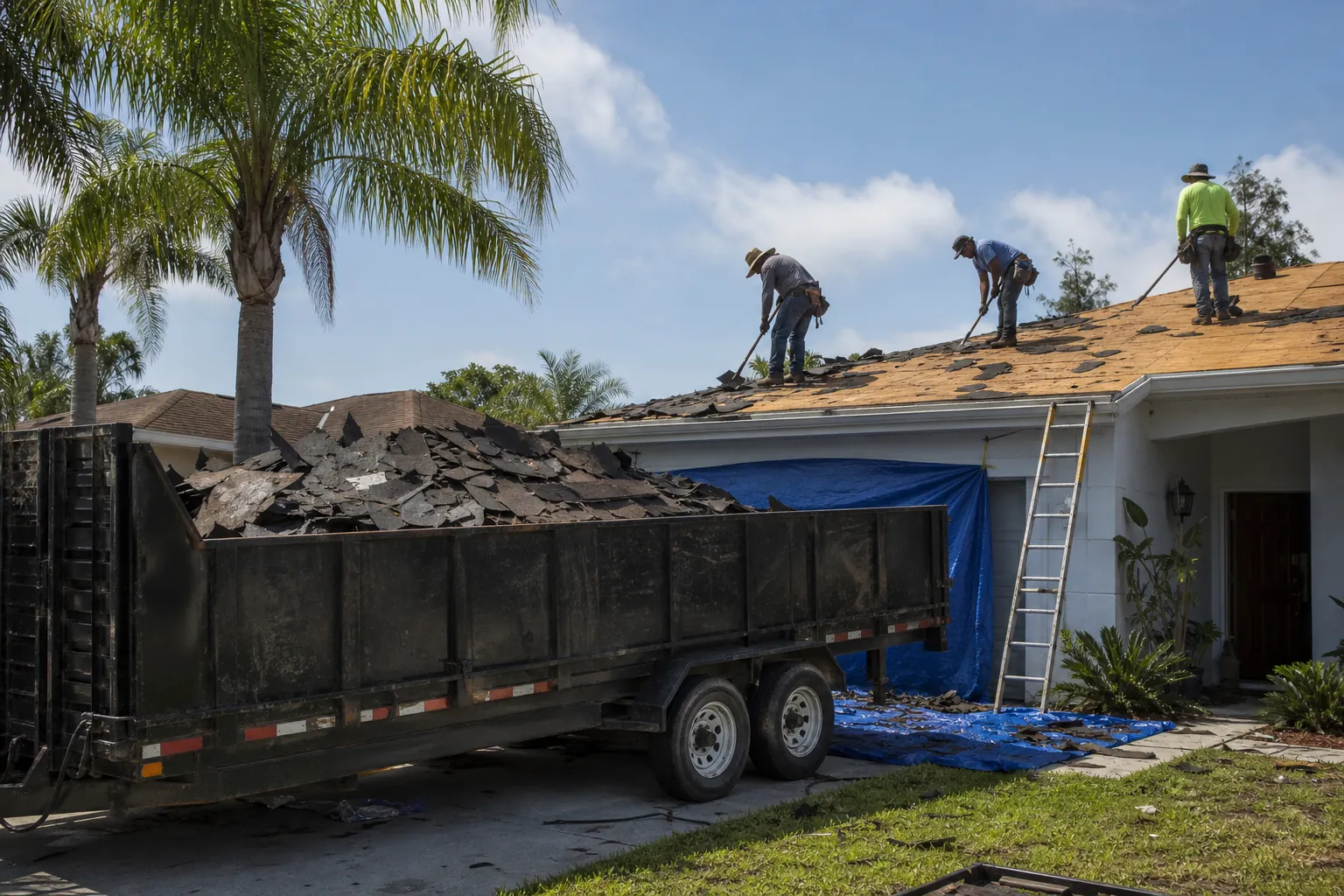
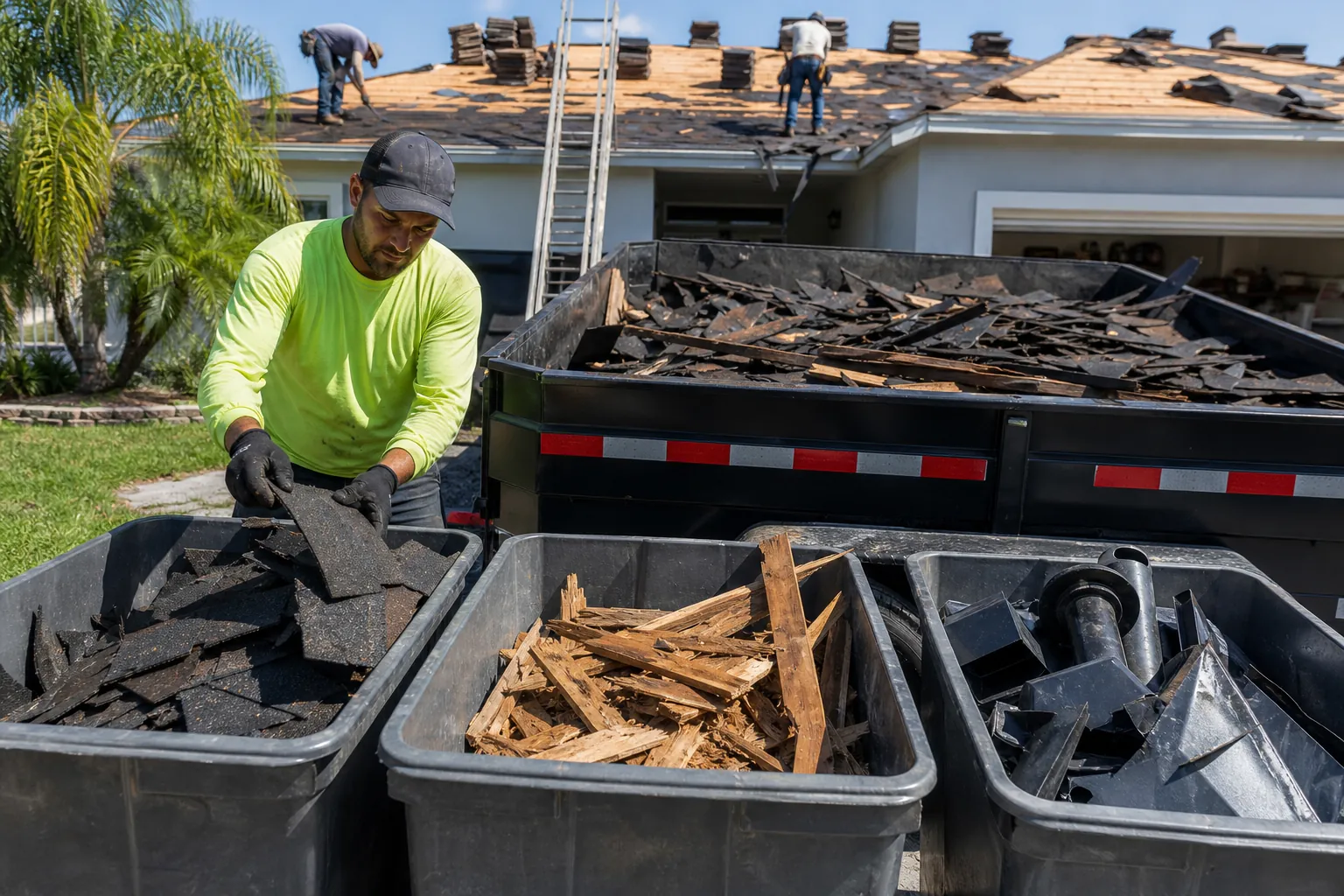
Identify the roof waste before mixing it with other debris. Shingles, tile, metal, wood, and loose wrap can need different handling. Check Volusia County debris sorting guidance for local questions. Review Florida construction debris pickup rules before assuming a mixed pile will be accepted for hauling or disposal.
A roof pile can hide more than shingles. It may hold underlayment, flashing, fasteners, rotten decking, and packaging. Describe what is present rather than calling it all construction waste. Clear labels help a hauler assess the request.
Keep roof waste distinct from unrelated household items and yard debris. Do not add paint, cleaners, fuel, or sealed containers to the pile. Ask the hauler about anything unusual before it becomes buried under heavier waste.
Volusia County's Solid Waste and Recycling guidance is a starting point for local disposal questions. Collection rules vary by material, location, and date. Check current guidance for the exact waste involved. Private hauling and public collection are separate arrangements.
Do not sort a sharp or unstable pile by hand to improve its appearance. Tell the roofing crew what needs review. If unknown material raises a hazard concern, pause that part of the work. Seek guidance from a qualified professional before handling it.
- Describe the main roofing material and any known layers beneath it.
- Identify wood, metal, wrap, and other waste mixed into the load.
- Flag unknown materials before anyone agrees to handle or haul them.
- Keep unrelated waste separate unless the hauler has approved its inclusion.
Where should the roof debris pile go?
Agree on the pile location with the roofing crew and hauler before tear off. The spot must suit the loading method and protect needed access. Use photos for a hauling estimate to show constraints. Check Florida construction debris pickup rules before using a curb, sidewalk, or shared space.
A pile that looks close to the street may still be hard to load. Fences, parked cars, trees, and overhead lines can affect the work. Let the hauler assess the setup. Do not guess at a safe reach or clearance.
Show the full approach from the road to the proposed loading point. Include gates, tight turns, sloped ground, and visible drainage features. Share known soft ground or buried features. A photo cannot confirm the strength of a driveway or soil.
- Ask who approves the work area and any needed surface protection.
- Keep doors, exits, mail access, and routine walking routes clear in the site plan.
- Have the roofer explain how loose scraps and fasteners will be contained.
The owner, roofer, and hauler may each have concerns. If the plan could affect a sidewalk or public right of way, confirm local requirements with the responsible authority.
Do not make residents step through roofing waste to reach a car. Tell the crew if children, pets, or visitors may use nearby space.
The hauler should explain what happens during loading. Neither discussion replaces a site review. If conditions change after rain or more tear off, ask for the setup to be checked again.
Which hauling setup fits a roof tear off?
The right setup depends on the waste, loading space, and work sequence. A ground pile and a container create different site needs. Review Florida construction debris pickup rules before choosing. Share photos for a hauling estimate so each provider can assess the same facts and explain the proposed loading method.
Do not choose from the roof size alone. The waste may include several layers or heavy broken pieces. Ask each provider how it assesses load size and weight. Confirm what happens if the job produces more waste than expected.
- A ground pile may suit some loading plans, but acceptance must be confirmed.
- A container keeps waste within a defined space when used as agreed.
- The roofing crew may have its own waste plan.
Loose pieces can spread beyond the main pile. Ask how the crew will handle scattered scraps and what ground cleanup remains outside the hauling scope.
It still needs a suitable placement area and an accepted loading plan. Ask about material limits, access, removal steps, and any local placement rules that may apply.
Compare that scope with a separate hauling quote before booking both. Look for gaps in loading, disposal, and final cleanup. Ask providers to explain any limits in plain terms.
| Setup | Space question | Scope question |
|---|---|---|
| Ground pile pickup | Can the truck load from the proposed spot? | Are loose scraps included? |
| Container service | Where can the container be placed? | Which materials and load limits apply? |
| Roofer-managed removal | How will waste leave the work area? | Does the roof contract include disposal? |
What information helps make a hauling quote clear?
A useful quote starts with clear photos, known materials, access details, and a written scope. Explain what is certain and what may change. Follow photos for a hauling estimate when gathering views. Use Florida construction debris pickup rules to frame questions about accepted waste and disposal responsibilities.
Show the whole pile and its surroundings from safe ground. Include a wide view and closer views of visible materials. Do not climb the pile or move sharp waste for a better picture. Tell the provider if photos show only part of the load.
Roof area alone does not describe the waste. Layers, material type, decking replacement, and mixed scraps all matter. Share the roofer's known scope, but label estimates as estimates. The hauler may need more details before defining the work.
Ask what the quoted work includes and excludes. Loading, hauling, disposal, and final ground cleanup are separate tasks to clarify. Ask how extra material or changed access would be handled. Get approval steps in writing before work starts.
A clear comparison uses the same facts for each provider. Do not compare a full removal scope with a loading-only scope. Ask about disposal fees or other stated charges without assuming they apply. Confirm any open details before accepting the quote.
- Send wide photos that show the pile, approach, and nearby obstacles.
- Name the roofing materials and disclose any known mixed waste.
- Explain who will load the waste and clean the surrounding ground.
- Ask how added waste or changed site conditions affect the scope.
- Request written terms that state exclusions and the process for changes.
When should removal be coordinated with the roofer?
Discuss removal before roof work starts, then confirm details as the waste becomes known. Avoid tying pickup to an uncertain tear off finish. Use photos for a hauling estimate to update the request. Check Florida construction debris pickup rules when the plan changes or material remains on site.
Ask the roofer when the first waste will reach the ground. Then ask when the main tear off should end. These may be different points in the job. The hauler needs to know which stage the pickup is meant to cover.
A single pickup may leave later scraps behind. Repeat pickups may create more coordination work. Ask which approach fits the actual roof plan. Do not assume a second visit is available or included unless the provider confirms it.
- Rain, hidden roof damage, and changes in work scope can shift the plan.
- Confirm when the loading area must be clear of cars and work gear.
- After removal, ask the roofing crew to review the grounds within its cleanup scope.
Set a clear way to share updates. Name the person allowed to approve changes. This avoids messages passing through several people while the pile keeps growing.
The roofer may still need the same space for new materials. Resolve that overlap before the truck is expected. Keep the work sequence clear to all parties.
Bulk hauling does not describe every detail of final cleanup. Discuss loose fasteners, small scraps, and hidden areas in advance. Report missed material through the agreed contact rather than handling sharp waste yourself.
What changes when roof damage follows a storm?
Storm damage does not make roofing waste eligible for public collection by default. Confirm current local instructions and keep repair waste clearly identified. Start with storm debris cleanup after Florida storms for broader planning. Use Volusia County debris sorting guidance to separate local collection questions from a private hauling request.
Storm cleanup can involve fallen branches, damaged belongings, and roof repair waste at once. Each stream may have different instructions. Do not merge them just to clear space. Ask the repair crew and hauler how each stream should be handled.
FEMA's Debris Removal Guidelines Help You and Your Community provides general public sorting and removal guidance. Local rules still control. That guidance does not establish a pickup date or approval for a specific Port Orange roof pile.
Check current Volusia County guidance and the responsible local authority for public collection questions. Explain that the waste came from roof repair or tear off. Ask about that exact category. A broad notice about storm debris may not answer it.
Keep photos and written work scopes for your own records. Ask your insurer what records it needs if a claim is involved. This is separate from arranging pickup. A hauling plan does not decide coverage, reimbursement, or who owes a repair cost.
- Identify roof repair waste separately from branches and other storm debris.
- Check current local instructions before placing any material for public collection.
- Confirm private hauling scope without assuming public crews will remove leftovers.
- Update all crews if damage, waste volume, or access conditions change.
Questions about next steps? Call Daytona Grapple Trucks at (386) 481-7913 or review debris.
Frequently Asked Questions
Can I add roofing debris to my regular household trash?
Do not assume regular household collection accepts roof tear off waste. Check current rules for your address and the exact material. Volusia County's waste guidance can help frame the question. Ask the responsible collection provider about roofing waste specifically, including any limits or separate disposal steps.
What if the crew finds suspect material under the roof?
Ask the crew to pause handling the suspect material and explain what was found. Do not break, sample, or mix it into the pile yourself. A qualified professional should assess any possible hazard. Tell the hauler about the finding before pickup so it can review acceptance and handling limits.
Can roofing waste stay on a shared driveway?
- Ask the property owner or manager about permission and use limits.
- Ask for a direct answer in the written scope.
- Tell the hauler before the planned pickup and send updated photos.
Resolve shared access before placing waste there. Then have the roofer and hauler review the location. A convenient pile spot may block another person's access. Do not assume a hauling agreement grants permission to use shared land.
Bulk waste removal and detailed ground cleanup are different tasks. Confirm who checks for loose nails, small metal, and scraps around the work area. Ask the roofing contractor how it handles that cleanup, including spots where small pieces may be hard to find.
Explain which materials were added and why. Ask for a revised scope if needed, including how any added work would be approved. Do not assume the first quote covers waste that was absent from the original request.
Sources
- Solid Waste and Recycling, Volusia County
- Debris Removal Guidelines Help You and Your Community, FEMA
Call (386) 481-7913 to talk through next steps.