
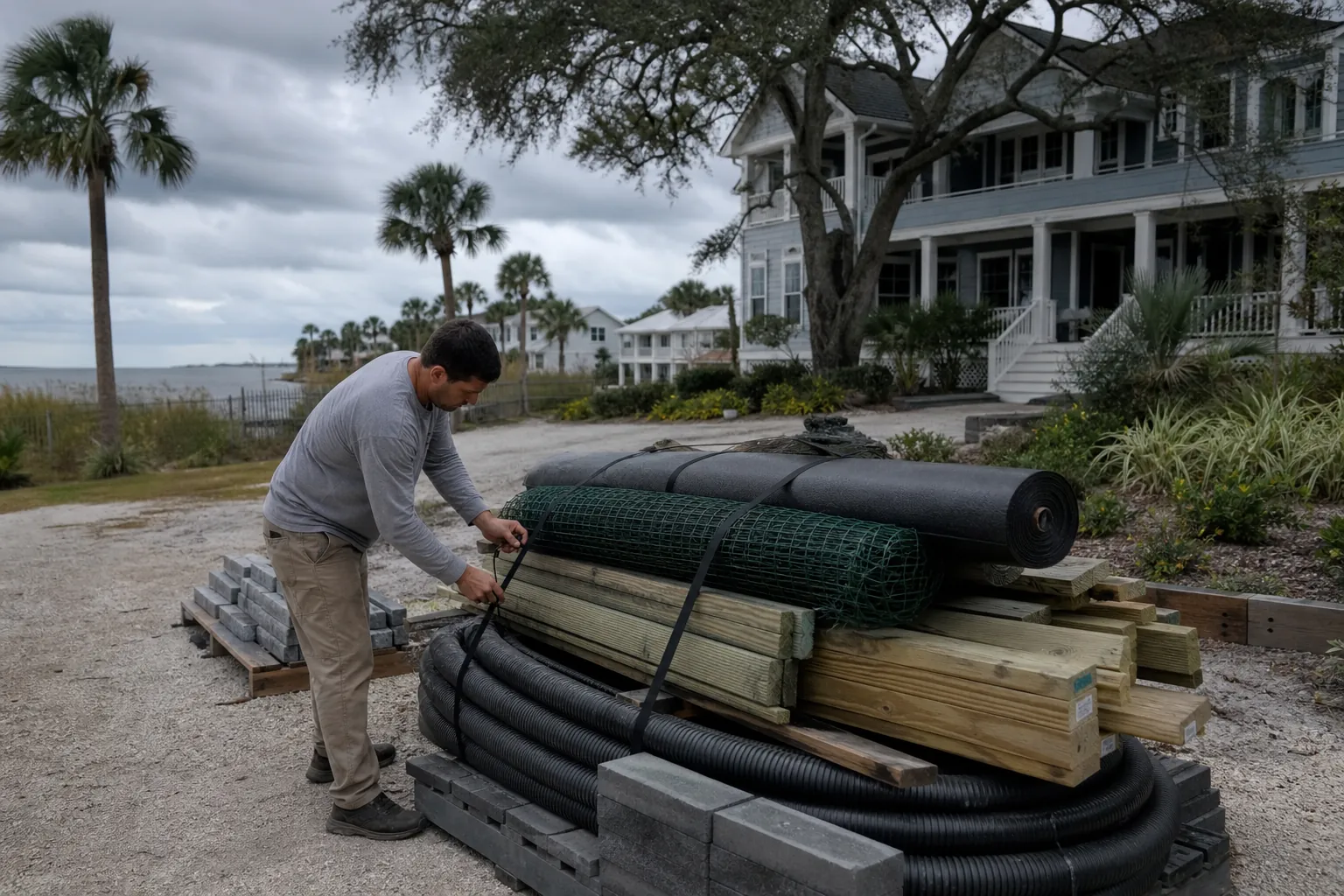
Secure landscape supplies before storms in Duval County by moving loose materials into suitable storage, stabilizing heavy stock, keeping drainage paths open, and separating usable supplies from debris. Start with items that can blow away or wash into drains, then check whether your storage arrangement leaves room for people, vehicles, and later cleanup.
The goal is not to tie down everything in the yard. It is to reduce loose material, protect what you can safely store, and avoid creating new hazards with tarps, stacks, or misplaced piles.
This guide provides regional preparation advice for Jacksonville and Duval County, not a statement of Daytona Grapple Trucks service availability there. It focuses on landscape supplies and cleanup access. For a broader property checklist, see our hurricane-season yard readiness guide for Northeast and Central Florida.
Which Landscape Supplies Should You Secure First?
Secure lightweight, movable supplies first. Empty pots, plastic trays, packaging, loose bags, fabric rolls, and small tools are usually easier to relocate than a pallet of pavers or a bulk soil pile.
Walk the property before moving anything. Look behind sheds, beside fences, near gates, and around unfinished planting beds. Supplies left from a previous project can be overlooked when attention shifts to patio furniture and larger equipment.
- Move empty containers, nursery trays, and plastic edging into enclosed storage when space allows.
- Place unopened bags of mulch, soil, and amendments on a stable surface protected from water entry.
- Collect loose packaging and damaged bags so they do not become scattered litter.
- Separate reusable supplies from branches, removed sod, and other material already intended for disposal.
- Keep tools, hoses, and cords out of walking routes and away from drainage openings.
Do not start with the heaviest item simply because it looks important. A short first pass that removes lightweight clutter can make the remaining work safer and easier.
If a supply is too heavy to move safely, leave lifting to properly equipped help. A hurried attempt to shift a loaded pallet can cause more trouble than leaving it in place while evaluating safer options.
How Should You Store Bagged Mulch, Soil, And Fertilizer?
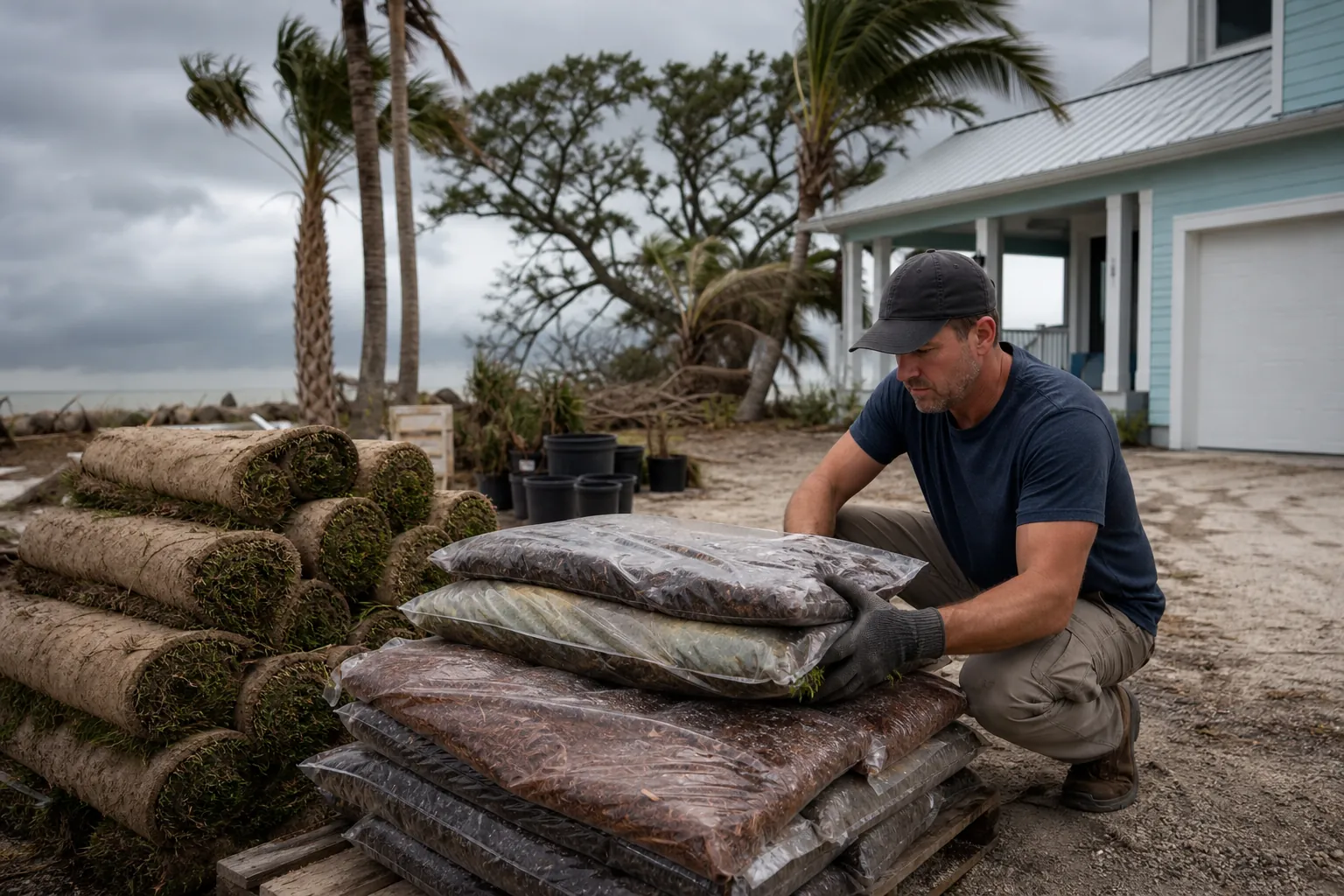
Store bagged products in a dry, stable location using the product label as your guide. Keep different materials identifiable, and avoid stacking bags so high that reaching or removing them becomes unsafe.
A garage, shed, or other suitable enclosed space may work for ordinary landscaping supplies, but storage conditions matter. Check for roof leaks, floor-level water entry, and clear access before carrying bags inside.
Retain fertilizer, pesticides, and other treatment products in their original labeled containers. Follow their storage directions, including any separation requirements. Do not transfer them into unmarked buckets or store them where children or pets can reach them.
- Inspect bags for tears before moving them, and contain leaking ordinary soil or mulch without mixing it with chemical products.
- Keep labels visible so you can identify each product after the weather passes.
- Use stable shelving only within its rated capacity, rather than loading it with more bags than it can support.
- Leave exits, electrical equipment, and access to stored emergency supplies unobstructed.
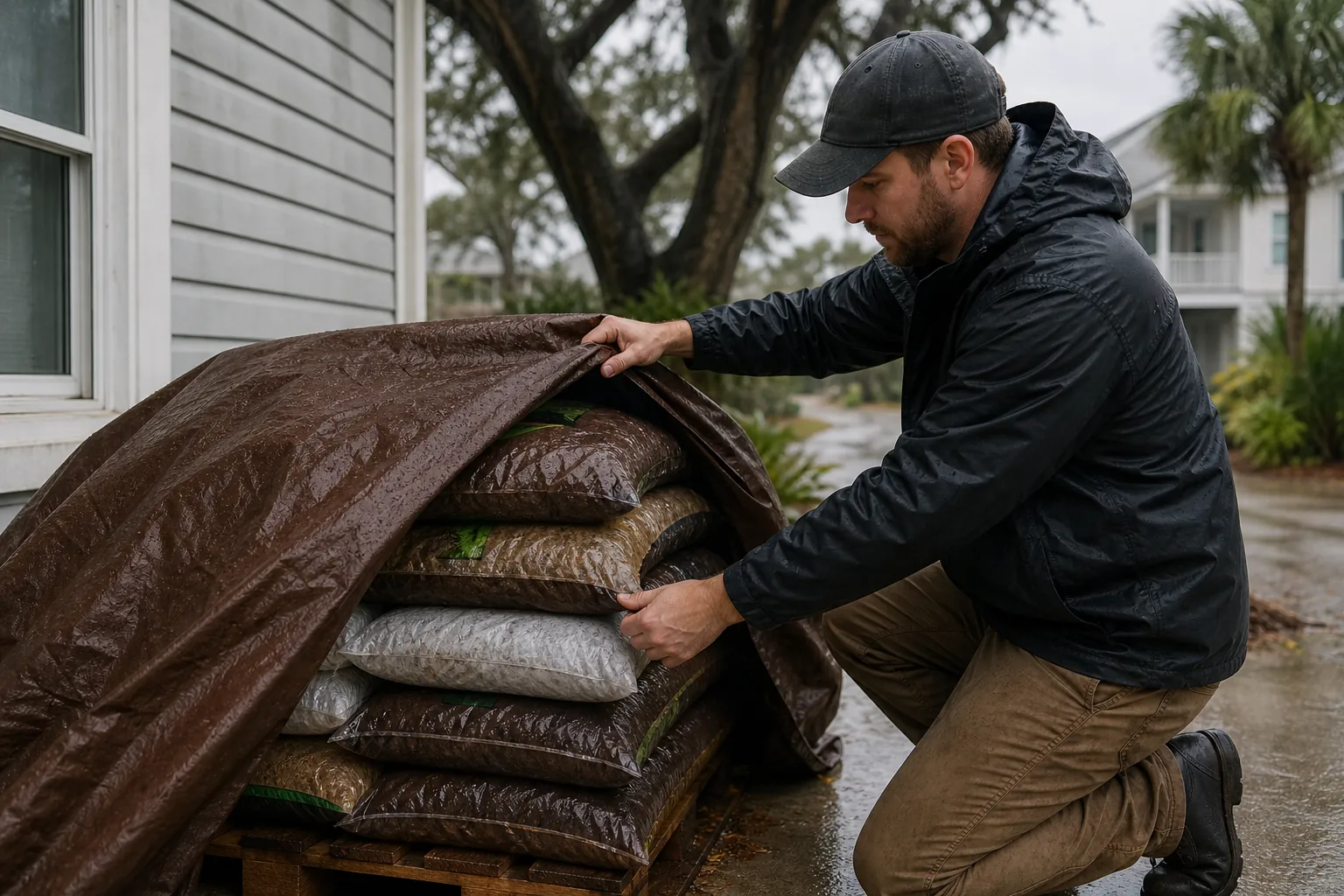
For outdoor storage, choose a location away from known runoff paths. A cover can help protect ordinary supplies from rain, but it does not make a low spot floodproof. Avoid placing bags where rising water could trap them against a doorway or carry their contents toward a drain.
What Is The Best Way To Contain Bulk Mulch, Soil, And Gravel?
Reduce exposed bulk material where practical, then contain the remaining stock without blocking drainage. Bulk piles need a different approach from bagged supplies because water can move through them or carry loose particles away.
If conditions and your project schedule allow, finish moving supplies to their intended location before deteriorating weather. Do not rush to install material in a drainage swale or another unsuitable area just to empty a pile.
For material that must remain stored, use an appropriate containment method for the amount and location. Smaller quantities may fit into durable, lidded containers rated for their weight. Larger quantities may require a planned stockpile area or professional relocation.
Keep piles away from curb inlets, roadside ditches, driveway channels, and low areas that collect runoff. Do not use landscape soil or mulch as an improvised barrier across a drainage route.
If you use a tarp, size and secure it for the storage arrangement. A loosely draped cover can become another item that needs securing. Avoid stretching ropes across walking paths or attaching covers to weak structures.
Gravel is heavy, but its weight does not eliminate storage concerns. Scattered stone can obstruct access and complicate cleanup. Keep gravel contained and separate from organic debris so usable material is not mistaken for a disposal pile.
How Can You Secure Pavers, Lumber, Pots, And Equipment?
Keep heavy supplies stable and lightweight supplies enclosed. Pavers, lumber, containers, and equipment have different handling needs, so one storage method will not suit every item.
For pavers and masonry products, inspect the base and stack condition from a safe position. Do not climb on stacks, pull material from an unstable pile, or assume old pallet wrapping makes a load secure.
Store lumber and edging flat where practical, with support that prevents rolling or tipping. Avoid leaning long pieces against a fence, gate, or exterior wall where they could fall into an access route.
- Move empty pots indoors or place them in suitable enclosed storage rather than relying on nesting alone.
- Lower and store freestanding trellises or plant supports when you can do so safely.
- Secure carts and wheelbarrows in a stable location where they will not roll or block a door.
- Store powered equipment according to manufacturer instructions, including guidance for batteries and fuel.
- Keep heavy supplies away from the edge of slopes, retaining walls, and soft ground.
Do not improvise tie-down points on utility equipment, damaged trees, or structures of uncertain strength. If moving or anchoring a large item requires machinery, make that a separate planning task rather than a last-minute lifting project.
Where Should Supplies Go To Keep Drainage And Access Clear?
Choose storage locations that do not interfere with water movement or everyday access. The best available corner of a yard is not necessarily the safest place if it sits in a low area or blocks a gate.
Look for existing signs of runoff: soil washed across a walkway, sediment beside a driveway, or leaves gathered along a shallow channel. These clues can help identify locations to avoid, but they are not a substitute for a drainage assessment.
From a safe position, remove loose surface litter around visible drain openings when appropriate. Do not lift drainage structures, enter culverts, or work in moving water. Contact the responsible property manager or authority about blocked infrastructure.
Maintain a clear route between the house, storage area, and vehicle access. Keep gates operable, and consider where a cleanup crew would need to work after the weather passes.
Regional hurricane-season preparation is relevant across Jacksonville and Duval County, St. Augustine and St. Johns County, Palm Coast and Flagler County, Daytona Beach and New Smyrna Beach in Volusia County, and Titusville, Cocoa, and Melbourne in Brevard County. However, storage conditions, collection rules, and service availability must be checked for the individual property.
Do not assume guidance for one municipality establishes pickup arrangements elsewhere. This article offers preparation advice across the corridor without extending a business service-area claim.
Should You Remove Existing Yard Debris Before Bad Weather?
When safe and practical, remove existing loose debris before adding more storage or staging piles. Old branches, discarded landscaping materials, and packaging can consume the space you need to secure usable supplies.
Start by separating materials. Keep clean landscape stock apart from vegetation, household bulk items, construction remnants, and products requiring special handling. A mixed pile can make disposal planning harder.
Do not assume every unwanted item is suitable for a grapple truck. Explain what you have and ask the hauler to confirm accepted materials, preparation requirements, and access needs before arranging collection.
Our Volusia County bulk waste pickup guide offers a separate discussion of bulk material planning. For vegetation-specific considerations, see the bamboo debris hauling guide for Volusia County. These resources do not establish Duval County collection rules.
Avoid major last-minute pruning that creates more debris than you can safely manage. Tree work near power lines, damaged limbs, or uncertain tree stability belongs with the appropriate qualified professionals.
If removal cannot be arranged safely before weather deteriorates, focus on safe containment and clear access. Do not put a new pile into a street, drainage feature, or travel lane simply to move it away from the house.
How Can You Prepare A Debris Pile For Later Grapple Truck Cleanup?
Plan the collection location with the hauler before building the pile. Grapple truck cleanup requires workable access and a suitable loading area, not just a visible heap of branches.
Keep reusable supplies out of the collection pile. Clearly identifying what stays and what goes helps reduce confusion, especially when several people are cleaning the same property.
- Describe the material types and approximate pile dimensions when requesting hauling guidance.
- Keep piles clear of overhead wires, tree limbs, fences, parked vehicles, and other obstacles.
- Leave mailboxes, gates, utility access points, and pedestrian routes unobstructed.
- Do not place debris over drains, irrigation equipment, or features you cannot clearly locate.
- Tell the hauler about soft ground, narrow entrances, private roads, or access restrictions before scheduling.
Do not choose a specific setback by guesswork. The necessary clearance depends on the equipment, site, and applicable collection requirements. Our articles on contractor debris pile access and debris piles near mailboxes explain considerations for Volusia County planning.
If access uses a shared or privately maintained road, confirm permission and site suitability. The private-road grapple truck pickup guide provides related planning questions, not a promise that any particular road can accommodate a truck.
What Order Should You Follow For A Final Supply Check?
Use a simple sequence that prioritizes safe, achievable work. Stop outdoor preparation when conditions make it unsafe, and follow official instructions for your location.
- Inventory your supplies and identify which items are usable, damaged, or already intended for disposal.
- Move lightweight loose items into suitable enclosed storage before tackling heavier materials.
- Check bagged products and labeled containers, then store them according to their instructions.
- Contain bulk stock while keeping drainage routes and low collection areas clear.
- Inspect heavy stacks and equipment without climbing, overloading storage, or attempting unsafe lifts.
- Separate existing debris and confirm any planned hauling arrangement directly with the provider.
- Walk the remaining access routes and verify that doors, gates, drains, and utility access points are unobstructed.
- Photograph stored supplies and planned debris areas from a safe location for your own records and later coordination.
Afterward, make a short list of unfinished tasks. Distinguish essential safety issues from cosmetic work so you are not tempted to continue unnecessary outdoor preparation when conditions worsen.
This is an evergreen preparation checklist, not a current storm advisory. Check current National Hurricane Center information, your local National Weather Service forecast, and local emergency-management instructions before making weather-related decisions.
Frequently Asked Questions About Securing Landscape Supplies
Can I leave unopened mulch bags outside?
You can store them outdoors if the location and protection are suitable, but unopened packaging does not guarantee protection from water or movement. Keep bags stable, away from runoff routes, and protected according to product guidance. Enclosed storage is preferable when suitable space is available.
Is a tarp enough to secure a soil pile?
No. A tarp is only one part of containment. The pile location, drainage exposure, cover condition, and fastening arrangement all matter. A loose tarp can create another hazard, and a cover will not prevent water from reaching a pile stored in a low area.
Should I put landscaping supplies beside the curb?
Not simply to clear the yard. Usable supplies should remain separate from collection areas, and neither supplies nor debris should obstruct drainage or travel. If curbside debris collection is planned, confirm the placement requirements with the responsible collector before moving material.
Can gravel and pavers go into a yard-debris pile?
Do not assume they can. Stone, masonry, soil, and vegetation may require different handling. Tell the hauler exactly what is present and obtain acceptance guidance before combining materials. Keep reusable pavers and gravel separate from anything designated for disposal.
When should I inspect supplies after severe weather?
Wait until conditions are safe and official guidance allows outdoor activity. Avoid standing water, damaged electrical equipment, unstable stacks, and fallen wires. Inspect from a safe position first, then decide whether professional help is needed before moving heavy or damaged materials.
Does this Duval County guide confirm local hauling service?
No. It provides regional preparation advice and does not establish Daytona Grapple Trucks service availability in Jacksonville or Duval County. Call with your property location, material description, and access details to ask whether your project is within the service area and suitable for the equipment.
Keep Supplies Protected And Cleanup Practical
A useful preparation plan leaves landscape stock contained, drainage routes open, and debris clearly separated. It also avoids rushed lifting, unstable stacking, and disposal assumptions that could complicate later cleanup.
For questions about debris hauling or grapple truck cleanup, call Daytona Grapple Trucks at (386) 481-7913. Share your location, material types, and access conditions so service availability and project fit can be discussed before you build a collection pile.
Call (386) 481-7913 to talk through next steps.