
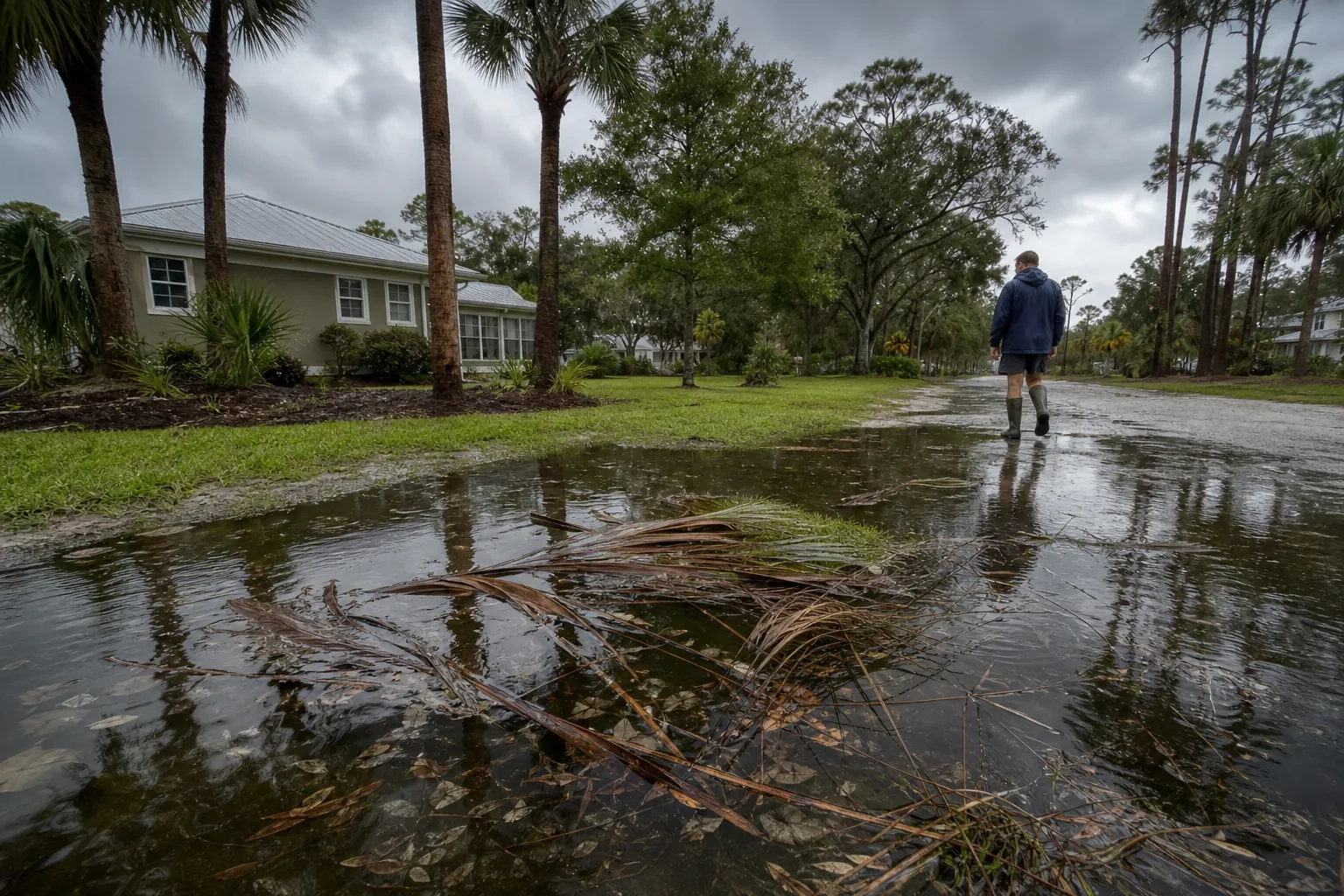
Standing water can conceal sharp branches, loose fencing, tangled vines, and unstable debris piles. In Brevard County, the safest first step is to stay out of pooled water, inspect from dry ground, and keep children, pets, and vehicles away until hidden hazards can be assessed.
This guide addresses standing water and hidden yard debris hazards in Brevard County with practical, regional preparation advice for Titusville, Cocoa, Melbourne, and nearby communities. It is not a current weather advisory or a promise of local hauling availability. Before arranging pickup, confirm that a provider serves your address and accepts the material involved.
The goal is to make cleanup decisions without turning a wet yard into an injury, equipment-access, or drainage problem. For broader seasonal planning, see the hurricane-season yard readiness guide for Northeast and Central Florida.
What hazards can standing water hide in a yard?
Standing water can hide both debris and changes in the ground beneath it. Even shallow puddles may obscure objects that could puncture footwear, damage a mower, or catch a foot. Cloudy water makes it difficult to judge where a branch ends or whether a depression is deeper than the surrounding lawn.
A familiar yard is not automatically safe after heavy rain. Loose material can move, mulch can cover small obstacles, and saturated soil may no longer support the weight it normally carries.
- Broken branches can have pointed ends that remain invisible below the water surface.
- Fence wire, garden edging, and loose fasteners can create cutting or snagging hazards.
- Vines, palm material, and flexible branches can wrap around tools or entangle a foot.
- Displaced pavers and concealed holes can cause trips even when the surrounding ground looks level.
- Debris piled against a fence or tree can shift when someone pulls material from underneath it.
- Water near electrical equipment may present a hazard that requires professional evaluation rather than yard cleanup.
Do not use your feet to search for submerged objects. Do not send a mower through pooled water to discover what is underneath. If you cannot see the ground, postpone hands-on work in that area.
Unknown water may also contain contaminants. Gloves and boots are useful for ordinary cleanup, but they do not make entering floodwater safe. Keep cleanup focused on visible material reachable from stable, dry ground.
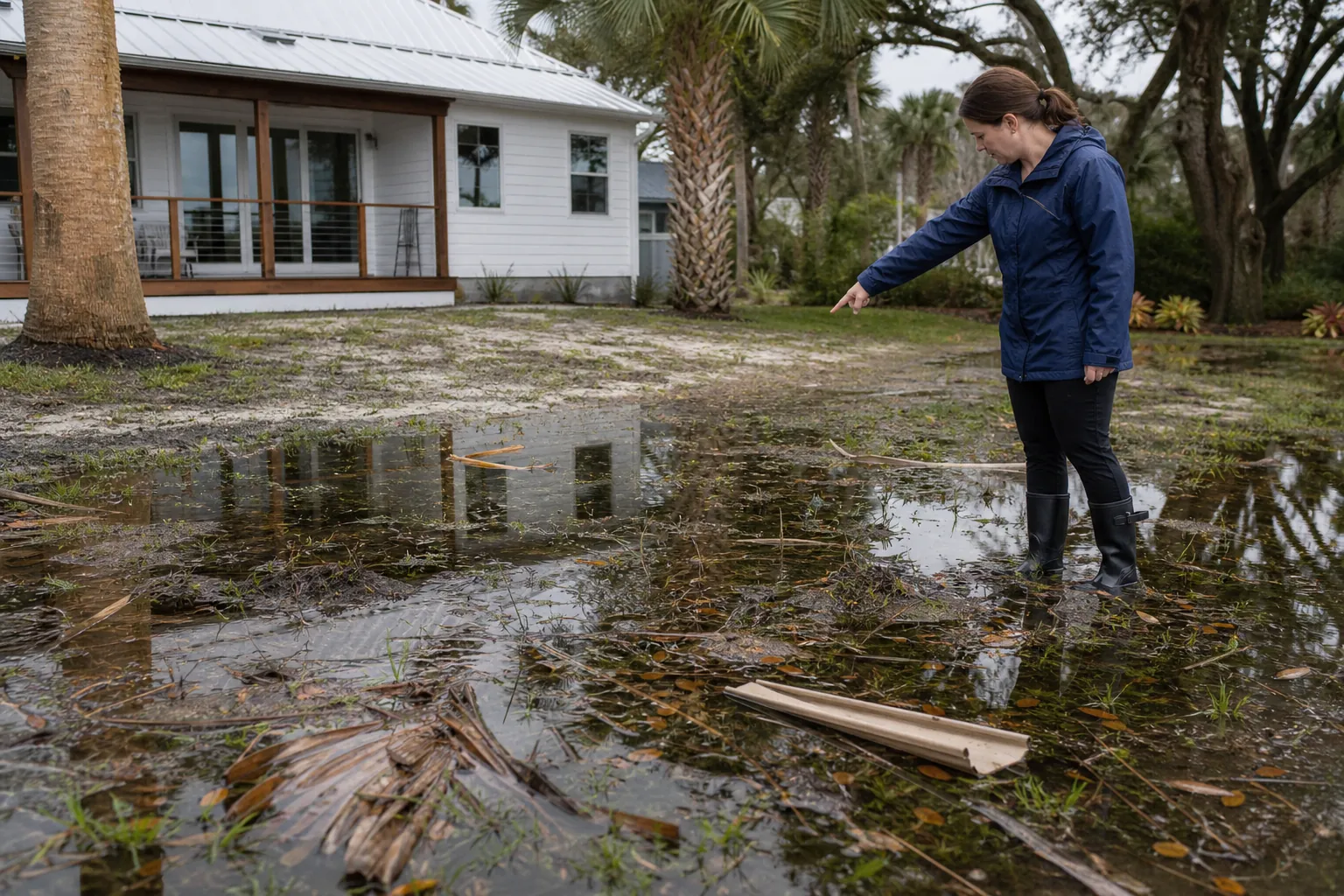
How can you inspect a wet yard without entering standing water?
Start with a perimeter check from a dry walkway, driveway, or other stable surface. Look for changes rather than trying to inspect every submerged object. A missing fence panel, displaced planter, or branch lodged near a drain can indicate where additional material may be hidden.
Use daylight whenever possible. Take photographs from safe positions so you can compare conditions as the water recedes and explain the problem to a landscaper, drainage professional, or debris hauler.
- Check for immediate hazards from a safe distance. If you see fallen wires, damaged electrical equipment, or a tree resting on a structure, stop and contact the appropriate utility or emergency resource.
- Identify areas that remain dry and firm. Use those areas as observation points, not as proof that the entire yard can support equipment.
- Look for visible debris at the edges of pooled water. Note sharp material, unstable piles, and objects caught against fences.
- Observe drainage openings without stepping into water. Record whether leaves or branches appear to cover a grate, inlet, or swale.
- Mark the unsafe area from dry ground. Keep barriers outside the water and away from roadways or pedestrian routes.
- Recheck after water levels fall. Newly exposed debris and ground damage may change the cleanup plan.
A long-handled tool is not a substitute for knowing what is submerged. Avoid probing water near utilities, drains, or unknown metal objects. If an item cannot be identified and reached safely, leave it for a qualified professional.
Also watch for wildlife without approaching it. Debris creates sheltered spaces, so lifting a pile blindly or reaching into thick vegetation is a poor first inspection method.
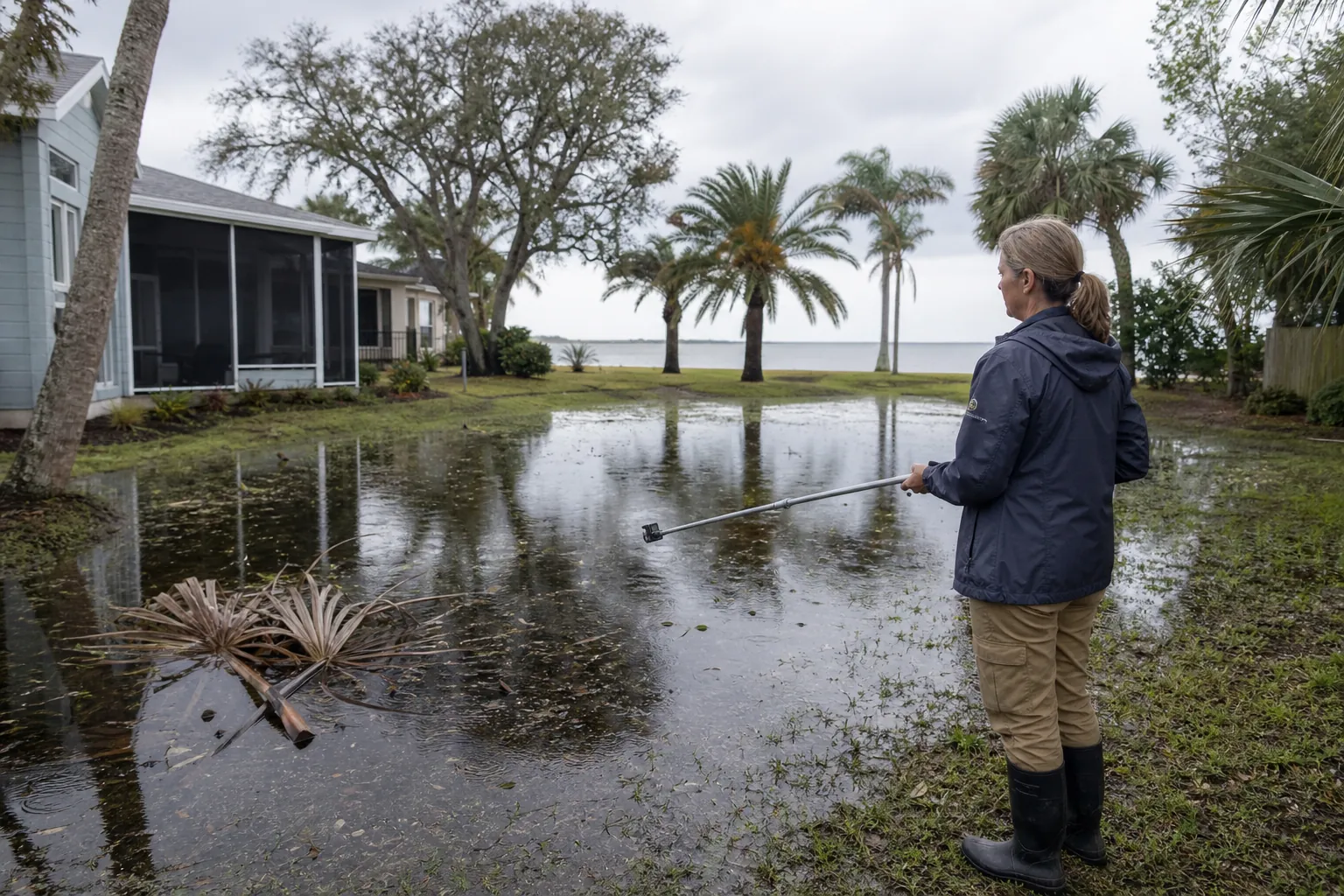
When does yard debris become a drainage problem?
Yard debris becomes a drainage concern when it blocks an existing flow path or collects where water enters a drainage system. Leaves, small twigs, and grass clippings can mat together, while larger branches can trap additional material behind them.
That does not mean every puddle is caused by debris. Saturated soil, grading, damaged drainage infrastructure, and other site conditions can also contribute. Removing a visible obstruction may help restore an existing path, but it does not diagnose the entire problem.
Pay attention to low spots, swales, downspout discharge areas, and visible drainage inlets. These are poor locations for temporary debris storage, even when they seem conveniently out of the way.
- Keep loose yard material away from visible drain openings so it cannot collect across the entrance.
- Leave existing swales unobstructed rather than using them as holding areas for branches.
- Move bagged leaves away from low areas when the bags can be reached and handled safely.
- Keep downspout outlets clear without redirecting water toward neighboring property.
- Ask the responsible property manager or drainage authority about blocked shared infrastructure instead of opening or altering it yourself.
Do not remove drain covers, enter culverts, or excavate a new channel as an improvised fix. Those actions can introduce hazards and affect other properties. A grapple truck removes accessible debris; it does not repair drainage systems or resolve an unknown grading issue.
If ponding repeatedly returns after debris is removed, document where it appears and how long it remains. A drainage assessment may be more useful than another round of hauling.
What should you remove before heavy rain and wind?
Remove loose, manageable debris before wet weather makes it harder to see, lift, and stage. Concentrate on material already on the ground and objects that can obstruct drainage or move around the property.
This is different from emergency tree work. Dead limbs overhead, leaning trees, or branches touching utility lines require an appropriate professional. Do not climb, cut overhead limbs, or work near electrical lines as part of a quick yard cleanup.
Walk the property while conditions are safe and identify unfinished maintenance piles. Small amounts of scattered material can become a larger cleanup problem when they collect along fences or in low areas.
- Gather loose branches into a designated dry staging area that does not block drainage.
- Bag ordinary loose leaves where the intended collection provider accepts that packaging.
- Secure lightweight outdoor items that are not debris, including empty pots and movable decorations.
- Separate leftover lumber, wire, and damaged fencing from vegetation so the pickup request accurately describes the load.
- Check side yards and spaces behind sheds for material that is easy to overlook during routine mowing.
- Arrange removal of existing large piles before adding more material from new trimming work.
Do not rush a major pruning project simply to create a cleaner-looking yard. Cutting generates new debris, and an unfinished pile can leave you with more material to manage. Coordinate trimming and removal so the disposal plan is ready first.
For seasonal priorities beyond standing water, use the regional yard readiness guide. This article focuses on concealed hazards and wet-ground cleanup decisions rather than a full property preparation checklist.
How should you stage wet debris for grapple truck pickup?
Stage debris only where the ground is stable, the material is visible, and the provider has approved the pickup location. Do not drag submerged material into a pile simply to make the yard appear ready.
A grapple truck needs more than a large pile to complete a pickup. The operator must evaluate road access, truck positioning, overhead clearance, nearby objects, and the reach needed to handle the material. Wet ground adds another reason to discuss the site before moving debris.
Keep the pile separate from fences, parked vehicles, utility equipment, and landscaping you want to preserve. Do not assume that a loader can safely extract branches tightly wedged around permanent objects.
- Describe whether the pile contains vegetation only or includes construction material, fencing, or other mixed debris.
- Tell the provider if standing water remains around the pile or along the proposed access route.
- Provide photographs showing the whole pile and its surroundings rather than only close-up views.
- Identify overhead lines and nearby structures without attempting to measure clearances yourself.
- Ask where to place material before using a roadside shoulder, shared space, or public right-of-way.
- Keep pedestrian routes, driveway entrances, mailboxes, and drainage paths unobstructed.
Pickup arrangements vary by property and provider. Do not assume that municipal collection, private hauling, and community cleanup use the same staging rules. Confirm the intended collection method before relocating a large pile.
Daytona Grapple Trucks has a Volusia County debris pile access guide that explains access considerations. Its geographic context matters: use it for general planning concepts, not as proof of service availability or local requirements in Brevard County.
If the only possible staging area is saturated, ask the provider how to proceed. Driving across soft turf or moving a heavy load with unsuitable equipment can create ruts and complicate the job.
When should cleanup stop and professional help begin?
Stop when the work involves uncertain electrical conditions, unstable trees, submerged sharp material, or ground that cannot safely support you. The right professional depends on the hazard, not simply on the amount of debris.
A debris hauler handles accepted material that can be collected safely. A utility addresses damaged electrical infrastructure. A tree professional evaluates hazardous limbs or trees. Drainage problems may require a qualified contractor or the entity responsible for the drainage system.
Avoid treating hauling as a substitute for those assessments. For example, a branch connected to a damaged tree is not necessarily a loose item ready for loading. A pile containing unidentified containers is not an ordinary vegetation pile.
- Stop if water conceals the objects you would need to lift or cut.
- Stop if removing one branch could release a larger suspended or leaning piece.
- Stop if the debris touches a wire or sits beneath damaged electrical equipment.
- Stop if the work requires entering a culvert, ditch, or other confined or unstable area.
- Stop if you find unknown chemicals, damaged containers, or material that the hauler has not agreed to accept.
For nonemergency cleanup planning, prepare a clear description of the material, photographs, the property address, and any access limitations. This helps a provider decide whether hauling is appropriate or another assessment should come first.
Community properties need coordination as well. Residents should not combine piles in a shared drainage area without authorization. Property managers can review the Volusia County HOA debris hauling guide for general coordination ideas while checking their own location's requirements.
What should you check after the water recedes?
Inspect the newly exposed ground before resuming mowing, driving, or routine yard use. Receding water reveals debris, but it does not immediately restore soil strength or make every cleanup task safe.
Walk only where footing is firm and visible. Look for exposed roots, displaced edging, loose screws, and small branches that could be missed from a distance. Keep children and pets away until the inspection and basic cleanup are complete.
Separate material as you identify it. Ordinary vegetation should not conceal wire, glass, or construction scraps in a hauling pile. Tell the provider about mixed material instead of covering it with leaves.
Finally, compare the area with your earlier photographs. If a drainage opening is still obstructed, a fence has shifted, or ponding persists without visible debris, arrange the relevant assessment. Clearing the yard is one task; confirming that the property is ready for normal use is another.
Frequently asked questions about hidden yard debris
Can I walk through shallow water to collect branches?
No, shallow water can still conceal sharp objects, uneven ground, and electrical hazards. Wait until the ground and material are visible, or have the situation assessed by an appropriate professional.
Will removing a debris pile fix standing water?
Not necessarily. Removal may clear an obstruction, but persistent ponding can involve saturated soil, grading, or drainage infrastructure. Observe the area after cleanup and seek a drainage assessment if the problem continues.
Can a grapple truck collect debris directly from flooded ground?
Do not assume it can. The provider needs to evaluate visibility, accepted materials, truck access, and loading conditions. Explain the water conditions before scheduling or relocating material.
Should wet vegetation and damaged fencing go in one pile?
Keep them separate unless the intended provider specifically instructs otherwise. Mixed material affects handling and acceptance, and concealed wire or fasteners can create hazards for anyone preparing the pile.
Does this guide confirm Daytona Grapple Trucks serves Brevard County?
No. The Brevard County guidance is regional safety information. Confirm service availability for your exact address directly with Daytona Grapple Trucks before planning a pickup.
What information should I have ready when calling a hauler?
Have the address, photographs, a description of the debris, and details about standing water, overhead obstacles, and access. Mention any mixed or unidentified material so the provider can discuss appropriate next steps.
Plan cleanup around visibility and safe access
The best cleanup sequence is straightforward: keep people out of standing water, inspect from dry ground, wait for concealed hazards to become visible, and arrange the right help for the remaining material.
For debris hauling questions, call Daytona Grapple Trucks at (386) 481-7913. Describe your location and site conditions, and confirm service availability and accepted materials before staging a pile. A short planning conversation can help you avoid moving debris twice or placing it where it creates another drainage problem.
Call (386) 481-7913 to talk through next steps.