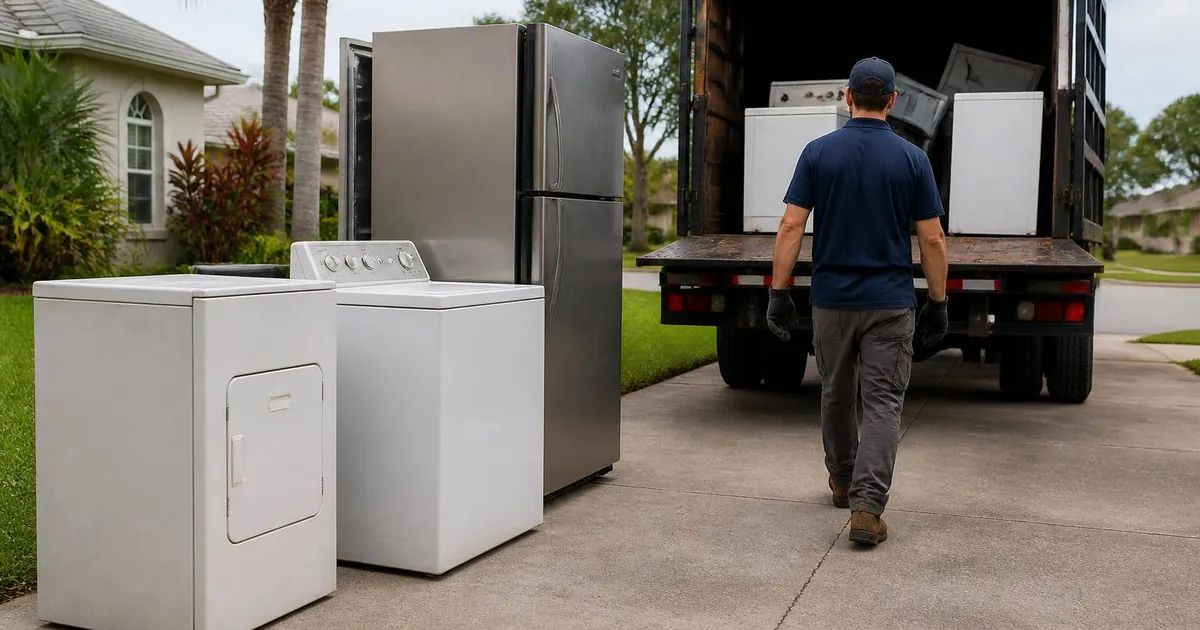
To arrange an appliance debris hauling service, first confirm that the hauler accepts the exact appliance and can collect it from your property. Share its size, location, and pickup needs before setting a date. Daytona Grapple Trucks is described as a grapple truck debris hauling business, but the supplied site facts do not confirm appliance service.
How do you plan appliance debris hauling in Deltona?
Start by naming the appliance and asking if the hauler accepts it. Share its size, condition, and pickup location. These details help set clear expectations before you arrange a collection. For broader project planning, see the post-renovation hauling plan and tile debris pickup checklist.
The phrase appliance debris hauling can cover very different items. A small countertop appliance is unlike a large refrigerator or washer. Do not assume one pickup plan fits every item.
Daytona Grapple Trucks is described in the supplied site facts as a grapple truck debris hauling business. Those facts do not list appliance hauling as a confirmed service. Ask the company directly about the specific item before relying on a pickup plan.
Write down what you need removed before you call or send a request. Include the appliance type, number of items, and whether each item is inside, outside, or in a hard-to-reach spot. Clear details can help avoid confusion.
- Name each appliance and give its approximate size before asking about pickup.
- Describe where the item sits and how a hauler could reach it.
- Ask if the provider accepts that item and what preparation it needs.
- Confirm the collection plan before moving the appliance to another spot.
What details should you confirm before booking?
Confirm the accepted item, collection point, access needs, and any preparation steps before you set a date. Ask who will move the appliance and what happens if access is blocked. A clear scope helps you compare options, as shown in window pickup arrangements and door debris planning.
Ask whether the service covers the appliance itself, related loose parts, or both. Do not treat an answer about general debris as approval for every appliance. Get a clear response about each item you plan to set out.
Describe the route from the appliance to the pickup point. Mention stairs, narrow gates, low doorways, or other barriers if they apply. The provider can then tell you if the access plan works for its equipment and crew.
Also ask whether the appliance must be empty, disconnected, or placed in a certain spot. These steps can depend on the item and provider. Do not disconnect a unit or handle a part if you are unsure how to do so safely. Seek qualified help when needed.
Keep the provider's answers with your notes. A short written list can help you confirm what was agreed and spot any open questions before collection. It can also help another person at the property follow the same plan.
Which pickup option fits your appliance and site?
The right choice depends on the appliance, where it sits, and what local programs accept. Ask about a private hauler, a retailer take-back option, or a public waste program. The siding pickup planning guide and cabinet removal steps offer related planning examples.
A hauler may be useful when you need an item collected from a property, but confirm its scope first. A retailer may offer a take-back option tied to a new purchase. Public programs may have their own rules for item type, location, and collection dates.
Do not assume that an appliance accepted by one option will be accepted by another. Check each option's current terms. Volusia County's Solid Waste and Recycling guidance notes that waste rules can vary by material, location, and date. Use current local guidance to check the right route for your address.
Compare options using the same questions. Check item acceptance, pickup location, preparation, and timing. This gives you a fair view without relying on a broad claim such as full-service pickup.
If the appliance is part of a larger cleanout or repair, separate it from other debris in your notes. Some materials may have different rules. FEMA and the U.S. EPA offer general debris planning guidance, while local rules still control.
- A private hauler may collect only the items it approves in advance.
- A retailer may set take-back terms tied to a new appliance purchase.
- A public program may limit accepted items by place, material, or date.
- A recycling option may ask you to follow its own preparation steps.
Compare the scope, not the label
A service name alone may not explain what it collects. Ask whether it takes the appliance, loose parts, and any separate materials. Then ask where the item must be placed and who handles it at the property.
If two options appear similar, compare their written terms and current availability. Do not assume that a service covers removal from indoors, stairs, or a specific type of unit. Confirm those details with the provider.
How can you prepare the appliance and pickup area?
Prepare only after the provider explains what it accepts and how it wants the item set out. Keep the route clear and tell the provider about access limits. For related project details, review the flooring debris Q&A and tile pickup checklist.
Start with the pickup route, not with moving the appliance. Look for items that block a doorway, path, or agreed collection point. Tell the provider about tight turns, steps, soft ground, or other limits before setting out the item.
Ask if the appliance should stay where it is until collection. Large units can be hard to move, and each property has different access. Do not try to lift, tilt, or take apart an appliance unless you know the safe method and have suitable help.
Ask what should happen to cords, shelves, drawers, and loose parts. The provider may have a preferred way to handle them, or a separate rule may apply. Keep small parts together only if the provider says that is suitable.
If the item may need special handling, ask the provider or local waste authority for direction. The Volusia County waste guidance is a place to check local rules, but confirm that the specific guidance applies to your address and item.
- Confirm the collection point with the provider before moving the appliance.
- Clear the agreed route and note any steps, gates, or tight turns.
- Follow the provider's stated preparation steps for the specific appliance.
- Keep people and pets away from the planned collection area.
What can change the timing or collection plan?
Timing can depend on item acceptance, site access, the provider's schedule, and any local program rules. Ask which details could affect your planned date and how changes are handled. Related examples include renovation debris planning and pickup arrangement comparisons.
Do not assume a collection date until the provider confirms it. Ask what information it needs to review the request and how it will confirm the plan. The supplied facts do not establish availability or response times for appliance pickups.
Access can affect the work plan. A unit inside a home may need a different arrangement than one already at an agreed outdoor spot. Tell the provider about the route and ask if its service includes moving the appliance to that point.
Local rules may also shape disposal choices. Collection practices can change by material, location, or date. Check the current guidance for your address instead of relying on an old notice or a neighbor's experience.
If the pickup date changes, ask who should be contacted and whether the item should remain in place. Avoid moving it to a curb or shared area unless the provider or local authority has told you that is allowed.
How should you handle mixed appliance and renovation debris?
List appliances separately from other debris, then ask how each material should be handled. Different items may have different collection rules. For project context, see the cabinet debris removal steps and siding debris pickup guide.
A home project can leave appliances, packaging, wood, metal, and other loose material. Do not assume one provider or collection route accepts the whole pile. Make a short inventory and ask about each group.
Keep items separate until you know the accepted plan. This can make it easier to explain what needs collection and to follow local sorting instructions. Volusia County provides waste and recycling guidance, but check its current rules for the material and location involved.
For debris linked to a storm or other emergency, use guidance from the relevant public authorities. FEMA and the U.S. EPA provide general debris planning information. Those sources do not confirm that a local hauler offers a specific pickup or that an item is eligible for a local program.
If another contractor is working at the property, agree on who will handle each material. Clear roles can help prevent an appliance from being mixed into a pile that follows a different disposal route. Put any open questions in writing before work begins.
Keep item groups easy to identify
Use a simple list that names each appliance and each debris group. Note which items need a separate answer from the provider or local authority. Do not mark an item as approved until you have received clear confirmation.
If an item has loose parts or contents, ask how to handle them. The right steps can depend on the item and the collection option. Follow the instructions from the provider or the proper public authority.
What should you do if no provider confirms appliance pickup?
Pause before moving the item or setting it out. Check another approved disposal route, such as a local waste program or a retailer option, and confirm its current rules. See door debris planning and the flooring debris Q&A for related scope questions.
If a provider cannot confirm the appliance, treat that as an open question rather than an approval. Ask whether it can suggest a public resource, but check any suggestion with that program directly. A general debris service description does not establish appliance acceptance.
Use the appliance maker or retailer as another source of information about take-back options. Ask if any option applies to your item, location, and purchase. Terms can vary, so confirm the details before planning transport or collection.
Check current public guidance for local rules. Volusia County's Solid Waste and Recycling page explains that rules vary by material, location, and date. Confirm which rules apply at your address and whether the appliance is covered.
Keep the appliance in a safe, stable place while you confirm the next step. Do not leave it in a roadway, shared path, or public area unless the proper authority has allowed that placement. If you cannot move it safely, ask a qualified person for help.
- Ask the provider to state clearly whether it accepts the exact appliance.
- Check current local waste guidance for rules that apply to your address.
- Ask a retailer or maker if a take-back option may fit your item.
- Wait for clear direction before placing the appliance in a public area.
Questions about next steps? Call Daytona Grapple Trucks at (386) 481-7913 or review debris.
Frequently Asked Questions
Should I move an appliance outside before asking for pickup?
No. First ask where the provider wants the item and whether it can collect from its current location. Moving a large appliance may be difficult, and the pickup plan may depend on access. If you are unsure how to move it safely, leave it in place and seek qualified help.
What information should I give when I request a pickup?
Give the appliance type, number of items, approximate size, and current location. Describe the route to the collection point, including stairs, gates, or tight spaces. Ask if the provider needs photos or other details. Share those only through a method the provider approves.
Can a hauler take appliances with other household debris?
That depends on the provider and the items involved. List appliances and other debris separately, then ask what it accepts in one visit. Do not assume that approval for general debris includes appliances or loose parts. Check local waste guidance for any separate rules.
Do the supplied facts confirm appliance pickup by Daytona Grapple Trucks?
No. The supplied site facts describe Daytona Grapple Trucks as a grapple truck debris hauling business, but they do not list appliance pickup as a confirmed service. Contact the business to ask about the exact appliance, access needs, and current options before making plans.
Where can I check disposal rules for an appliance in Deltona?
Check current guidance from the local waste authority for your address and item. Volusia County's Solid Waste and Recycling information says rules can vary by material, location, and date. If the correct program is unclear, contact the authority directly before moving or placing the appliance.
Sources
- Solid Waste and Recycling, Volusia County
- Planning for Natural Disaster Debris, U.S. EPA
- Debris Removal Guidelines Help You and Your Community, FEMA
Call (386) 481-7913 to talk through next steps.