
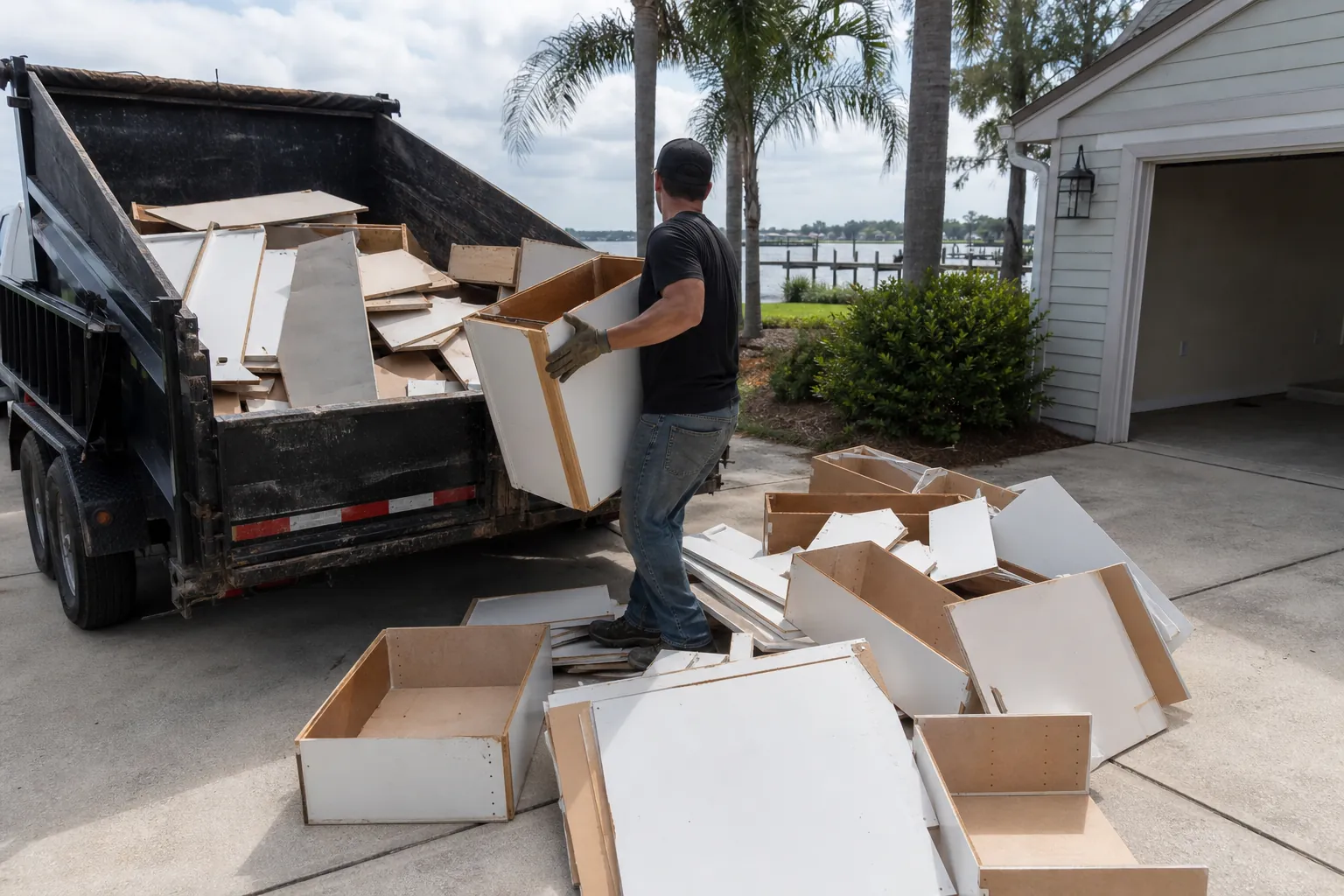
Cabinet debris removal starts with a clear plan for taking out, sorting, and moving old cabinets. In New Smyrna Beach, first check what materials you have, where they can go, and what local rules apply. Then choose a removal method that fits the pile, access, and your own ability to handle the work safely.
What does cabinet debris removal involve?
Cabinet debris removal is the process of clearing old cabinets and related material from a home or work area. The steps can include taking cabinets apart, separating different materials, and arranging a suitable way to move the debris. Start with a list of what needs to go and where it is now.
A kitchen update can leave more than cabinet boxes. You may also have doors, shelves, hardware, trim, packaging, or pieces of a countertop. The mix matters because each item may need a different handling or disposal plan. Do not assume every part belongs in one pile.
Walk through the work area before you begin. Note the number of cabinets, their size, how they are attached, and the route from the room to the place where debris will be staged. Check the route for narrow doors, steps, low branches, and other obstacles. A clear plan can prevent rushed lifting and repeated moves.
If the project includes storm damage or other outdoor waste, use the Florida storm debris cleanup guide to think through the broader cleanup. For a wider view of material sorting, see the Volusia County storm debris sorting guide. These guides address debris planning, while local rules and the actual materials still shape what you can do.
Keep the cleanup area separate from items you plan to reuse. Set aside cabinet parts, tools, and household goods before demolition begins. If you are unsure whether a part contains a material that needs special handling, pause and ask a qualified professional or the appropriate local authority. Do not rely on appearance alone.
How should I prepare old cabinets for removal?
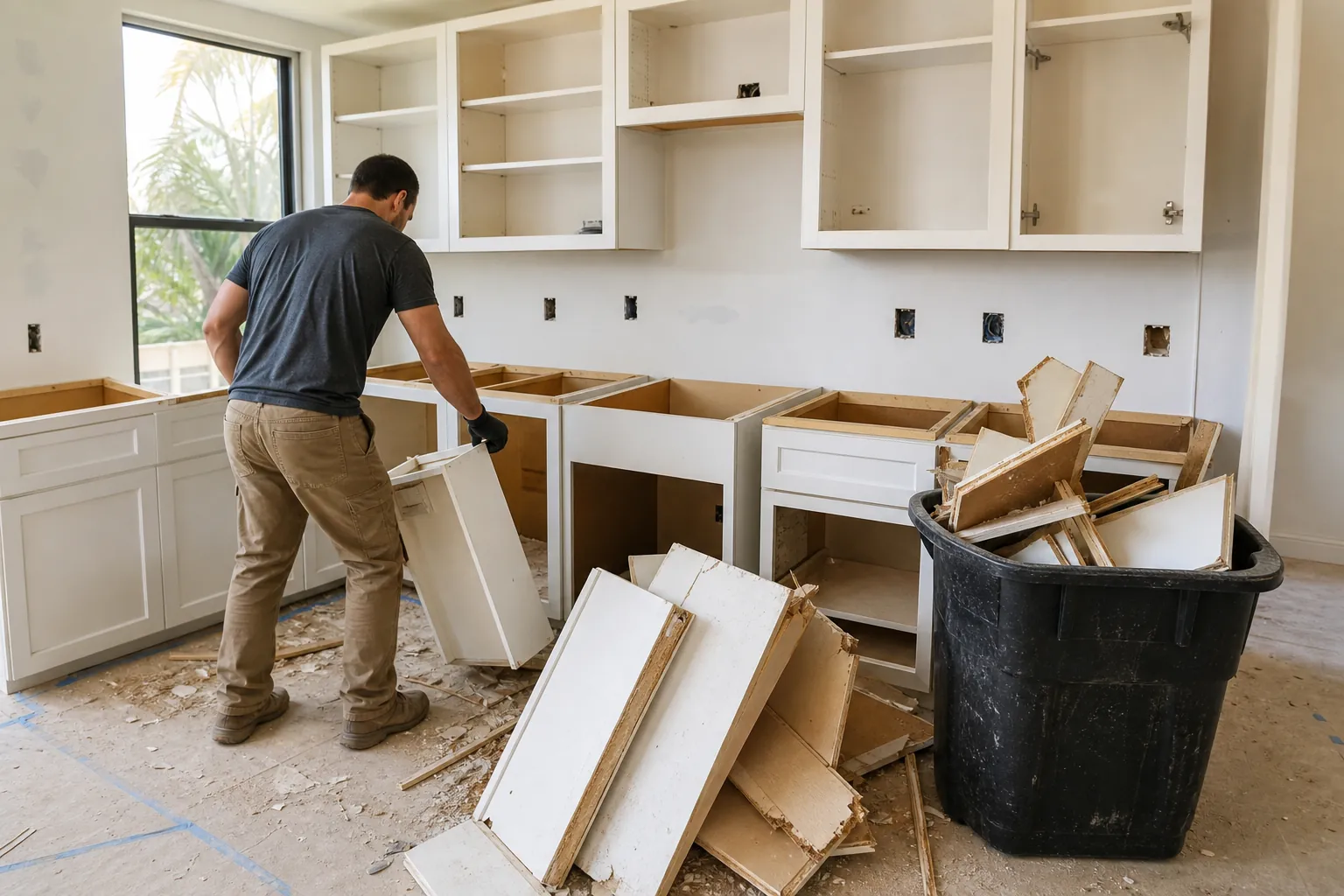
Prepare cabinets by clearing their contents, checking how they are attached, and planning a safe route out. Before removing doors or shelves, identify any parts that may need special care. If the work is beyond your skills or involves a safety concern, stop and ask a qualified professional to assess it.
Preparation begins before tools come out. Empty drawers and shelves, then check nearby floors and counters for items that could be damaged. Make sure children and pets stay away from the work area. If you rent or share the space, confirm who can approve changes and debris handling.
Cabinets can be bulky even when they are empty. A narrow hallway, stairway, or doorway may make a large piece hard to move. Measure the route and compare it with the cabinet size before choosing whether to move whole units or take them apart. Avoid forcing a piece through a tight opening.
Do not assume a cabinet is safe to detach based on how it looks. Hidden fasteners, nearby wiring or plumbing, and wall materials can affect the job. Ask a qualified contractor to handle work that calls for trade skills. Follow tool instructions and use suitable protective gear for the task.
A simple staging plan helps keep the room and exit path clear. Decide where each material will go before work starts. For storm-related debris that may be mixed with renovation waste, review the guide to cleanup after Florida storms and the Florida construction debris pickup rules guide for planning context. Neither replaces a check of current local requirements.
- Empty drawers and shelves, and keep household items away from the work zone.
- Check the cabinet route from the room to the planned staging area.
- Set aside parts you plan to reuse before demolition begins.
- Ask a qualified professional about work that involves hidden utilities or uncertain materials.
- Keep debris piles stable and out of walkways while you plan the next step.
How do I sort cabinet and kitchen renovation debris?
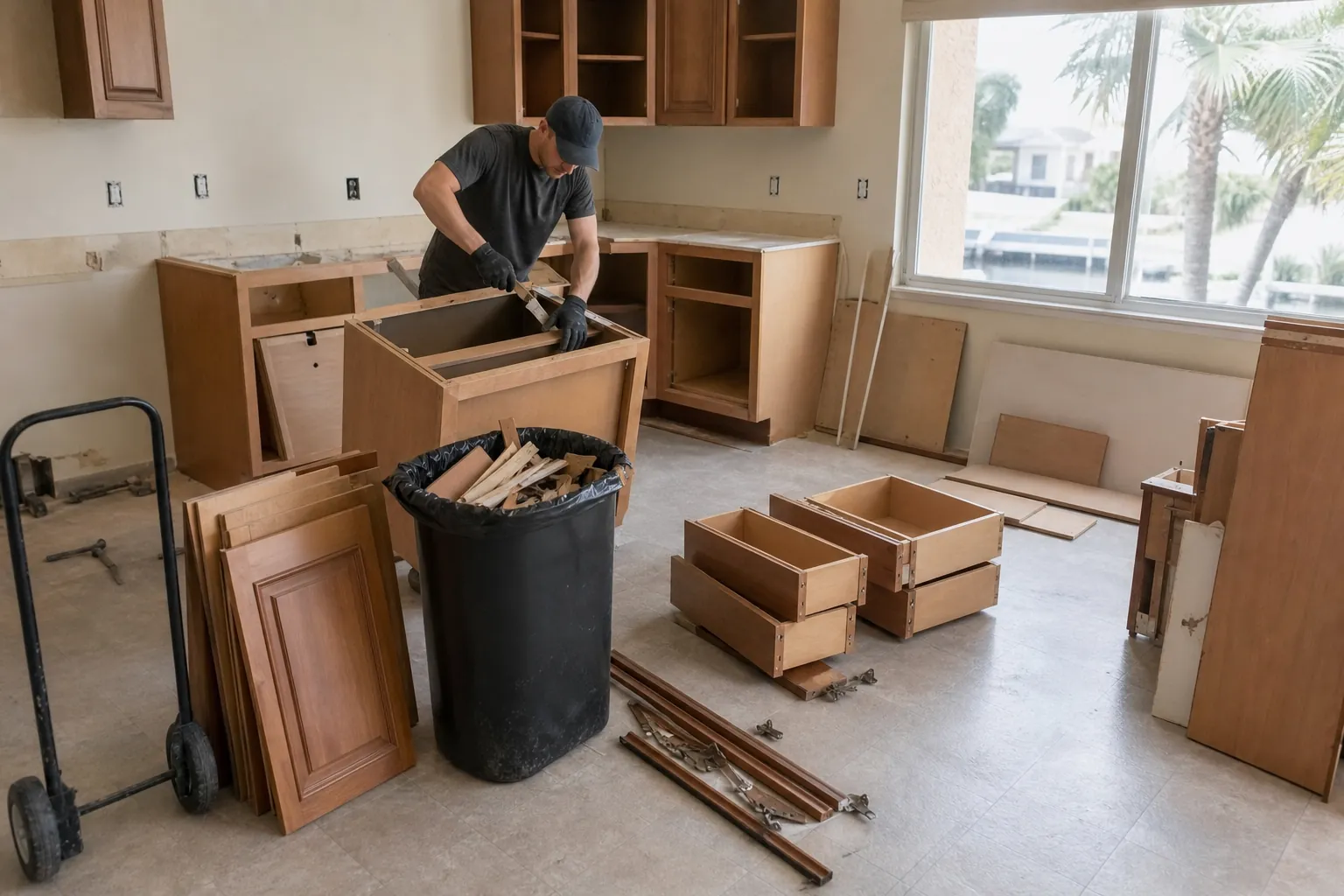
Sort debris by material and condition before arranging disposal or hauling. Cabinet projects may create wood, metal hardware, packaging, and other renovation waste. Local acceptance rules can vary by material and location, so check current guidance before combining items or setting them out for collection.
Start by separating items that are clearly different. Keep metal handles and hinges apart from wood pieces when practical. Separate clean cardboard from heavy debris, and keep household goods that are still usable out of the waste pile. Do not place loose parts where wind or rain can scatter them.
Some kitchen work creates debris beyond the cabinets, such as countertop pieces, flooring, or fixtures. These items may have different handling needs. If you are not sure what a material is, avoid breaking it up or mixing it with other debris until you have checked with a qualified professional or local authority.
Volusia County's solid waste and recycling guidance is a useful place to check county information. Its rules can depend on the material, location, and date, so confirm details for your situation. General disaster debris guidance from FEMA and the U.S. EPA can help with planning and sorting, but it does not establish local pickup availability.
For broader mixed debris, use the Volusia County debris sorting guide as a planning aid. If the pile includes storm waste as well as renovation debris, the Florida storm cleanup planning hub can help you think about the wider task. Check the current rules that apply to each material before arranging collection.
- Keep reusable cabinet parts apart from material you plan to discard.
- Separate metal hardware from larger cabinet pieces when practical.
- Keep cardboard and light packaging away from heavy or wet debris.
- Set aside any material whose identity or handling needs are unclear.
- Check local guidance before placing sorted items out for collection.
What removal option fits my cabinet debris pile?
The right removal option depends on the pile's size, material, location, and route to the pickup point. You can compare a container, a hauling service, or an approved collection option, but do not assume one method accepts every item. Confirm access, accepted materials, and local rules before choosing.
A small, neat pile may be easier to manage than a large mix of cabinets, counters, and packaging. Consider how much debris the project will create and how quickly it will be ready. Also think about where it can sit without blocking a driveway, sidewalk, or work area.
A container may suit some projects, while a truck-based pickup may suit others. Each method has limits that depend on the provider, equipment, site access, and material. Ask what can be loaded, how the pile should be staged, and whether the route to it is clear. Do not infer a provider's services from the name of a vehicle or company.
County or other approved collection options may apply to certain materials or areas. Confirm current rules and availability directly with the relevant authority. The grapple truck versus dumpster comparison can help you frame questions about two common removal methods. For storm waste mixed into the pile, also check the Florida storm debris cleanup overview.
Compare options by what they accept and how they fit the site, rather than by a general label. If the pickup method is unclear, describe the material and access conditions before making plans. Photos of the pile and its route can help someone assess the job, but they do not replace an on-site review when one is needed.
| Factor | What to confirm |
|---|---|
| Material | Which cabinet and renovation materials are accepted? |
| Pile size | How much debris can the method handle? |
| Access | Can equipment or workers reach the staging area? |
| Preparation | How must the pile be sorted and placed? |
How can I plan access and pickup in New Smyrna Beach?
Plan the pickup around the debris location, the route to it, and any local placement rules. New Smyrna Beach is in Volusia County, but that alone does not confirm what a specific collection service accepts. Check current guidance and the removal provider's terms before staging materials outdoors.
Choose a staging spot that does not block doors, driveways, sidewalks, or access for other people. Keep the pile on the property unless you have confirmed that another placement is allowed. If the work area is shared, tell the people affected where materials will sit and how long the area may be in use.
Look at overhead and ground-level access. A truck or crew may need space to reach the debris, but the needs vary by equipment and site. Note soft ground, slopes, parked cars, gates, low branches, and tight turns. Share those details when asking about a pickup so the other party can assess them.
Local collection rules can change by material and location. Check current Volusia County solid waste guidance and ask the relevant local authority if you cannot tell which rule applies. The county source is a starting point, not proof that a particular item will be collected from your address.
If a contractor or removal provider is involved, confirm the planned work and site needs directly. The photos for a grapple truck estimate guide can help you prepare clear pictures of a pile and its access route. If storm debris is part of the same cleanup, review the storm debris planning guide for Florida before mixing it with renovation waste.
- Photograph the full pile and the path from the work area to the staging spot.
- Note gates, slopes, overhead branches, and other access limits.
- Keep debris clear of walkways and places people need to use.
- Confirm accepted materials and placement rules before setting debris outdoors.
What should I confirm before booking debris hauling?
Before arranging hauling, confirm what materials are included, how the pile must be prepared, and what access the job needs. Ask who will handle sorting and loading, and who decides whether an item is accepted. Clear answers help you compare options without assuming that every provider works the same way.
Give a plain description of the project. Say whether the pile contains cabinet boxes, doors, hardware, packaging, or other renovation debris. Share an estimate of the pile's size and photos that show both the materials and the access route. Be clear about items you have not identified.
Ask what the provider needs from you before the scheduled work. This may include a clear staging area or a separate pile for certain materials, but requirements differ. Confirm how changes in pile size or material mix should be handled. Do not treat an informal estimate as confirmation that every item will be taken.
If you are comparing truck-based hauling with a container, ask the same questions of each option. The grapple truck and dumpster option guide offers a starting point for comparing fit. Use the debris hauling photo checklist to plan the information you share, then confirm details directly with the provider.
The configured business information here does not establish specific services, accepted materials, rates, or scheduling terms. Confirm those details with the business before making plans. Keep local disposal rules separate from a provider's terms, since a provider's acceptance does not by itself establish what local rules allow.
What common mistakes can slow cabinet debris removal?
Common problems include mixing materials too soon, underestimating the pile, blocking the access route, and assuming a collection option accepts every item. A brief check before work begins can help you avoid rehandling debris. Keep decisions about special materials or safety concerns with the right qualified person or authority.
One mistake is treating all renovation debris as the same. Cabinet wood, metal pieces, packaging, and other project waste may have different disposal paths. Sort what you can identify and verify the rest. If you cannot tell what a material is, do not guess based on color or texture.
Another problem is planning the pile only after demolition. A pile can grow beyond the space you set aside, or it may block a door or driveway. Pick a staging area in advance and leave room for people to move safely around it. Recheck the area as the project changes.
People may also assume a dumpster, truck, or local collection program takes any household renovation waste. Acceptance depends on the specific service and material. Ask first, and keep separate items out of the main pile until you receive clear direction. General debris guidance from the U.S. EPA and FEMA can support planning, but local rules still matter.
Use a short check-in before the removal step. Confirm the materials, pile size, pickup access, and handling plan. If the project has storm debris too, read the tree debris removal guide for homeowners and the Florida construction debris rules guide for related planning topics. Do not combine separate waste streams unless the relevant authority or provider says that is acceptable.
- List every material in the pile before you arrange removal.
- Check whether the selected option accepts each item you plan to include.
- Keep the staging area clear and accessible as the pile grows.
- Ask for help when material identity or safe handling is uncertain.
Questions about next steps? Call Daytona Grapple Trucks at (386) 481-7913 or review debris.
Frequently Asked Questions
Can I leave old cabinets whole for removal?
That depends on the cabinet size, route, and removal method. Whole cabinets may be bulky and hard to move through doors or narrow halls. Before leaving them intact, measure the route and confirm how the selected provider wants items prepared. If a cabinet is attached to plumbing, wiring, or other building parts, ask a qualified professional about removal.
Should I remove cabinet doors and hardware first?
Taking doors and hardware off may make some pieces easier to handle, but the best approach depends on the cabinet and the planned removal method. Ask the provider whether items should be taken apart or kept together. Keep small hardware in a secure container so it does not scatter, and do not detach anything that may involve a safety concern.
Can kitchen cabinets go out with regular household trash?
Do not assume that they can. Rules can vary by material, location, and date, and large renovation items may have different collection requirements from everyday trash. Check current Volusia County guidance and ask the relevant local authority about your address and materials before setting cabinets out.
What photos help someone assess a cabinet debris pile?
Take one clear photo of the whole pile and a few close views of its main materials. Also show the route from the pile to the place where a vehicle or crew may need access. Include gates, steps, slopes, and overhead obstacles. Photos can help explain the site, but the person assessing the job may need more details.
What if the cabinets are mixed with storm debris?
Keep the materials separate when you can, then check the rules for each type before arranging removal. Storm cleanup guidance can help with general planning, but it does not confirm local collection or a provider's acceptance. Ask the appropriate local authority or provider how to handle the mixed pile before moving or combining it.
Sources
- Solid Waste and Recycling, Volusia County
- Planning for Natural Disaster Debris, U.S. EPA
- Debris Removal Guidelines Help You and Your Community, FEMA
Call (386) 481-7913 to talk through next steps.