August 20, 2026
A practical Daytona Beach comparison of grapple trucks and dumpsters, covering who handles loading, where debris goes, property access, material separation, and pickup timing after a storm.
When comparing grapple truck debris removal with a rented container, the central question is who will load the storm debris. A grapple truck collects an accessible, properly staged pile, while a dumpster remains on the property for people to fill. Daytona Beach owners can review local storm debris cleanup hauling options before choosing based on access, occupancy, materials, and timing.
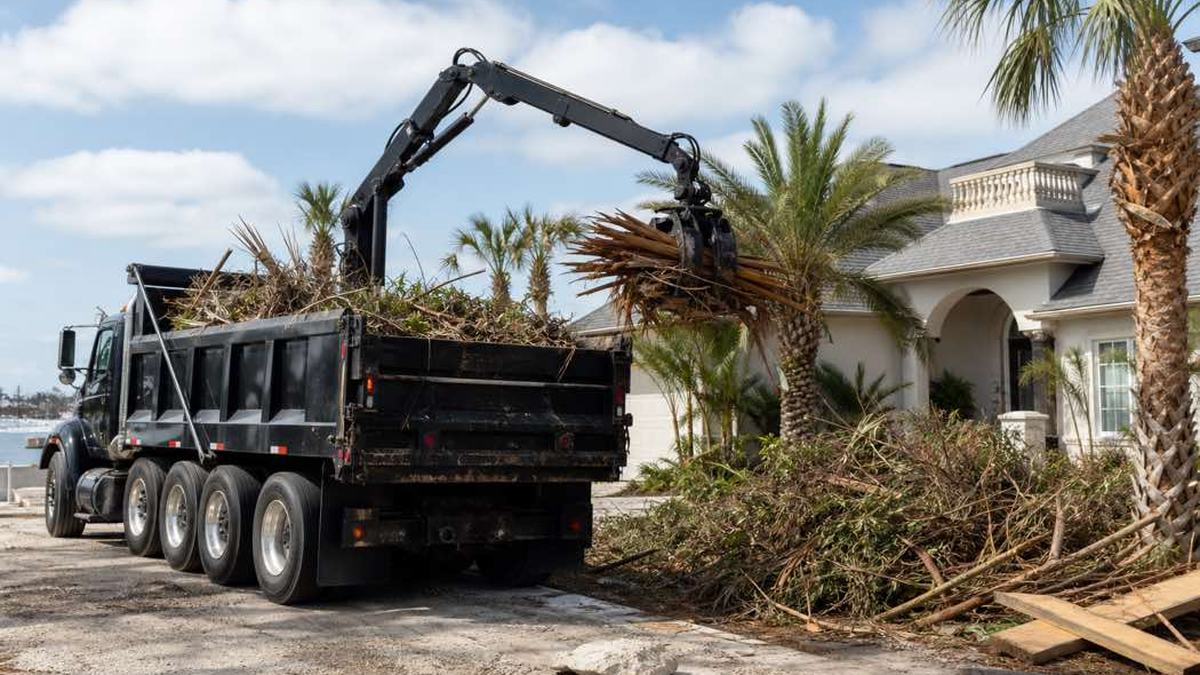
A grapple truck is usually the more direct hauling format when branches, logs, brush, or approved debris have already been cut, cleared, and moved into a reachable pile. The truck arrives for collection, uses its grapple to load the material, and hauls it away. Daytona Grapple Truck Service provides hauling only. It does not cut limbs or remove standing trees.
A dumpster changes the workflow. The container is delivered first, remains at the site while it is loaded, and is removed later. That can suit projects where cleanup will happen gradually or where workers need a container available over multiple stages. It also means someone at the property must place debris inside while following the rental provider's loading and material rules.
| Decision point | Grapple truck | Dumpster |
|---|---|---|
| Who loads? | The truck's grapple loads a prepared, accessible pile. | The customer, contractor, or cleanup crew loads the container. |
| Site use | The truck accesses the pile during collection. | The container occupies space until pickup. |
| Best staging format | A consolidated pile reachable from a suitable truck position. | Debris carried and placed inside without overfilling. |
| Timing | Debris must be ready before the hauling visit. | Loading can occur during the agreed rental period. |
| Material control | Materials should be described and confirmed before hauling. | Materials must comply with the container provider's terms. |
With grapple truck service, the machine loads a pile that has already been cut, cleared, consolidated, and positioned for access. With a dumpster, property owners or their hired crews carry and load debris into the container. Because Daytona Grapple Truck Service is hauling-only, customers needing broader help should separate cutting or clearing work from the hauling conversation.
This distinction affects labor, equipment, and scheduling. After a storm, a property may contain hanging limbs, standing damaged trees, loose brush, fence sections, roofing fragments, and other materials. A hauling service should not be confused with a tree-cutting, demolition, or site-clearing service.
For grapple collection, complete the cutting and clearing first. Then gather acceptable debris into a pile that the truck can approach and load without relying on workers to drag material across the property during the visit. The company's truck has a 50-yard capacity, but pile density, limb shape, log size, mixed materials, and safe access all affect how debris occupies that capacity. No exact load count should be assumed from visual pile size alone.
For dumpster service, plan who will lift and place every item. Heavy rounds, wet vegetation, and bulky limbs may require additional labor or equipment. Debris generally must remain within the container's fill boundaries and weight conditions, as specified by that provider.
Good staging means placing confirmed materials in a consolidated pile that a truck can reach without crossing septic components, soft lawns, landscaping, or uncertain surfaces. Review the Daytona Beach service page and discuss placement through the contact page before moving everything. Avoid assuming that a curb, sidewalk, shoulder, alley, or drainage area is automatically an acceptable location.
Start by identifying a stable approach and enough working room for a large truck and moving grapple. Consider overhead wires, low branches, roof edges, fences, gates, parked vehicles, utility equipment, and neighboring property. Do not place debris where it blocks visibility, traffic, sidewalks, fire access, or drainage.
Public right-of-way rules and post-storm collection instructions can change. Consult the responsible local authority instead of relying on general cleanup advice. The Volusia County Solid Waste and Recycling website is an authoritative starting point for county information. For questions involving state-maintained roads or rights of way, check with the Florida Department of Transportation or the authority responsible for that specific road.
Use this practical staging checklist:
A dumpster needs different staging. It requires a firm delivery location, room for the delivery vehicle, and ongoing access for loading. Protecting pavement or other surfaces and determining whether a container may be placed in a particular location should be discussed with the provider and appropriate authority.
A grapple truck generally occupies the work area during loading and departure, while a dumpster occupies a parking, driveway, or approved staging space for a longer period. Compare access through the storm cleanup hauling page and confirm whether your address falls within the broader Volusia and Flagler service area. The better choice depends on how the property must function during cleanup.
For an occupied Daytona Beach home, a container can affect resident parking, garage access, deliveries, landscaping work, and contractor movement. At a business, condominium, rental property, or managed community, it may interfere with customer parking, waste collection, loading zones, or shared access. Approval from an owner, association, manager, or authority may be necessary depending on the location, but requirements should be verified rather than assumed.
Grapple hauling avoids leaving a container at the property, but it still requires adequate operating space when the truck arrives. Vehicles and portable equipment may need to be moved before collection. Gates must provide sufficient clearance, and the travel surface must be appropriate for truck access. A narrow driveway or enclosed courtyard may make a curbside-accessible pile preferable only if that placement is allowed and safely reachable.
Ask these site-use questions:
If keeping the site open is the priority, preparing a pile and coordinating a hauling visit may reduce long-term space use. If cleanup cannot be completed at once, a dumpster may provide more flexibility despite its larger occupancy footprint.
Neither option should be treated as permission to combine every storm-damaged item. Before using grapple truck hauling, identify vegetation, construction debris, household items, and questionable materials separately. Approved construction debris may be hauled after confirmation. Use the contact page to describe the pile accurately, because acceptance depends on what is present rather than the broad label “storm debris.”
Storm cleanup commonly produces several waste streams. Vegetative debris may include branches, brush, trunks, and cut tree sections. Construction-related debris may include damaged fencing, lumber, roofing, drywall, or siding. Household goods, electronics, appliances, containers, and unknown substances create different handling questions. Local programs, disposal facilities, and private providers may apply separate requirements.
The U.S. Environmental Protection Agency's natural disaster debris planning guidance explains why disaster waste should be identified, separated, and managed through appropriate channels. The resource is general public guidance and does not endorse Daytona Grapple Truck Service.
Keep materials separate until acceptance is confirmed. In particular, do not bury questionable items beneath branches or assume that a dumpster accepts them. Ask the chosen provider about:
If a material might be hazardous or prohibited, contact the appropriate waste authority for instructions. Do not rely on blanket acceptance statements. Clear photographs and a written list of pile contents can help a hauling provider determine what requires further discussion.
The timing difference is simple: a grapple truck collects after the pile is ready, while a dumpster must be delivered, loaded, and later retrieved. Daytona property owners can plan through the storm debris hauling service and submit pile details through contact options. The phone is answered 24/7, but that does not establish a promised arrival, completion window, or government collection schedule.
Grapple hauling requires the preparation sequence to be complete. Tree or cleanup crews cut and clear the material, the customer confirms what can be hauled, the pile is staged for access, and collection is coordinated. If cutting continues after hauling is arranged, additional debris may change the pile and the service discussion.
Dumpster timing begins earlier because delivery should occur before loading. The customer then works within the provider's rental and pickup terms. This may be useful for repairs that generate debris over time, but pickup is not necessarily immediate when loading ends. Confirm delivery, rental duration, extension, exchange, and removal procedures directly with the container company.
Private hauling is also distinct from public debris collection. Do not assume placing material at the curb creates a private or government pickup request. Current local collection instructions should be obtained from the responsible city, county, or road authority.
FEMA's debris removal guidelines provide general community cleanup and documentation considerations. Eligibility and reimbursement depend on the applicable program and circumstances, so readers should contact FEMA and the relevant local authority rather than assuming private hauling costs qualify.
Choose based on workflow, not simply pile size. Grapple truck removal fits accessible debris that will be ready at one time, while a dumpster can support gradual loading. Daytona Grapple Truck Service is based in Ormond Beach and covers Volusia and Flagler counties. Check the full service area, then confirm materials and access before deciding that either method fits your property.
A grapple truck may be the practical choice when a tree crew has finished, the debris is consolidated, the property cannot host a container, and the pile can be reached safely. It may also reduce the need for people to lift each branch or log into a box, though workers still must cut, clear, and stage the pile beforehand.
A dumpster may fit when renovation or cleanup will continue for days, debris will be generated in phases, or crews want a defined receptacle on site. It requires sufficient space and manual or mechanical loading. Mixed-material and weight limits still need confirmation.
Before calling, prepare:
The 50-yard truck capacity is a useful equipment detail, not a promise that a specific pile equals one load. Irregular branches can create voids, while dense materials add weight quickly. Accurate descriptions allow a more useful conversation without inventing load counts, pricing, or timing.
These answers summarize common Daytona Beach questions about grapple hauling, dumpster loading, material separation, and service coverage. For property-specific access or debris questions, use the contact page. Always confirm public pickup instructions, right-of-way placement, permits, disposal rules, and disaster-assistance questions with the responsible government agency or program rather than relying on general guidance.
No. Daytona Grapple Truck Service is a hauling-only service and does not cut trees, remove standing trees, or perform the clearing needed to create a pile. A tree or clearing provider must complete that work first. Once debris is cut, cleared, separated as needed, and staged in an accessible location, the hauling requirements can be discussed.
The property owner, cleanup crew, or hired contractor generally loads a rented dumpster. The container provider does not function like a grapple that picks up a ground pile. Confirm the provider's material, weight, fill-line, access, and rental-period conditions before loading. Heavy logs and wet vegetation can create labor and weight concerns even when the container has open volume.
Approved construction debris can be hauled by Daytona Grapple Truck Service after confirmation, but customers should not assume it can be mixed with vegetation. Describe roofing, fencing, lumber, drywall, siding, concrete, or other materials before staging. Keep questionable materials separate until the hauling method and disposal path are confirmed, and seek authority guidance for hazardous or prohibited waste.
The truck has a 50-yard capacity. That figure does not provide an exact load count for a storm pile because branch shape, air space, density, log size, moisture, access, and material type affect loading. Share photos and approximate dimensions for discussion, but do not treat a visual estimate or the truck's stated capacity as a guaranteed pile conversion.
Yes. Daytona Grapple Truck Service is based in Ormond Beach and serves Volusia and Flagler counties, including Daytona Beach. Coverage alone does not confirm that every material or site can be handled. Provide the address, pile contents, access conditions, and whether cutting is complete so the company can evaluate the hauling request without promising timing or acceptance.