August 22, 2026
Tree cutting and debris hauling are separate steps. This guide explains how Ormond Beach property owners and tree companies can prepare piles, confirm truck access, and arrange the handoff.
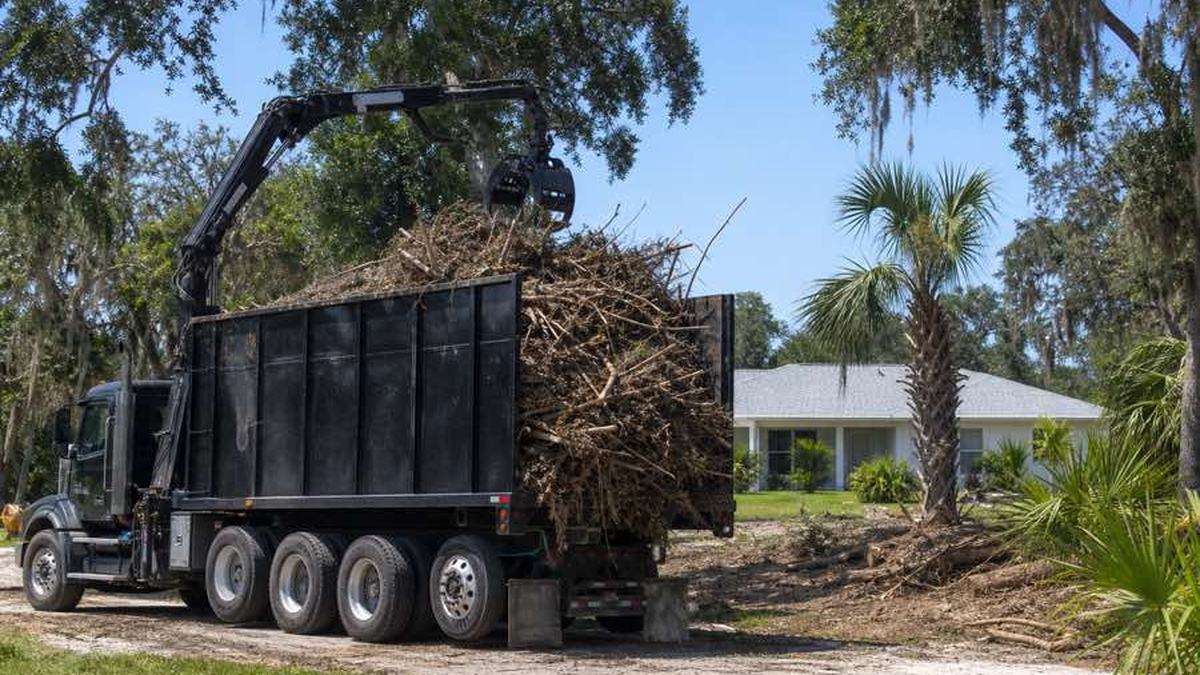
Grapple hauling after tree work begins once the tree company or property owner has cut and cleared the material. Daytona Grapple Truck Service, based in Ormond Beach, provides hauling only. It does not cut or remove standing trees. Before arranging grapple truck debris removal, confirm that cutting is complete, the pile is ready, and the truck can safely approach it.
The handoff is the point when responsibility shifts from cutting, trimming, or clearing to loading and hauling. Keeping that distinction clear helps the tree crew prepare material for pickup and helps the hauling service understand what is waiting at the property.
A typical sequence is straightforward:
Daytona Grapple Truck Service covers Volusia and Flagler counties. Its truck has a 50-yard capacity, but capacity is not the same as a guaranteed amount per project. Branch shape, trunk diameter, packing density, mixed materials, weight, and access can all affect how material loads. Exact load counts should not be assumed from pile dimensions alone.
The phone is answered 24/7, allowing callers to provide project information at any hour. That does not establish a particular response or pickup time. Scheduling depends on confirming the debris, location, access, and other job details.
A pile is generally ready when all vegetation has been cut, loose material is gathered, and the debris can be reached without additional tree work. Review the practical scope of tree debris removal, then use the contact page to describe the material. Standing trees, attached limbs, and vegetation that still requires cutting are outside a hauling-only service.
Readiness is more than having branches somewhere on the property. The grapple needs a workable pile that can be approached and loaded without expecting the hauler to finish cutting, dismantle a tree, or perform site clearing.
Use this pile-readiness checklist before calling:
Ask the cutting crew about pile placement before work begins. If the tree company leaves material behind a fence, beneath utility lines, between structures, or deep in a soft yard, the pile may be difficult to reach even though the cutting is complete. Moving it later can create extra work for the property owner or require separate equipment.
Photos can help show the overall pile, the largest trunk sections, the path from the street, and nearby obstacles. They support an initial conversation, but they do not replace confirmation of site conditions or material acceptance.
The best pile location combines reach, clearance, and separation from obstacles. Before using grapple truck debris removal, review the truck route and pile position. Ormond Beach property owners can also consult the local service-area page when planning a hauling-only handoff after a tree company finishes.
A grapple truck needs room for the vehicle and its loading equipment. A pile that is easy for workers to create is not necessarily easy for a truck to load. Coordinate with the tree company so it does not choose a convenient drop point that is blocked from truck access.
Consider these placement factors:
Do not assume the public right of way, roadside shoulder, swale, median, or sidewalk can be used for staging. Rules and current collection instructions can vary. Volusia County publishes solid-waste information through its Solid Waste and Recycling division. For a municipal street or local collection question, contact the responsible city or county authority directly.
If state highway access or roadside conditions are involved, consult the Florida Department of Transportation maintenance resources and the appropriate authority. These agencies provide public guidance and do not endorse Daytona Grapple Truck Service.
Access confirmation should cover the full route from the street to the loading point, not just the pile itself. When requesting service through the contact page, describe gates, driveways, shoulders, utilities, and surface conditions. The broader Volusia and Flagler service area includes many property types, so clear site details are essential before scheduling.
A wide driveway entrance can narrow near a house, and an open yard can still have septic components, irrigation, low branches, or soft ground. Give the hauling service enough information to evaluate the approach without relying on assumptions.
| Access feature | Useful information to provide | Why it matters |
|---|---|---|
| Entrance | Gate width, sharp turns, columns, signs, and culverts | The truck must enter or position without relying on unconfirmed clearance. |
| Surface | Pavement, shell, gravel, sand, grass, slope, or soft soil | Surface conditions affect where a heavy vehicle may be able to operate. |
| Overhead area | Utility lines, branches, awnings, and building edges | The loading equipment needs suitable overhead space. |
| Loading zone | Distance to pile, nearby vehicles, fences, and structures | Obstacles can limit positioning and grapple reach. |
| Public frontage | Road type, shoulder, traffic, and legal staging location | Road use questions may require authority guidance. |
Plan for access on the anticipated service day. Arrange for removable gates to be open, move vehicles and trailers, and avoid scheduling another contractor to occupy the loading area at the same time. Pets and bystanders should remain away from the working zone.
Never direct a truck across a septic system, drain field, buried utility, irrigation component, or surface that has not been assessed for the vehicle. The property owner or site contact should identify known underground features and disclose recent rain, flooding, washouts, or construction that changed the route.
Tree debris should be separated from unrelated waste before pickup. The tree debris hauling service is intended for material that has already been cut or cleared, while grapple debris hauling may include approved construction debris only after confirmation. Do not mix chemicals, hazardous items, or prohibited materials into a vegetation pile.
A clean, identifiable pile makes the handoff easier to evaluate. Common cut vegetation may include branches, brush, logs, palm material, leaves, and other cleared plant matter, subject to confirmation. Dirt, root balls, oversized sections, or material entangled with wire or fencing should be disclosed rather than assumed acceptable.
Use separate piles when a project produces different material streams:
Approved construction debris can be hauled after confirmation. Describe exactly what it contains, including roofing, lumber, drywall, concrete, fixtures, packaging, or mixed demolition material. Approval for one type of material should not be treated as blanket acceptance of everything at the site.
Disaster debris also requires careful separation. The U.S. Environmental Protection Agency's disaster debris planning guidance discusses separating waste streams and planning for safe management. Its guidance is general public information and is not an endorsement of this business.
If an item may be hazardous, regulated, contaminated, pressurized, or otherwise restricted, identify it before service is arranged and consult the appropriate disposal authority. Do not conceal questionable items beneath brush or logs.
Good coordination starts before the final cut. Tell the tree company that a separate hauling-only service will follow, and agree on pile placement, material separation, and access. Then provide the site details through Daytona Grapple Truck Service. The cutting crew should not leave standing trees, attached limbs, or unfinished clearing for the hauler.
Property owners should decide who will serve as the point of contact. That may be the owner, property manager, general contractor, or tree company representative. The contact should understand what was cut, what remains, where the truck is expected to load, and whether any materials require separate confirmation.
Before the tree crew leaves, verify:
If cutting and hauling are scheduled separately, leave enough flexibility for the pile to be completed and assessed. Do not promise the tree crew a specific hauling time unless it has been confirmed through the hauling service. Likewise, avoid assuming that a 50-yard truck means every visible pile will fit in one trip. Irregular branches can occupy substantial volume, while dense logs can add weight quickly.
A clear handoff also prevents scope confusion. The tree company handles tree cutting or clearing under its own arrangement. Daytona Grapple Truck Service handles the confirmed debris after it is cut or cleared. It does not remove standing trees or complete unfinished cutting.
Storm cleanup still requires the same hauling-only handoff: vegetation must be cut, gathered, separated, and accessible. Review cut debris hauling and confirm whether your address is within the Volusia and Flagler service area. For public collection, roadside placement, reimbursement, or eligibility questions, contact the responsible government agency rather than relying on general assumptions.
After a storm, multiple systems may operate at once, including private hauling, municipal collection, county services, utility work, and disaster programs. Their requirements can differ and may change. Daytona Grapple Truck Service should not be presented as a substitute for official instructions or as proof that a property, expense, pile, or service qualifies for reimbursement.
The Federal Emergency Management Agency's debris removal guidance offers general advice about sorting debris and following local instructions. FEMA does not endorse this business. For current eligibility, documentation, reimbursement, or disaster-program questions, consult FEMA and the responsible state or local authority directly.
Use a storm-debris planning checklist:
Private hauling can be discussed independently of public pickup, but callers should clarify their goal. If participation in a government program matters, get authoritative guidance before changing the pile or arranging private removal.
These answers summarize the handoff for grapple hauling after tree work, from finished cutting to accessible pile placement. For site-specific questions, use the contact page and describe the debris, location, and truck route. Daytona Grapple Truck Service is based in Ormond Beach, serves Volusia and Flagler counties, and provides hauling rather than standing-tree removal.
No. Daytona Grapple Truck Service is a hauling-only service. It does not cut or remove standing trees. A tree company, property owner, or other appropriate provider must finish cutting and clearing first. The debris should be detached, consolidated, and accessible before grapple hauling is arranged.
The tree company should complete its cutting scope, gather the intended debris into an accessible pile, and keep unrelated materials separate. It should avoid placing debris under utility lines, behind restrictive gates, against structures, or over known underground features. Standing trunks, attached limbs, and unfinished cutting should not remain for the hauler.
Approved construction debris can be hauled after confirmation, but it should not be mixed into a tree pile without prior discussion. Provide a specific list of materials and photos when possible. Acceptance is not automatic, and potentially hazardous, contaminated, regulated, or prohibited items should be identified and handled according to guidance from the responsible authority.
The truck has a 50-yard capacity. That figure does not guarantee a specific pile, project, or number of trips. Branch shape, air space, trunk size, material density, weight, and loading access affect how debris fits. Share pile dimensions, photos, and details about the largest pieces so the scope can be discussed.
Yes. The phone is answered 24/7. Calling at any hour does not guarantee a particular arrival or response time. Be ready to provide the Ormond Beach or surrounding Volusia or Flagler County address, material type, pile photos, access conditions, obstacles, and confirmation that all tree cutting is complete.