August 22, 2026
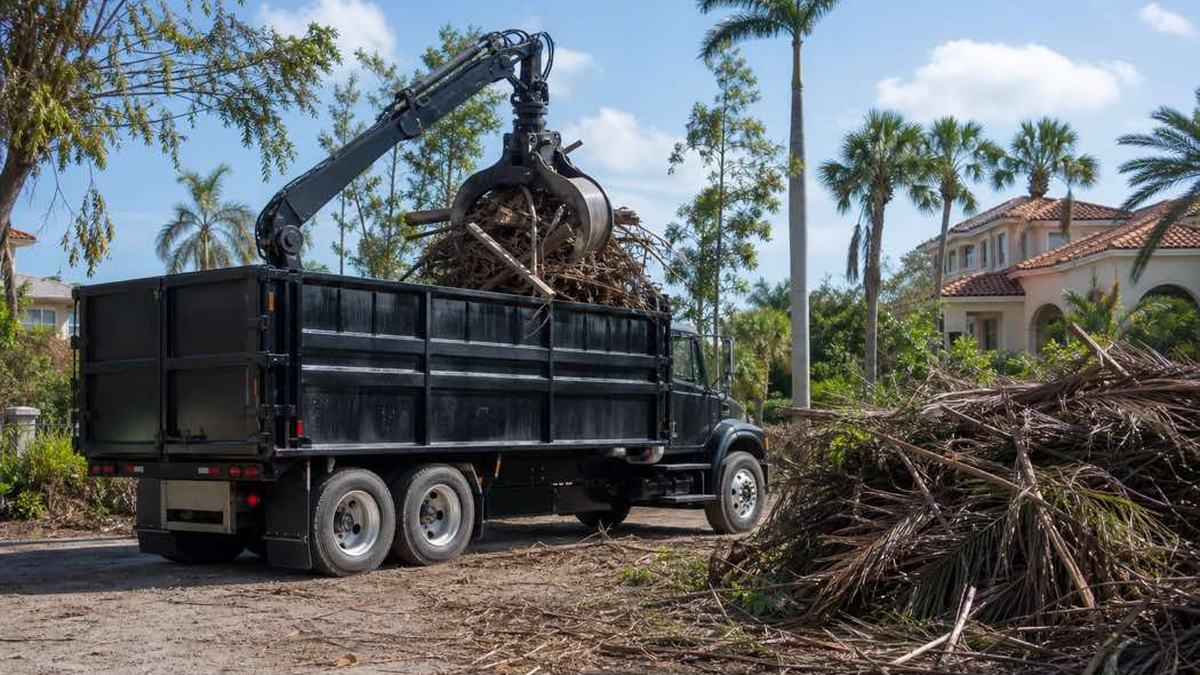
Several debris piles may fit into one grapple pickup when the truck can reach them safely and materials are compatible. Careful staging can reduce repositioning and simplify hauling.
Yes, several piles may share one pickup when they contain approved material, remain accessible, and collectively fit the truck’s 50-yard capacity. Review grapple truck debris removal options and the Port Orange service area before deciding whether to consolidate debris or let the truck move between piles.
The practical question is not simply how many piles are on the property. A grapple truck can potentially load from more than one spot during the same visit, but each reposition adds setup considerations. The driver needs a workable approach, overhead clearance, stable ground, and enough room to operate the grapple without contacting buildings, fences, parked vehicles, utility lines, or landscaping.
Consolidation often makes loading more straightforward because the truck can remain in one suitable position. It is not always the better option, however. Moving bulky branches across a yard may damage turf, create unnecessary labor, or mix materials that should stay separate. In those cases, moving the truck between accessible piles may be more practical.
Daytona Grapple Truck Service is a hauling-only service based in Ormond Beach and serving Volusia and Flagler counties. The company does not cut or remove standing trees. Limbs, brush, trunks, and similar material must already be cut or cleared before hauling is arranged.
Consolidating is usually preferable when debris can be moved without creating damage or safety problems, while truck repositioning can make sense when each pile has direct access. The debris hauling service explains the equipment’s role, and the broader service area page helps confirm whether the property is within coverage.
| Factor | Consolidate the piles | Move the truck |
|---|---|---|
| Loading efficiency | One operating position may simplify loading. | Each position may require a new approach and setup. |
| Property impact | Debris must be moved across the property. | Less manual debris movement may be needed. |
| Access needs | One staging location must be reachable. | Every pile needs suitable truck access. |
| Material control | Compatible materials can be grouped together. | Separate piles can remain separated. |
| Obstacles | The chosen staging point must avoid hazards. | Every route and operating spot must avoid hazards. |
A central pile near a clear driveway or other reachable loading area can reduce repositioning. It also gives the person scheduling service a simpler way to describe the job. Dimensions, material types, access photos, and nearby obstacles are easier to evaluate when debris is staged in one defined place.
Multiple loading positions can still work when the property has a wide circular drive, separate accessible frontage, or piles along a route that can support the truck. By contrast, piles behind a house, inside a fenced yard, or across soft ground may not be reachable even if they appear close from an overhead map.
Avoid moving material solely to create one pile until the proposed staging location has been discussed. A neatly consolidated pile placed beneath utility lines or behind parked vehicles may be less serviceable than several smaller piles with clear access.
Access often decides whether multiple debris piles one grapple pickup can reasonably address. Provide details through the contact page and review the local coverage information for Port Orange grapple hauling. Photos showing the approach, pile locations, gates, pavement edges, trees, wires, and structures are especially useful when evaluating possible truck positions.
A grapple truck needs more than a path that an ordinary passenger vehicle can use. The loading area must account for the truck body, the working reach of the grapple, turning space, and vertical clearance. The operator also needs a position from which debris can be lifted without dragging it across a roof, fence, mailbox, vehicle, or neighboring property.
Before choosing pile locations, check:
For questions about state roadway property or maintenance concerns, consult the Florida Department of Transportation maintenance information. For city streets, local rights-of-way, permits, or placement requirements, contact the responsible City of Port Orange department. Current government rules and collection practices should be confirmed directly with the authority that administers them.
Do not assume that placing a pile at the curb automatically makes it accessible or acceptable. Mailboxes, drainage swales, hydrants, signs, trees, traffic visibility, and utility equipment can all affect where a truck can operate.
Material separation can determine whether piles should be combined at all. Confirm acceptable contents through Daytona Grapple Truck Service contact before mixing categories, and use the grapple debris removal overview to understand the hauling-only scope. Approved construction debris may be hauled after confirmation, but acceptance should never be assumed from appearance alone.
Yard debris such as cut limbs, brush, and sections of trunk may be straightforward to identify when kept apart from renovation waste. Construction material can vary widely, so describe it specifically. A pile labeled merely “construction debris” provides less useful information than a list identifying wood, drywall, roofing, cabinets, concrete, metal, or other components.
Keep these categories distinct until acceptance is confirmed:
Separation supports accurate planning and helps prevent an approved pile from being complicated by an unconfirmed item. Do not hide bags, containers, small appliances, or demolition remnants beneath branches. The grapple operator needs a clear understanding of what will be lifted.
The U.S. Environmental Protection Agency’s disaster debris planning guidance discusses separating debris streams and planning for potentially hazardous materials after disasters. The EPA does not endorse Daytona Grapple Truck Service. Its guidance is a public planning resource, and local disposal questions should be directed to the appropriate authority or facility.
Estimate the combined volume rather than counting piles. Daytona Grapple Truck Service operates a 50-yard truck, but pile shape, density, material type, and loading conditions affect practical capacity. Share measurements through the service request page, then review Port Orange hauling coverage while gathering photos and access details.
A low, sprawling branch pile may look larger than a compact stack of cut wood while containing substantial air space. Dense demolition material behaves differently from brush, and long limbs may load differently from shorter sections. For that reason, neither pile count nor a visual guess can establish an exact number of loads.
Use a simple documentation process:
If a pile includes logs, concrete, soil, or other dense contents, say so. Weight and handling characteristics matter in addition to volume. If debris extends into shrubs or is tangled around fencing, disclose that condition rather than measuring only the visible outer edge.
The goal is a useful planning picture, not a guaranteed capacity calculation. Final loading depends on the debris presented, confirmed acceptance, safe operation, and the space available in the truck when the work is performed.
Stage debris in a reachable, open location while preserving material separation and avoiding public infrastructure. The grapple hauling page outlines the service, while the 24/7 phone contact option lets property owners discuss pile placement before moving heavy or awkward material. The phone is answered 24/7, though no specific response or service time is promised.
Good staging begins after cutting or clearing is complete. Daytona Grapple Truck Service does not cut standing trees, take down limbs, or perform land clearing. Arrange those tasks separately, then prepare the resulting debris for hauling.
For vegetative debris, stack cut material so it is visible and reasonably contained. Avoid weaving branches through fences or placing trunks against structures. Keep the pile free of tools, tarps, ropes, wire, plant pots, and unrelated waste. If root balls or soil-covered material are present, identify them in advance.
For confirmed construction debris, prevent loose pieces from spreading into the street or drainage features. Keep unconfirmed materials separate until discussed. Do not create a mixed pile on the assumption that everything from a project will be accepted.
Volusia County publishes solid waste and recycling information through its Solid Waste and Recycling division. That county resource does not endorse this business. Contact Volusia County, the City of Port Orange, or another responsible authority to verify current public collection procedures, disposal options, placement directions, or restrictions applicable to a particular property.
After a storm or declared disaster, do not assume ordinary procedures remain unchanged. FEMA’s debris removal guidance offers general public information, but eligibility and reimbursement questions must be confirmed with FEMA and the responsible local authority.
Before scheduling, prepare the Port Orange address, material descriptions, pile measurements, photos, access notes, and any separation concerns. Confirm coverage through the Volusia and Flagler service area, then send relevant details using the contact options. Complete information helps determine whether consolidation or truck repositioning is the more practical plan.
A short site summary can make the discussion more productive. State whether the property is residential, commercial, vacant, or under construction. Identify where each pile sits in relation to the street, driveway, gate, building, and overhead lines. Mention locked access, restricted hours imposed by the property, or other site-specific limitations.
Use this preparation checklist:
Do not move debris into a roadway, sidewalk, drainage area, or public right-of-way based solely on general online advice. Ask the responsible local or state authority about current placement, permit, traffic, code, or collection requirements. Private hauling arrangements do not replace those requirements.
Daytona Grapple Truck Service is based in Ormond Beach and provides hauling-only service across Volusia and Flagler counties. The core decision remains site-specific: consolidate compatible debris when one strong loading position is available, or keep piles separate when each is accessible and combining them would create unnecessary handling or material conflicts.
These answers summarize common planning issues for multiple piles, truck capacity, access, and material separation. For service details, visit grapple truck debris removal; for property-specific questions, use the contact page. Acceptance and loading decisions depend on the actual debris and site rather than pile count alone.
Potentially, yes. Two cut vegetative debris piles may share one truck when both are accessible, their combined material fits available capacity, and they contain acceptable contents. Consolidating them may simplify loading, but keeping them separate can be practical when the truck can reach each pile without unsafe positioning or property damage.
The truck needs a workable operating position from which the grapple can safely reach the debris. It may not need to sit directly beside each pile, but distance, overhead clearance, buildings, fences, vehicles, ground conditions, and the grapple’s operating space all affect whether a pile is reachable.
Keep them separate unless the construction debris has been specifically described and confirmed as approved. Separation makes contents easier to evaluate and avoids complicating a vegetative pile with unconfirmed material. Daytona Grapple Truck Service can haul approved construction debris after confirmation, but blanket acceptance should not be assumed.
No. Daytona Grapple Truck Service is a hauling-only service and does not cut or remove standing trees. Tree sections, limbs, and brush must already be cut or cleared before pickup. Provide photos and dimensions of the prepared debris, along with information about access and nearby obstacles.
There is no dependable pile-count formula. The truck has a 50-yard capacity, but pile dimensions, density, branch shape, material type, weight, and loading conditions vary. Measurements and photos can support planning, while the actual debris and safe loading conditions determine how the available capacity is used.