August 21, 2026
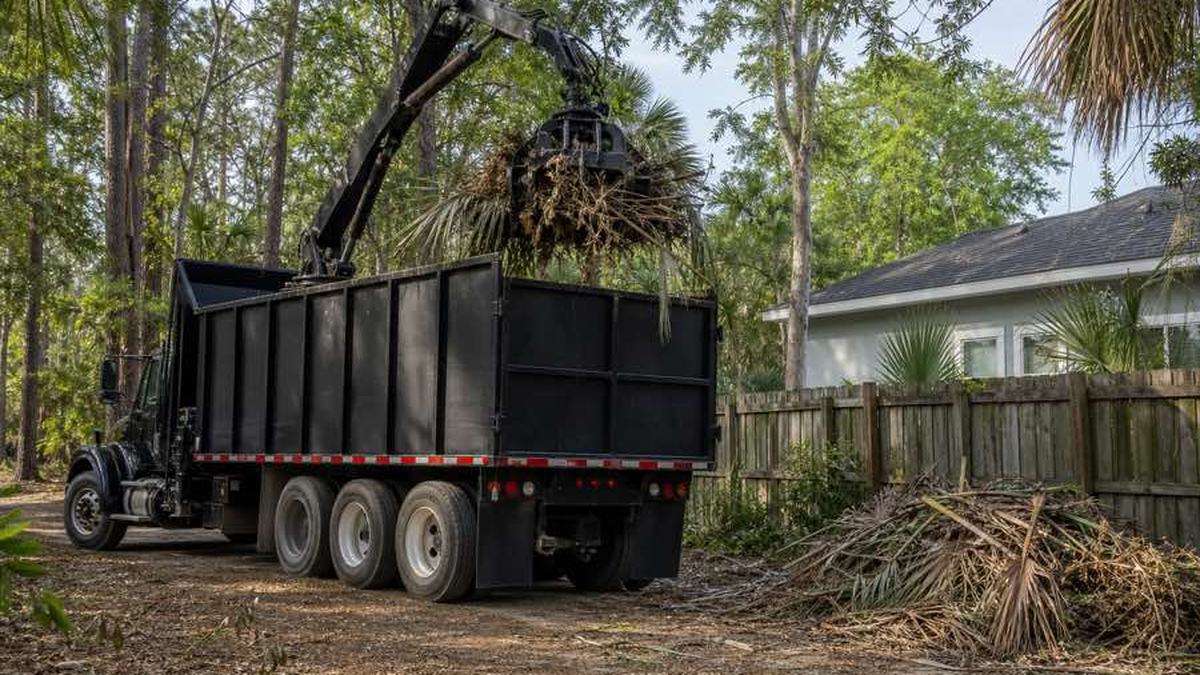
Smart pile placement can simplify debris hauling around Palm Coast fences, gates, landscaping, and soft shoulders. Learn how to prepare access and confirm materials before scheduling a 50-yard grapple truck.
A successful grapple truck pickup near a fence starts with an accessible pile and a workable loading angle. Palm Coast property owners can review the local Palm Coast service area before placing debris. Leave room around fences, gates, posts, landscaping, vehicles, and soft shoulders so the truck can approach without relying on a tight or obstructed setup.
Daytona Grapple Truck Service is a hauling-only service based in Ormond Beach. It serves Volusia and Flagler counties with a truck that has a 50-yard capacity. The company does not cut or remove standing trees. Branches, logs, brush, and other accepted debris must already be cut, cleared, and arranged for hauling.
A fence changes more than the available width. It can limit how the truck lines up, how the grapple reaches the pile, and where loose material may shift during loading. A gate post, mailbox, utility pedestal, decorative wall, or low tree canopy can also turn an apparently open area into a difficult approach.
Before building the pile, look at the property from the street and identify:
Call before moving heavy material into place if the only apparent location is behind a fence, through a narrow gate, or across a soft shoulder. A conversation about access and debris type can help determine whether the proposed layout is suitable.
The best loading angle gives the truck a clear approach and gives the grapple useful working space above and beside the pile. Compare the hauling process through grapple truck debris removal, then use the broader service area information to confirm county coverage. Do not assume a long mechanical reach can compensate for a fence, gate, tree, or vehicle directly between the truck and debris.
Whenever practical, position the pile on the truck-accessible side of the fence rather than behind it. The shortest visual distance is not always the best loading path. Grapple equipment needs space to lift and control material, and long branches can swing or rotate as they are picked up.
A pile placed parallel to a fence may provide a cleaner working edge than one packed into a corner. Keep material from leaning against panels or wrapping around posts. If branches are woven through fence rails, separate them before pickup without damaging the fence or handling anything unsafe.
| Site condition | Better preparation | Problem to avoid |
|---|---|---|
| Fence beside the street | Place debris on the accessible side with visible separation | Piling material against panels or posts |
| Narrow gate opening | Move cut debris through the gate before the truck arrives | Expecting the truck or grapple to work through a tight opening |
| Corner lot | Choose the side with clearer alignment, subject to lawful placement | Blocking sight lines or placing debris in traffic space |
| Landscaped frontage | Use a firm, open area away from irrigation and plantings | Hiding sprinklers, rocks, or edging beneath the pile |
| Soft shoulder | Discuss an alternative loading position before scheduling | Assuming saturated ground can support a heavy truck |
Keep public safety in mind when considering roadside placement. For information about state-maintained roadway areas, consult the Florida Department of Transportation maintenance resources. For local streets, rights of way, permits, or placement requirements, contact the responsible city, county, utility, or road authority rather than relying on general guidance.
Protecting fixed features begins with making them visible and keeping debris separate from them. When arranging debris hauling service, describe gates, posts, walls, and planting beds, then use the contact page to discuss unusual access. A clean buffer around fragile features is more useful than covering them with branches, tarps, or loose yard material that hides their location.
Open gates fully only if they can be secured and will not swing into the approach. Remove detachable decorations, hoses, portable lights, toys, and garden tools. Mark low items such as irrigation heads or landscape edging, but do not place markers where they create another obstruction.
Separate debris from structures rather than using a fence as a retaining wall. A compact pile can settle, and branches under tension may move when another piece is lifted. Keep piles away from:
Cut debris into manageable sections before piling it, but remember that Daytona Grapple Truck Service does not perform tree cutting or removal of standing trees. If a tree is still standing, hung up, unstable, or attached to a structure, arrange appropriate cutting or clearing first. The hauling discussion can begin after the material is safely on the ground.
A tarp under a pile may tear, snag, or become mixed with debris. Ask before using one as a loading aid. Also avoid string, wire, and straps wrapped around the pile unless their use has been specifically discussed. These materials can entangle branches and make individual pieces harder to control.
Soft shoulders deserve attention because a 50-yard grapple truck requires stable access and room to maneuver. Review the local coverage on the Palm Coast service page and send site details through contact options before assuming the truck can leave pavement. Saturated swales, sandy edges, buried drainage features, and sloped lawns may look passable while presenting access concerns for heavy hauling equipment.
Palm Coast properties can have roadside swales and drainage features that should remain visible. Do not bury culvert openings, fill drainage paths with debris, or stack material where it may wash into a drain. The responsible local authority can explain current rules for roadside placement, drainage protection, and rights of way.
Walk the proposed route in daylight and check conditions without entering unstable areas. Look for standing water, deep tire ruts, loose sand, recently installed sod, concealed ditches, and sharp grade changes. Rain can alter conditions between pile preparation and pickup, so share significant changes before service.
Use this ground-access checklist:
Do not add boards, fill, gravel, or improvised ramps to a public shoulder without authorization from the responsible authority. If access depends on neighboring property, obtain the property owner's permission and discuss the arrangement before scheduling. A different pile position may be preferable to forcing a route across uncertain ground.
Material confirmation is as important as access planning. The grapple truck hauling page explains the core service, while the contact page provides a way to describe the pile before pickup. Keep vegetative debris separate from household items and construction material. Approved construction debris can be hauled only after confirmation, so identify it clearly rather than mixing it into an opaque pile.
Useful descriptions include the main material, approximate pile dimensions, longest pieces, and whether soil, fencing, metal, concrete, roofing, or household contents are present. Photos can provide context when requested, especially where a gate, fence corner, overhead obstacle, or narrow street affects the loading angle.
Do not hide bags, cans, batteries, chemicals, fuel containers, pressurized cylinders, paint, or unidentified liquids beneath branches. Acceptance should never be assumed for hazardous or prohibited material. Contact the appropriate solid-waste or environmental authority for current handling and disposal instructions.
For general disaster-debris planning, the U.S. Environmental Protection Agency discusses separating debris streams and planning for safe management. FEMA also publishes debris-removal guidance for communities and residents. These agencies do not endorse Daytona Grapple Truck Service, and their information should not be treated as confirmation of local eligibility, reimbursement, pickup, or placement rules.
For Volusia County solid-waste information, consult the county's Solid Waste and Recycling resources. Palm Coast is in Flagler County, so residents should contact the responsible Palm Coast or Flagler County authority for current local instructions. Requirements can depend on the material, roadway, property location, and circumstances.
A well-prepared pile is consolidated, visible, and reachable without being pressed against a fence. Use the grapple truck debris removal details to understand the hauling scope, and check county service coverage before finalizing plans. The truck's 50-yard capacity describes container volume, but actual loading depends on material shape, density, access, and what has been confirmed for hauling.
Stack cut branches with thicker ends generally facing the accessible loading side when practical. Keep long pieces from projecting into the street, sidewalk, driveway travel lane, or neighboring property. Do not create an unstable vertical stack simply to reduce the footprint.
For mixed cleanup projects, create separate, clearly identifiable groups until acceptance is confirmed. A practical preparation sequence is:
Avoid placing material under low communication or power lines. Do not try to measure safe clearance yourself or move any line. If electrical infrastructure is involved, contact the utility or emergency authority as appropriate. Keep people and pets away from the working area during loading.
Capacity should not be used to promise an exact number of piles or loads. Bulky branches occupy volume differently from dense material, and irregular pieces may not compact evenly. Describe the pile accurately and let the service confirm whether the material and proposed access fit the hauling plan.
Before scheduling, share the address, material type, pile location, fence layout, gate width, and ground conditions. The phone for Daytona Grapple Truck Service is answered 24/7, and the contact page offers another starting point. Confirm that the property falls within the Palm Coast service area, then mention any approval needed for construction debris or any change to the planned loading position.
Phone availability does not establish a particular pickup time. Scheduling depends on the service conversation and site details. Provide a reliable contact number and disclose access restrictions, locked gates, community entry procedures, dead-end streets, low canopies, or limited turnaround space.
On pickup day, check that:
If the pile is on or near a public right of way, verify current placement, obstruction, and collection requirements with the responsible authority. Private hauling does not replace government instructions, permits, code requirements, or emergency-management procedures. Do not assume that private debris hauling qualifies for FEMA reimbursement or any other program.
The central goal is straightforward: create a loading position that does not depend on reaching blindly over a fence or driving onto questionable ground. Clear communication about the gate, posts, landscaping, pile contents, and street approach allows the hauling request to be evaluated using the actual site conditions.
These answers cover common questions about grapple truck pickup near a fence, including access, pile placement, tree debris, and construction material. For site-specific questions, use the contact page and describe the Palm Coast property in detail. Current roadside, disposal, permit, code, and government-collection rules should always be confirmed with the authority responsible for that location and material.
Do not assume the truck can or should reach over a fence. Fence height, pile distance, overhead clearance, material length, and truck alignment all affect loading. The better approach is usually to place cut debris on an accessible side with separation from panels and posts. Share photos and measurements before scheduling if the pile must remain behind a fence.
Branches may be placed near a gate only when they do not block access, lean on posts, conceal hardware, or interfere with the loading angle. Keep a visible buffer and prevent long limbs from projecting into travel areas. If the gate is the only access point, discuss its width, swing direction, and surrounding ground before building the pile.
No. Daytona Grapple Truck Service is a hauling-only service and does not cut or remove standing trees. Tree and brush debris must be cut or cleared before hauling. Do not approach or move an unstable, hung, or utility-involved tree. Arrange appropriate cutting or emergency assistance first, then confirm the resulting debris for pickup.
Approved construction debris can be hauled after confirmation. Describe the materials and keep them separate from vegetative debris until acceptance is established. Access still matters, particularly around nails, broken boards, masonry, fencing, and concealed objects. Do not mix chemicals, batteries, pressurized containers, unidentified liquids, or other potentially prohibited materials into the pile.
Report the changed condition before pickup and avoid assuming a heavy truck can use the shoulder. Keep swales, culverts, drains, and utility features visible. An alternative loading position may be needed. For current rules about public roadside areas, drainage, or temporary placement, contact Palm Coast, Flagler County, FDOT, or the authority responsible for that road.