August 21, 2026
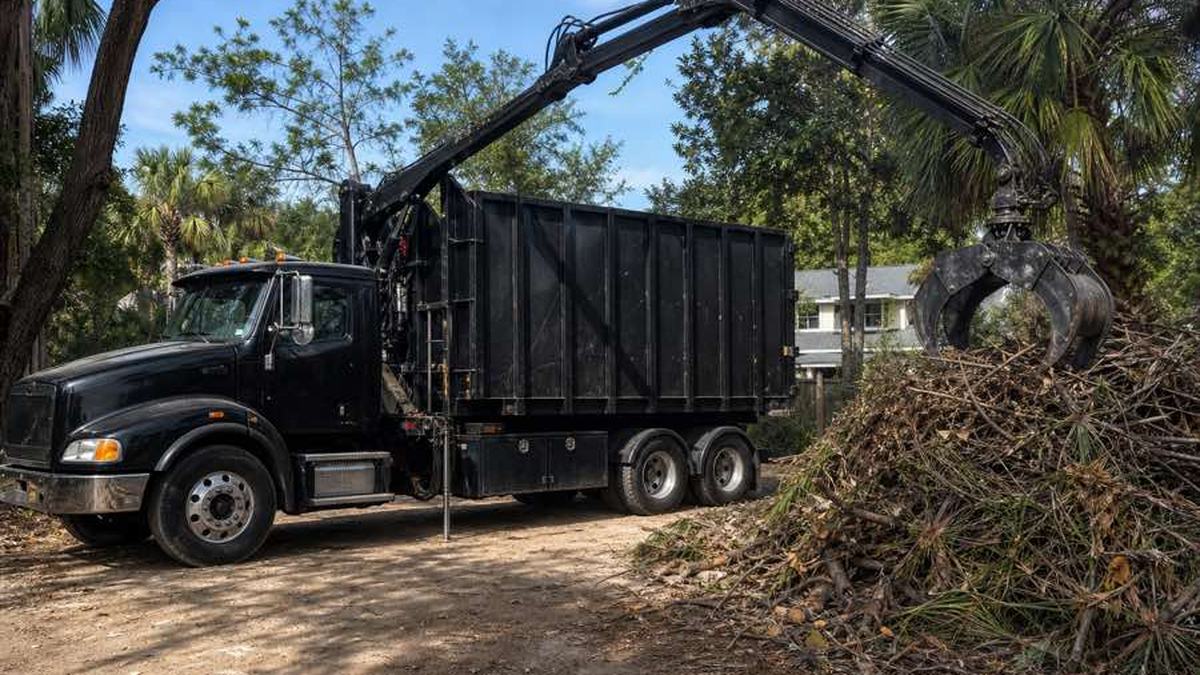
A well-planned load zone gives the grapple operator room to position the truck, see the debris, control the work area, and lift material without avoidable obstacles.
A grapple truck load zone is the working space needed to position the truck, reach a debris pile, operate the grapple, and keep people away from moving equipment. Before arranging grapple truck debris removal in the Daytona Beach service area, customers should consider access, overhead clearance, pile placement, traffic, and anything that could block the operator’s view.
The load zone is more than the footprint of the debris pile. It includes the truck’s parking area, the space between the truck and pile, the grapple’s operating path, and a controlled area around the work. A pile that looks accessible from the ground may be difficult to handle if it sits behind a fence, under utility lines, beside parked vehicles, or beyond the equipment’s practical reach.
Good preparation lets the operator evaluate the site and choose a workable position. The goal is not to create a perfectly measured rectangle. It is to provide an open, stable area where the truck can be placed without unnecessary maneuvering and the material can be lifted with fewer obstructions.
The grapple must reach the pile from a practical truck position without stretching across avoidable obstacles. Customers reviewing debris hauling options or checking the broader service area should place material in an open location near accessible pavement or another suitable truck approach, while keeping it away from vehicles, fences, mailboxes, utility equipment, and structures.
Grapple reach should not be treated as permission to place debris wherever it fits. Effective reach changes with truck angle, ground conditions, pile height, material shape, and obstructions. Long limbs may extend toward the truck even when the bulk of the pile is farther away. Dense chunks, tangled brush, and irregular construction debris may also require a different approach than loose yard material.
Build the pile so the grapple can approach it from above and the side without crossing sensitive property. Avoid wrapping material around poles, stacking it against walls, or wedging it between trees. Keep debris separate from landscaping features that should remain.
A practical pile generally has these qualities:
If the site offers several possible staging areas, discuss them before moving a large amount of debris. A few minutes spent confirming pile placement can prevent extensive restacking later.
Truck position determines whether the operator can stabilize the work area, see the pile, and move the grapple through a clear path. For help evaluating access, customers can review the Daytona Beach hauling page and contact the service before finalizing the pile location. Driveway width, turning room, surface condition, gates, shoulders, and overhead clearance can all affect positioning.
A grapple truck is not positioned like a passenger vehicle. It needs enough room to enter, align with the material, operate, and leave without relying on tight turns around delicate features. Soft shoulders, saturated turf, loose sand, steep grades, and narrow residential lanes can complicate access. In coastal Central Florida, customers should also consider low branches, palms, drainage swales, and vehicles parked along the street.
Do not assume the truck should drive onto a lawn simply because the pile is there. Ground suitability and access need to be evaluated. If a driveway, private road, gated community, commercial property, or shared access has restrictions, the property owner or responsible manager should confirm permission and practical access.
| Site feature | Helpful condition | Potential problem |
|---|---|---|
| Approach | Clear, direct route | Tight turn, blocked gate, or parked cars |
| Surface | Firm and reasonably level | Soft soil, deep sand, or unstable edge |
| Vertical space | Open area above truck and pile | Utility lines, limbs, signs, or overhangs |
| Exit path | Room to depart safely | Dead end with insufficient turning space |
Public street positioning may involve traffic, parking, right-of-way, or maintenance considerations. Requirements can change by location and circumstance. Consult the responsible local authority, property manager, or the Florida Department of Transportation when a state-maintained roadway is involved, rather than assuming roadside placement is allowed.
The operator needs a clear view of the grapple, debris, truck surroundings, and potential hazards throughout loading. When preparing for grapple debris hauling, use the contact page to discuss visual obstructions such as fences, hedges, buildings, parked equipment, or mixed piles. Better visibility helps the operator identify material boundaries and monitor the controlled load zone.
The customer sees the pile from ground level, but the operator works from a different vantage point. Items concealed under brush can be difficult to identify. Loose wire, straps, hoses, metal pieces, glass, containers, and small equipment should never be intentionally hidden within vegetative debris. Unknown material can affect whether the pile is suitable for pickup.
Visibility also includes clear communication. Before operation begins, identify the person authorized to answer questions about the pile and property. That person should remain outside the active zone and avoid approaching the truck unless directed. Hand signals from multiple people can create confusion.
Use this visibility checklist before pickup:
Night lighting or property lighting should not be assumed to solve a poor sight line. Site layout and unobstructed visibility remain important regardless of the time of contact.
No customer, child, neighbor, pet, or unrelated worker should enter the active load zone while the grapple is moving. Customers can learn about the company’s hauling-only service and confirm coverage through the Volusia and Flagler service area page. The person coordinating pickup should keep access controlled and pause nearby activities that could bring people into the operating space.
Grapple loading involves a moving boom, suspended material, shifting debris, and a large truck. Material can rotate, separate, or extend beyond the compact center of the pile. A person standing beside the pile cannot reliably predict every movement. Watching from a porch, doorway, or another location outside the work area is more appropriate than approaching to direct individual grabs.
Before the truck arrives, customers should:
If traffic control, lane use, or public-space staging may be necessary, do not create an improvised closure. Contact the agency responsible for the road or right-of-way for current direction. Daytona Beach streets, county roads, private roads, and state-maintained routes may involve different authorities and circumstances.
Move anything portable that could block the truck, limit visibility, be mistaken for debris, or be contacted by shifting material. Before scheduling through the 24/7 answered phone line, review the Daytona Beach service information and inspect the route from the street to the pile. Vehicles, trailers, bins, planters, hoses, furniture, tools, and decorations commonly need relocation.
Start with the truck approach, not just the pile. A clear pile is not accessible if a car blocks the driveway or a trailer prevents turning. Move vehicles far enough away that they are not beside the truck or within the grapple’s work path. Close garage doors and secure lightweight objects that could shift.
Pay particular attention to items that blend into debris:
Fixed objects cannot always be moved, so create separation. Keep debris away from air-conditioning equipment, septic components, wells, drain fields, utility cabinets, water meters, irrigation heads, mailboxes, signs, fences, and building walls. Tell the service about features that are difficult to see.
Do not place material on top of storm drains or where loose debris can readily enter drainage infrastructure. For current public disposal or collection guidance in Volusia County, consult Volusia County Solid Waste and Recycling. Its information is an official public resource and does not imply endorsement of Daytona Grapple Truck Service.
Group acceptable debris into an accessible pile and disclose the material before pickup. Daytona Grapple Truck Service provides hauling after debris is cut or cleared across its Volusia and Flagler coverage area. The company does not cut or remove standing trees. Approved construction debris may be hauled after confirmation, so customers should describe contents accurately instead of assuming every material is accepted.
Separate different material categories when requested or when doing so makes identification easier. Vegetative debris, bulky cleared material, and construction debris can have different handling and disposal considerations. Do not mix liquids, unidentified containers, chemicals, batteries, fuel, pressurized cylinders, paint, or suspected hazardous material into a pile for grapple pickup. Acceptance must be confirmed rather than inferred.
The truck has a 50-yard capacity, but capacity is a volume specification, not a promise that every 50-yard pile equals one load. Branch shape, air space, density, weight, compaction, access, and accepted material affect loading. Avoid advertising-style load estimates based only on a photograph or rough pile dimensions.
After storms, public guidance may change. The Federal Emergency Management Agency’s debris removal guidance offers general community preparation information, while the U.S. Environmental Protection Agency’s disaster debris planning guidance discusses broader waste-management considerations. These agencies do not endorse this business. Ask the responsible local authority about current government pickup, permits, disposal requirements, code questions, or FEMA eligibility.
When calling, be ready to provide:
These answers cover common planning questions about a grapple truck load zone, but actual access and material acceptance depend on the site. Review grapple truck hauling details and use the contact page to describe the pile, truck approach, overhead clearance, and surrounding property. The phone is answered 24/7, although no specific response time or pickup availability is promised.
The pile should be close enough for practical grapple access from a suitable truck position, but there is no universal distance that fits every site. Truck angle, pile height, material shape, ground conditions, overhead lines, fences, and structures affect reach. Send photos or discuss placement before building a large pile in a location that may be obstructed.
A fence can limit reach, visibility, and safe movement, so loading over or behind one should not be assumed. An open gate may still be too narrow or poorly positioned for the truck. Describe the fence, gate width, approach, and pile location when contacting the service. Moving the debris to a clearer area may be necessary.
Yes, move vehicles if they block the approach, turning area, truck position, operator view, or grapple path. Parking a vehicle only a few feet from the pile may still create an avoidable exposure to shifting branches or debris. Also relocate trailers, boats, portable basketball goals, bins, and other movable objects along the access route.
No. Daytona Grapple Truck Service is a hauling-only service based in Ormond Beach. It does not cut, trim, or remove standing trees. The material must already be cut or cleared and placed where the truck can access it. Customers should arrange any required cutting or tree work separately before scheduling debris hauling.
Approved construction debris can be hauled after confirmation. Describe the material and keep it identifiable rather than mixing unknown items into brush or yard debris. Do not assume blanket acceptance of hazardous, prohibited, liquid, pressurized, or unidentified materials. Current disposal or regulatory questions should be directed to the responsible local or state authority.