August 22, 2026
Commercial roof tear-offs can suit grapple hauling, but material type, packaging, access, and disposal requirements matter. Daytona Beach contractors should disclose debris details and request site-specific confirmation before scheduling.
Commercial roofing work can generate bulky, mixed debris that quickly occupies staging space. A grapple truck may help move approved material efficiently, but roof tear-off waste is not a single, uniform category. Membranes, insulation, fasteners, decking, adhesives, coatings, and rooftop equipment can present different handling or disposal concerns.
Grapple truck debris removal can fit a roof replacement when approved debris is placed in an accessible pickup area and its contents are disclosed in advance. Contractors planning construction debris removal should request confirmation for the specific material mix rather than assume every roofing product can be hauled.
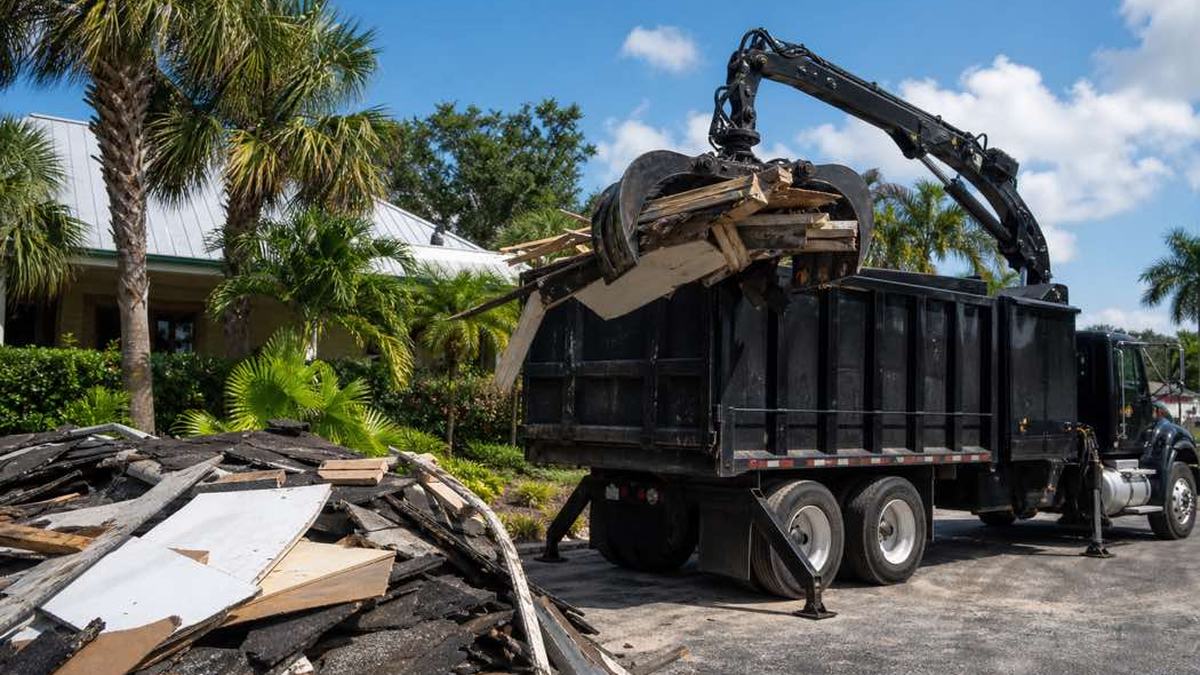
A grapple truck is designed to lift loose or piled debris with a hydraulic grapple and place it in the truck body. Daytona Grapple Truck Service has a 50-yard-capacity truck and provides hauling only. The service is based in Ormond Beach and covers Volusia and Flagler counties, including Daytona Beach.
Commercial roofing debris is more likely to be a practical fit when:
A grapple truck does not perform roof demolition, rooftop loading, cutting, or tear-off work. The roofing contractor or property team must remove and stage the material. Confirmation should happen before the pile is finalized because changing the location or separating materials afterward can disrupt the project.
Material disclosure is central to commercial construction debris hauling. Before requesting service in the Daytona Beach service area, provide the roof type, known debris components, approximate pile dimensions, packaging method, and photographs. Approved construction debris can be hauled only after confirmation, so a clear description supports an accurate site-specific review.
Do not describe a pile only as “roofing debris.” That phrase could refer to built-up roofing, single-ply membrane, modified bitumen, metal panels, wood decking, insulation, aggregate, flashing, fasteners, sealants, adhesives, coatings, or a mixture of materials. Each project may involve different handling and disposal considerations.
A useful disclosure should address:
Photographs should show the pile from multiple angles, its distance from the travel path, nearby structures, and overhead clearance. Labels on wrapped products or chemical containers can also help. If the contents are uncertain, say so. Uncertainty is important information and should not be replaced with a guess.
Grapple hauling should never be treated as blanket acceptance of every commercial roof component. Use the contact page to identify questionable materials and obtain confirmation before staging. Unknown insulation, chemical containers, wet roofing compounds, suspect regulated materials, pressurized cylinders, batteries, electronics, and mixed wastes may require separate evaluation or another disposal channel.
Some debris may look ordinary while presenting concerns that are not visible in a photograph. Older roofing assemblies can include layers installed in different eras. Rooftop mechanical work can add oils, refrigerant-related equipment, electrical components, or maintenance chemicals to a tear-off pile. These items should not be concealed inside membrane or insulation.
Use three practical categories during planning:
| Category | Project action | Examples |
|---|---|---|
| Potentially suitable after confirmation | Describe, photograph, and stage as directed | Membrane, approved insulation, cover board, wood, and metal roofing components |
| Needs closer review | Keep separate and disclose composition or testing | Unknown older layers, coatings, saturated materials, heavy aggregate, and mixed demolition waste |
| Use an appropriate specialty channel | Do not mix into the pickup pile | Hazardous or regulated materials, liquids, pressurized containers, batteries, and chemicals |
This table is a planning framework, not an acceptance list. Actual acceptance depends on the disclosed material and site-specific confirmation.
For local disposal information, consult Volusia County Solid Waste and Recycling. The county is the appropriate source for its current facility requirements, programs, and restrictions. Its website does not endorse Daytona Grapple Truck Service, and project teams should verify current information directly rather than relying on assumptions from prior projects.
Good staging makes grapple truck hauling more workable and reduces the chance that a pile must be moved. Before setting the drop zone at a Daytona Beach property, confirm the approach, surface, clearance, pile boundaries, and material segregation. Site-specific confirmation remains necessary because commercial lots, alleys, loading areas, and occupied buildings differ.
The truck needs a suitable route to the debris and enough operating room for the grapple. A location that works for a pickup truck or roofing trailer may not work for a larger truck. Consider gate width, turning space, parked vehicles, curbs, landscaped islands, canopies, signs, power lines, tree limbs, and building overhangs.
Use this staging checklist:
Do not assume a public sidewalk, street, shoulder, or right of way can be used for staging. Contact the responsible property owner and government authority for current permission, permit, traffic-control, and code requirements. If work may affect a state roadway, the Florida Department of Transportation maintenance website can help identify relevant contacts and information. FDOT does not endorse the hauling company.
The 50-yard truck capacity can support roofing construction debris removal, but capacity alone does not establish how many trips a project needs. Contractors throughout the Volusia and Flagler service area should provide pile dimensions, material composition, density, moisture condition, and photos so the hauling request can be reviewed without promising an unsupported load count.
Roofing debris behaves differently depending on its composition. Rolled or folded membrane may occupy substantial volume while compressed insulation may change shape during handling. Aggregate, concrete pavers, gypsum-based products, saturated insulation, and dense decking can add considerable weight before the truck body appears full. Long metal sections may also require preparation to fit and handle appropriately.
For better planning, document:
A 50-yard capacity is a truck specification, not a guarantee that every 50 cubic yards of staged roofing material can be moved in one trip. Weight, dimensions, safe loading, material acceptance, and disposal requirements all matter. Avoid using roof square footage alone to predict hauling needs because assemblies vary in layers, thickness, ballast, and moisture.
For occupied properties, grapple debris removal works best when hauling is included in the site logistics plan. Before work at a Daytona Beach commercial property, identify who controls access, who verifies the pile, and who keeps the operating area clear. The phone is answered 24/7, but scheduling and material acceptance still require confirmation.
Assign one project contact who can explain the debris and site conditions. That person should know whether the pile changed after photographs were submitted, whether gates or loading zones are available, and whether tenants, customers, or deliveries could enter the work area.
A practical coordination sequence is:
The roofing contractor remains responsible for controlling tear-off work and preventing debris from falling or blowing from the roof. Daytona Grapple Truck Service is hauling only. It does not remove roofing from the structure. Similarly, the company does not cut or remove standing trees. If storm work includes branches or tree debris, those materials must already be cut or cleared and separately confirmed for hauling.
Storm damage can complicate commercial roofing debris removal by mixing roof components with vegetation, furnishings, electrical items, and unknown waste. Property teams seeking service through the Daytona Grapple Truck Service contact page should separate materials where practical, disclose contamination or water saturation, and obtain confirmation rather than assuming storm-generated debris is automatically accepted.
After severe weather, prioritize personal safety and follow instructions from emergency management, utility providers, property officials, and the responsible government agencies. Do not enter unstable structures, approach downed lines, or place debris where it blocks emergency access. Current public pickup programs, eligibility conditions, collection zones, and placement rules must be verified with the authority operating the program.
The FEMA debris removal guidance offers general information about separating disaster debris and avoiding blocked roads, sidewalks, and utilities. FEMA does not endorse this business, and its guidance should not be interpreted as a statement that a private hauling cost, material, property, or project qualifies for reimbursement.
The U.S. Environmental Protection Agency guidance on natural-disaster debris planning also discusses waste streams and planning considerations. It is a general resource, not a project-specific acceptance decision.
For a storm-related roofing pile, document roof materials, interior contents, vegetation, appliances, electronics, liquids, damaged solar components, and suspected hazardous or regulated waste separately. Keep cut vegetation apart from roofing debris when possible. Daytona Grapple Truck Service can haul debris after it has been cut or cleared, subject to confirmation, but it does not cut or remove standing trees.
These answers summarize common questions about grapple truck debris removal and Daytona Beach hauling service. Every commercial roofing pile still requires material disclosure and site-specific confirmation. For current disposal, right-of-way, permit, public pickup, or disaster-program requirements, contact the government agency or facility responsible for that rule or program.
No. Roofing debris varies by membrane, insulation, decking, coatings, adhesives, aggregate, age, contamination, and mixed contents. Approved construction debris can be hauled after confirmation, but there is no blanket acceptance. Describe the materials, identify unknown or questionable components, provide photographs, and keep chemicals, liquids, regulated materials, and unrelated waste separate pending direction.
No. Daytona Grapple Truck Service is a hauling-only service. Roofing contractors or property teams must complete the tear-off and place confirmed material in an accessible ground-level staging area. The truck uses its grapple to load suitable staged debris. It does not perform roof demolition, lower materials from the building, or prepare an unsafe or inaccessible pile.
The truck has a 50-yard capacity, but that figure does not guarantee a specific project volume or number of trips. Dense, wet, heavy, long, or irregular roofing materials can affect loading. Provide pile dimensions, composition, moisture condition, packaging details, and photos for review. Exact load counts should not be assumed from roof square footage or truck capacity alone.
Do not assume a street, sidewalk, shoulder, or public right of way is available for staging. Placement, permit, traffic-control, and collection requirements may depend on the location and responsible authority. Confirm current rules directly with the City of Daytona Beach, Volusia County, FDOT, the property owner, or another agency that controls the specific area.
Provide the Daytona Beach site address, project contact, roof-system description, debris components, approximate pile dimensions, photos, moisture or contamination concerns, and proposed staging location. Also identify gates, surface conditions, overhead lines, canopies, parked vehicles, tenant traffic, and access limits. Report unknown materials honestly so acceptance and site suitability can be evaluated before scheduling.