August 20, 2026
Learn how to prepare tangled palm fronds for grapple-truck hauling, keep the pickup area reachable, separate unsuitable debris, and arrange service in Palm Coast.
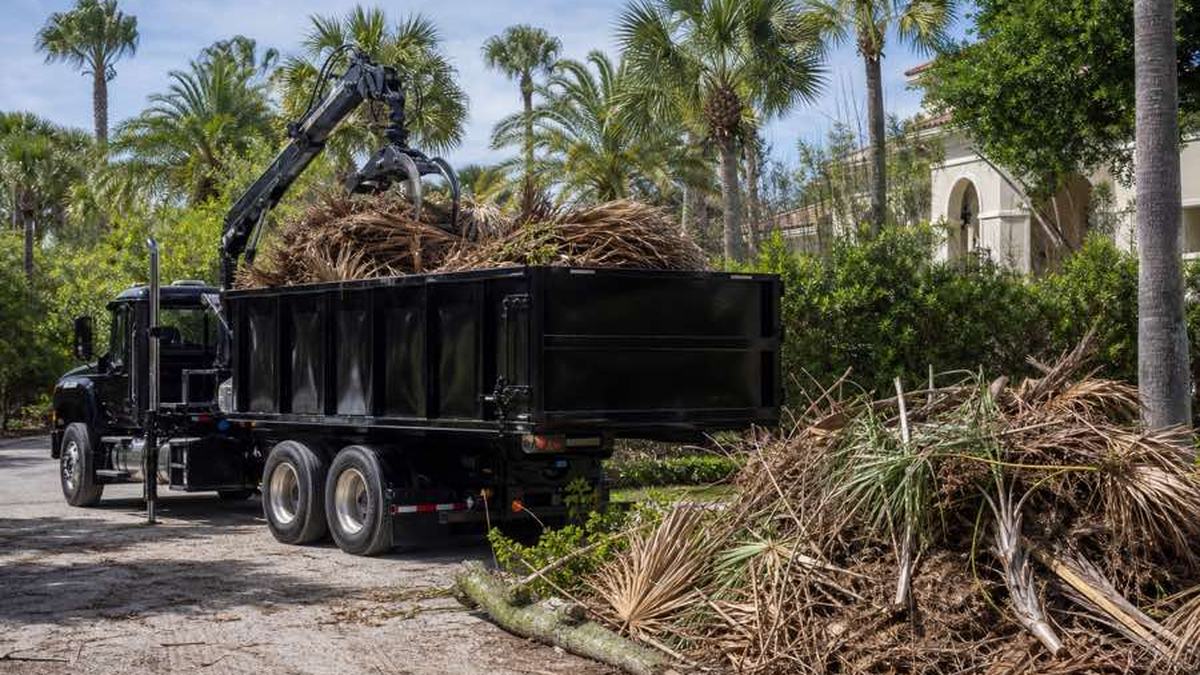
Palm frond pile removal is not quite the same as hauling loose leaves or compact branches. Long stems, rigid ribs, and spreading leaflets can interlock, making a pile bulky and resistant to clean lifting. Daytona Grapple Truck Service provides hauling-only support through its Palm Coast service area after palms have been cut or cleared.
A palm frond may look light on its own, but a group of fronds behaves like a woven mat. The stems cross at different angles, leaflets catch on neighboring material, and curved fronds can create springy voids. Those open spaces consume truck volume even though the pile may not contain much dense material.
Tangled fronds can also drag neighboring debris when lifted. A grapple may close around one section while several connected pieces trail behind it. Neater orientation helps the operator capture manageable bundles and reduces the chance of loose fronds spreading beyond the intended loading area.
The difference is important because Daytona Grapple Truck Service uses a truck with a 50-yard capacity. That figure describes container volume, not a guaranteed amount for every pile. Wetness, stem length, pile shape, hidden debris, and how tightly the material settles all affect the usable capacity.
For more efficient preparation:
The company does not cut palms or remove standing trees. A property owner, landscaper, or tree professional must complete cutting and clearing before hauling is arranged.
A good pile for grapple truck debris removal is consolidated, visible, and separated from obstacles. Stack cut ends in a similar direction without compressing the pile with a vehicle. Before requesting bulk yard waste hauling, check that the fronds are fully detached and placed where the truck can reach them without crossing fragile surfaces.
Start with a stable base of larger fronds. Place additional fronds on top instead of leaning them against a tree, mailbox, utility cabinet, wall, or fence. A free-standing pile gives the grapple room to approach from above and reduces the need to pull material away from objects.
Keep the pile within a defined footprint. Fronds scattered in a thin layer require more individual grabs than a consolidated stack. At the same time, do not create an excessively tall or unstable mound that can slide into a road, sidewalk, drainage feature, or neighboring property.
Use this preparation checklist:
If the pile includes brush, limbs, or trunk sections, describe the mixture when contacting the company. Accurate information helps determine whether the material fits the hauling service and whether pile changes are needed before the truck arrives.
Reachability is central to safe, practical palm frond pile removal. The truck needs a suitable route, a stable operating position, and overhead room for the grapple. Review the property before using the contact page, noting gates, parked vehicles, low branches, wires, soft ground, tight turns, and any drainage swales near the proposed pile.
A grapple truck is larger and less maneuverable than a pickup. The loading arm also needs working space beyond the truck body. A pile may be close to pavement but still difficult to reach if a canopy, cable, sign, fence, or parked vehicle blocks the lifting path.
Think about access in three dimensions:
Avoid assuming the truck can drive across a lawn, paver area, septic field, culvert edge, or saturated shoulder. Surface suitability depends on site conditions. When in doubt, explain the access route and share clear photos before scheduling.
The Florida Department of Transportation maintenance website is an appropriate source for questions involving state-maintained roadways. For placement rules on local rights of way, swales, sidewalks, or streets, contact the responsible Palm Coast or Flagler County authority rather than relying on general debris-hauling advice.
The best location for grapple truck debris removal balances truck access with protection of the property and public travel areas. Review coverage on the service area page, then choose a visible, consolidated spot that does not block vehicles, pedestrians, drainage, mail access, or utility equipment. Confirm local placement requirements with the responsible authority.
Common pile locations each involve tradeoffs:
| Location | Potential benefit | Issue to check |
|---|---|---|
| Driveway edge | Often visible and close to a firm surface | Garage access, vehicles, pavers, and overhead clearance |
| Yard near the street | May shorten grapple reach | Soft soil, irrigation, swales, and underground features |
| Side yard | Keeps debris away from the front entrance | Gate width, turning room, rooflines, and fences |
| Roadside area | Can appear convenient | Traffic, drainage, right-of-way, and local placement rules |
Do not place fronds on top of water meters, utility cabinets, fire hydrants, storm drains, culvert openings, or marked underground facilities. Even if the pile is light, tangled material can obscure equipment and complicate access.
If property boundaries are close, keep the entire pile on the correct parcel unless permission and applicable rules say otherwise. Wind can spread dry leaflets, so place the pile far enough from travel lanes and secure only in a way that does not introduce wire, rope, tarps, or other contaminants into the load.
After storms, official debris instructions may change by location and event. The FEMA debris removal guidance offers general community information, but it does not establish current Palm Coast collection, reimbursement, or eligibility rules. Check with the agency responsible for the specific program.
Clean separation makes bulk yard waste hauling easier to evaluate and helps prevent unsuitable items from being hidden in tangled fronds. Before arranging service through the contact page, identify everything in the pile. Keep vegetative debris apart from household garbage, chemicals, electronics, tires, concrete, metal, and demolition material unless acceptance has been specifically confirmed.
Palm piles can conceal more than expected. Dense leaflets hide sprinkler parts, garden edging, glass, nails, bags, and stones. These items may not be visible from the outside, so inspect the ground first and add fronds only after the area is clear.
A practical sorting plan is:
Approved construction debris can be hauled after confirmation. That does not mean every construction or demolition material is accepted, and it should not be mixed into a frond pile without prior discussion. Provide material type, approximate dimensions, pile location, and photos so the hauling request can be evaluated.
The U.S. Environmental Protection Agency disaster debris guidance explains why debris streams should be planned and separated after natural disasters. It is general planning guidance, not a statement that Daytona Grapple Truck Service accepts hazardous or prohibited materials.
After routine trimming or storm cleanup, arrange palm frond pile removal only after cutting is complete and the debris can be described accurately. Daytona Grapple Truck Service is a hauling-only company based in Ormond Beach, serving Volusia and Flagler counties. Its Palm Coast service page provides local context for properties needing cut debris hauled away.
Do not work around hanging limbs, leaning trees, downed electrical lines, unstable structures, floodwater, or active equipment. Contact the appropriate emergency service, utility, property professional, or tree contractor for hazards and cutting needs. The hauling company does not cut or remove standing trees.
Once the site is safe and cutting is finished, take a deliberate approach:
Dry fronds can be light and wind-prone, while rain-soaked piles may settle and become heavier. Avoid adding material after the pile has been reviewed unless the change is communicated. A substantially altered pile may have different access, volume, or material considerations.
For county solid-waste information in nearby Volusia County, consult Volusia County Solid Waste and Recycling. Palm Coast residents should consult the responsible City of Palm Coast or Flagler County authority for current public collection instructions, event-specific debris guidance, and local disposal requirements.
To request grapple truck hauling in Palm Coast, gather pile details and use the contact page or call. The phone is answered 24/7. Explain that the material is cut palm debris, identify mixed items, and describe access. Phone availability does not guarantee a particular pickup time, material acceptance, or site suitability.
Useful information includes:
The truck has a 50-yard capacity, but capacity should not be treated as an exact pile-to-load conversion. Tangled fronds can occupy substantial air space, and mixed heavy material changes loading considerations. No exact load count should be assumed from measurements or photos alone.
Daytona Grapple Truck Service is based in Ormond Beach and provides hauling service across Volusia and Flagler counties. Service is limited to debris hauling after cutting or clearing. If the project still involves climbing, pruning, felling, stump work, or removing a standing palm, arrange that work with an appropriate provider first.
Before the hauling visit, keep the agreed access path open. Move vehicles and portable objects, stop adding unrelated waste, and avoid soaking the pile with irrigation. If site conditions change, such as heavy rain softening the access route, communicate the change so the situation can be reviewed.
These answers cover common questions about palm frond pile removal, truck capacity, mixed debris, access, and the limits of a hauling-only service. For property-specific details, review the Palm Coast service information and provide photos, pile dimensions, material types, and access notes when contacting Daytona Grapple Truck Service.
No. Daytona Grapple Truck Service is a hauling-only service. The company hauls palm fronds and other confirmed debris after it has been cut or cleared. A property owner, landscaper, or tree professional must handle pruning, cutting, felling, and removal of standing trees before the debris-hauling portion is arranged.
Similar orientation reduces cross-weaving among long stems and leaflets. It can make the pile easier to capture in manageable grapple bundles and helps limit trailing pieces. Perfect alignment is unnecessary, but grouping thick cut ends and avoiding random, interlocked layers produces a more orderly pile than scattering fronds or leaning them around fixed objects.
Do not add it without confirmation. Approved construction debris can be hauled after the material has been identified and acceptance confirmed. Keep it separate from fronds so it remains visible and can be evaluated. Do not assume hazardous, prohibited, or unidentified material is accepted, and disclose heavy or sharp items before service.
The truck has a 50-yard capacity, but that does not establish an exact number of palm frond piles or guaranteed loads. Tangled fronds contain air space and settle differently from dense debris. Moisture, trunk sections, soil, mixed material, and pile arrangement can also affect how the available container volume is used.
Describe the route from the street to the pile, driveway surface, gate, turns, slope, soft ground, and nearby drainage. Also note overhead wires, low branches, roofs, parked vehicles, fences, utility equipment, and mailboxes. Photos from the pile toward the approach, plus wide views of the operating area, are especially useful.