August 20, 2026
Use this Daytona Beach decision framework to compare private hauling with public curb pickup, verify current government instructions, prepare debris safely, and choose the practical path for your property.
Choose between storm debris hauling and public curb pickup by checking urgency, debris type, volume, placement rules, and truck access. Daytona Beach property owners can also review the local Daytona Beach hauling option while confirming current public collection instructions directly with the responsible city or county authority.
The central question in private storm debris hauling vs curb pickup is not simply which option can move a pile. It is which option fits the property, the material, the cleanup schedule, and the latest public instructions. Storm collection programs can vary by location, event, road, property type, and collection phase. Never assume instructions from an earlier storm still apply.
This framework avoids guessing about government schedules or eligibility. It also prevents a common mistake: arranging private hauling before identifying mixed materials that require separate handling.
Public collection is governed by the responsible authority's current program, while grapple truck debris removal is arranged directly for a suitable site and accepted material. The broader service area for Daytona Grapple Truck Service includes Volusia and Flagler counties, but public instructions must be verified for the exact property location.
| Decision point | Public curb pickup | Private hauling |
|---|---|---|
| Scheduling | Depends on the authority's current collection plan and published instructions. | Coordinated directly with the hauling provider, subject to confirmation. |
| Placement | Must follow current public directions for location, separation, and preparation. | Requires a safe, reachable loading area and an agreed plan for the pile. |
| Material categories | Accepted and excluded categories are set by the responsible public program. | Acceptance is confirmed with the hauler. Approved construction debris may be hauled after confirmation. |
| Property access | Typically involves material placed where the public program directs. | Truck access, overhead clearance, ground conditions, and loading space matter. |
| Best fit | May suit owners who can comply with current rules and wait for the applicable collection process. | May suit owners who need direct coordination or have a suitable pile that cannot remain in place. |
Daytona Grapple Truck Service is a hauling-only service based in Ormond Beach. It does not cut trees or remove standing trees. Branches, limbs, and other vegetation must already be cut or cleared before hauling can occur. That distinction matters when comparing bids or making a cleanup plan because cutting, demolition, site clearing, and hauling are different scopes of work.
The truck has a 50-yard capacity, but pile shape, material density, weight, access, and disposal requirements affect what can be handled. Capacity should not be treated as a guaranteed load calculation. Photos and an accurate material description help determine whether the service is an appropriate fit.
Before placing anything near the street, use the official government source for current instructions, then compare those requirements with private storm debris cleanup hauling. If direct coordination appears more practical, the contact page provides a way to discuss material and access without relying on assumptions about public pickup.
Government debris operations can change after a declared event or as collection progresses. Instructions may address collection areas, eligible properties, sorting, rights of way, private roads, gated communities, deadlines, or restricted materials. Those details should come from the agency responsible for the program, not from a private hauler or an article summarizing an earlier event.
Use this verification sequence:
The FEMA debris removal guidance offers general community cleanup considerations, including separation and safe placement. FEMA does not endorse Daytona Grapple Truck Service, and its general guidance does not establish whether a particular pile, expense, property, or private hauling service qualifies for collection, reimbursement, or assistance. Direct eligibility questions to the administering government agency.
If debris is near a state-maintained roadway, consult the Florida Department of Transportation maintenance resources and the responsible local authority before placing or moving it. Do not assume a shoulder, median, sidewalk, drainage feature, or roadside area is an approved staging location.
Sorting first makes grapple truck hauling easier to evaluate and helps avoid conflicts with public instructions. Review the Daytona Beach service information, photograph each material group, and confirm questionable items separately rather than treating every post-storm pile as ordinary vegetative debris.
A storm pile can contain materials with very different handling requirements. Cut limbs may be mixed with fencing, roofing, drywall, insulation, furniture, fuel containers, batteries, paint, electronics, or spoiled food. Mixing categories can complicate both public collection and private hauling. It may also expose workers, equipment, neighbors, and the environment to avoidable hazards.
Create separate, clearly identifiable groups when it is safe to do so:
Do not open, drain, burn, or combine unknown containers. The EPA's natural disaster debris guidance explains broader planning and waste-management concerns. The EPA does not endorse this company, and its guidance is not a substitute for local disposal directions.
Daytona Grapple Truck Service may haul approved construction debris after confirmation. That is not blanket acceptance of every construction, demolition, contaminated, or storm-damaged material. Describe what is present, including roofing, concrete, wood, metal, drywall, fencing, or insulation. If the material is unknown or potentially hazardous, consult the appropriate public authority or qualified waste provider before arranging transport.
A private haul works only when the truck can approach and load safely, so evaluate the site before requesting storm debris hauling. Property owners elsewhere in the region can check the Volusia and Flagler service area, then provide photos showing the pile, driveway, street approach, overhead space, and nearby obstacles.
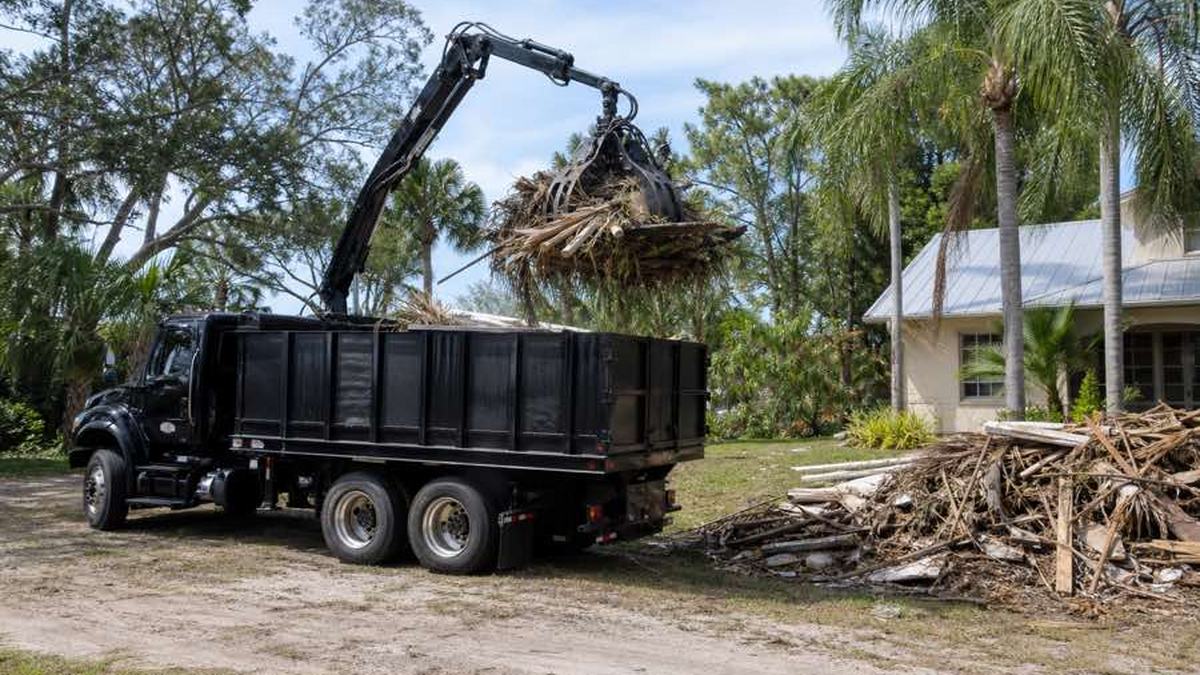
Grapple equipment needs more than a visible pile. The operator must account for the truck's position, the reach needed to access material, overhead hazards, stable ground, traffic, structures, fences, drainage areas, and other property. A pile behind a narrow gate or under utility lines may not be reachable even when its volume appears manageable.
Use this access checklist:
Take wide photos from both travel directions, not only close-ups of the pile. Include gates, turns, overhead conditions, and the distance between debris and the expected loading position. Photos support an initial conversation, but actual conditions still govern whether hauling can proceed.
Do not move debris into a public right of way merely to improve private truck access. Confirm current placement requirements with the authority responsible for the road and collection program.
Private hauling offers direct coordination, while curb pickup follows the public program's process. Owners considering a scheduled grapple truck haul can use the service contact option to describe timing needs, but should still verify whether moving publicly staged debris could affect any government collection or assistance process.
Waiting may be reasonable when the pile complies with verified public instructions, does not interfere with safe property use, and can remain until the applicable collection occurs. Private hauling may be practical when an accepted pile is accessible and the owner needs greater control over coordination. Neither option is automatically better for every Daytona Beach property.
Consider these practical questions:
If reimbursement, disaster aid, insurance coverage, or FEMA-related eligibility matters, preserve photographs, receipts, property records, and written instructions. Ask the insurer and the administering authority what documentation is required before hiring anyone. Do not assume private hauling will be reimbursed or that a public program will collect material from every property.
The business phone is answered 24/7, which allows callers to submit information at any hour. It does not guarantee immediate dispatch, a particular response time, or acceptance of a job. Scheduling depends on confirmation of material, access, location, and other operating considerations.
Good preparation helps determine whether storm debris cleanup hauling fits the site. Before using the contact form or phone information, gather the Daytona Beach address, pile photos, material description, access details, and any scheduling constraints. Do not request tree cutting because the company only hauls material after it has been cut or cleared.
Start with an honest inventory. Describe the main material, mixed items, approximate pile dimensions, number of separate piles, and whether material is wet, soil-covered, tangled with fencing, or near a structure. Avoid estimating an exact number of truckloads from appearance alone. The truck's 50-yard capacity does not mean every pile of that apparent size is one load because weight, density, pile shape, and loading conditions vary.
Prepare the following information:
Keep people and pets away from unstable piles. Wear appropriate protective gear if sorting can be done safely, and stop if you encounter leaking containers, downed utilities, sharp structural material, or other hazards. Contact emergency services or the responsible utility when conditions require it.
Clear communication helps avoid a mismatched service request. Daytona Grapple Truck Service serves Volusia and Flagler counties from Ormond Beach and provides hauling only. Tree cutting, standing-tree removal, demolition, and unconfirmed waste handling should be arranged with an appropriate provider.
These answers summarize how to compare public pickup with private storm debris hauling in Daytona Beach. For a site-specific discussion, use the company contact page; for government schedules, placement requirements, eligibility, disposal instructions, permits, or code questions, contact the city, county, state, or administering agency responsible for the property.
No. Daytona Grapple Truck Service is a hauling-only service. It does not cut trees or remove standing trees. Limbs, trunks, branches, and other vegetation must be cut or cleared before hauling. If a tree is standing, leaning, entangled with utilities, or otherwise hazardous, contact an appropriate tree or utility professional before requesting debris hauling.
Approved construction debris can be hauled after confirmation. Provide clear photos and identify materials such as roofing, wood, drywall, fencing, metal, concrete, or insulation. Acceptance should never be assumed, especially for mixed, unknown, contaminated, or potentially hazardous material. Public disposal and collection requirements must be confirmed with the responsible government authority.
Check current notices from the City of Daytona Beach and Volusia County, then contact the agency or collector identified for your address. Ask about service area, property eligibility, collection phases, sorting, placement, and deadlines. Because storm programs can change, do not rely on instructions from a previous event, neighborhood posts, or a private hauling company.
Not necessarily. Fifty yards describes truck capacity, not a guaranteed measure for a pile or an exact load count. Debris density, weight, moisture, shape, material restrictions, reach, and site access can affect loading. Send photos and dimensions for review, but understand that actual site and material conditions determine what can be hauled.
Yes. The phone is answered 24/7. That allows you to provide the address, material description, photos, access details, and scheduling needs, but it does not promise immediate service or a specific response time. Hauling must be confirmed based on location, debris type, site access, scheduling, and applicable handling requirements.