August 21, 2026
A well-positioned debris pile can protect grading plans, preserve access, and simplify hauling. Use this DeLand guide to coordinate one reachable consolidation area before clearing begins.
Effective lot-clearing pile placement starts with one consolidation area that a grapple truck can reach without crossing planned improvements or unstable ground. Before cutting begins, review the property through the DeLand service page and coordinate where debris will be gathered, how the truck will approach, and which route must remain open.
A single well-planned pile is usually easier to evaluate and load than scattered stacks at every corner of a parcel. It gives the clearing crew a defined destination and helps prevent limbs, trunks, brush, and approved debris from blocking the driveway, future building pad, drainage path, or equipment route.
The best location is not necessarily the shortest distance from the first tree or brush line. It should balance movement during clearing with safe, practical truck access later. Consider where the grapple truck can approach, stop, load, and depart without requiring debris to be handled again.
Daytona Grapple Truck Service is a hauling-only service based in Ormond Beach. The company does not cut or remove standing trees. Debris must already be cut, cleared, and consolidated for pickup.
Before establishing a pile, use the DeLand hauling information to plan service access and the contact page to discuss site details. Keep all cleared material within confirmed property boundaries and outside neighboring lots, public rights of way, sidewalks, drainage features, and any protected or restricted area identified by the responsible authority.
Visual cues such as fences, old posts, mowing lines, tree rows, or utility boxes are not substitutes for verified boundaries. If the property line is uncertain, consult the survey, owner, project manager, or qualified surveying professional before using the edge of the lot as a debris zone.
Also distinguish the property boundary from the clearing limit. A clearing plan may preserve trees, buffers, drainage areas, easements, or portions of the parcel even when they fall inside the legal boundary. Marking these limits before work begins can keep the pile from drifting into an area that must remain undisturbed.
Local requirements can change by location and project. For current public disposal, collection, or solid-waste information, consult Volusia County Solid Waste and Recycling. The county source does not endorse Daytona Grapple Truck Service, but it is an appropriate place to verify applicable public information.
Good grapple truck debris removal planning keeps the consolidation area outside the future building pad, swales, retention areas, utility trenches, and soil-stockpile zones. Coordinate the pile with the broader land-clearing debris hauling process so loading does not interfere with rough grading, compaction, drainage work, or later construction access.
A pile placed on the future pad can delay grading and may require material to be moved twice. The same problem occurs when debris covers grade stakes, benchmark markers, test locations, utility paths, or the area where fill will be delivered. Review the site plan before selecting the consolidation point, even if active construction is still weeks away.
Water movement matters on DeLand parcels. Avoid filling shallow swales, low areas, culvert approaches, ditch lines, or routes that visibly carry stormwater. A large brush pile can trap sediment, redirect runoff, hide saturated ground, and make access less predictable after rain.
| Site feature | Pile-placement concern | Planning response |
|---|---|---|
| Future building pad | Obstructs grading or compaction | Place debris beyond marked pad limits |
| Drainage swale | Blocks or redirects water | Preserve the full drainage path |
| Utility trench | Restricts excavation access | Keep the marked route open |
| Fill or soil stockpile area | Creates material conflicts | Assign separate zones before clearing |
| Construction entrance | Blocks deliveries and equipment | Maintain continuous travel clearance |
If grading plans are preliminary, choose a location that can remain dedicated to debris until hauling occurs. Record it on a printed plan or simple site sketch so operators do not gradually expand the pile into reserved work areas.
A reachable pile needs more than an open driveway. Review grapple truck hauling requirements and confirm the property falls within the listed service area. Plan a continuous route from the public-road entrance to the pile, with suitable clearance, firm ground, turning space, and an exit that does not depend on crossing loose debris.
Walk the intended route before clearing starts and again after the pile begins to grow. Look up for branches and overhead lines, then look down for soft shoulders, culverts, septic components, irrigation hardware, freshly filled trenches, steep transitions, or hidden stumps. A route that works for a pickup truck may not be appropriate for a larger hauling vehicle.
Do not assume the truck should drive anywhere heavy equipment traveled during clearing. Tracked machinery may cross soft or uneven ground differently. The approach should be evaluated specifically for truck access, especially after rain or when fill has recently been placed.
If access involves a state-maintained roadway or work near its right of way, consult the Florida Department of Transportation maintenance resources or the responsible road authority for current direction. That source does not endorse the company. Do not place debris in a public right of way based on assumptions about collection or access rules.
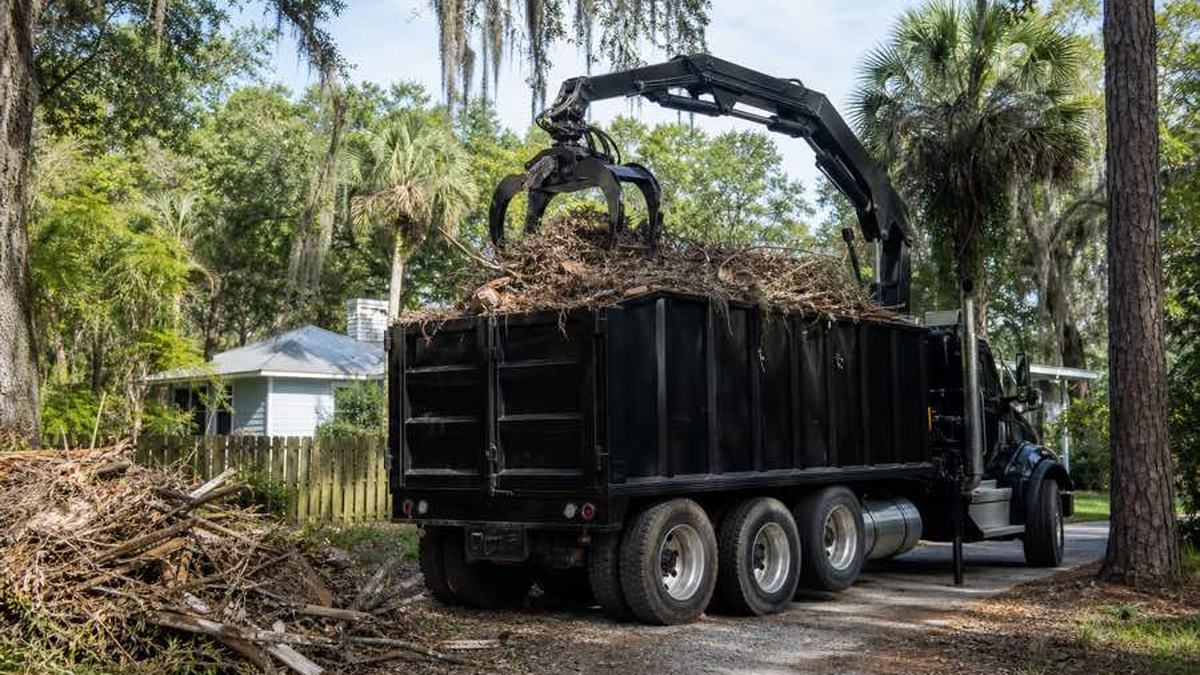
The land-clearing debris removal process is more efficient when cut material is consolidated rather than tangled around standing trees, fences, or equipment. Use the service contact option to describe the pile composition and access. Daytona Grapple Truck Service hauls debris after it is cut or cleared, using a truck with a 50-yard capacity.
Orient long limbs, trunks, and brush in a generally consistent direction when practical. A loosely organized pile is easier to assess than a compressed mass mixed with soil, fencing, wire, bags, and miscellaneous waste. Keep material visible so its type can be discussed before hauling.
Do not build the pile around standing trees, utility poles, mailboxes, signs, or permanent structures. The grapple needs a clear working area, and buried obstacles can be difficult to identify once brush accumulates. Avoid leaning material against fences or placing logs where they can roll into the loading area.
The 50-yard capacity describes the truck body, not a guaranteed amount that any specific pile will occupy. Branch shape, density, trunk size, void space, material type, site access, and loading conditions all affect hauling. Exact load counts should not be assumed from photographs or rough dimensions alone.
Before requesting grapple truck debris removal, identify what the pile contains and use the contact page to confirm questionable material. Vegetative debris should not conceal unrelated waste. Approved construction debris can be hauled after confirmation, but acceptance depends on the material and should never be assumed for hazardous, prohibited, or unidentified items.
Separation begins while the lot is being cleared. If every material goes into one pile, later sorting can require extra handling and may expose sharp or unsafe objects. Give clearing crews a simple site rule: vegetation goes to the designated vegetative area, while other debris remains separate pending confirmation.
Photographs can help communicate pile contents, but they do not replace a complete description. Mention roofing, lumber, pallets, drywall, concrete, soil, metal, fencing, treated wood, containers, or demolition debris if present. If the composition changes after the initial discussion, provide updated information before hauling.
Keep fuels, oils, paints, pesticides, batteries, pressurized cylinders, medical waste, asbestos-suspect materials, and unidentified liquids out of the pile. This is not a complete regulatory list or a statement of local acceptance. Contact the appropriate local or state authority for current handling and disposal instructions.
For disaster-related planning, the U.S. Environmental Protection Agency's disaster debris planning guidance explains why communities and property owners should anticipate different waste streams. The EPA does not endorse this business. For current eligibility or reimbursement questions following a declared disaster, consult the responsible government agency rather than assuming private hauling qualifies.
The easiest time to plan lot-clearing debris hauling is before equipment enters the property. Review DeLand coverage through the local service page, then align the owner, clearing contractor, grading contractor, and hauler around one marked consolidation area. Early coordination reduces blocked access, boundary confusion, mixed materials, and avoidable rehandling.
Create a basic sketch showing the road entrance, truck route, pile footprint, property limits, building pad, grading zones, drainage features, utilities, gates, and areas that must remain untouched. The drawing does not need to replace a formal site plan. Its purpose is to give everyone the same practical instructions.
Daytona Grapple Truck Service is based in Ormond Beach and serves Volusia and Flagler counties. The phone is answered 24/7, which allows property owners and contractors to share project information at any hour. That does not establish a guaranteed response or pickup time. Scheduling and site details must be discussed directly.
If debris follows a storm, use the FEMA debris-removal guidance as general safety and planning information. FEMA does not endorse the company. Verify current government collection, documentation, placement, and eligibility requirements with the agency or local authority responsible for the specific event.
For quick planning, compare the DeLand service details with the grapple truck debris removal service. The answers below explain pile location, access, standing-tree limitations, construction debris confirmation, and capacity. Site conditions vary, so use them as practical preparation rather than a substitute for project-specific coordination or guidance from the responsible authority.
Place it inside confirmed property boundaries on firm, reasonably level ground that the truck can reach. Keep it outside the future building pad, grading areas, drainage paths, utility routes, and public rights of way. Leave open space beside the pile for loading and preserve a clear route from the entrance to the consolidation area.
No. Daytona Grapple Truck Service is a hauling-only service. The company does not cut or remove standing trees. Trees, limbs, brush, and other vegetation must be cut or cleared by others before hauling. Consolidating that material into one accessible area helps the pile remain separate from standing vegetation, structures, fences, and future work zones.
Approved construction debris can be hauled after confirmation. Describe each material before combining piles, including lumber, roofing, drywall, concrete, metal, or demolition waste. Do not assume hazardous, prohibited, or unidentified material will be accepted. Keeping construction debris separate until it is confirmed can prevent sorting, access, and handling problems at the site.
The truck has a 50-yard capacity. That figure describes the truck body and does not establish an exact load count for a particular pile. Branch shape, trunk size, density, void space, material composition, access, and loading conditions affect how debris occupies capacity. Provide clear photographs and an accurate material description for planning.
Confirm the pile is fully cut and consolidated, the property boundary is understood, and the truck route remains open. Check overhead clearance, ground conditions, gates, culverts, utilities, drainage features, and turning space. Identify all pile contents, mention construction debris, and report recent changes caused by rain, grading, parked equipment, or material deliveries.