August 22, 2026
Learn how Deltona property owners can prepare tangled brush and vine piles for safer, more efficient hauling by checking for hidden objects, excess dirt, access problems, and mixed materials.
Tangled vines, thorny brush, palm remnants, and cut limbs can turn a cleanup pile into something far more complicated than ordinary yard waste. Daytona Grapple Truck Service provides hauling-only service in Deltona and throughout Volusia and Flagler counties. The company does not cut or remove standing trees. Material must already be cut, cleared, and positioned where the grapple truck can safely approach it.
Before scheduling bulk yard waste hauling, inspect the pile and review the property through the Deltona service-area information. Tangled material can conceal metal, fencing, rocks, bags, tools, soil, or construction scraps. Identifying these items before the grapple begins lifting helps clarify what is in the pile, whether separation is needed, and whether every material can be accepted.
Vines behave differently from loose branches. Long runners wrap around limbs and knit separate pieces into a single mass. A pile that looks compact from one side may extend farther than expected beneath leaves or around a stump, fence post, shrub, or stored item. If the grapple lifts that mass without a clear view, attached objects may move with it.
Walk around the pile if the area is stable and accessible. Look from several angles rather than relying on the visible top layer. Do not climb onto the debris or reach blindly into thorny or unstable material. Use a rake or similar hand tool only when doing so is appropriate for the conditions.
Inspection is not a promise that every concealed item will be found. It is a practical step that improves communication and lets the hauler understand the debris before loading begins.
A clean vegetation pile is easier to evaluate than mixed debris. The grapple truck debris removal service can collect cut material after access and contents are confirmed, while the broader service area covers Volusia and Flagler counties. Separate vines, branches, logs, and palm debris from household trash, fencing, masonry, and construction material whenever practical, then disclose anything that cannot be separated.
Start by sorting according to material type, not merely by where the debris originated. A fence-line clearing may contain vegetation, wire mesh, treated wood, concrete footings, plastic pots, and irrigation components. Although all of it came from one project, it is not one uniform waste stream.
Long vines can be folded or cut into more manageable sections after they have been detached from anything that must remain. Daytona Grapple Truck Service does not perform cutting or clearing, so property owners or their chosen clearing provider must complete that work first. Avoid tying piles with wire or cable because those materials may create another hidden entanglement.
| Material found | Preparation approach | Why it matters |
|---|---|---|
| Cut vines and brush | Detach from fences, trees, and fixed features | Prevents the pile from pulling on property that should remain |
| Loose soil and sod | Shake or separate excess dirt where practical | Clarifies pile composition and reduces unnecessary weight |
| Wire, stakes, or metal edging | Remove and place separately | Makes sharp or snagging objects visible |
| Approved construction debris | Describe it before service and await confirmation | Acceptance must be confirmed rather than assumed |
| Unknown containers or liquids | Keep out of the pile and seek proper guidance | Unknown or potentially hazardous material requires separate handling decisions |
If a pile contains questionable material, photograph it clearly and describe it when contacting the company. Approved construction debris can be hauled after confirmation, but approval should be obtained before it is mixed into a brush load.
For bulk yard waste hauling, dirt can change a light-looking brush pile into a dense load. Use the contact page to describe root balls, stumps, sod, rocks, or soil before scheduling. A 50-yard truck describes volume capacity, not unlimited weight, so pile dimensions alone cannot determine how the material will load or whether preparation and separation are required.
Freshly pulled vines and shrubs often carry wet soil in their roots. Grading debris may also contain clay, sand, shell, or stone beneath a thin cover of leaves. Because Deltona piles may be created during drainage work, lot cleanup, landscaping, or storm preparation, the visible vegetation does not always represent most of the pile's weight.
Allow loose dirt to fall away from roots where practical. Keep separate soil piles separate from brush unless the hauling arrangement has specifically accounted for both. Do not bury rocks, concrete, or pavers beneath vegetation to make the site look tidier. Visibility is more useful than appearance when material is being evaluated.
A grapple can efficiently lift bulky debris, but preparation still matters. Loose vegetation, dense root balls, and inert material do not handle identically. Clear descriptions support an appropriate hauling plan without guessing at exact load counts.
Good access is central to grapple truck debris removal. Deltona property owners should review the local service page and describe the driveway, gate, road edge, overhead clearance, surface conditions, and pile position. The truck needs a suitable approach and operating space, while the debris must be reachable without requiring travel across septic areas, soft yards, landscaping, or uncertain surfaces.
Do not assume that a pickup truck's route will work for a grapple truck. Consider turning room, slope, pavement edges, low tree limbs, overhead lines, roof overhangs, mailboxes, gate widths, parked vehicles, and drainage swales. A pile behind a house may be inaccessible even when it appears close to the driveway.
The best placement is a location approved for the specific property and hauling plan. Keep debris fully on property unless the responsible authority has directed otherwise. Do not place material in a travel lane, on a sidewalk, over a storm drain, or near utilities based solely on general cleanup advice.
For information about state road right-of-way and maintenance concerns, consult the Florida Department of Transportation maintenance resources. For local solid-waste information, contact the responsible local authority. These agencies provide their own guidance and do not endorse Daytona Grapple Truck Service.
Conditions can change after rain or additional clearing. Recheck the approach on hauling day and communicate any new obstruction or saturated ground.
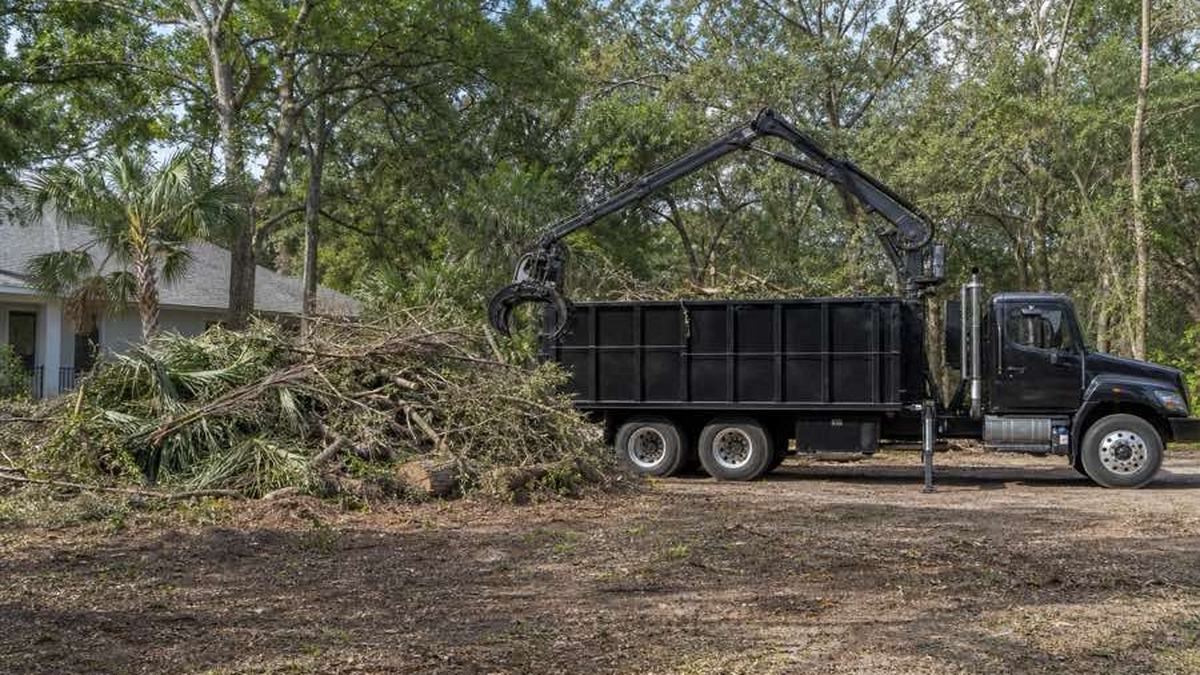
Once cutting is complete, the bulk yard waste hauling service can address an accessible pile, and the grapple truck service overview explains the hauling format. Build the pile on a stable, open surface, keep it detached from standing trees and structures, and leave hidden materials visible or separate. The company hauls cleared debris but does not cut vines or remove standing trees.
Place longer branches generally in the same direction when practical. This is not about making a decorative stack. It reduces cross-weaving and makes the pile's boundaries easier to see. Keep vines from trailing under fences, around posts, across walkways, or into neighboring vegetation.
Avoid compacting debris with a vehicle. Driving over brush can force sharp pieces into tires, push material into soil, hide contaminants, and create a dense mat. Burning, bagging, or binding the pile may also change how it must be handled, so discuss unusual preparation before proceeding.
If a landscaping or clearing contractor creates the pile, share the access and separation requirements before work begins. Moving an intertwined pile later can require extra labor that the hauling-only service does not provide.
After severe weather, use the county service-area page to confirm private hauling coverage and the contact page to discuss pile contents. Private brush and vine debris removal is separate from any public collection program. Government pickup locations, schedules, eligibility, reimbursement, permits, and sorting rules may change, so obtain current instructions directly from the responsible city, county, state, federal, or utility authority.
The Volusia County Solid Waste and Recycling website is an appropriate starting point for current county information. Residents should also verify whether their address is served by a city program, a county program, a contracted provider, or private arrangements. Daytona Grapple Truck Service should not be treated as the source of current government collection rules.
FEMA publishes general debris removal guidelines intended to help communities with post-disaster cleanup. FEMA eligibility and reimbursement depend on official requirements and individual circumstances, so readers should not assume private hauling qualifies. Ask the responsible authority before moving, combining, or documenting debris if eligibility matters.
The EPA also offers natural disaster debris planning guidance. Its information emphasizes planning for different waste streams. It does not represent an endorsement of this company.
During storm cleanup, watch especially for:
Keep people away from electrical hazards and contact the appropriate utility or emergency authority. A hauling provider should not be used as a substitute for qualified hazard assessment.
To discuss brush and vine debris removal, review Deltona coverage and use the contact options to share accurate pile and access details. Daytona Grapple Truck Service is based in Ormond Beach, serves Volusia and Flagler counties, and answers the phone 24/7. Phone availability does not guarantee a particular response time, hauling time, material acceptance, or access outcome.
Useful information at the first conversation can reduce uncertainty. State that the material has already been cut or cleared. Describe vines, limbs, palm material, logs, stumps, root balls, dirt, rocks, fencing, and any construction debris separately. Approved construction debris may be hauled after confirmation, but it should not be assumed acceptable without that confirmation.
Provide:
The truck has a 50-yard capacity, but pile volume does not produce a reliable exact load count. Tangling, density, moisture, soil, access, and material type all affect loading. Avoid planning around a guaranteed number of loads unless the actual debris and conditions have been evaluated.
Before loading, perform one final perimeter check. Confirm that vines are not attached, move loose personal property, and point out anything that could be difficult to see. Straightforward disclosure is more useful than trying to make a mixed pile resemble clean vegetation.
These answers summarize common questions about brush and vine hauling and requesting service details. Daytona Grapple Truck Service provides hauling only after material is cut or cleared. Every pile should be reviewed for access, entanglement, dirt, hidden objects, and mixed waste. Specific acceptance, positioning, and construction-debris questions require confirmation based on the material and site.
No. The company is a hauling-only service and does not cut vines, clear vegetation, or remove standing trees. Brush, vines, limbs, and other vegetation must be cut, detached, and placed for access before hauling. If vines remain connected to a tree, fence, trellis, or rooted plant, have the clearing work completed before the pile is presented for pickup.
Tangled vegetation can hide wire, fencing, rocks, tools, irrigation parts, containers, construction scraps, and heavy soil. Inspection helps identify items that need separation or confirmation and reveals whether vines are still attached to fixed features. Check from stable ground and avoid climbing on the pile or reaching blindly into thorny, sharp, or unstable debris.
Describe dirt, root balls, and stumps before scheduling rather than assuming they can be handled as ordinary brush. These materials can be substantially denser than loose vegetation, especially when wet. Shake off excess soil where practical, keep separate dirt piles distinct, provide photos, and disclose rocks, concrete, or other heavy material so the proposed load can be evaluated.
Approved construction debris can be hauled after confirmation. Identify wood, roofing, drywall, fencing, masonry, metal, or other project debris before combining it with vegetation. Do not assume all construction or demolition material is accepted, and do not place unknown or potentially hazardous materials in the pile. Clear photos and an accurate material list support a proper acceptance decision.
Keep debris on the property in a location suitable for the truck unless the responsible authority provides different instructions. Do not block travel lanes, sidewalks, drainage features, utilities, or neighboring access. Public pickup and right-of-way rules can change, so consult the City of Deltona, Volusia County, FDOT, a utility, or another responsible authority for current requirements.