August 20, 2026
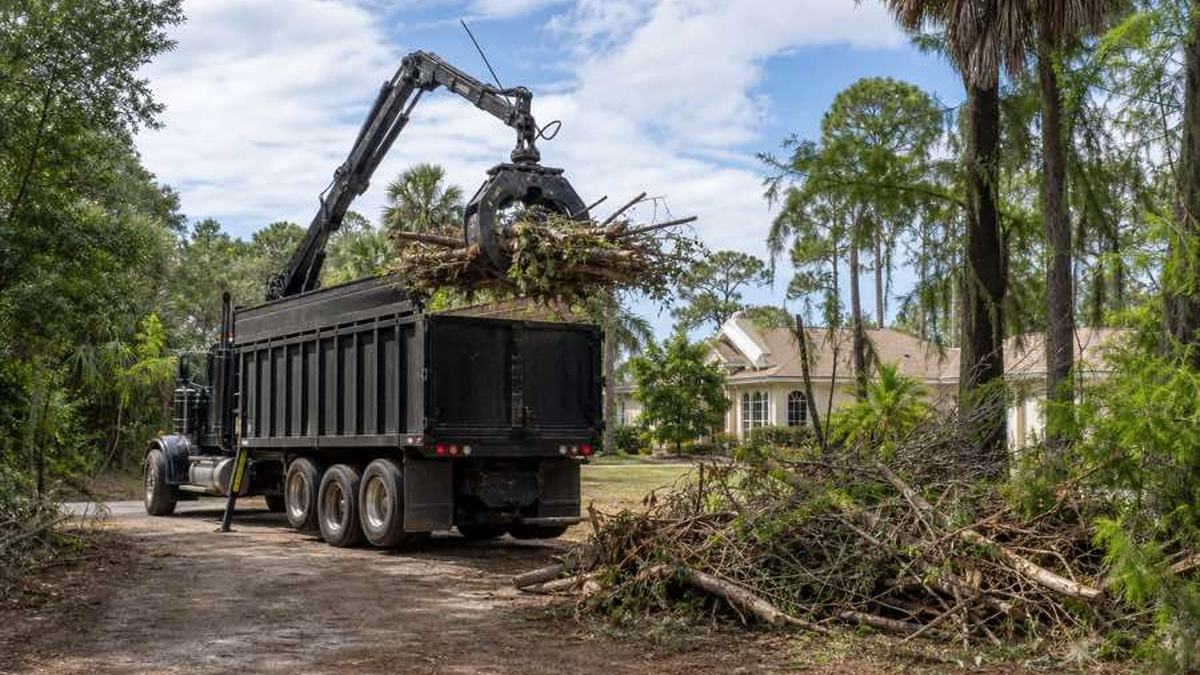
Prepare cut limbs, trunks, and brush for efficient hauling with a practical Port Orange staging plan focused on pile direction, truck access, overhead clearance, and material separation.
To stage tree debris for grapple pickup, place cut material where a truck can approach without crossing soft ground, landscaping, or hidden obstacles. Review the local Port Orange service information and the scope of tree debris removal before selecting the pile location. The goal is a stable, visible work zone with enough room for the truck, grapple, and nearby traffic to remain separated.
Start by viewing the property from a truck-access perspective. A pile beside a wide driveway or other firm approach is generally easier to reach than one behind a house, fence, pool enclosure, or row of trees. Avoid assuming that a grapple can reach over structures or retrieve material from anywhere on the lot.
Keep debris away from objects that could be damaged or concealed during loading. Common concerns include:
Port Orange properties vary from compact residential lots to larger parcels with long driveways. If the staging choice is unclear, take photos from the street, driveway entrance, and pile location. Daytona Grapple Truck Service is based in Ormond Beach, serves Volusia and Flagler counties, and answers the phone 24/7 for hauling inquiries.
Arrange branches and trunks so their cut ends face the side where the truck is expected to load. This simple alignment gives the grapple clearer purchase and reduces tangled, cross-stacked material. The grapple truck debris removal page explains the hauling service, while the broader service area page helps confirm geographic coverage. Keep pieces parallel whenever practical rather than building a random mound.
Think of the pile as a bundle rather than a brush heap. Place longer limbs in the same general direction, with leafy or forked ends trailing away from the loading side. Stack shorter branches in a separate aligned layer instead of throwing them sideways across the longer material.
A practical order is:
Avoid pointing sharp limbs into a travel lane, sidewalk, or neighboring property. Alignment should support loading without creating a hazard for pedestrians, cyclists, vehicles, or nearby homes. Do not tie the entire pile together with rope, wire, or chain unless specifically requested, because hidden binding can complicate handling.
If debris comes from several parts of the property, build one accessible, orderly pile only when doing so will not exceed the available safe staging space. Several smaller piles may be preferable if combining them would block access or push material beneath overhead obstacles.
A grapple truck needs more than a parking spot. It also needs working room beside and above the debris. Before using the contact page to discuss access, compare the proposed area with the service described under tree debris hauling. Check for overhead wires, tree canopies, roof edges, signs, and narrow turns that could interfere with truck positioning or grapple movement.
Walk the full approach, not just the immediate pile area. Look at the entrance width, turn radius, surface condition, parked vehicles, gate opening, and exit route. A truck should not have to squeeze between fragile features or reverse through an unnecessarily congested path.
Use this clearance checklist before pickup:
The Florida Department of Transportation provides information related to state roadway maintenance. For questions about placing debris near a state-maintained road or right of way, contact FDOT or the responsible road authority rather than assuming a pile location is permitted.
Never move debris into traffic to improve reach. If roadside staging is being considered, preserve sight lines at driveways and intersections and seek direction from the authority responsible for that location.
Keep tree material separate from household trash, roofing, fencing, soil, concrete, metal, and storm-damaged contents. A clean pile is easier to evaluate for grapple truck hauling, and Port Orange property owners can use the contact options to confirm questionable materials beforehand. Approved construction debris may be hauled after confirmation, but it should not be mixed into a tree-debris pile without prior discussion.
Tree debris commonly includes already-cut limbs, branches, brush, and trunk sections. Daytona Grapple Truck Service does not cut or remove standing trees. The service begins after vegetation has been cut or cleared and staged for hauling.
| Material group | Recommended staging approach |
|---|---|
| Cut limbs and brush | Align together with cut ends toward the loading side. |
| Trunk sections | Group visibly and keep them accessible, not buried under loose brush. |
| Approved construction debris | Separate from vegetation and request confirmation before pickup. |
| Household contents and bagged trash | Do not mix into the vegetation pile. Confirm other disposal options. |
| Paint, fuel, chemicals, batteries, or unknown containers | Isolate safely and contact the responsible waste authority for instructions. |
Volusia County publishes solid-waste information through its Solid Waste and Recycling division. Consult that authority for current county program details, facility requirements, and guidance concerning restricted or special waste. Program rules can change, so do not rely on old storm notices or neighborhood assumptions.
Never hide questionable material under branches. Visible separation allows the hauling request to be assessed accurately and helps prevent a mixed pile from becoming harder to manage.
Build a compact, stable pile that remains visible from the truck approach. Avoid a tall, loose stack that can roll, settle, or hide obstacles. The guidance for service in Port Orange can help with local planning, and the tree debris service page clarifies that hauling applies after cutting or clearing. Keep heavy pieces low and avoid stacking against structures.
The truck has a 50-yard capacity, but that figure should not be used to predict an exact number of piles, trees, or loads. Branching shape, trunk diameter, moisture, air space, mixed materials, access, and loading conditions all affect how debris occupies the container. Share clear photos and rough dimensions when discussing the job.
To improve pile stability:
Do not compact a pile by driving over it. That can push debris into soil, conceal metal or rocks, damage the surface, and create tightly interlocked material. Similarly, avoid using tarps beneath a large pile unless their removal has been discussed. A tarp can tear, become entangled, or hide ground conditions.
If rain is expected, prioritize drainage and firm access. Do not relocate debris into a swale or cover a drain merely to keep the pile together.
Keep staged debris clear of storm drains, drainage paths, sidewalks, travel lanes, utility equipment, and access points. Use the Volusia and Flagler service area overview for coverage context and contact Daytona Grapple Truck Service about property-specific hauling access. Public placement requirements depend on the responsible authority, so verify current instructions instead of treating general cleanup advice as a local rule.
Port Orange receives heavy rain and tropical weather, making drainage awareness especially important. Loose leaves and small branches can migrate quickly when runoff increases. Keep the pile contained on a stable surface without blocking water flow or creating a barrier across a swale.
After a disaster, the Federal Emergency Management Agency offers general debris-removal guidance for communities and residents. FEMA does not endorse this business, and its general guidance does not establish current local pickup procedures or individual eligibility. Contact the relevant government agency for current program, reimbursement, right-of-way, or collection instructions.
The U.S. Environmental Protection Agency also provides planning guidance for natural-disaster debris. That resource is useful for understanding why sorting and hazardous-material awareness matter, but local authorities should answer questions about actual acceptance and disposal arrangements.
Before leaving the pile, walk around it once more. Confirm that drivers can see around it, pedestrians can pass safely, utility access remains open, and wind or runoff is unlikely to scatter smaller material.
On pickup day, keep the approach open, remove movable obstacles, and make sure the debris has not spread or become mixed with new material. Review grapple truck debris removal details and use the contact page to communicate gates, access limitations, or material questions. The phone is answered 24/7, although no specific pickup or response time should be assumed without confirmation.
Use a final readiness checklist:
Photos can make the conversation more productive. Include a wide image showing the approach, a side view showing pile height and length, and closer images of trunk sections or mixed materials. Do not use perspective tricks or omit access constraints. Accurate information supports a realistic assessment of hauling needs.
If construction material is present, describe it specifically and keep it separate. Approved construction debris can be hauled after confirmation. Do not assume that all demolition, storm, hazardous, or prohibited materials are accepted.
Daytona Grapple Truck Service is a hauling-only service based in Ormond Beach. It serves Volusia and Flagler counties and uses a 50-yard-capacity truck. Cutting, trimming, clearing, and removal of standing trees must be completed before the debris-hauling stage.
These answers summarize how to prepare cut vegetation for tree debris pickup and where to find Port Orange hauling information. They focus on pile direction, access, clearance, sorting, and service scope. Property conditions differ, so communicate unusual entrances, overhead obstacles, soft ground, mixed debris, or roadside placement concerns before hauling is arranged.
Point the cut ends toward the expected loading side and keep long branches generally parallel. Place heavier sections low, with forked and leafy ends trailing away from the truck side. This arrangement creates a more orderly pile and reduces cross-stacking. Keep sharp ends out of sidewalks and travel lanes, and confirm the loading side if access could occur from more than one direction.
No. Daytona Grapple Truck Service is a hauling-only service and does not cut or remove standing trees. Trees, limbs, and brush must already be cut or cleared before hauling. Arrange any needed cutting, trimming, or site clearing separately, then stage the resulting debris in a reachable location with adequate truck and grapple clearance.
Keep construction debris separate from branches and trunks. Approved construction debris can be hauled after confirmation, but acceptance should be discussed before pickup. Provide photos and identify materials accurately. Do not bury roofing, metal, concrete, household contents, chemicals, or unknown containers beneath vegetation, and consult the appropriate waste authority regarding restricted or special materials.
The truck has a 50-yard capacity, but that does not establish an exact tree, pile, or load count. Irregular branches create air space, while trunk sections, moisture, material type, access, and loading conditions affect usable capacity. Share wide and close photos plus rough pile dimensions so the hauling request can be discussed without relying on an unreliable visual estimate.
Choose a firm, reachable area that does not block drainage, sidewalks, traffic, utilities, or sight lines. For any placement in or near a public right of way, contact the government agency responsible for that road or collection program. Current municipal, county, state, FEMA, permit, disposal, and pickup requirements should be verified with the appropriate authority.