August 20, 2026
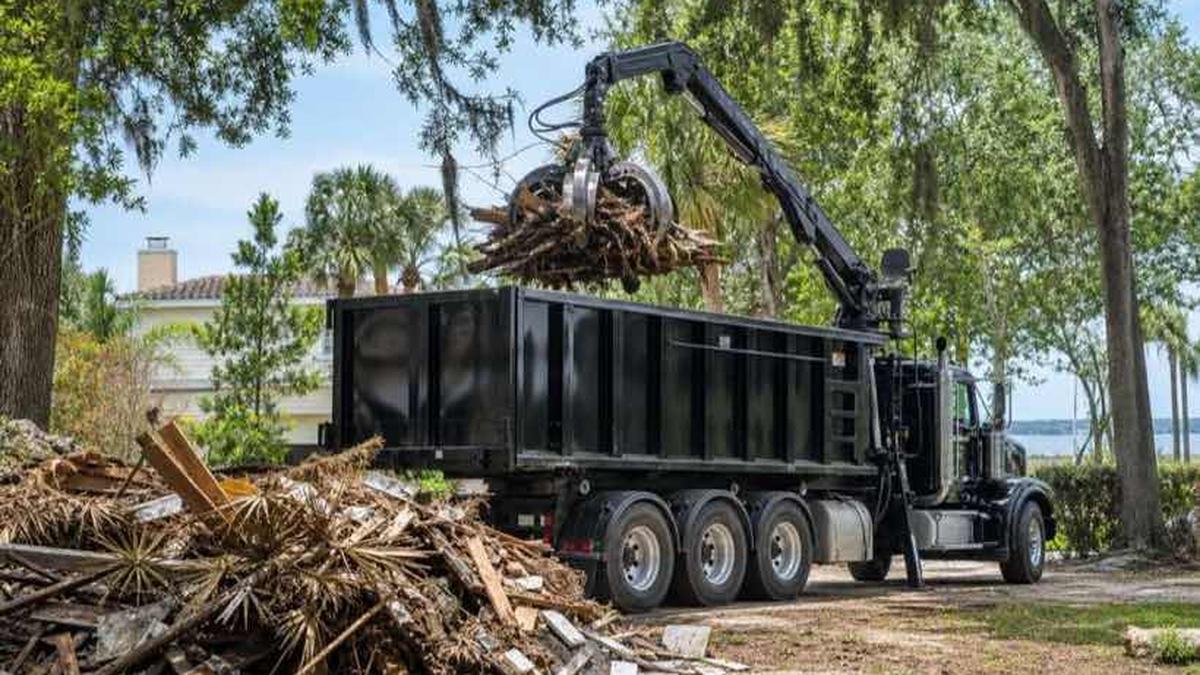
Use measured pile dimensions, shape, compaction, and material type to screen debris volume before scheduling a 50-yard grapple truck in Daytona Beach.
To estimate debris for a 50-yard grapple truck, measure the pile’s length, width, and average height, then adjust for its shape and material. Daytona Beach property owners can also review the local service area details before discussing hauling. This approach is a planning screen only because loose branches, compact soil, mixed demolition material, and hidden voids load differently.
A 50-yard truck describes volumetric capacity, not a guarantee that every pile measuring 50 cubic yards will fit into one load. Weight, pile density, grapple handling, safe loading, and disposal requirements can affect the practical amount hauled. A light, irregular branch pile may contain substantial open air, while a much smaller pile of wet soil or concrete can be heavy.
Begin by identifying the pile as predominantly vegetation, wood, soil, construction debris, or mixed material. Next, measure the visible footprint and estimate an average height rather than using only the tallest point. Photographing the pile from several angles with a familiar object nearby, such as a standard trash cart, can provide useful scale when discussing the job.
Daytona Grapple Truck Service is a hauling-only service based in Ormond Beach. The truck has a 50-yard capacity, and service covers Volusia and Flagler counties. The company does not cut or remove standing trees. Vegetation must already be cut, cleared, and positioned for hauling.
A basic pile estimate starts with length × width × average height in feet, divided by 27 to convert cubic feet to cubic yards. Use the debris hauling service overview to understand the service, and check the broader Volusia and Flagler service area when planning. The calculation represents the pile’s outer dimensions, including voids, so it is not a precise measure of solid material.
For a rectangular pile measuring 18 feet long, 8 feet wide, and 5 feet high, the outer-volume calculation is 18 × 8 × 5 = 720 cubic feet. Dividing by 27 gives about 26.7 cubic yards. That figure is useful for screening, but the actual loading behavior depends on whether the pile contains leafy limbs, logs, fencing, roofing, soil, or a mixture.
Most debris piles are not neat boxes. For a mound that slopes from the center to the edges, using the peak height can overstate volume. Estimate the average height by visually smoothing the pile into a more even shape. If it rises to 6 feet at the center but tapers to near ground level, an average height of roughly half the peak may be a more practical starting assumption.
| Pile shape | Planning method | Main caution |
|---|---|---|
| Rectangular stack | Length × width × average height | Spaces between items still count in outer volume |
| Rounded mound | Box estimate, then reduce for sloped sides | Do not use peak height as average height |
| Long windrow | Split into segments and calculate each | Width and height may vary considerably |
| Several small piles | Estimate separately, then add | Different materials may require different handling |
For irregular piles, divide the area into simple sections. Measure each section, calculate its approximate cubic yards, and add the results. Record a low and high estimate if dimensions are uncertain. A range communicates the limits of visual estimating more honestly than a single number.
After calculating outer volume, classify the contents by density and handling characteristics. The contact page provides a way to describe materials, while the grapple truck debris removal page explains the hauling focus. Light vegetation may fill space before reaching a weight constraint, whereas soil, concrete, roofing, and saturated debris can become weight-sensitive well before the truck’s nominal 50-yard volume is used.
Density is why a cubic-yard estimate should never be converted directly into a promised number of loads. Two piles with identical measurements may have very different practical hauling requirements. Fresh palm fronds can interlock and create voids. Short, compact branches may settle tightly. Logs concentrate weight. Wet material is generally heavier than dry material.
When a pile contains multiple categories, estimate each material separately rather than averaging everything together. For example, identify an upper layer of brush and a lower layer of soil as distinct quantities. This helps reveal heavy material that might otherwise be hidden by a visually dominant layer of branches.
Do not assume every material can be accepted. Describe uncertain items before service, including containers, chemicals, batteries, electronics, tires, treated materials, or anything with unknown contents. Acceptance and disposal requirements can vary by material and destination.
Visual volume includes empty space, so examine how tightly the debris is packed before comparing it with a 50-yard truck. Photos submitted through the service contact option can support the discussion, and the Daytona Beach page provides local context. A tangled limb pile, neatly cut stack, and crushed mixed pile can share the same outer dimensions while containing very different amounts of material.
Void space is especially significant in storm vegetation. Forked branches lock together, palm fronds fan outward, and long limbs may extend beyond the main mound. A tape-measure box around those pieces captures air as well as debris. That does not make the measurement useless. It simply means the estimate should be labeled as loose-pile volume.
Compaction should not be guessed too aggressively. A pile that appears airy may not settle evenly during grapple loading. Rigid limbs, wire, lumber, fencing, or long dimensional pieces can prevent efficient placement. Conversely, small leaves and chipped material can settle more tightly than their original mound suggests.
Use three visual categories for planning:
Keep long or awkward pieces in the photos and notes rather than mentally trimming them from the estimate. Also identify concealed layers. A brush pile may cover fencing, concrete, root balls, or bags. If the pile cannot be safely inspected, do not climb on it or reach into it. Explain what is visible and what remains unknown.
Even a careful volume estimate is incomplete without checking whether the truck can approach and grapple the pile safely. Review the grapple hauling details and use the contact information to explain gates, overhead lines, parked vehicles, soft ground, or narrow access. A reachable, clearly separated pile is easier to assess than debris hidden behind structures or scattered across a property.
Before scheduling, walk the path from the street or access point to the debris. Look upward as well as outward. Tree canopies, utility lines, signs, roof edges, and other overhead obstructions can affect equipment positioning. Ground conditions matter too. Saturated soil, septic areas, decorative paving, steep grades, and tight turns should be identified in advance.
Prepare a practical access checklist:
Pile placement also affects what can be visually verified. A single organized pile with vegetation separated from heavy or uncertain materials supports a more useful planning conversation. Scattered debris is harder to measure and classify. Avoid mixing household trash, sealed containers, liquids, or unknown products into yard or construction debris.
For road-related questions, consult the agency responsible for that roadway. The Florida Department of Transportation maintenance site is an authoritative starting point for state-road information, but it does not endorse Daytona Grapple Truck Service. Local streets, rights of way, permits, and placement questions may fall under different authorities.
Good photos and concise notes can make a preliminary estimate more useful without turning it into a guarantee. Use the company contact page to share pile details and consult the county service coverage page when confirming location. Photograph all sides, include a scale reference, list dimensions, and disclose dense, mixed, concealed, or questionable materials rather than showing only the easiest angle.
Take one wide photo showing the pile relative to the property, then capture the front, back, and both sides when accessible. Add a close view of the material mix. A measuring tape, marked pole, standard fence panel, or trash cart can help establish scale, but avoid relying on perspective alone. Camera distance and wide-angle lenses can make piles appear larger or smaller.
Include these notes with the images:
If construction debris is involved, list what it contains rather than describing it only as “construction material.” Approved construction debris can be hauled after confirmation, but that statement is not blanket acceptance. Separate uncertain items and provide clear photographs or product labels when safe to do so.
Volusia County publishes solid waste and recycling information through its Solid Waste and Recycling division. Readers should consult the responsible county, city, disposal facility, or other authority for current acceptance and placement information. That source is provided for public guidance and does not endorse this hauling service.
After a storm or large cleanup, measure each debris category separately and confirm the intended hauling arrangement before moving material. The Daytona Beach service page explains local coverage, while the hauling service page distinguishes debris hauling from tree cutting. Daytona Grapple Truck Service does not cut or remove standing trees; it hauls debris after trees or vegetation are cut or cleared.
Storm piles often combine vegetation, damaged building materials, household contents, soil, and unknown products. Mixing categories can complicate measurement, handling, and disposal. Keep vegetative debris separate from construction debris, appliances, electronics, containers, and potentially hazardous materials whenever authorities direct and it is safe to do so.
The Federal Emergency Management Agency debris removal guidance offers general disaster-debris planning information. FEMA does not endorse this business, and its public guidance should not be read as confirmation that a particular private hauling expense, pile, property, or disposal method qualifies for assistance. Contact the responsible program or agency for current eligibility questions.
The U.S. Environmental Protection Agency’s natural disaster debris planning guidance also discusses the complexity of disaster waste. It does not endorse Daytona Grapple Truck Service. Follow official instructions for suspicious containers, asbestos concerns, chemicals, fuel, batteries, and other potentially hazardous materials rather than placing them into a general debris pile.
Government pickup schedules, FEMA policies, disposal rules, permits, and local codes can change. Confirm current information directly with the city, county, state agency, FEMA, disposal facility, or other responsible authority. Private hauling should not be represented as government collection or as a guaranteed path to reimbursement.
The quickest way to refine an estimate is to combine measurements, material details, access photos, and honest uncertainty. Review 50-yard grapple truck hauling and the contact options before scheduling. The answers below address common Daytona Beach planning questions while avoiding exact load promises, since weight, density, shape, access, and material acceptance can change what is practical.
Measure length, width, and average height in feet. Multiply those figures to get cubic feet, then divide by 27 for approximate cubic yards. For rounded or sloped piles, reduce the box-shaped estimate or calculate a range. The result includes air gaps and should be used as a planning screen, not a guaranteed loaded volume.
Not necessarily. A 50-yard truck states nominal capacity, but loose branches can interlock, protrude, or resist compact arrangement. Weight, safe loading, grapple handling, and hidden materials also matter. Share dimensions and photos from multiple angles, but plan for uncertainty rather than treating an outer-volume calculation as a promise of one load.
Approved construction debris can be hauled after confirmation. Identify the materials specifically, including wood, roofing, drywall, concrete, masonry, metal, or mixed contents, and disclose any unknown items. Dense debris may reach practical weight limits before filling the truck’s volume. Acceptance should be confirmed before service rather than assumed from a general description.
No. Daytona Grapple Truck Service is a hauling-only service based in Ormond Beach. It does not cut or remove standing trees. Tree and vegetation debris must already be cut or cleared for hauling. When estimating the pile, note long limbs, logs, stumps, root balls, and soil because each affects volume, weight, and handling.
The phone is answered 24/7. Prepare the property location, pile measurements, material list, access notes, and photos before calling or using the contact page. Service covers Volusia and Flagler counties. Providing details supports planning, but it does not establish an exact load count, material acceptance decision, price, or response time.