August 21, 2026
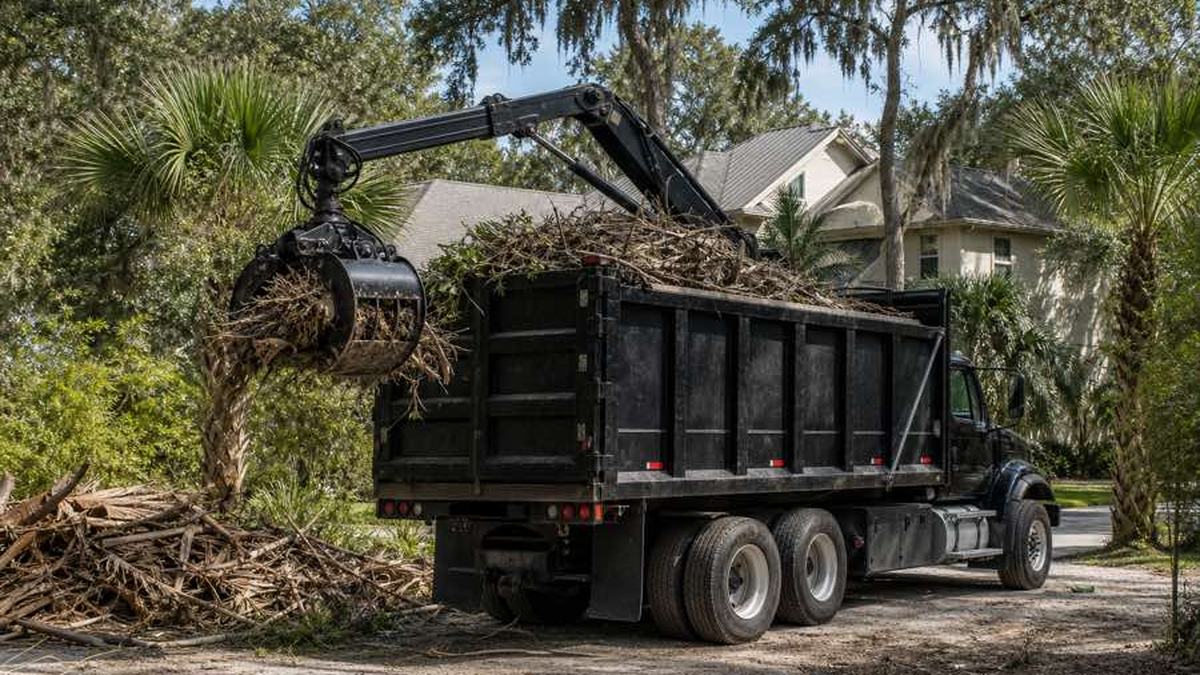
Before scheduling debris hauling, screen the pickup area from ground level for overhead wires, tree limbs, signs, roof edges, and enough open space for the grapple boom.
A useful grapple truck debris removal plan starts by looking up before placing debris. For a Daytona Beach pickup, review the approach, parking position, pile location, and overhead space together. The Daytona Beach service area page provides local context, while a site-specific conversation can help determine whether the hauling setup appears workable.
Grapple truck overhead clearance is not just the open air directly above a debris pile. The boom needs usable working space between the truck and material, and the truck needs a practical path to enter, position, load, and leave. A clear pile can still be difficult to reach if wires cross the driveway, limbs extend over the curb, or a roof edge limits boom movement.
Perform the first review from the ground. Do not climb onto a roof, ladder, tree, pole, or debris pile to measure clearance. Walk the route in daylight when practical, viewing it from both directions because thin service lines and angled branches can disappear against the sky.
Do not assume an obstacle is harmless because another vehicle has passed beneath it. A grapple truck has different height, positioning, and boom-space needs than a passenger car, pickup, or ordinary delivery van.
Treat every overhead line near the route or pile as an important constraint. Before arranging grapple truck hauling, inspect wires from the public approach through the loading area. If line ownership, height, or condition is uncertain, use the contact page to discuss the layout and consult the responsible utility or authority rather than making assumptions.
Look for utility lines along the street as well as service drops running from poles to a home or business. Cable and telecommunications lines may hang lower than neighboring electrical lines. Guy wires, pole-mounted equipment, transformers, and lines obscured by foliage also deserve attention. Never touch, lift, tie back, drive over, or place debris against a wire or utility pole.
Warning signs include a visibly sagging line, a line resting on vegetation, a damaged pole, exposed components, or a wire displaced after a storm. Keep away from a downed or questionable line and report it through the appropriate utility or emergency channel. Daytona Grapple Truck Service should not be used as a substitute for utility assessment or line clearance.
If any answer raises concern, pause placement and seek confirmation. Ground-level visual estimates are useful for screening, not for declaring a safe electrical clearance.
Tree canopy can limit access even when the debris itself consists of already-cut vegetation. Review limbs above the approach, truck position, pile, and boom path before requesting debris hauling. Daytona Grapple Truck Service does not cut standing trees, so arrange cutting or clearing separately, then use the service area information to confirm coverage across Volusia and Flagler counties.
In Daytona Beach, broad shade-tree limbs, palms, and dense ornamental landscaping can create narrow overhead pockets. Pay attention to dead branches, hanging fronds, vines, and limbs under tension. Vegetation that looks high enough at the pile may extend lower over the route the truck must travel.
Do not cut a limb merely to create access without first considering nearby wires, buildings, traffic, and the condition of the tree. Tree work involving standing trees should be handled by an appropriate tree service. Daytona Grapple Truck Service hauls debris after it has been cut or cleared.
After cutting or storm cleanup, repeat the overhead scan. Removing one branch can expose a wire, broken hanger, or second limb that was previously hidden.
Built features can reduce grapple truck overhead clearance as much as wires or trees. Before using grapple truck debris removal, check signs, carports, awnings, roof eaves, balconies, porte-cocheres, and covered gates. The Daytona Beach location page can help frame the request, but photos and an accurate obstacle description are essential for screening a specific property.
Check both vertical and side clearance. A truck may fit beneath an opening yet lack space to turn, position, or operate without getting too close to an eave or sign face. Roof-mounted fixtures, gutters, security cameras, lights, flagpoles, and suspended signs can project farther than their supports suggest.
| Obstacle | Ground-level check | Practical response |
|---|---|---|
| Roof or carport | Look for low eaves, gutters, downspouts, and narrow corners. | Keep the truck and pile outside the covered footprint. |
| Business sign | Check sign panels, brackets, lighting, and support cables. | Use an approach that avoids passing or operating beneath it. |
| Awning or canopy | Note fabric edges, rigid frames, posts, and sagging sections. | Choose an open loading position beyond the projection. |
| Balcony or overhang | Check railings, drainage outlets, and objects stored above. | Relocate the pile to open sky where practical. |
| Gate structure | Inspect overhead bars, open gate leaves, and entry width. | Describe dimensions and provide photos before scheduling. |
Never rely only on a property listing, aerial image, or old street-view image. Signs change, branches grow, roofs are altered, and storm damage can create new projections. Current ground-level photos are more useful.
The safest-looking route can still fail if the boom has no open working envelope. Plan the truck position, pile location, and surrounding buffer before arranging grapple truck service. Share photos through the contact options, especially where walls, roofs, wires, trees, traffic, or neighboring property could restrict the space between the truck and debris.
Think of the working zone as a three-dimensional area, not a single vertical line. The grapple must reach toward the material, lift it, and move it to the truck body. Obstacles beside or behind the pile can matter even when nothing is directly overhead.
Do not stand beneath or near the boom, grapple, or suspended debris. Children, neighbors, customers, workers, and pets should remain outside the loading area. Move vehicles, bicycles, bins, portable signs, and outdoor furniture before the truck arrives.
If the pile sits behind a fence, under a tree canopy, beside a building, or across a landscaped strip, do not assume the boom can simply reach over everything. Relocating material before pickup may create a clearer setup, but only move it when doing so is safe and permitted by the property owner and relevant authority.
Good pile placement supports both overhead screening and efficient hauling. Put confirmed material in an open, reachable area before requesting grapple truck debris removal, and review geographic coverage on the Volusia and Flagler service area page. Approved construction debris may be hauled after confirmation, so describe materials accurately instead of assuming every mixed pile can be accepted.
Separate material types when practical and keep questionable items out until discussed. Do not hide containers, cylinders, batteries, chemicals, fuel, paint, electronics, or unknown materials within yard debris or construction debris. Acceptance and disposal options depend on the material and facility requirements, so confirm before combining loads.
For local disposal information, consult Volusia County Solid Waste and Recycling. Its information comes from the responsible county authority and does not represent an endorsement of Daytona Grapple Truck Service.
The truck has a 50-yard capacity, but pile shape, density, material type, access, and disposal requirements affect practical hauling. Avoid estimating an exact number of loads from volume alone.
Storm debris can hide wires, unstable limbs, sharp material, and changed access conditions. Before arranging private debris hauling, repeat the entire overhead scan and use the contact page to describe hazards. Daytona Grapple Truck Service is hauling-only, while utility work, standing-tree removal, traffic control, and public debris programs belong with the responsible providers or authorities.
Do not treat a post-storm pile as routine merely because it is already at the curb. A branch may be tangled with a service line, a pole may be leaning, or debris may conceal damaged equipment. Keep clear of electrical hazards and contact the utility or emergency services as appropriate.
The Federal Emergency Management Agency debris-removal guidance offers general community cleanup considerations. The U.S. Environmental Protection Agency's disaster debris planning guidance also discusses material separation and waste planning. These sources do not endorse the company, and eligibility or program requirements should be verified directly with the agency administering the specific program.
For questions involving state road rights of way or maintenance, consult the Florida Department of Transportation maintenance information and the authority responsible for the particular road. Do not assume a private hauler may load from any shoulder, lane, median, sidewalk, or public right of way.
These answers summarize common grapple truck overhead clearance questions for local hauling. Review grapple truck debris removal details and the Daytona Beach service page, then share clear ground-level photos when obstacles are present. Final suitability depends on the actual route, pile, materials, truck position, and surrounding hazards rather than one general measurement.
There is no single clearance number that fits every property or pile. The truck needs room to approach, position, and operate the boom without conflicting with wires, limbs, roofs, signs, or neighboring structures. Screen the complete three-dimensional working area from ground level and provide current photos so the specific layout can be discussed before hauling.
Do not plan a loading position beneath or close to power lines. Lines can be difficult to identify or judge from the ground, and service drops may cross a driveway at an angle. If a line affects the approach, pile, or boom area, keep clear and contact the responsible utility for guidance before arranging debris hauling.
No. Daytona Grapple Truck Service does not cut or remove standing trees. It provides hauling after debris has been cut or cleared. If attached limbs, standing trees, or hazardous canopy block the truck route or boom space, arrange appropriate tree work first, then reassess the entire access and loading area from the ground.
Approved construction debris can be hauled after confirmation. Describe the materials, pile location, and any overhead restrictions before scheduling. Keep unknown or potentially prohibited items separate rather than burying them in the pile. Material acceptance can depend on composition and disposal requirements, so confirmation is necessary instead of assuming all construction debris qualifies.
Send current ground-level photos showing the street approach, driveway or gate, intended truck position, full debris pile, and sky above the working area. Include side views that reveal wires, limbs, signs, roofs, and nearby structures. Daytona Grapple Truck Service is based in Ormond Beach, serves Volusia and Flagler counties, and answers the phone 24/7.