August 21, 2026
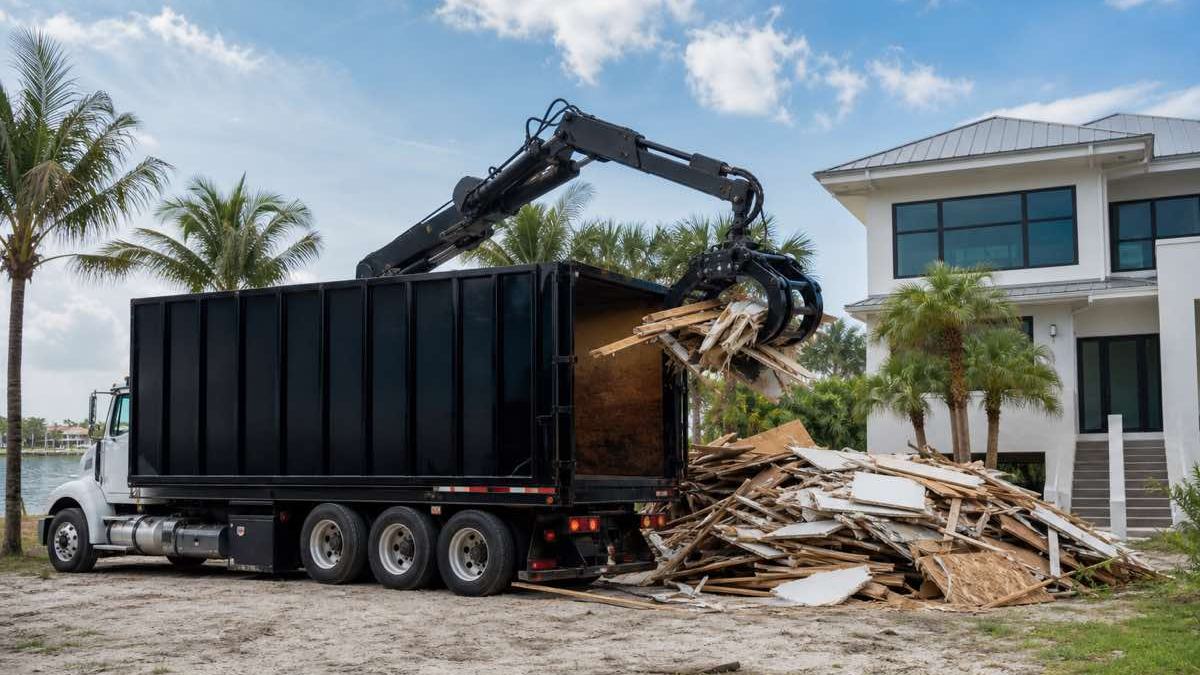
A phase-gate debris plan helps Daytona Beach contractors preserve access, separate questionable materials, and schedule hauling only after debris type, staging conditions, and project readiness are confirmed.
Jobsite debris pickup between construction phases works best when each transition has a clear release point. Pair planned construction debris removal with a defined Daytona Beach service-area check so access, material type, and staging conditions are reviewed before hauling is scheduled.
A phase gate is a practical checkpoint between scopes of work. Instead of requesting pickup simply because a pile looks large, the superintendent or project lead confirms that the current trade is substantially finished, reusable material has been separated, and the debris is ready for review. This approach reduces interference between demolition, rough work, exterior improvements, and finish activity.
Daytona Grapple Truck Service is a hauling-only service based in Ormond Beach. It does not cut or remove standing trees. Vegetative debris can be considered for hauling after it has been cut or cleared and after the material is confirmed. Approved construction debris can also be hauled after confirmation.
A workable phase gate should answer four questions:
The goal is not to predict acceptance from a photograph or a general label such as “construction waste.” The goal is to pause at a useful transition, describe the pile accurately, and confirm hauling details before the next phase depends on that space.
Protect truck access before piles begin to grow. Review the route with the project’s grapple truck debris removal needs in mind, then verify that the address falls within the broader service area covering Volusia and Flagler counties. A planned path is easier to preserve than a blocked path is to recover.
Start with the entrance and work inward. Note gates, narrow turns, temporary fencing, overhead obstructions, soft shoulders, parked equipment, material deliveries, and changing traffic patterns. The person managing the site should determine whether the proposed staging point is suitable for a large hauling vehicle and whether loading there would conflict with workers or the public.
Keep the approach separate from active production whenever possible. A pile beside a frequently used concrete, roofing, or finish-material route can create avoidable coordination problems. Likewise, staging directly behind a locked gate may delay access even when the debris itself is ready.
Public-road conditions are a separate matter from private jobsite access. For questions involving state-maintained roadway operations or right-of-way concerns, consult the Florida Department of Transportation maintenance resources or the responsible local authority. The agency does not endorse Daytona Grapple Truck Service.
Do not treat every construction pile as automatically acceptable. Before using the contact page, sort and describe the material for the construction debris removal request. Daytona Grapple Truck Service can haul approved construction debris after confirmation, so clear categories support a more useful review without making material-acceptance assumptions.
Different phases often produce mixed piles: framing scraps beside packaging, roofing material beside damaged sheathing, or cleared vegetation beside construction debris. Mixing everything can make the pile harder to assess. Keep known categories separate when practical, and isolate questionable containers, liquids, batteries, chemicals, pressurized cylinders, electronics, or unidentified materials rather than placing them in the pickup pile.
| Phase gate | Useful preparation | What to confirm |
|---|---|---|
| After clearing | Cut vegetation and separate it from other material | Debris description and accessible staging |
| After demolition | Group materials and isolate questionable items | Which construction debris is approved |
| After rough work | Remove offcuts and packaging from trade routes | Pickup zone and site access |
| Before finishes | Clear entrances, laydown areas, and delivery paths | Readiness before new materials arrive |
| At closeout | Separate remaining debris from tools and reusable stock | Final pile contents and access |
Material descriptions should be specific. “Mostly cut branches and logs” or “sorted framing offcuts and damaged sheet material” is more useful than “miscellaneous debris.” Photos may help communicate pile composition and surroundings, but confirmation is still required.
For current local disposal, recycling, or public-service information, consult Volusia County Solid Waste and Recycling or the authority responsible for the property. Its guidance should not be interpreted as an endorsement of this private hauling service.
Place the hauling decision between the outgoing trade’s cleanup and the incoming trade’s mobilization. A Daytona Beach hauling request can be organized through the contact options after materials, access, and readiness are known. The phone is answered 24/7, but scheduling details still depend on confirmation rather than an assumed response time.
The best release point is usually after debris generation slows but before the next delivery, inspection activity, or crew needs the same area. Calling too early can leave new debris behind. Waiting too long can force workers to move piles, share narrow access, or stage valuable materials beside waste.
Use a simple release sequence:
The truck has a 50-yard capacity, but container volume does not translate into a guaranteed number of piles or trips. Material shape, density, loading conditions, separation, and site access all affect planning. Avoid dividing estimated pile volume by truck capacity and presenting the result as an exact load count.
For longer projects, use recurring decision windows rather than an automatic pickup assumption. A weekly review may reveal that one phase needs hauling while another does not. Each request should reflect the current pile and current access conditions.
A ready loading zone has confirmed debris, visible boundaries, and an unobstructed approach. Review preparation expectations for grapple truck service, then coordinate the site-specific details through Daytona Grapple Truck Service. The project’s responsible party should control workers, equipment, visitors, and changing site conditions around the pickup area.
Place debris where it can be reached without requiring the truck to travel over hidden hazards or disturb active improvements. Avoid staging directly against buildings, fences, utility equipment, newly installed landscaping, or materials intended to remain. Maintain enough separation to distinguish the pickup pile from stored property.
Before the planned service window, walk the route from the entrance to the pile. Conditions can change quickly as dumpsters, trailers, cranes, concrete trucks, and delivery vehicles move through a Daytona Beach jobsite. Confirm that temporary barriers and gate arrangements match the access plan.
If weather changes ground conditions, reassess rather than relying on the earlier plan. A route that appeared workable when dry may need a different staging or scheduling decision after heavy rain. Site readiness is a current-condition determination, not a one-time checkbox.
Daytona Beach projects may involve compact lots, shared drives, tourism traffic, coastal weather, or limited staging. Confirm coverage through the Daytona Beach service page and review the full Volusia and Flagler service area. Private hauling coordination does not replace decisions by property managers, road agencies, utilities, or local authorities.
When a proposed pile or truck approach could affect a sidewalk, street, alley, easement, drainage area, or other public space, ask the responsible authority what currently applies. Do not assume that a familiar practice is permitted at a particular address. The same caution applies to lane use, traffic control, placement timing, and access through managed properties.
Storm cleanup also calls for careful separation between private hauling and government programs. FEMA’s debris removal guidance offers general preparation information, while the EPA’s disaster debris planning guidance discusses broader waste-planning considerations. Neither source endorses this business, and neither should be used to assume current pickup arrangements, eligibility, reimbursement, or material acceptance.
For any government collection, disaster program, permit, code, disposal, or eligibility question, contact the agency responsible for that issue and verify current instructions. Keep records required by the project owner or authority, but do not assume a private hauling receipt or photograph satisfies a government program.
Local coordination is most effective when ownership is clear. Assign one person to handle hauling communication, one to control the site route, and one to verify that the outgoing trade has removed tools and reusable materials. On a small project, one person may cover all three roles, but the responsibilities should still be explicit.
A short record keeps the next pickup request accurate. Use the construction debris service information to frame the request and the contact page to share current details. Documentation should identify the phase, material categories, staging location, access changes, and the person authorized to confirm readiness.
A phase-gate log does not need to be elaborate. It can be part of the superintendent’s daily report, a shared project checklist, or a dated folder of site photographs. The important point is to capture what changed since the previous review.
Update the record if another crew adds material. Approval or planning based on one pile description should not be treated as blanket acceptance of later additions. This is especially important when several subcontractors share a cleanup area.
Close each gate by confirming that the area is ready for its next intended use. That may mean reopening a delivery lane, returning a laydown area to material storage, or clearing the path for finish trades. The hauling task supports the transition, but the project manager remains responsible for sequencing and site control.
These answers summarize common planning points for Daytona Beach projects considering grapple truck debris removal. Material approval, access, and scheduling must be confirmed for the specific request. Current government collection, disposal, permit, code, disaster, and eligibility questions should be directed to the responsible authority.
Plan the request after the outgoing trade has finished generating and sorting debris but before the next crew or delivery needs the same route or staging area. Confirm pile contents and access near that release point. Scheduling too early can leave additional debris, while waiting may allow materials, equipment, or vehicles to block the loading path.
No blanket acceptance should be assumed. Approved construction debris can be hauled after confirmation. Describe the materials specifically, separate questionable items, and provide current information about the pile and site. For hazardous, prohibited, regulated, or unidentified materials, consult the appropriate disposal facility or responsible authority rather than placing them in the proposed pickup area.
No. Daytona Grapple Truck Service is a hauling-only service and does not cut or remove standing trees. It can consider vegetative debris after trees, limbs, or other growth have been cut or cleared and the material has been confirmed. Keep cut vegetation accessible and separate from construction debris or questionable materials when practical.
The truck has a 50-yard capacity. That figure should not be used to promise an exact number of piles or loads. Material density, shape, separation, loading conditions, and site access affect practical hauling. Share pile dimensions, photographs, and a clear material description so the request can be reviewed without relying on a volume assumption.
Daytona Grapple Truck Service is based in Ormond Beach and covers Volusia and Flagler counties, including Daytona Beach. The phone is answered 24/7 for inquiries. That does not represent a promised arrival or response time. Confirm the project address, debris type, access conditions, and scheduling details for each hauling request.