August 22, 2026
Use this practical Daytona Beach checklist to organize construction debris, protect access, review the work area, and schedule hauling before the final walkthrough or inspection.
Construction cleanup before final inspection should begin with a written sweep of every work zone, access point, and debris pile. Review local construction debris removal options, then confirm whether the property falls within the Daytona Beach service area. The goal is straightforward: leave the site organized, accessible, and ready for the appropriate authority or project representative to evaluate without promising any particular outcome.
A final-stage cleanup is different from routine housekeeping. It happens when most installation work is complete, yet packaging, offcuts, broken materials, temporary protection, and outdoor piles may still be present. A rushed cleanup can also hide unfinished tasks. A planned cleanup lets the contractor separate actual waste from tools, spare materials, owner-retained items, and components still needed for corrections.
Divide the property into zones before moving anything. A practical sequence for Daytona Beach projects is:
Assign each zone a status such as active work, ready to clean, cleaned, or pending correction. This prevents a crew from cleaning an area that another trade must reopen. It also gives the project lead a simple way to identify where debris is still being generated.
Keep inspection requirements separate from hauling decisions. The relevant building department, permit authority, fire official, utility, engineer, or other responsible party should answer questions about required access, documentation, or project-specific standards. A debris hauler can help clear approved material, but should not be treated as the source for code or inspection determinations.
Sort debris by material type and approval status before it reaches the pickup area. Daytona Grapple Truck Service can confirm whether approved construction debris fits its grapple truck debris removal service. Property owners and contractors can also review the broader service area covering Volusia and Flagler counties before discussing the pile, access, and material mix.
Start with clearly identifiable, nonhazardous construction material. Common project debris may include cut lumber, drywall pieces, roofing tear-off material, broken cabinets, discarded flooring, empty packaging, or similar items, but acceptance must be confirmed. Material composition, contamination, disposal requirements, and site conditions can affect whether a pile is suitable for hauling.
Use separate, clearly marked areas for:
Do not bury questionable containers, liquids, batteries, chemicals, pressurized cylinders, or unidentified material inside an otherwise ordinary pile. If a substance may be hazardous or prohibited, stop and identify it. Consult the product label, the responsible disposal authority, or an appropriate environmental resource rather than assuming it can be hauled with general construction debris.
Volusia County provides solid-waste information through its Solid Waste and Recycling division. Consult the county or the authority responsible for the particular property and material for current facility, preparation, and disposal guidance. Those requirements can change and are distinct from a private hauling service's confirmation process.
Sorting also improves the final site review. It reduces the chance that a needed component gets discarded and makes it easier to see whether scraps remain behind fences, under stairs, inside cabinets, or around utility areas.
Clear routes for people, equipment, and the debris truck without disturbing completed finishes. Before arranging grapple truck debris removal, use the contact page to discuss overhead clearance, pile placement, ground conditions, gates, and nearby vehicles. Safe, practical access supports an orderly pickup, while questions about official inspection access should go to the inspector or responsible authority.
Walk the route from the street to the proposed pile. Look up as well as down. Branches, wires, roof overhangs, signs, and temporary lines may limit truck or grapple access. At ground level, consider soft soil, pavers, irrigation components, septic features, curbs, narrow turns, parked trailers, and fresh concrete. Do not assume a truck can enter simply because passenger vehicles can.
Keep the proposed staging area away from active traffic lanes, sidewalks, fire access, drainage inlets, and neighboring property unless the relevant owner or authority has directed otherwise. For questions involving state-maintained roadways or rights of way, consult the Florida Department of Transportation maintenance resources or the agency with jurisdiction. Do not place debris in a public area based on convenience alone.
Use this access check before confirming pickup:
Daytona Grapple Truck Service is a hauling-only service based in Ormond Beach. It does not cut or remove standing trees. If land clearing or trimming produces vegetative debris, another qualified party must cut or clear it first. The resulting material can then be discussed for hauling, subject to confirmation.
A room-by-room checklist helps crews find debris that broad exterior cleanup can miss. Pair the checklist with scheduled construction debris removal and verify Daytona Beach coverage through the local service page. This process supports general readiness by making unfinished cleanup visible, but only the responsible inspector or project authority can determine what is required or acceptable.
Begin at the main entrance and follow one direction through the building. Finish each room before moving on, except where a trade still has active work. Use bright removable tags for pending corrections, and keep those tags separate from the debris list.
| Area | Cleanup check | Readiness review |
|---|---|---|
| Entries and halls | Remove packaging, fasteners, dust piles, and temporary scraps | Keep normal walking routes clear |
| Kitchens and baths | Check cabinets, drawers, counters, tubs, and fixture packaging | Separate spare materials and manuals from waste |
| Mechanical and utility areas | Remove trade debris and loose storage not needed for work | Ask the responsible authority what access is required |
| Bedrooms and living areas | Inspect closets, corners, ledges, and protected flooring | Mark incomplete finishes rather than covering them |
| Garage and exterior | Clear offcuts, broken pallets, wrap, and staging leftovers | Preserve access to equipment and site features |
Look for small items that create an unfinished impression or physical obstruction: screws, nails, wire pieces, shims, tile fragments, plastic film, cardboard corners, and adhesive backing. Check behind doors and under built-ins where practical. Avoid moving or energizing equipment unless that task belongs to an authorized trade.
Cleaning should reveal the work, not disguise it. Do not fill gaps with debris, conceal damaged materials, remove required labels, or discard documents that belong with installed products. Keep plans, approvals, manuals, test records, and other project documents in a separate location chosen by the project manager. Ask the responsible authority which records must be available.
Exterior readiness requires more than moving one obvious pile. Check fences, side yards, roof-drain areas, landscaping edges, and the street-facing boundary before booking debris hauling. Contractors can confirm county coverage on the service area page, while public-space placement, drainage, roadway, and pickup questions should be directed to the government agency or property authority responsible for that location.
Florida rain and wind can scatter light construction material quickly. Secure foam, plastic wrap, paper, insulation scraps, and empty cartons while they await proper handling. Do not push material into swales, storm drains, ponds, vacant lots, dunes, or neighboring parcels. If erosion controls, inlet protection, fencing, or other temporary measures are present, ask the project lead or responsible authority before altering them.
Complete an exterior perimeter walk:
Storm-related debris deserves additional caution. The U.S. Environmental Protection Agency's disaster debris planning guidance explains why communities plan for segregation, collection, and management of different waste streams. FEMA also publishes general debris-removal guidance. These sources do not endorse Daytona Grapple Truck Service and should not be read as confirming eligibility, reimbursement, pickup, or local disposal rules.
For any storm event, ask the city, county, property manager, insurer, or other responsible authority about current instructions. Private hauling arrangements should remain distinct from government programs or disaster assistance decisions.
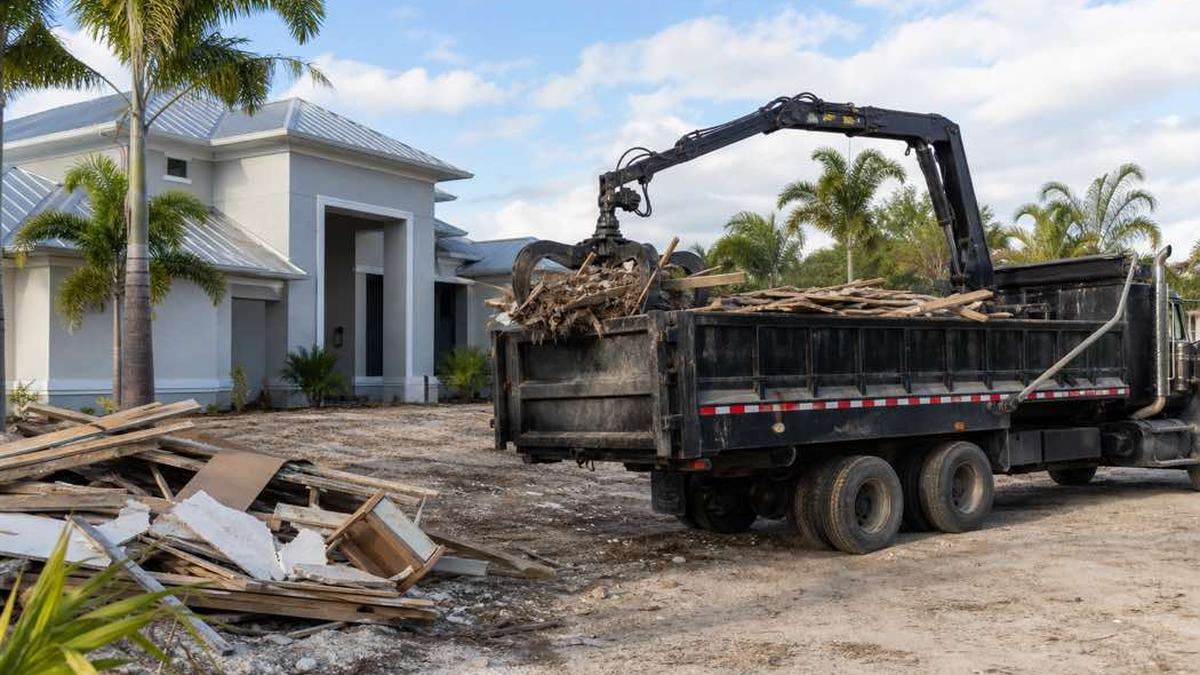
A well-prepared pile keeps the hauling discussion specific. Before scheduling through the contact page, review the accepted project scope on the construction debris service page. Daytona Grapple Truck Service uses a truck with a 50-yard capacity, but pile density, material type, access, legal weight considerations, and approval affect what can be handled. Do not estimate an exact load count from volume alone.
Place confirmed material where the grapple can reach it without crossing protected areas or contacting structures and utilities. Keep the pile compact rather than creating a long, thin windrow. Do not stack it against walls, fences, mailboxes, trees, utility equipment, or vehicles. Avoid mixing soil into otherwise clean debris unless that material has been discussed and accepted.
When contacting the service, be ready to provide:
The phone is answered 24/7, which allows callers to provide project details at any hour. That fact should not be interpreted as a promise of immediate dispatch, a particular response time, or acceptance of every material. Approved construction debris can be hauled after confirmation.
If tree work is part of the project, arrange cutting or clearing separately. Daytona Grapple Truck Service does not cut or remove standing trees. Keep uncut limbs, leaning trees, and attached vegetation out of the truck access zone until the appropriate party has completed that work.
After hauling and detailed cleaning, complete one controlled walkthrough instead of relying on memory. Revisit the Daytona Beach service information if another approved pile needs discussion, and use the contact options to clarify hauling details. For inspection scheduling, required documents, permit status, code questions, or access expectations, contact the building department or other authority responsible for the project.
Use daylight where possible and carry a flashlight for closets, cabinets, garages, and utility spaces. Walk the same route an arriving project representative is likely to use, but do not speculate about what that person will approve. The purpose is to find remaining debris, obstructions, or incomplete cleanup tasks.
Final walkthrough checklist:
Build a small buffer between debris hauling and the scheduled visit whenever the project calendar allows, without assuming any service timing. A final trade may create new waste, weather may scatter light material, or the project manager may identify something that was mistakenly staged. Recheck the site after every correction.
This workflow is about practical readiness, not predicting an official decision. A clean, accessible site makes it easier to review completed work, yet it does not establish code compliance, guarantee an inspection result, or replace instructions from the relevant authority.
These answers summarize common planning points for construction debris hauling and the Daytona Beach service area. Material acceptance and access must be confirmed directly. Questions about inspections, permits, code, public pickup, disposal requirements, or disaster-program eligibility belong with the government agency, building department, facility, or other authority responsible for the property and issue.
Remove approved construction debris, loose packaging, offcuts, sharp scraps, and obstructions from work and access areas. Keep tools, spare materials, manuals, and required project documents separate. Because requirements vary by project and authority, ask the responsible inspector or department what must remain accessible or available. Cleanup can support an orderly review, but it does not guarantee an inspection outcome.
No blanket acceptance should be assumed. Approved construction debris can be hauled after the material, pile, and access are confirmed. Identify everything in the pile and disclose questionable containers or mixed materials. Hazardous, prohibited, unidentified, or specially regulated items should be addressed with the appropriate disposal or environmental authority rather than placed in a general construction-debris pile.
The truck has a 50-yard capacity, but that figure is not an exact load estimate for every project. Material density, weight, shape, access, and handling requirements affect what can be hauled. Provide photographs, dimensions, and an accurate material description for review. The company should confirm the proposed debris rather than callers relying on volume alone.
No. Daytona Grapple Truck Service is a hauling-only service and does not cut or remove standing trees. A separate appropriate provider must cut or clear the tree first. Afterward, the resulting debris can be discussed for hauling. Keep unstable, attached, or uncut tree material away from the proposed truck area until the cutting work is complete.
Daytona Grapple Truck Service is based in Ormond Beach and covers Volusia and Flagler counties, including Daytona Beach. The phone is answered 24/7 for callers to share project details. This does not promise immediate service or a specific response time. Confirm the address, debris type, pile placement, and truck access before making cleanup plans.