August 21, 2026
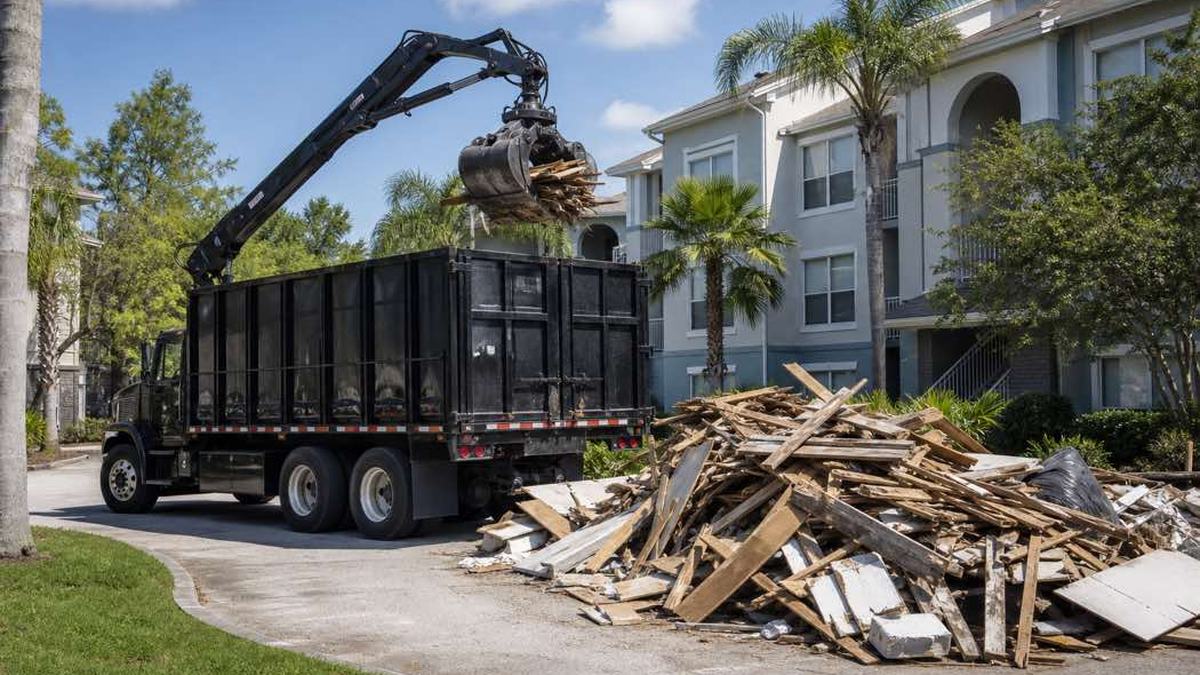
A practical guide for Daytona Beach apartment managers planning debris hauling around residents, parked vehicles, multiple collection points, and safe grapple-truck loading windows.
Effective debris hauling for an apartment community starts with a written site plan that identifies materials, pile locations, access routes, resident impacts, and loading windows. Managers can also review grapple truck debris removal details before coordinating vendors, maintenance teams, landscapers, or contractors. Early planning keeps cutting, clearing, staging, and hauling responsibilities distinct.
Daytona Grapple Truck Service is a hauling-only service based in Ormond Beach. It does not cut or remove standing trees. Tree limbs, brush, trunks, and similar material must already be cut or cleared before hauling. This distinction matters when an apartment project involves a tree contractor, landscape crew, roofing contractor, renovation team, or on-site maintenance staff.
Start by assigning one property representative to coordinate the project. That person should confirm what created the debris, what materials are present, where they can be staged, who will prepare them, and when vehicle access can be controlled. Share photographs and access details when requesting service so material acceptance and site logistics can be discussed before the truck arrives.
The truck has a 50-yard capacity, but volume does not by itself determine how a project will be handled. Material density, pile shape, contamination, loading reach, travel access, and disposal requirements can all affect planning. Avoid promising residents or ownership an exact number of loads until the material and site conditions have been reviewed.
Resident notices should explain where activity will occur, which parking spaces must remain open, and when loading noise or truck movement may occur. Pair a clear notice with the local Daytona Beach service information and a direct contact option for coordinating the haul. Notices work best when they give residents specific actions without making unconfirmed scheduling or disposal promises.
Use more than one communication channel when practical. Email, resident portals, door notices, text alerts, and signs near affected parking areas can reinforce the same instructions. Keep wording consistent across every channel, especially the start and end of parking restrictions. Include the date on each notice so outdated copies are easy to recognize.
A useful notice should cover:
Notify more than residents. Brief leasing staff, maintenance personnel, security teams, towing or parking vendors, landscape crews, and any contractor producing the debris. If one team moves a barricade or creates a new pile without telling the coordinator, the planned loading path may no longer be workable.
Avoid notices that imply every item placed outdoors will be accepted. Residents may interpret a broad cleanup message as permission to add household chemicals, batteries, electronics, paint, tires, appliances, or other questionable materials. Name the authorized debris categories and state that unapproved additions should not be placed in the staging area.
Parking control is central to safe, orderly commercial debris hauling at a multifamily property. Before scheduling, use the broader service-area information to confirm coverage, then reserve enough space for truck approach, loading, and departure. A pile may look accessible from a sidewalk while parked cars, gate geometry, or turning limits make practical loading difficult.
Walk the intended route from the public entrance to every pile. Look beyond the width of the drive aisle. A grapple truck needs a workable path and a loading position that does not place residents, vehicles, or structures unnecessarily close to operations. Consider entrance gate clearance, sharp turns, traffic circles, speed humps, drainage inlets, low branches, overhead utilities, signs, carports, and balcony projections.
Use a parking-control checklist:
Questions about public roads, right-of-way access, lane impacts, or state-maintained facilities should go to the responsible authority. The Florida Department of Transportation maintenance portal is an authoritative starting point for state transportation contacts and information, but it does not represent an endorsement of Daytona Grapple Truck Service. City, county, property ownership, and road jurisdiction can affect whom a manager needs to contact.
Do not place cones, signs, debris, or equipment in a public travel area based solely on a private site plan. Confirm any applicable permission, traffic-control, permit, or code question with the authority responsible for that location.
Several small staging points can be practical when one central pile would block residents or require excessive material movement. Review grapple truck hauling requirements and coordinate through the service contact page before selecting locations. Each pile still needs suitable truck access, overhead clearance, material separation, and enough controlled space to support loading without trapping vehicles or closing essential routes.
Multiple piles are most useful when they follow the property layout. A long apartment community with separate courts or building clusters may benefit from designated collection points near each work area. However, convenience for the cleanup crew should not override access. A pile beside a transformer, under utility lines, behind parked cars, or inside a tight carport row can create avoidable complications.
| Staging approach | Potential benefit | Planning concern |
|---|---|---|
| One central pile | Simplifies monitoring and resident messaging | May require more internal material handling and a larger reserved zone |
| Several building-area piles | Reduces distance crews carry or move debris | Requires access review and parking control at every location |
| Phased piles | Limits how much debris is exposed at one time | Requires close coordination between clearing and hauling schedules |
Number the staging points on a simple map and use the same labels in resident notices, contractor instructions, and hauling communications. For example, labels such as North Court, Building 300, or Maintenance Yard are clearer than references such as first pile or back area.
Inspect every pile before loading day. Check whether residents have added unrelated waste, whether rain or landscaping work changed ground conditions, and whether vehicles have returned to reserved spaces. Keep piles away from storm drains and avoid mixing soil, bagged household garbage, loose litter, or unknown containers into vegetative material. Material categories should be confirmed rather than assumed.
A good loading window balances property access, resident activity, contractor progress, daylight, and predictable parking control. Managers arranging apartment debris hauling can verify the property location through the Daytona Beach service-area page and discuss scheduling variables before sending final notices. Do not announce a precise resident-facing time until site access and service details have been coordinated.
Avoid the community's busiest periods when possible. School departure times, morning commutes, evening returns, trash collection, package deliveries, pool activity, and move-in appointments can increase conflicts. The best window depends on the property's traffic pattern, not simply the hour that is easiest for one contractor.
Build a sequence for the day:
Weather can change site conditions even when debris remains ready. Heavy rain may soften shoulders, reduce traction, move loose material toward drains, or make a planned staging edge unsuitable. High winds can also scatter lightweight debris. Create a method for notifying residents if the parking restriction or loading plan changes, rather than leaving old signs in place without explanation.
The phone is answered 24/7, which supports communication at any hour, but that fact should not be presented as a guaranteed arrival time or immediate service commitment. Scheduling depends on confirmed project details and coordination.
Material review should happen before crews combine piles. Use the debris removal service page to understand the hauling scope, then contact the company to describe contents and share photos. Approved construction debris can be hauled after confirmation, but managers should not assume that every renovation, maintenance, storm, or resident-discarded material belongs in the same load.
Keep vegetative debris such as cut branches and brush separate from roofing, renovation, furniture, bagged waste, or unknown containers. Separation helps the property identify what requires confirmation and reduces the chance that concealed material appears during loading. The company hauls tree debris after it has been cut or cleared, but it does not cut or remove standing trees.
For storm-related planning, the U.S. Environmental Protection Agency's disaster debris planning guidance explains why communities should identify waste streams, temporary staging considerations, and potentially hazardous materials. The source is general public guidance and does not endorse this business or determine acceptance for a particular load.
Property teams should isolate and report suspect materials rather than burying them in a pile. Do not make blanket assumptions about chemicals, fuels, paint, batteries, pressurized cylinders, asbestos-containing material, medical waste, electronics, or other hazardous or regulated items. Ask the appropriate waste authority or qualified specialist how such materials should be handled.
Volusia County provides solid-waste information through its Solid Waste and Recycling division. Managers should consult the responsible city, county, facility, or other authority for current disposal programs and requirements. Public guidance can change, and its inclusion here is not an endorsement of Daytona Grapple Truck Service.
Loading day should have one authorized property contact, a clear route, controlled parking, and verified piles. Managers can keep the coordination page available while reviewing Volusia and Flagler service coverage. Daytona Grapple Truck Service serves both counties from Ormond Beach, but the community still needs to manage residents, vendors, gates, internal traffic, and access to each staging point.
The property representative should arrive before the planned activity and carry the pile map, resident notice, gate information, and relevant vendor contacts. Walk the route one final time. A delivery van, landscape trailer, moving truck, or resident vehicle can alter a route that was clear during the original site review.
During loading, keep the work zone calm and predictable. Redirect pedestrians rather than allowing them to squeeze between the truck and parked cars. Do not let residents approach to add last-minute items. Keep maintenance personnel available to address gates, irrigation controls, or property-specific access issues, but avoid placing unnecessary people near operating equipment.
After activity ends, inspect all pile areas. Look for loose fragments, displaced signs, exposed sprinkler components, blocked drainage, or material that was not part of the confirmed haul. Restore parking only after the property representative determines the controlled area is ready for normal resident use.
If debris resulted from a declared disaster or may be connected to public reimbursement, do not promise eligibility. The Federal Emergency Management Agency's debris removal guidelines provide general information, but the responsible agencies and program administrators must determine current documentation, collection, placement, and eligibility requirements. FEMA does not endorse this company.
Apartment managers often ask about materials, tree debris, truck capacity, service coverage, and scheduling. The commercial hauling page outlines the service context, while the contact page provides a way to discuss property-specific details. The answers below offer practical planning guidance without making assumptions about load acceptance, exact load counts, government programs, or a guaranteed response time.
No. Daytona Grapple Truck Service is a hauling-only service and does not cut or remove standing trees. A tree contractor, landscape crew, or other appropriate provider must cut or clear the material first. Once tree limbs, brush, or related debris is prepared, contact the company to discuss pile access, material details, and hauling coordination.
Approved construction debris can be hauled after confirmation. Before combining renovation waste, provide a clear description and photographs of the materials. Keep construction debris separate from vegetation, household garbage, liquids, chemicals, and unknown containers. Acceptance should be confirmed for the specific material rather than inferred from a broad construction or cleanup label.
The truck has a 50-yard capacity. That figure describes container volume, but it does not establish an exact number of piles or loads for an apartment project. Density, material type, pile arrangement, contamination, loading access, and disposal considerations can affect the plan. Share pile measurements and photos for a more useful discussion.
Daytona Grapple Truck Service is based in Ormond Beach and serves Volusia and Flagler counties, including Daytona Beach. Property managers should provide the community address and explain any gated entry, private-road restrictions, narrow drives, overhead obstacles, or multiple pile locations when coordinating service. These details help determine whether the proposed loading plan is workable.
Yes. The phone is answered 24/7, allowing apartment managers to share project information or raise coordination questions at any hour. This does not guarantee an immediate arrival or a specific response time. Service details, material acceptance, site access, parking controls, and scheduling still need to be confirmed for the individual property and project.