August 20, 2026
Good pile preparation helps a grapple truck load cleared brush efficiently. Learn how placement, access, vines, soil, fencing, and scattered debris can affect hauling in New Smyrna Beach.
Effective brush removal pile prep gives the grapple room to pick up cleared vegetation without fighting avoidable obstacles. For property owners using New Smyrna Beach hauling service, the main goals are simple: consolidate loose material, keep contaminants separate, provide truck access, and place the pile where overhead lines, fences, vehicles, and soft ground will not complicate loading.
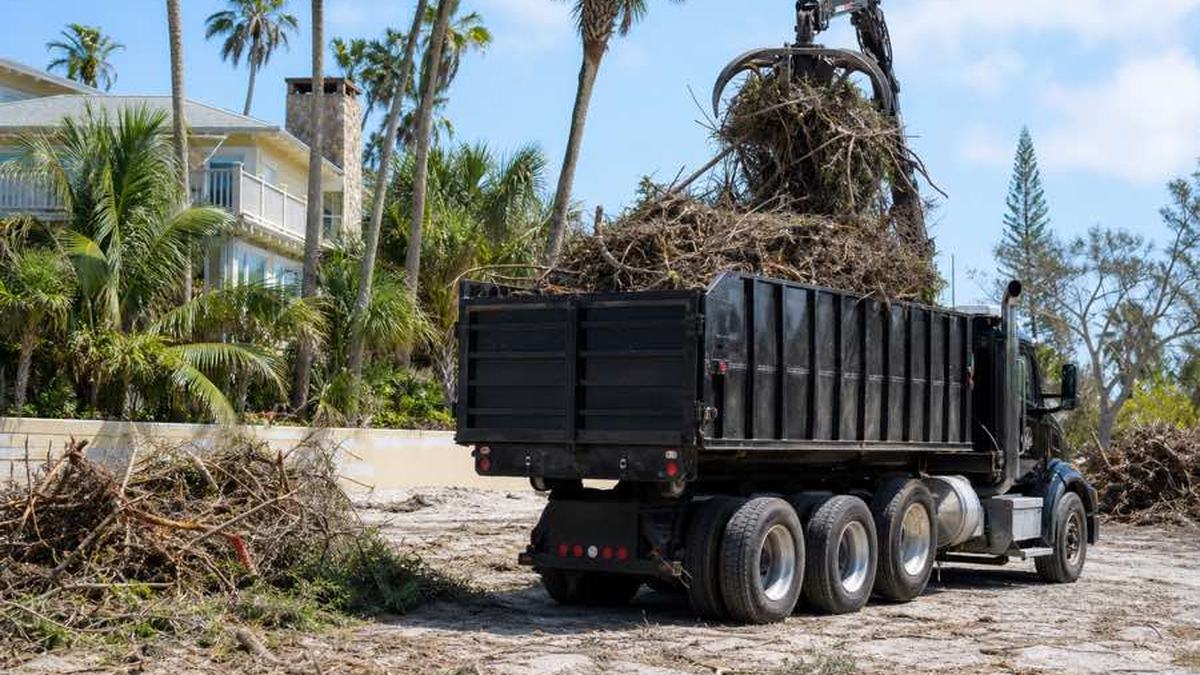
A grapple truck does not load a brush pile the same way a crew carries branches by hand. The hydraulic grapple approaches from above, closes around a portion of the material, and transfers it into the truck body. Pile shape, branch direction, density, and surrounding clearance all influence how cleanly that process can happen.
Daytona Grapple Truck Service is a hauling-only service based in Ormond Beach. The company hauls debris after it has been cut or cleared, but it does not cut or remove standing trees. That distinction matters when planning a cleanup. Tree cutting, shrub removal, and vegetation clearing need to be completed before hauling.
Preparation is especially useful after yard clearing, trimming, storm cleanup, or landscape renovation. Rather than creating several small piles wherever work occurs, designate a suitable staging area before cutting begins. Tell anyone helping with the clearing where accepted brush should go and which materials should remain separate.
The best pile location is firm, open, and reachable from a lawful truck approach. Before arranging grapple truck debris removal, review the placement details through the contact page. A pile wedged behind a fence, beneath utility lines, against a building, or across unstable soil can limit safe grapple positioning even when the vegetation itself is ready to haul.
Think about the complete truck path, not merely whether a pickup truck can reach the property. A grapple truck needs adequate room to enter, position near the material, operate the loading equipment, and leave without crossing weak surfaces or striking overhead obstacles. Locked gates, narrow turns, low branches, parked cars, and decorative columns can all change the practical approach.
Keep the loading zone clear before service. Move vehicles, trailers, portable basketball goals, garden tools, and other movable objects away from the pile and truck path. Pets and bystanders should also remain outside the work area during loading.
New Smyrna Beach properties vary widely, from compact residential lots to larger parcels and areas near sandy or low-lying ground. Avoid assuming that turf, pavers, drain fields, septic areas, or saturated soil can support heavy equipment. If the proposed position requires crossing a questionable surface, discuss it in advance rather than building a large pile first.
Do not place debris in a public right of way based only on habit or a neighbor's example. Government collection, placement, and road-clearance requirements can change. Consult Volusia County Solid Waste and Recycling and the responsible municipal or roadway authority for current public-program instructions. For state-road questions, use information from the Florida Department of Transportation.
Tangled vines can turn an otherwise manageable pile into one connected mass. When preparing material for bulk yard waste hauling, cut long vines into shorter, separated sections and avoid wrapping them around posts or fencing. The broader service area covers Volusia and Flagler counties, but every property still needs a pile that the grapple can approach and divide into controlled grabs.
Vines often weave through shrubs, limbs, wire, lattice, and old landscape edging. If they are pulled into a pile without being freed, lifting one section may drag unrelated material across the ground or toward a nearby obstacle. Thick ropes of vegetation may also hold soil, stones, plastic, or pieces of fencing inside the pile where they are difficult to see.
Separate vines while clearing rather than trying to untangle a finished pile. Remove them from fences, trellises, gates, irrigation fixtures, and utility supports before staging. Cut unusually long runners into sections that remain loose enough for individual grapple grabs. There is no need to create tiny bundles. The objective is to prevent the entire pile from behaving like one net.
Branch orientation also helps. Place long limbs generally in the same direction when practical, with bulky trunk ends accessible rather than buried against a wall or hedge. Avoid weaving branches together deliberately. Dense interlocking may make a pile look compact, but it can make portions harder to separate during loading.
Use caution with thorny vines and plants that may cause skin irritation. Property owners should select appropriate protective equipment and avoid handling unknown plants casually. If vegetation is still attached to a standing tree, rooted shrub, or structure, finish the cutting and clearing work before scheduling hauling.
Excess soil makes brush heavier, hides unwanted material, and reduces the useful volume available in a 50-yard truck body. For cleaner debris removal, shake loose dirt from roots and avoid scraping soil into the pile. New Smyrna Beach property owners can review the local coverage page for service-area details before combining vegetation with stumps, sod, dirt, or other dense material.
Root balls are a common source of hidden weight. After a shrub or small cleared plant is pulled, allow loose soil to fall back into the planting area. Do not intentionally add fill dirt, excavated soil, or mud to make the brush pile appear more compact. Soil occupies container space differently than limbs and can obscure rocks, metal, irrigation pieces, or buried trash.
Scalped turf creates a similar problem. When raking a cleanup area, use a technique that gathers leaves, twigs, and cut vegetation without collecting a thick layer of sand or topsoil. If machinery is used for clearing, set aside pushed-up earth rather than placing the mixed mound with clean brush.
Material should be identified accurately when service is discussed. A pile of branches with light incidental dirt is different from a mound composed largely of soil, sod, roots, concrete, and vegetation. Photos from several angles can help show the pile's contents, dimensions, surroundings, and access conditions.
After severe weather, debris may contain sediment, household waste, damaged building material, or chemical containers. The U.S. Environmental Protection Agency's disaster debris planning guidance explains why debris streams should be identified and separated. The guidance is general public information and is not an endorsement of Daytona Grapple Truck Service.
Fencing should not be concealed inside cleared vegetation. Before requesting brush hauling, pull out wire, mesh, posts, fasteners, and panels, then identify them separately for confirmation. Daytona Grapple Truck Service may haul approved construction debris after confirmation, while its bulk yard waste service is best prepared with visible, sorted material rather than an interwoven mix of brush and demolition debris.
Chain-link mesh, field wire, welded wire, and cable can snag the grapple or bind together multiple sections of a pile. Nails and sharp fasteners may be hidden in wooden fence pieces. Even when fence removal happened at the same time as landscape clearing, create distinct piles so each material can be evaluated.
| Material condition | Better preparation | Why it matters |
|---|---|---|
| Clean cut limbs and shrubs | Consolidate in an accessible brush pile | Keeps vegetation visible and loadable |
| Vines wrapped in wire | Separate the vegetation from the wire | Reduces snagging and reveals contents |
| Fence panels and posts | Stack apart and disclose them | Allows confirmation before hauling |
| Soil, sod, or rocks | Keep out of the brush pile | Avoids hidden dense material |
| Unknown containers or suspect waste | Isolate and contact the appropriate authority | Prevents unconfirmed material from entering the load |
Other items that should not be casually mixed into brush include tarps, garden hoses, nursery pots, glass, batteries, fuel cans, paint containers, tires, appliances, and household garbage. This is not a complete acceptance or prohibition list. Describe all non-vegetative material and receive confirmation rather than assuming it can be hauled.
If a project includes roofing, lumber, drywall, concrete, or other construction-related material, keep it separate and provide clear details. Approved construction debris can be hauled after confirmation. Acceptance depends on what the material is and how it has been prepared, not simply on whether it came from the same property.
Scattered debris creates more pickup points and can leave small pieces beyond the grapple's practical reach. Consolidate cut material before using grapple truck hauling, while preserving a clear route around the pile. Residents can also check the Volusia and Flagler service-area overview when planning work at multiple properties or confirming whether a project location falls within the company's coverage.
Walk the property after cutting is complete. Look behind sheds, along fence lines, under shrubs, near drainage features, and around the original work area. Move manageable branches and loose vegetation to the designated staging point instead of leaving a trail between the yard and the primary pile.
Do not spread material into a thin mat. A reasonably consolidated pile is easier to identify and approach than branches distributed over a wide patch of lawn. At the same time, do not press vegetation against a structure, pack it beneath a low canopy, or build it around utility equipment just to make the footprint smaller.
A practical final sweep includes:
Small leaves and fragments may remain after mechanical loading because a grapple is designed to lift bulk material, not sweep a surface like a broom. Property owners should plan separately for fine cleanup if they want the staging area raked or swept after the main brush is hauled.
Before arranging brush removal pile prep and hauling, confirm that cutting is complete, the material is accessible, and questionable items are separated. Daytona Grapple Truck Service answers the phone 24/7 and uses a truck with a 50-yard capacity. The New Smyrna Beach service page provides location context, but pile contents and site conditions still need individual confirmation.
A clear description makes the initial conversation more useful. Explain what was cut, whether roots or trunks are included, whether fencing or construction debris is present, and where the pile sits in relation to the road or truck approach. Mention gates, soft ground, overhead lines, narrow driveways, low limbs, drainage features, and other constraints.
Photographs should show more than a close-up of leaves. Provide a wide view of the entire pile, side views that show depth, and an image of the access route. Include an ordinary fixed object for visual context when possible, but do not stand people in a hazardous area merely to show scale.
Use this readiness checklist:
Do not rely on an estimated pile size to predict an exact number of loads. A 50-yard truck capacity describes container volume, but branch shape, air space, density, moisture, soil, and mixed material affect how debris occupies that space. The pile should be reviewed rather than converted into a guaranteed load count.
For storm-related cleanup, do not assume private hauling qualifies for reimbursement or that a pile meets a government program's requirements. Consult the responsible local authority and review FEMA's debris removal guidelines for general public information. FEMA does not endorse the company, and eligibility or documentation questions must be directed to the appropriate administering agency.
These answers summarize common brush removal pile prep questions involving access, standing trees, fencing, truck capacity, and public cleanup programs. For a specific New Smyrna Beach pile, use the contact page and provide current photos. Material acceptance, construction debris, and site access should be confirmed before service rather than inferred from a general description.
No. Daytona Grapple Truck Service is a hauling-only service based in Ormond Beach. It does not cut or remove standing trees. Trees, limbs, shrubs, and other vegetation must already be cut or cleared before hauling. If material remains rooted, attached to a standing tree, or entangled with a structure, complete that work before preparing the pickup pile.
Choose a firm, open location with a practical truck approach and clear overhead space. Keep the pile away from fences, buildings, vehicles, utility equipment, low branches, and soft ground. Do not assume that placement in a street or public right of way is allowed. Ask the responsible local or roadway authority about current requirements.
Do not hide fencing or construction material inside brush. Separate wire, panels, posts, fasteners, lumber, and other debris, then describe each material when contacting the company. Approved construction debris can be hauled after confirmation, but acceptance should not be assumed. Separating materials keeps the contents visible and prevents wire or mesh from binding the vegetation together.
The truck has a 50-yard capacity. That figure describes container volume, not a guaranteed amount from a particular property. Long branches, tangled vines, air gaps, dense root material, moisture, soil, and mixed debris can affect how a pile loads. Photos and an accurate description are more useful than trying to calculate an exact load count from yard dimensions alone.
The phone is answered 24/7. That does not establish a guaranteed response or service time. After a storm, separate debris streams, document the pile, and ask the responsible government authority about any public pickup or reimbursement program. Do not assume private hauling is eligible for FEMA or local reimbursement without confirmation from the administering authority.