
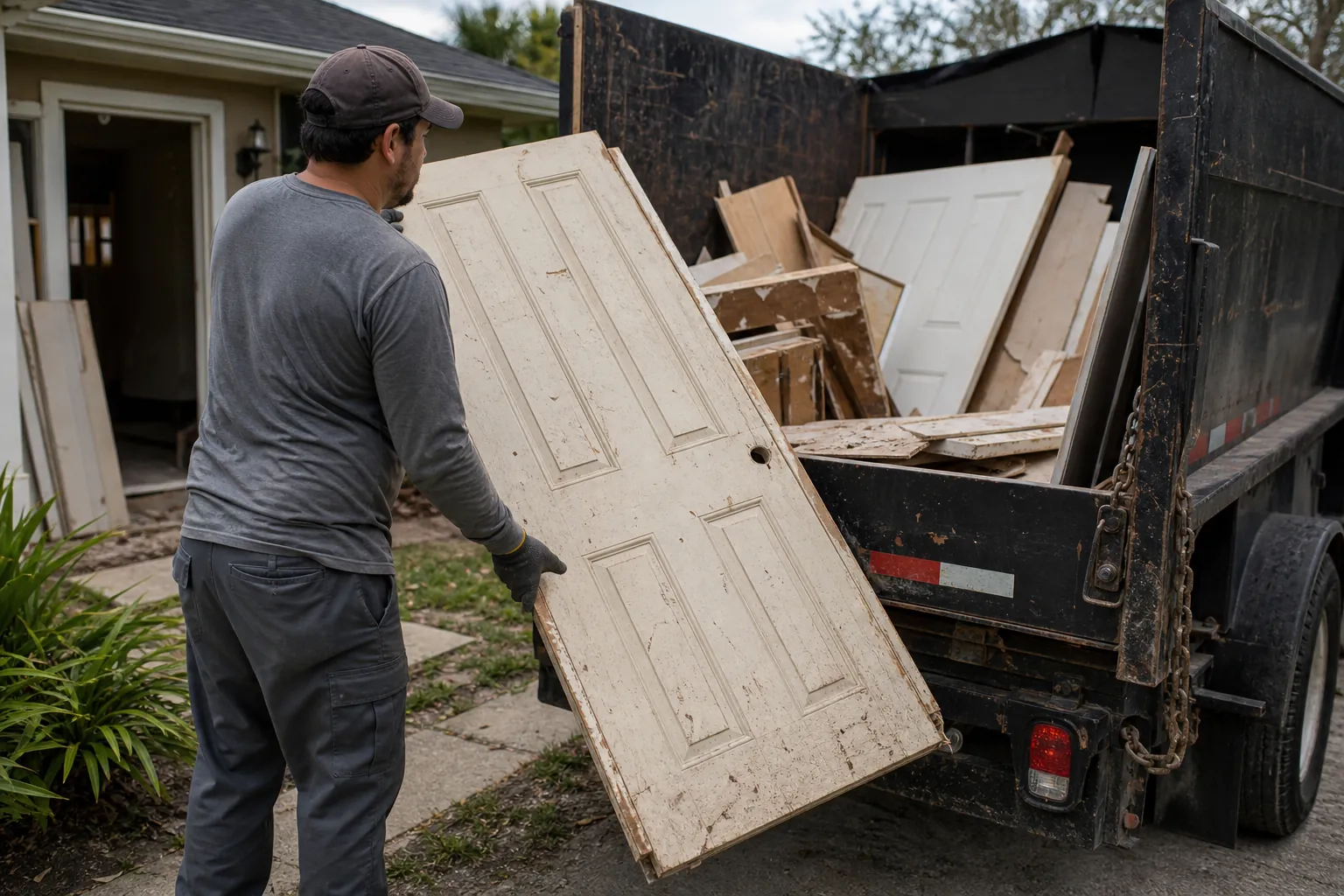
Door debris hauling is the planned removal of doors taken out during a property update. In DeLand, first identify what the doors are made of, how many need removal, and where they can be staged. Then confirm accepted materials, access needs, timing, and any local disposal rules with the hauling provider and relevant authorities.
What Should You Plan for Door Debris Hauling?
Plan door debris hauling around the material, amount, access, and timing. Those details help you ask clear questions before removed doors block a work area or sit outdoors. For wider storm cleanup context, read storm debris cleanup planning. Compare removal methods in grapple truck and dumpster choices.
A door can be a single item, but a property update may create a mixed pile. A crew may remove interior doors, exterior doors, frames, trim, or hardware at different times. Do not assume that every item belongs in one load. Describe each type and ask how the provider handles it.
Start by counting the doors and noting their size, weight, condition, and materials when known. Include frames and related debris only if they are part of the planned removal. These details help a provider understand the request, but they do not confirm what that provider accepts.
Plan the removal around the work sequence. If doors come out before flooring or wall work, the pile may grow or change. If the haul is arranged too early, later debris may need a separate plan. Ask how the provider handles a changed pile or a revised pickup date.
- Count the doors and note the kinds of materials you can identify.
- Separate frames, trim, glass, and other items in your description.
- Mark the proposed staging spot and the route to reach it.
- Ask which items the provider accepts before setting a removal date.
Which Removed Door Materials Need Separate Attention?
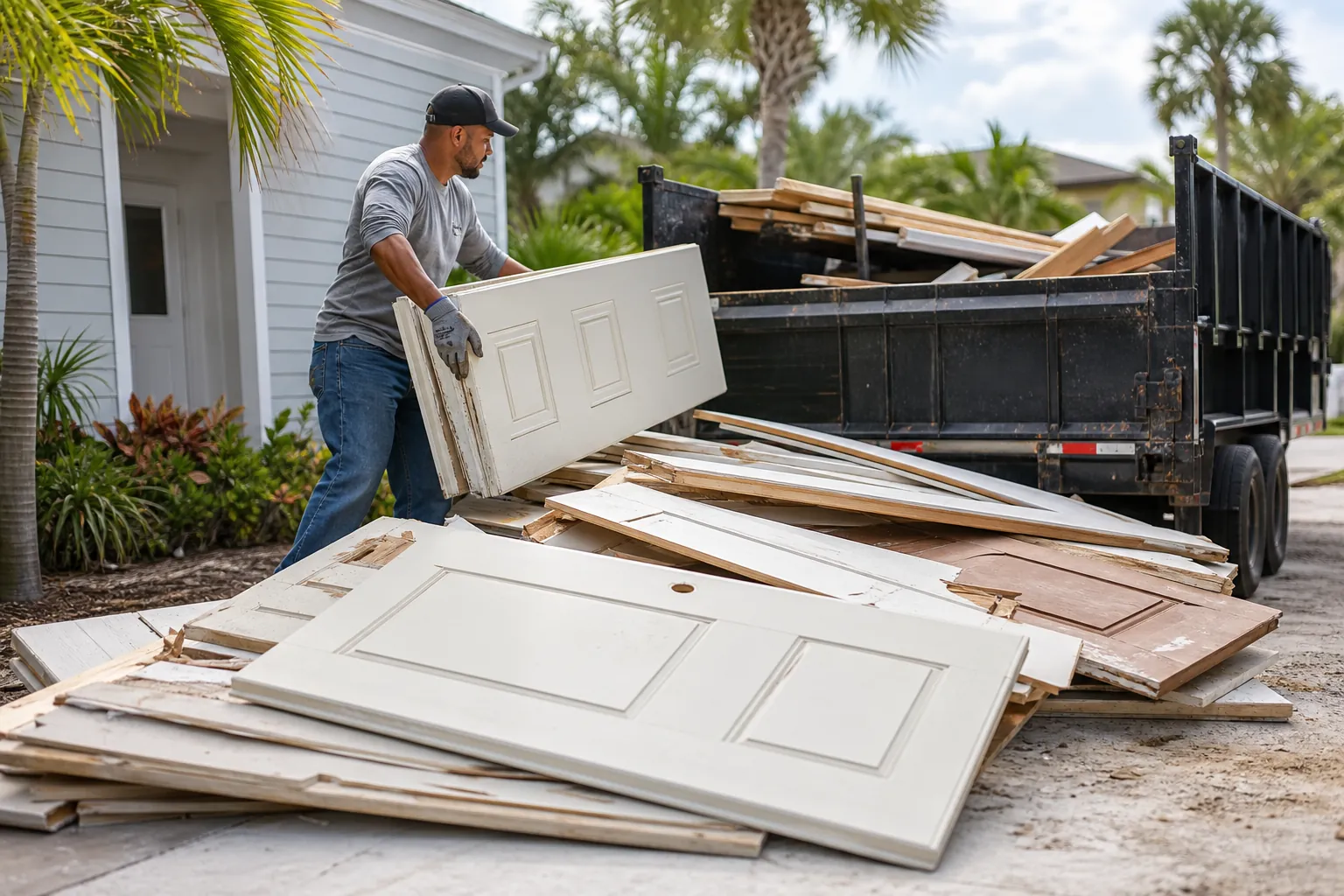
Door materials can affect handling and disposal, so describe what you know before pickup. A solid wood door, a metal door, and a door with glass may call for different plans. Check local disposal guidance and ask the provider what it accepts. See Volusia County debris sorting guidance and Florida construction debris rules.
Do not guess at material if you cannot tell. A door may have a wood, metal, composite, or glass component, and an older unit may have layers or hardware that are hard to see. Give the provider a plain description and ask what details matter for its process.
Separate items only when it is practical and safe to do so. Do not break glass, remove heavy hardware, or take apart a door just to make a pile look simpler. Ask a qualified worker to handle tasks that involve sharp edges, heavy lifting, or other hazards.
Local rules can depend on the material, location, and current collection guidance. Volusia County's solid waste and recycling information is a useful place to check county guidance. It does not establish that a particular provider accepts a door or that a specific pickup option is available.
If the doors are part of a larger renovation or storm cleanup, identify the other debris too. Mixed loads can raise questions about what belongs together. For broad disaster debris planning, the U.S. EPA offers general guidance. Local rules and the selected provider's terms still matter.
Describe the pile without assuming acceptance
A short inventory can keep the request clear. List the number of doors, known materials, attached glass, frames, trim, and any other debris. Say which details are uncertain. Then ask the provider to confirm what it can take and what must be handled separately.
Avoid calling a pile clean or ready unless you know what the provider requires. Ask whether doors should stay intact, whether loose parts should be grouped, and whether mixed materials affect the plan. Follow the instructions you receive rather than relying on a general rule.
How Can You Prepare a Safe, Clear Staging Area?
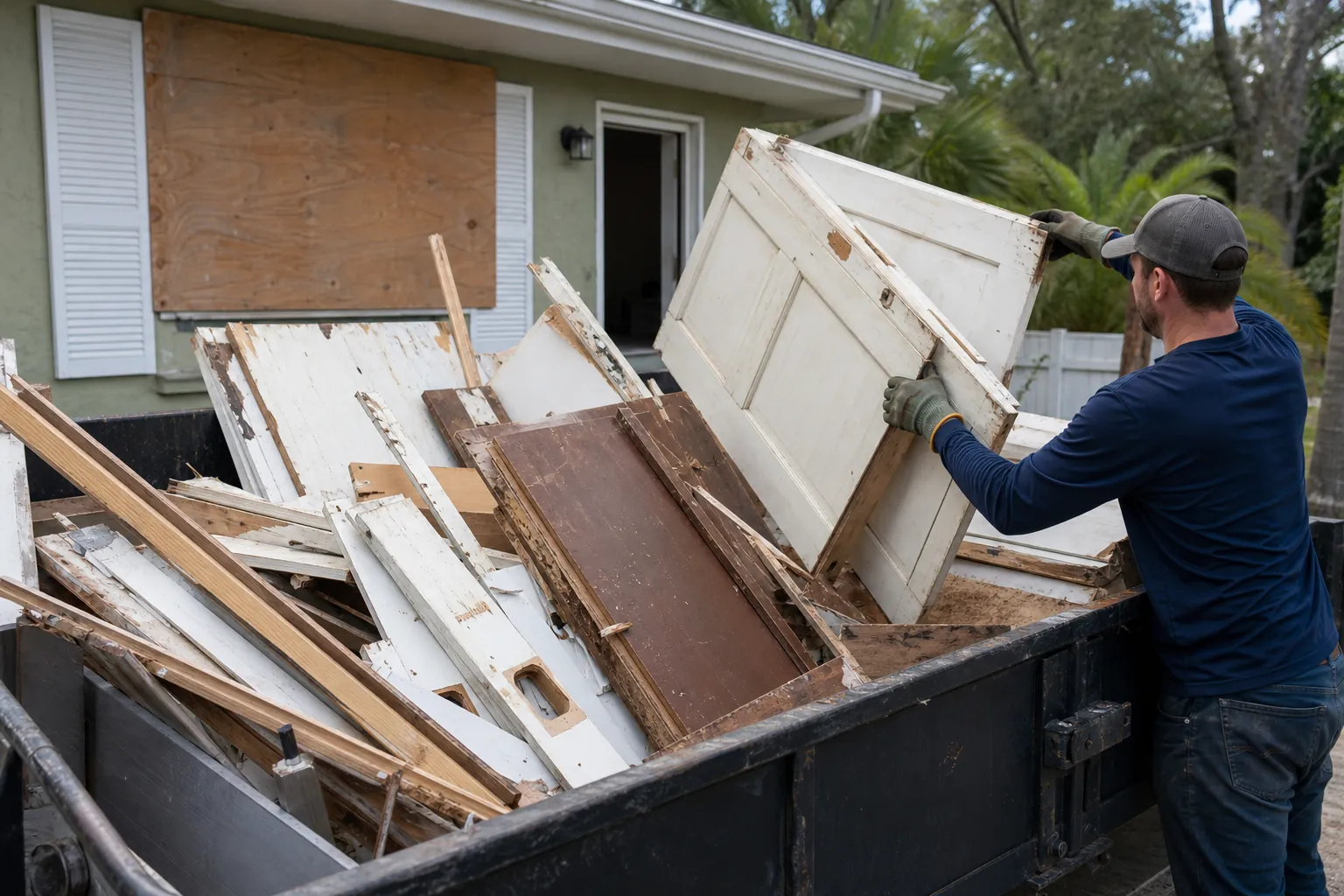
Choose a staging area that the hauling provider can reach and that does not block people, vehicles, or ongoing work. Keep doors stable and away from walkways until removal. Confirm placement and access with the provider before moving heavy items. For pile photos, use helpful estimate photo details and local debris sorting guidance.
A good staging spot is easy to describe and does not interfere with the work. Check the path from the doors to the pickup area. Note gates, narrow turns, overhead limits, parked vehicles, soft ground, and other obstacles. Ask the provider whether its planned equipment can reach the proposed spot.
Do not place doors where they may fall into a walkway or onto a work area. Keep people away from unstable stacks. If a door is heavy, damaged, or awkward to move, ask a qualified person to assess how to handle it. Do not try to lift it alone just to meet a pickup plan.
The provider may need a clear view of the pile before confirming its plan. Ask what photos or details would help. Share images only if requested, and include the surrounding access route when useful. A photo can show layout, but it cannot confirm every material or hazard.
Keep the staging area consistent with any local instructions and site rules. If the property is shared, rented, or under active work, get permission before using a common area. Do not leave doors in public spaces or near roads unless the responsible authority and provider have approved that arrangement.
- Pick a spot that keeps doors away from walkways and active work.
- Check the route for gates, turns, vehicles, and other obstacles.
- Keep unstable or damaged doors away from people until removal.
- Ask before moving doors that are heavy or hard to handle.
When Should You Arrange Removal During a Property Update?
Set removal timing around the work plan, the pile's growth, and confirmed provider availability. Do not assume a pickup can happen on a preferred date. Ask when to stage the doors, how long they may remain there, and what changes require a new plan. See construction debris pickup planning and storm cleanup planning steps.
A property update can create debris in stages. Some doors may come out early, while frames or other materials are removed later. Ask the contractor or person managing the work when the pile will be complete. Then share that timing with the hauling provider and confirm any limits on staging.
A single planned removal may suit a small, finished pile, while staged work may call for separate coordination. The right approach depends on the job, the provider's process, and accepted materials. Do not assume one load, one visit, or one type of equipment will fit every property.
Leave room for changes. Work may uncover more material, or a door may be too large or heavy for the expected plan. Ask whom to contact if the pile changes, and whether an updated count or photo is needed before removal. Get revised terms in writing when appropriate.
Storm debris can involve different sorting and local rules than routine update waste. FEMA's general debris guidance can help readers think about sorting and public recovery needs, but local instructions still control. For a storm-related pile, check current local guidance before staging or moving debris.
Coordinate the work and the pickup
The person managing the update can help establish when doors will be ready to move. Share that schedule with the provider rather than assuming the work crew and hauling crew coordinate directly. Confirm who will be on site, who can answer questions, and who has authority to approve changes.
Ask about the steps that matter to your site. These may include access times, a contact person, staging instructions, and what happens if the work runs late. The answers depend on the provider and property. Keep the agreed plan where the people involved can find it.
What Should You Ask Before Choosing a Removal Method?
Ask how the provider handles your specific door pile before choosing a removal method. Compare what it accepts, how access works, and what preparation it expects. A dumpster and a grapple truck are different options, not automatic matches for every site. Read grapple truck versus dumpster factors and photos for a hauling estimate.
Start with the pile rather than a preferred piece of equipment. Share the door count, materials, dimensions if known, related debris, and access details. Then ask which options the provider can offer and what each option requires. The provider must confirm its own services, availability, and limits.
A container may require a suitable placement area and permission to use it. A truck-based pickup may need a clear route and a workable position near the pile. These are planning questions, not claims that one option is always faster, safer, or less costly. Ask for details that fit your property.
Clarify the scope before agreeing to a plan. Ask whether the quote or work description includes only doors, or also frames, trim, and other debris. Ask how the provider treats changes in pile size or material. Confirm any access, sorting, or staging instructions in plain language.
If the site has tight access, shared space, overhead limits, or active construction, explain those conditions early. Do not assume the provider can work around them. If a site hazard or building requirement affects the plan, ask the property manager or a qualified professional for direction.
- Describe the pile and ask which materials the provider accepts.
- Explain the access route, staging spot, and any site limits.
- Ask what preparation and timing the provider requires.
- Confirm how added debris or changed conditions affect the plan.
How Do Local Rules Affect Door Disposal in DeLand?
Local disposal instructions can vary by material, location, and date, so check current guidance before setting doors out. DeLand is in Volusia County, but that alone does not confirm a specific collection method or provider service. Review Volusia County sorting information and Florida construction debris pickup rules.
Use official local guidance for collection and disposal questions. Volusia County's solid waste and recycling page provides county waste guidance, with rules that can vary. Check the latest information for the material and location in question. If the instructions are unclear, contact the responsible local authority.
A county guidance page does not prove that a private provider accepts a particular door or serves a specific property. Ask the provider to confirm its service area, accepted materials, access limits, and availability. This brief does not establish the company's specific services or pickup terms.
If the doors come from a commercial site, rental property, or larger project, ask the person responsible for the site about its waste plan. Property rules or project requirements may apply. When a building, legal, or safety decision matters, consult the qualified authority for that issue.
Keep records of the instructions you receive, especially when several people share responsibility for the update. Note the confirmed material list, staging location, pickup timing, and contact person. This makes it easier to spot a mismatch before work begins and to ask focused questions if plans change.
Questions about next steps? Call Daytona Grapple Trucks at (386) 481-7913 or review debris.
Frequently Asked Questions
Can removed doors be mixed with other renovation debris?
That depends on the materials and the provider's rules. Describe doors, frames, glass, trim, and other debris separately when you ask. Confirm which items can share a load and which need a different plan. Check current local guidance too, since disposal rules may vary by material, place, and date.
Should I remove the hardware before a door is hauled away?
Do not remove hardware unless the provider or a qualified worker tells you to. Taking apart a door can expose sharp edges or create loose parts. Ask whether hinges, handles, glass, or attached trim should stay in place. Follow site safety rules and get qualified help for difficult or hazardous work.
What information helps a provider review a door removal request?
Share the door count, known materials, approximate size, related debris, and the property's access conditions. Say what is uncertain rather than guessing. Ask whether the provider wants photos, where doors should be staged, and what can affect its plan. The provider must confirm its own service, terms, and availability.
Can I leave removed doors at the curb in DeLand?
Do not assume curb placement is allowed or that collection will occur. Check current local instructions for the specific material and location, then confirm the arrangement with the responsible authority or provider. Keep doors out of public areas until you have clear direction. Rules and collection options can change.
What if more doors or debris appear after pickup is planned?
Contact the provider before adding items to the staged pile. Explain what changed and ask whether it affects accepted materials, access, timing, or the agreed scope. Do not assume a planned removal covers added debris. If the work is managed by a contractor or property manager, tell that person too.
Sources
- Solid Waste and Recycling, Volusia County
- Planning for Natural Disaster Debris, U.S. EPA
- Debris Removal Guidelines Help You and Your Community, FEMA
Call (386) 481-7913 to talk through next steps.