
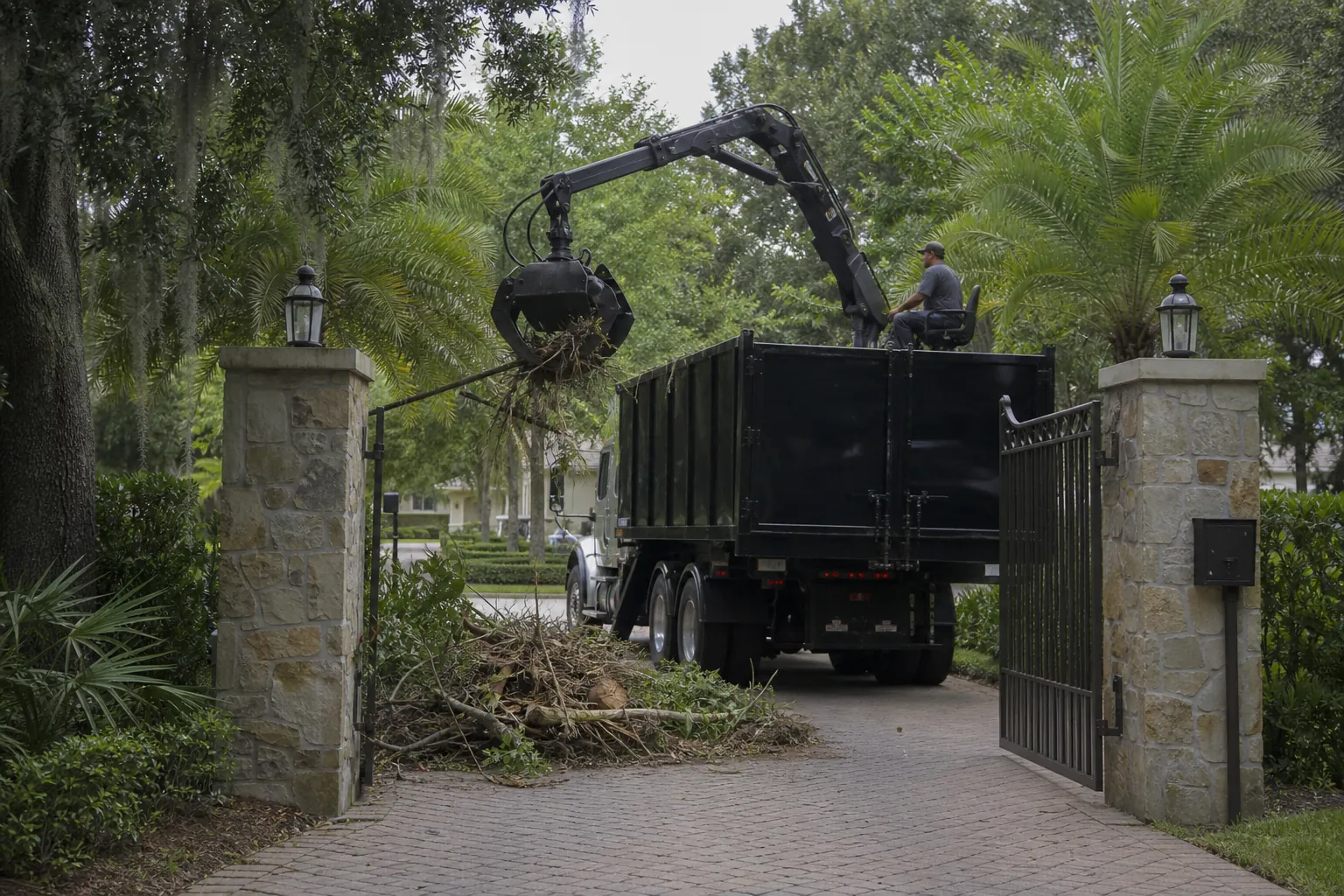
Good driveway access for grapple trucks starts with a clear route and an operator’s review. Share photos of the entrance, surface, overhead space, and debris pile. For a DeLand property, ask where the truck can stand before moving debris. Don’t assume a driveway can support heavy equipment.
What should you check for grapple truck driveway access?
Check the full route, from the street to the planned loading spot. A clear entrance alone doesn’t settle access. Use the Florida storm debris cleanup guide for the wider cleanup plan. Then review photos for a hauling estimate to show the operator what the truck would encounter on arrival.
Start with a walk-through from a safe, open area. Look at the street approach, gate, bends, and pile location. Note anything that makes the route narrow or hard to see. Include parked cars and items that may be there on pickup day.
Think about how the truck would leave, too. A route may look open from one direction but hide a tight turn. Tell the operator if there’s no clear space to turn around. Don’t plan backing movements yourself.
In DeLand, describe your actual property rather than relying on a street address. A map view may miss a gate, new fence, or soft shoulder. Recent ground-level photos can show details that an older overhead image lacks.
Send a short access summary with your photos. Mark facts you know and questions you need answered. That helps avoid treating a guess as a confirmed truck route.
- Show the street approach and the full driveway entrance in clear photos.
- Describe each gate, bend, slope, and narrow point along the route.
- Flag overhead lines, low branches, and structures near the loading area.
- Ask the operator to review access before you move the pile.
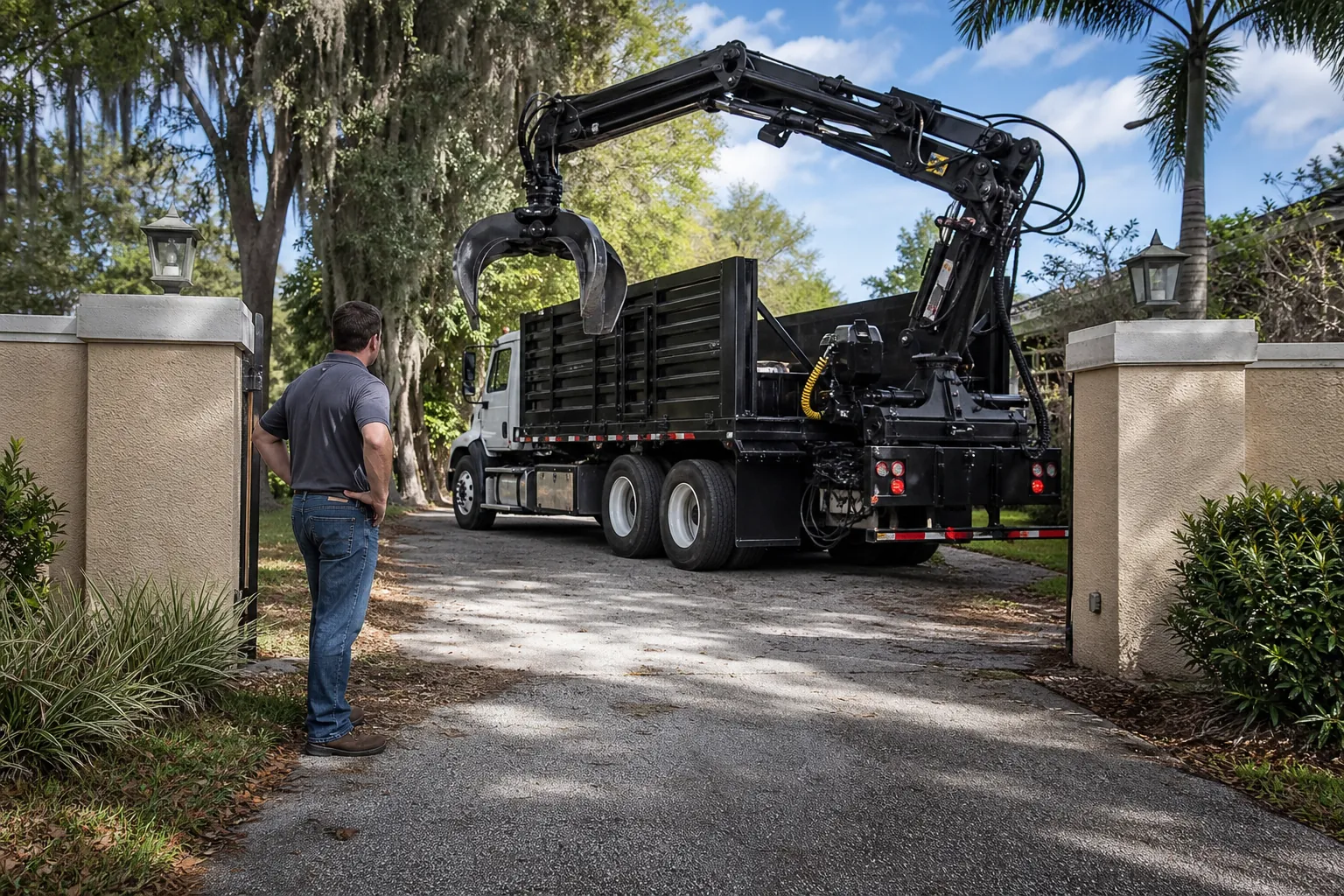
How much room does a grapple truck need?
There’s no single clearance number that fits every truck and loading setup. Ask for requirements for the equipment being considered. The hauling estimate photo checklist helps show tight spaces. The storm debris cleanup planning guide adds context when blocked roads or nearby piles affect the approach to your property.
Truck size, steering space, and loading reach are separate issues. An entrance might allow passage yet leave too little working room. The operator must judge the route and loading position for the actual equipment.
If requested, measure the clear opening between fixed objects. Say where each measurement starts and ends. Include gate posts, fence corners, and other narrow points. A width estimate without those details can be hard to use.
Height matters along the route and near the pile. Show tree limbs, roof edges, and overhead wires from a safe location. Don’t estimate electrical clearance or attempt to move lines. Refer concerns to the operator and utility provider.
Road width can affect how a truck approaches a driveway. Parked vehicles may change the turn available at the entrance. Tell the operator about these conditions before the visit. Don’t assume the truck can use a neighbor’s drive.
Avoid treating the grapple’s apparent reach as permission to place debris anywhere. Truck position, nearby objects, and the load all matter. Ask for a loading plan tied to the site. Confirm it again if the pile or access route changes.
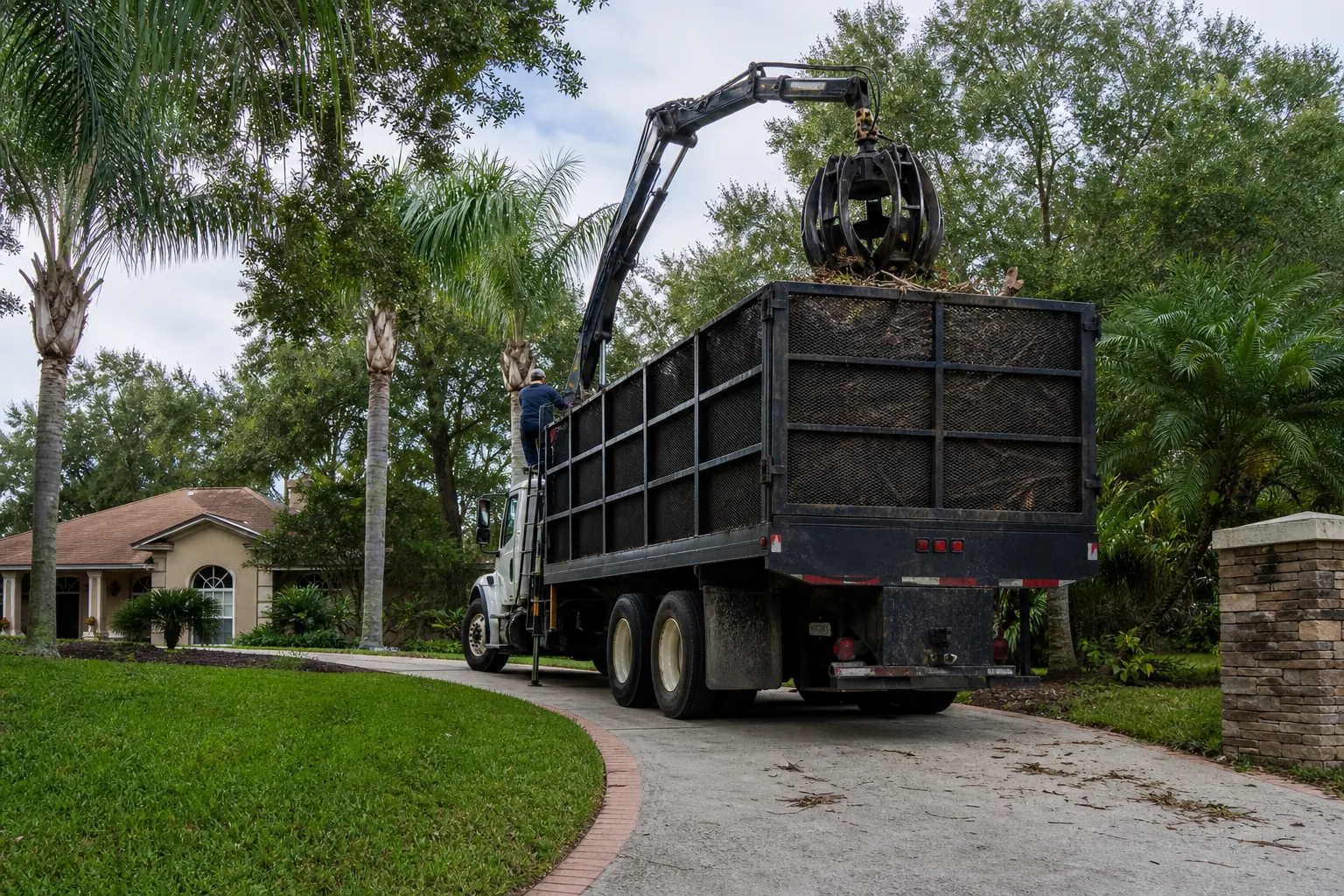
Can the truck use your driveway surface?
A driveway’s appearance doesn’t establish that it can support a loaded truck. Tell the operator about its surface, condition, and known hidden features. Review photos needed for an estimate before sending details. For the broader job, use the Florida storm cleanup planning guide to organize questions before pickup day.
Concrete, asphalt, gravel, and pavers each need a site-specific review. Photos can reveal visible damage but cannot prove load capacity. Don’t assign a weight limit based on the surface name. Ask a qualified professional when structural capacity needs to be established.
Mention cracks, sunken areas, loose edges, and past repairs. Explain any history of washouts or drainage trouble. Recent heavy rain may change conditions since the first photos. Send an update if the route becomes wet or damaged.
Share the locations of known septic systems, buried tanks, drains, and culverts. Flag uncertain locations rather than guessing. The operator needs these details when considering a route. Records or guidance from the proper qualified provider may be needed.
Driveway edges and nearby soil deserve attention during the review. A route that depends on leaving the paved area needs explicit review. Don’t assume grass or a roadside shoulder is usable. Avoid testing questionable ground with another heavy vehicle.
Protective mats or boards are not a substitute for reviewing load support. Ask who would assess any proposed protection and its limits. Discuss property concerns before work starts. Keep that discussion separate from claims about what a surface can carry.
Where should the debris pile go?
Place debris only after the loading location and local rules are checked. A pile near the driveway can still block needed truck space. Read the Volusia County debris sorting guide for sorting questions. Use the storm debris cleanup planning guide to connect pile placement with the rest of your cleanup.
Keep the driveway route separate from the proposed pickup area. A pile should not force the truck toward an edge or hidden feature. Ask the operator where material could be reached from an acceptable position. Don’t move it based on a guessed reach.
Volusia County waste guidance is a starting point for local disposal questions. Collection rules can vary by material, location, and date. Confirm which rules apply to your address and collection arrangement. A private hauling discussion doesn’t establish public pickup eligibility.
FEMA’s debris guidance supports planning for sorting and removal after storms. Check current local instructions before mixing or relocating storm debris. Keep the material description accurate when asking for a hauling review. Report bags or items whose contents are unknown.
Show nearby mailboxes, drains, fences, and utility equipment in your photos. Ask about any feature that could affect the loading spot. Don’t place material against equipment that may need service access. Avoid entering damaged areas to rearrange a pile.
If debris is already in a difficult spot, document it first. A move may add work without solving the access problem. Tell the operator what can be moved and what cannot. Get direction on the location before arranging extra labor.
Which photos and details help an access review?
Send wide views that connect the street, entrance, route, and pile. Add close views of specific concerns without hiding the surrounding space. The photos for a hauling estimate guide helps organize that set. Pair it with the Volusia County debris sorting guide when describing what is in the pile.
A close photo of debris says little about truck access. Start with the approach, then show the route in order. Use simple labels, such as entrance, first bend, and pile. Explain which way each photo faces if that isn’t clear.
Take photos from places you can reach safely. Don’t stand in traffic or climb debris for a wider view. If damage blocks a useful angle, state that limitation. The operator can ask for another way to review the concern.
Include a brief written description of the pile’s contents. Separate known facts from rough estimates of size or volume. Show mixed material instead of describing the whole pile as branches. Hidden contents may require more review before a plan is set.
Photos should reflect current conditions, especially after more rain or cleanup. Say when they were taken and what has changed. If parked vehicles usually block part of the route, include that fact. One unusually clear photo can give an incomplete picture.
- Photograph the approach from a safe spot near the street.
- Show the open gate and each narrow point along the driveway.
- Capture the surface and any known damage near the proposed route.
- Show the whole pile with nearby structures visible in the frame.
- Send written notes about hidden features and changes since the photos.
What should be ready before the truck arrives?
Confirm the access plan and report changes before the planned visit. Keep movable items out of the agreed route without changing the pile location yourself. The storm debris cleanup planning guide covers the wider task. Recheck hauling estimate photo details if the entrance, ground, or debris has changed since review.
Ask who needs to be reachable for access questions. Share gate instructions through the agreed contact method. Don’t post private entry codes in public photos or shared listings. Confirm any access limits set by the property owner.
Move personal vehicles only to lawful, suitable parking locations. Avoid shifting them where they block the street or another driveway. If a shared entrance is involved, tell the operator in advance. Don’t assume others have agreed to its use.
Keep children, pets, and visitors away from the planned work area. Follow the operator’s instructions about staying clear of equipment. Don’t approach the truck to point at debris during loading. Use the agreed contact method for questions or changes.
A storm can alter access between planning and arrival. A new fallen limb, standing water, or damaged gate needs fresh review. Report the change rather than trying to restore access through risky work. The original plan may need to change.
- Confirm how the operator will enter and whom to contact.
- Remove movable items from the route agreed during the access review.
- Report new water, damage, or obstructions before the planned visit.
- Keep pets and household members away from the planned work area.
- Ask before changing the pile location or adding more material.
What if driveway access is too tight?
Limited driveway access calls for a revised plan, not a forced entry. Ask which loading arrangements can be reviewed for your site. The grapple truck versus dumpster comparison explains different cleanup approaches. Return to the Florida storm debris cleanup guide when access limits change the scope of the job.
Possible changes may include a different loading position or a revised pile location. Neither is suitable by default. The operator must review access and equipment needs. The property owner must confirm permission for any proposed use of another area.
Street-side loading raises separate questions about traffic, placement, and local rules. Don’t assume a roadside spot is available for private work. Ask the relevant local authority about required permissions. An operator’s access review does not replace that check.
A dumpster is another approach to compare, rather than an automatic fix. It still needs a suitable delivery spot and removal route. Someone must load it under the agreed terms. Confirm accepted materials and property needs before choosing that route.
The U.S. EPA’s disaster debris planning guidance supports planning before removal begins. For a single property, keep the plan tied to known conditions. Record what remains unresolved and who will check it. Decide on the method only after those questions are answered.
| Approach to review | Access question | Other check |
|---|---|---|
| Different truck position | Can equipment work from there? | Confirm permission to use the space. |
| Revised pile location | Can the new spot be reached? | Check placement and sorting rules. |
| Street-side loading | Can the location be used? | Ask about traffic and local permissions. |
| Dumpster approach | Can delivery and removal occur? | Confirm loading duties and accepted debris. |
Questions about next steps? Call Daytona Grapple Trucks at (386) 481-7913 or review debris.
Frequently Asked Questions
Should I trim branches before asking for an access review?
Ask for the review before arranging trimming solely for truck access. Photos may help the operator identify the actual concern. Don’t cut near power lines or work on storm-damaged limbs yourself. Refer utility issues to the utility provider and tree work to a qualified professional. Access may still need review after the work.
Can a neighbor give permission to use a shared driveway?
A neighbor’s consent may not settle every access issue. Shared drives can involve more than one owner or access agreement. Identify who controls the proposed route and confirm permission before planning truck use. If rights are unclear, seek qualified legal guidance. The operator still needs to review the route itself.
Will sending measurements settle the access decision?
Measurements help, but they don’t settle the whole decision. They may miss turn space, ground support, or working clearance. Label each measurement and say how you took it. Ask which additional views are needed. The operator may need more information or a site review before accepting an access plan.
Does an earlier truck visit prove the driveway is suitable now?
No. An earlier visit involved a particular vehicle, load, and set of conditions. The proposed equipment or route may differ. Rain, repairs, erosion, and hidden damage can change the site. Share the earlier experience as background, then request a current review. Don’t treat past access as proof of present load capacity.
What should I ask Daytona Grapple Trucks before making arrangements?
Ask what information is needed to review your DeLand property. Confirm the proposed equipment, debris types, loading location, and access limits. Ask which details remain unresolved before moving material. Also confirm the work scope and any property preparations. This article does not establish site approval, available dates, or acceptance of particular debris.
Sources
- Solid Waste and Recycling, Volusia County
- Planning for Natural Disaster Debris, U.S. EPA
- Debris Removal Guidelines Help You and Your Community, FEMA
Call (386) 481-7913 to talk through next steps.