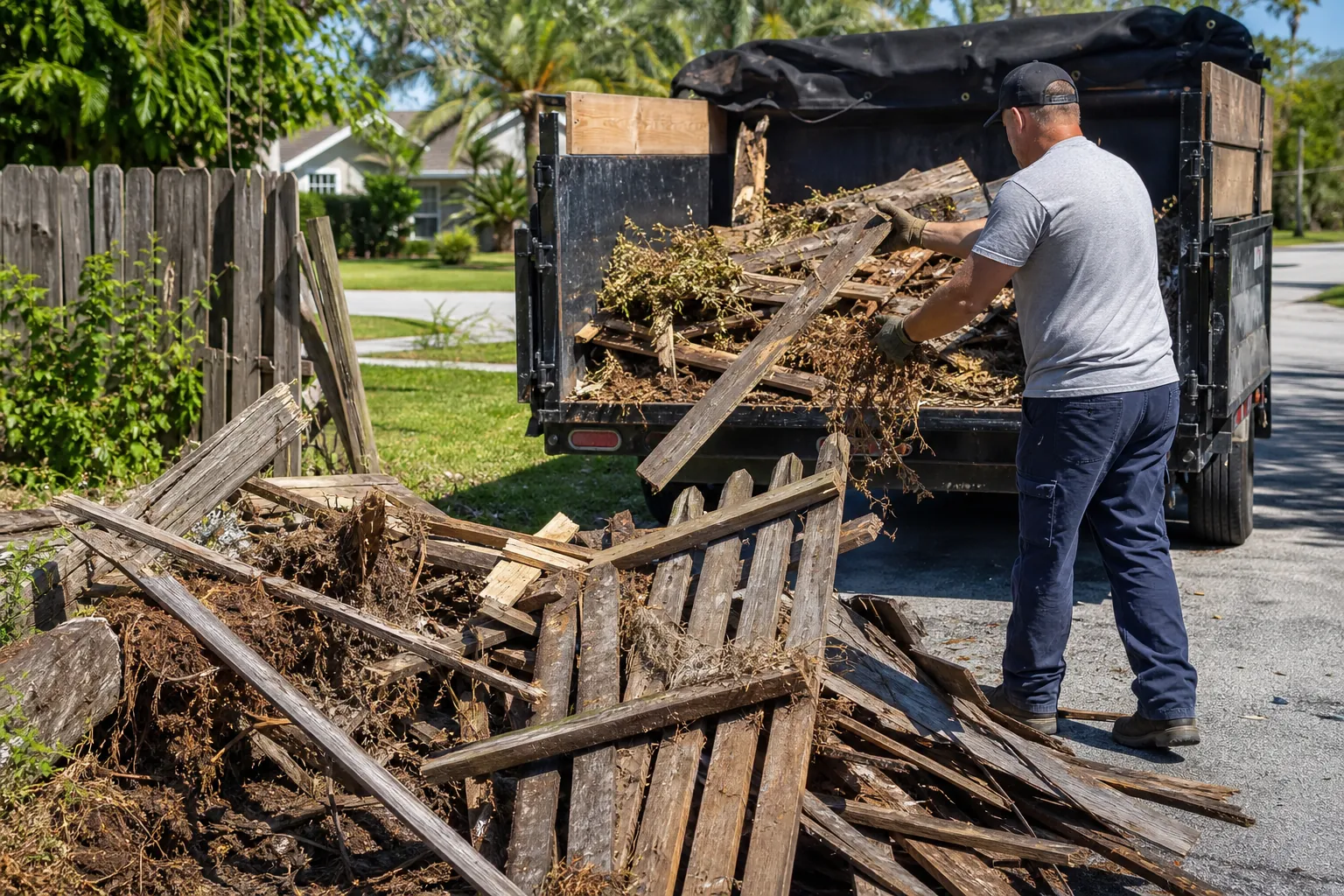
Fence and wood debris hauling starts with checking materials, pile size, and access. If you searched “fence and wood debris haul volusia,” first separate fence waste from yard debris. In South Daytona, confirm current disposal rules and the hauler’s accepted materials before moving waste or setting a pickup date.
What should fence and wood debris hauling include?
A clear hauling request names the wood, its source, and its location. It should state if the fence is down or still standing. Use the storm debris cleanup guide for the wider cleanup plan. Then check photos for a hauling estimate to show the work clearly.
Fence waste can include boards, rails, posts, and attached hardware. A pile may also hold concrete footings or other materials. Name each part rather than calling everything wood. The load’s contents can affect the pickup plan and disposal route.
Taking down a fence and hauling loose debris are different tasks. Don't assume one request covers both. Ask what work is included before anyone starts. If sections remain fixed in place, describe that clearly and send photos from a safe spot.
- For a South Daytona property, explain where the debris sits.
- Daytona Grapple Trucks is identified here as a grapple truck debris hauling business.
- Keep the request tied to work you need now.
A front yard pile differs from material behind a locked gate. Mention any access limits you already know. The hauler must confirm what equipment and loading approach could fit the site.
That fact doesn't establish acceptance of every fence material. Ask about your specific load, site access, and requested work. Confirm the agreed scope before treating a discussion as a booking.
If more fence removal is planned, say so. Otherwise, a review of today's pile may miss later waste. Ask how added debris would change the scope before adding it.
How should fence waste be sorted after a storm?
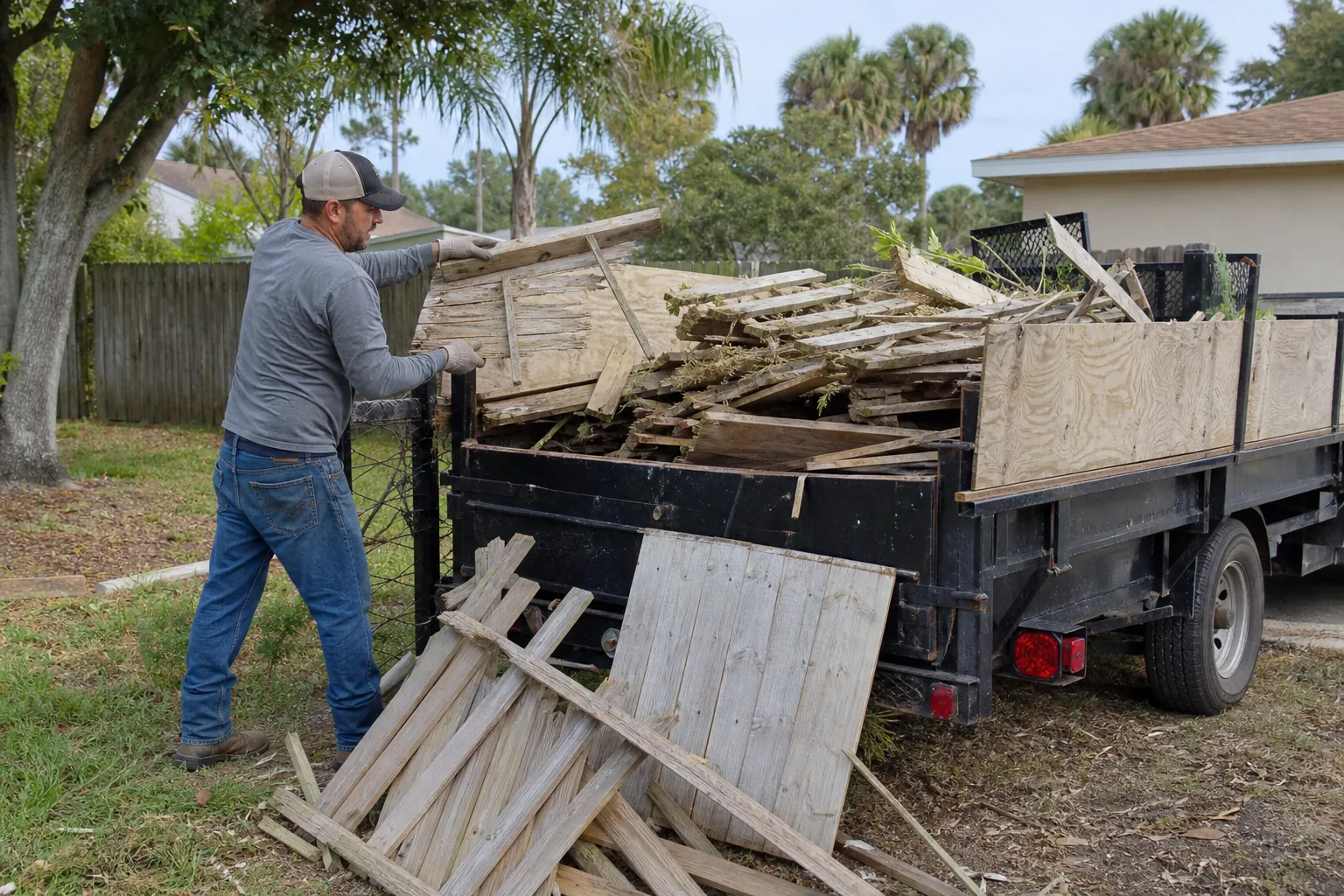
Keep fence waste distinct from branches, household waste, and other debris when practical. Confirm local directions before building a pickup pile. The Volusia storm debris sorting guide explains the sorting questions. The storm debris cleanup guide helps place fence cleanup within the broader work.
A storm can leave several waste types in one place. Wood fence panels may land beside limbs, roofing, or household goods. That shared cause doesn't make them one waste type. Describe mixed contents before asking how they should be grouped.
FEMA's debris removal guidance covers general debris sorting and removal. Local rules still control. Volusia County's Solid Waste and Recycling guidance is a starting point for current waste questions. Confirm which rules apply to your address, material, and planned pickup.
Use simple labels when you describe the pile. These details help keep the conversation clear without guessing a disposal category.
- Describe fence boards and posts apart from loose tree limbs.
- Identify concrete footings and metal parts within the fence waste.
- Report household items or other waste mixed into the pile.
- Ask how each material should be grouped before moving it.
Does painted or treated fence wood need special review?
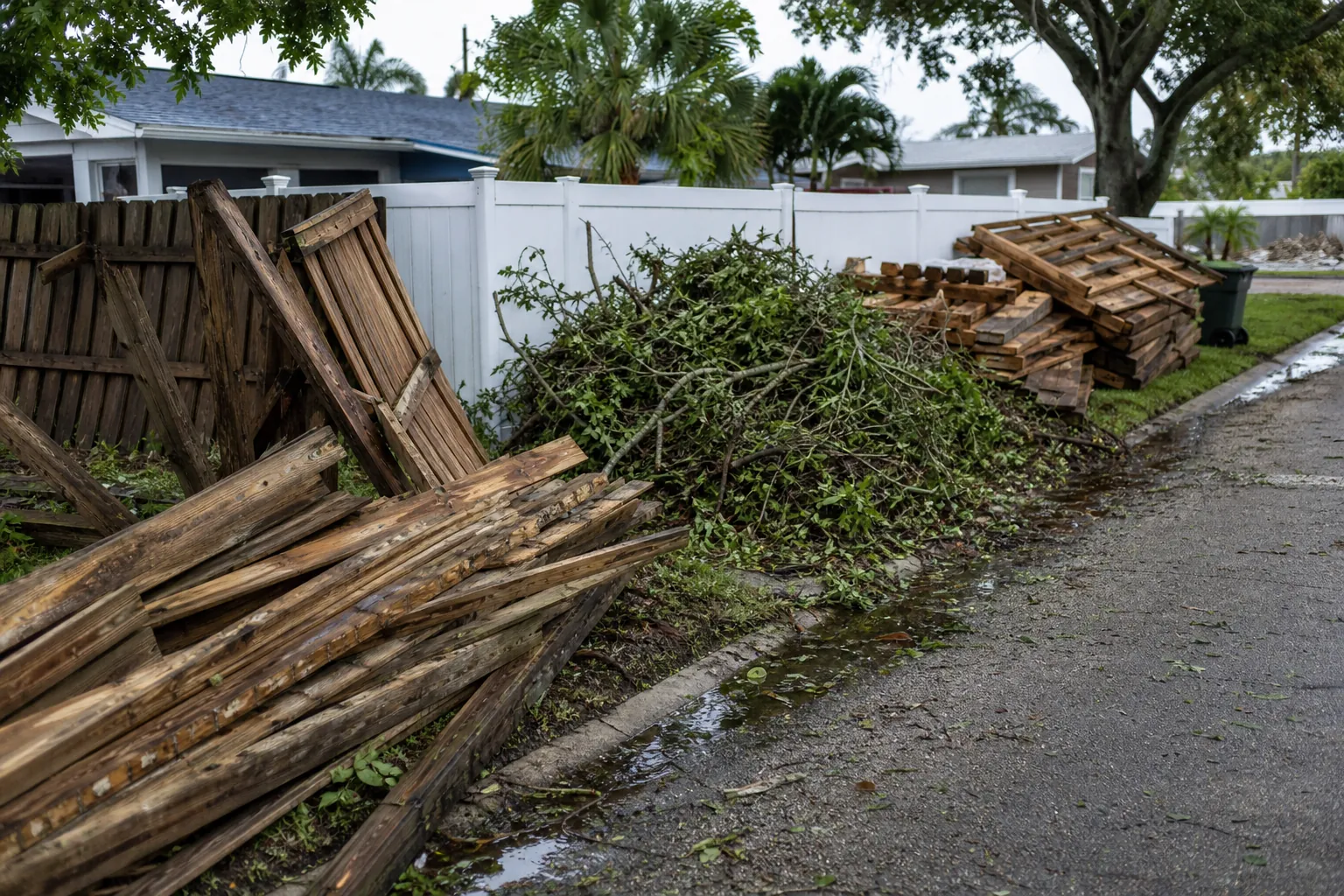
Describe painted, stained, or treated wood before requesting pickup, and don't assume it belongs with branches. Material acceptance needs confirmation. Use the Volusia storm debris sorting guide to frame sorting questions. Include clear views using the photos for a hauling estimate guide when the wood's condition is uncertain.
Fence wood may have coatings or treatment you can't identify. Age, color, and wear alone may not tell the full story. Share what you know from labels or project records. If you don't know, say that rather than naming a treatment.
Volusia County's waste guidance notes that collection rules depend on the material and location. Use that as a reason to verify acceptance. Don't infer that a rule for tree debris applies to fence lumber. Ask about the wood in your actual pile.
- Photos can show peeling paint, attached pieces, and mixed materials.
- Posts with concrete bases deserve a separate mention.
- If suspected contamination or an unknown substance is present, pause the handling plan.
They can't establish every substance present in old wood. A hauling review may leave questions open. Ask what added information is needed before handling or loading is planned.
So do wire mesh, plastic panels, and metal frames. These items may change how the load is described. Don't hide them under boards to make the pile look more uniform.
Seek guidance from the relevant waste authority or a qualified professional. Don't burn, grind, or repurpose unknown debris based on a hauling article. Disposal acceptance and safe handling are separate questions.
Where should the pile go for truck access?
Ask the hauler to review the proposed pile location before moving debris. Access depends on the property, truck approach, and nearby obstacles. The photos for a hauling estimate guide helps show these details. For the wider work area, consult the storm debris cleanup guide before choosing a staging spot.
Don't assume the curb is an approved staging point. Ask the relevant local authority about public space and placement rules. A private hauling plan doesn't grant use of a road, sidewalk, or right of way. Keep those permissions separate from the hauling discussion.
Show the path from the street to the pile. Include gates, turns, and narrow areas in the review. Mention soft ground or recent standing water if present. A photo may help, but it doesn't settle ground conditions or equipment access.
- Point out overhead lines, branches, and nearby structures without approaching hazards.
- Don't move long panels closer to the road solely for convenience.
- Access may change between the first call and pickup.
The operator must assess equipment clearance and loading needs. If debris touches a utility line or damaged structure, contact the responsible utility or qualified authority before arranging work around it.
The proposed move could create a new problem. Instead, describe the current position and ask for a site review. Leave lifting and equipment decisions to those qualified to make them.
Parked cars, repair crews, or new waste can block the route. Send an update when conditions change. Ask who should confirm that the planned loading area remains usable before work begins.
What information helps with a hauling estimate?
Useful estimate details include the full pile, its materials, and the route to it. State what remains attached and what work you expect. Follow photos for a hauling estimate for clear views. Use the grapple truck and dumpster comparison if you need to discuss loading choices.
Begin with a short written summary. Name the property location, fence material, and current condition. Say if the pile is complete or still growing. Clear facts are more useful than a guess at truck loads, which the hauler should assess.
Take photos from safe, stable places without climbing onto debris. Show the full pile and the surrounding area. Close views can help explain mixed materials, but shouldn't replace wider views. Avoid angles that hide the back or ends of the pile.
A simple message can cover the main points without becoming a project report. Include these details when asking for a review.
- State whether the fence is loose, partly attached, or standing.
- List known wood, metal, concrete, and other materials in the load.
- Show the pile and the route from the street.
- Mention planned additions and any limits on property access.
- Ask which tasks and disposal steps the estimate includes.
How do grapple hauling and a dumpster differ?
The main difference is how debris gets loaded and staged. A truck pickup and a container plan may suit different work patterns. Review the grapple truck and dumpster comparison for those choices. Keep material groups clear with the Volusia storm debris sorting guide before discussing either option.
Compare the work each choice would leave for you or your contractor. Ask who loads the debris and when it must be ready. Don't assume a container includes labor. Likewise, don't assume a truck pickup includes fence removal or work behind buildings.
The table gives questions to ask, rather than fixed service terms. Actual access, accepted waste, and loading arrangements need confirmation with the provider.
| Planning point | Grapple truck pickup | Dumpster plan |
|---|---|---|
| Loading work | Confirm what the truck can reach and load. | Confirm who fills the container. |
| Staging space | Ask for review of the pile and truck approach. | Ask for review of container placement and access. |
| Work sequence | Confirm when the full pile must be ready. | Confirm delivery, filling, and removal arrangements. |
| Material acceptance | Describe all materials before pickup. | Check accepted materials and loading terms. |
What should you confirm before pickup day?
Confirm the accepted load, included work, access plan, and contact person before pickup. Report any change since the estimate review. The storm debris cleanup guide can help organize remaining tasks. Recheck the photos for a hauling estimate guidance if the pile or site now looks different.
Keep a written record of the agreed scope. It should distinguish hauling from demolition and any other work. Ask how changes will be reviewed. A clear record reduces confusion when another person is present to provide access or answer questions.
After a storm, public collection notices may change as cleanup develops. EPA's disaster debris planning guidance supports planning for debris management, not a claim of local pickup. Check current local notices directly. Don't assume a public route will collect your private fence waste.
Use a final check to catch changes that affect the planned work. Share new facts before the truck arrives, rather than waiting until loading starts.
- Confirm that the described materials match the pile now present.
- Report added waste or any fence sections still needing removal.
- Verify the agreed access arrangements with the property contact.
- Ask how unexpected materials or access problems will be handled.
- Confirm who will review the completed work and remaining debris.
Questions about next steps? Call Daytona Grapple Trucks at (386) 481-7913 or review debris.
Frequently Asked Questions
Can old fence boards be set aside for reuse?
You can ask to keep selected boards out of the hauling scope. Make that decision before loading and clearly identify the retained material. Old wood's strength and treatment history may be unknown. Get qualified advice before using it for structural work or other uses where its condition matters.
What if the damaged fence sits on a shared boundary?
Resolve permission and ownership questions before authorizing removal. A hauling estimate doesn't establish who owns a fence or may approve work. Check available property records and speak with the other affected owner. If the boundary or responsibility is disputed, seek advice from an appropriate qualified professional before work begins.
Should I cover fence debris when rain is expected?
- Ask the hauler whether any cover is needed for your pile.
- Keep the written scope, estimate, payment record, and any disposal documents provided.
- Stop treating the original scope as a complete description of the job.
Don't add a tarp without discussing how it will affect review and loading. Wet ground can also change site access. Report standing water or changed conditions, and let the provider assess whether the planned work can proceed.
Before and after photos can help record what was present and removed. If an insurer or public program is involved, ask that organization about its own records process. A hauling receipt alone may not meet every documentation request.
Photograph the added material from a safe place and tell the hauler what changed. Ask for a revised review before adding it to the load. Unknown materials may need separate guidance from the local waste authority.
Sources
- Solid Waste and Recycling, Volusia County
- Planning for Natural Disaster Debris, U.S. EPA
- Debris Removal Guidelines Help You and Your Community, FEMA
Call (386) 481-7913 to talk through next steps.