
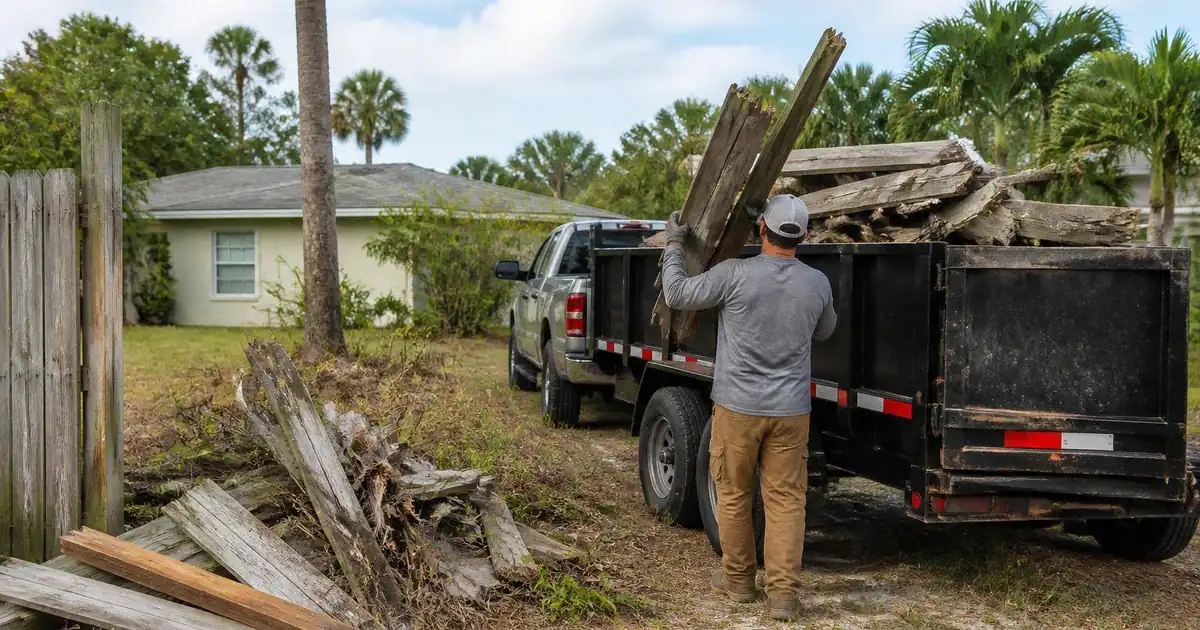
Fence demolition debris hauling costs and insurance details depend on the job’s scope, materials, access, and the hauler’s terms. Before work begins, describe the fence and debris, ask what the estimate includes, and confirm insurance details with the provider and your own insurer. These steps help you compare arrangements without assuming coverage or a set price.
What Shapes Fence Debris Hauling Costs?
Fence debris hauling costs can change with the amount, type, and location of material. A clear estimate should state what work it covers and what could change the total. Compare written details, not guesses based on fence length alone. For planning, see the fence debris planning guide and fence hauling preparation steps.
A fence’s length is only one part of the picture. Height, construction, and the amount of debris can affect the work involved. Ask the provider what details it needs to assess the job.
Material can matter, too. Wood, metal, concrete, and mixed debris may need different handling. Do not assume every material fits the same load or disposal plan. Describe what you know, and ask how unknown material will be handled.
Site access can shape the work. A narrow gate, soft ground, or a long carry may change the plan. Share these details before accepting an estimate. Ask the provider to note any limits or added work in writing.
- Describe the fence material, height, and estimated length as clearly as you can.
- Tell the provider where the debris sits and how workers would reach it.
- Ask which tasks and materials the written estimate includes.
- Request a written note about conditions that could change the quoted scope.
| Factor | What to describe | What to ask |
|---|---|---|
| Amount | Fence size and debris volume | How is volume assessed? |
| Material | Wood, metal, concrete, or mixed items | Which materials are included? |
| Access | Gate width and debris location | What access is needed? |
| Scope | Tasks you want considered | What work does this cover? |
Compare the estimate scope
An estimate is easier to compare when each provider prices the same task. Ask if it covers hauling only, or if it includes another part of the job. The configured site facts do not confirm a specific demolition or hauling service, so verify the provider’s exact role.
Ask what counts as extra work. The answer may depend on the agreed scope, material, access, or changes on site. Get any change explained before work proceeds. Keep the estimate and later updates together.
What Should an Estimate Include?
A useful estimate names the work, material, and conditions it covers. It should also show how the provider handles changes, excluded items, and disposal questions. Ask for unclear terms in plain language before you agree. Compare the fence debris planning guide with fence hauling scope questions to prepare.
Start by checking the basic scope. Does the estimate cover loading and hauling, or other tasks as well? Do not read extra work into a short description. Ask the provider to state what it will and will not do.
Look for assumptions about volume, material, and access. If the estimate depends on your description, confirm that both sides understand it the same way. Photos may help explain the site, but ask first how the provider wants you to share them.
Ask how changes are handled. For example, hidden posts or extra material may differ from what you described. The estimate should explain how the provider will discuss a change before doing added work. Do not rely on a spoken guess alone.
- Read the estimate once for the tasks it names and the tasks it leaves out.
- Ask the provider to explain each unclear fee or scope term in plain words.
- Confirm how the provider will discuss changes before doing added work.
- Save the estimate and any written updates in one place.
Separate included work from optional work
A fence project can involve several tasks, but the available site facts do not establish which tasks this business offers. Confirm whether demolition, cutting, loading, hauling, or cleanup is included. Treat each task as a separate scope question.
Write down your own priorities before you call. You might need only a specific debris pile removed, or you might be asking about a larger job. State the request plainly. Then ask the provider to confirm whether that request fits its services.
Which Insurance Details Should You Confirm?
Insurance questions need answers from the parties and policy documents that apply to your job. Ask the provider what proof it can share, and ask your insurer what your own policy says. Do not treat a general statement as proof of coverage. Use the fence debris planning guide and fence hauling question guide as planning aids.
The word “insured” can leave important questions unanswered. Ask which business or party is named on any document, what work it relates to, and whether the document is current. The provider can explain what it supplies, but your insurer can address your own policy.
Avoid assuming that a policy covers every kind of fence work or every type of loss. Coverage depends on the terms that apply. If a question affects your decision, ask the insurer or a qualified insurance professional to explain it for your situation.
Ask who is responsible for discussing damage or a claim if a problem occurs. Get the contact steps in writing when possible. This does not decide who is at fault or what a policy covers. It gives you a clear path for asking questions.
Ask for information, not a promise
A document can help you check basic details, but it cannot answer every coverage question. Read the document and ask the provider to clarify its role. For questions about policy terms, contact the insurer named on the document.
Keep copies of the estimate, any insurance information shared, and messages about the work. Do not send sensitive personal or policy details through an unconfirmed channel. Ask the provider how it handles documents before sharing them.
How Can You Compare Hauling Arrangements?
Compare arrangements by scope, material rules, access needs, and how changes are handled. A low or high figure alone does not show what the work includes. Ask each provider the same questions, then compare the written answers. The fence debris planning guide and fence hauling comparison points can help organize those questions.
The right arrangement depends on what you need done and what the provider confirms it can do. Avoid comparing a hauling-only estimate with a broader job estimate as if they cover the same work. First line up the tasks and assumptions.
Ask how the provider wants material sorted or described. Some debris may have local handling rules, and those rules can vary by material, place, and date. The Volusia County waste page is one example of county-specific guidance; check the rules that apply where your debris is located.
For general disaster debris planning, the U.S. EPA and FEMA offer public guidance. These sources do not confirm local pickup availability or a particular provider’s service. Use them for broad planning, then check current local rules and the provider’s terms.
| Question | Option A | Option B |
|---|---|---|
| Which tasks are included? | Record the written scope. | Record the written scope. |
| Which materials are accepted? | Note confirmed materials. | Note confirmed materials. |
| What access is needed? | Note stated site limits. | Note stated site limits. |
| How are changes handled? | Record the stated process. | Record the stated process. |
Use the same questions for each option
A shared question list makes answers easier to compare. Ask each provider about the same materials, access, task scope, and change process. If an answer is missing, mark it as unknown instead of filling in the gap yourself.
Bunnell is the location named for this planning topic. That does not establish that a provider has a staffed office there or offers every requested task. Confirm service availability and the job details directly before making plans.
What Should You Prepare Before Asking for Service?
Prepare a short description of the fence, debris, site access, and tasks you want considered. Clear details can help a provider decide what questions to ask next. Do not enter unsafe areas to inspect the site. Review the fence debris planning guide and fence hauling arrangement tips before you contact providers.
Begin with details you can gather safely. Note the fence material, approximate length, and whether the debris is already down. You can also describe posts, concrete, or mixed items if you know they are present.
Describe how a vehicle could reach the debris without making a claim about what equipment the provider uses. Mention gates, slopes, soft ground, low branches, or other visible limits. Ask the provider what access details matter for its assessment.
Think about the work you want considered. You may be asking about hauling existing debris or asking if a broader task is available. Be specific, and let the provider confirm its service scope. Do not assume that one request includes another.
- Write down the fence material and approximate size if you know them.
- Describe where the debris sits and what access limits you can see.
- State which tasks you want the provider to consider.
- Mark unknown details clearly instead of guessing about them.
Share details without taking on risk
Use existing photos only if they show the work area safely. Do not climb, cut, lift, or move material to create a better view. If the site has a hazard or you are unsure what is safe, ask an appropriate qualified person for help.
Keep the description factual. Separate what you have seen from what you are unsure about. That helps the provider ask follow-up questions instead of relying on an assumption.
How Do Debris Rules Affect the Plan?
Debris handling rules can differ by material, location, and date, so check current local guidance before choosing a plan. Ask the provider what materials it accepts and what sorting it expects. The fence debris planning guide and fence debris sorting questions offer a useful starting point.
Do not assume every fence material can be mixed together or placed with routine waste. Rules can depend on where the debris is and what it contains. Check the relevant local authority for current instructions before setting material aside or moving it.
Volusia County’s Solid Waste and Recycling page states that collection rules vary by material, location, and date. It is county guidance, not proof of rules in Bunnell. Check the authority responsible for the specific property and debris location.
The EPA and FEMA provide general guidance for planning and sorting disaster debris. That material can help with broad questions, but it does not establish a local pickup service. Confirm any local requirements with the proper authority, and confirm accepted materials with the provider.
Ask before mixing or moving debris
A provider may have limits on what it can accept. Ask about wood, metal, concrete, and mixed debris one by one. If you cannot identify a material, say so rather than labeling it with a guess.
Do not move material to a roadside or public area without checking the applicable rules. Ask the local authority where and how the material may be staged. The provider can explain its own process, but it cannot replace local guidance.
What Should You Confirm Before Work Begins?
Before work begins, confirm the agreed scope, accepted materials, access plan, and process for changes. Make sure you know who to contact with a question. Written details reduce confusion, but they do not replace local rules or policy advice. Use the fence debris planning guide and fence hauling readiness checklist to review your notes.
Read the final estimate and compare it with what you discussed. Check that the material, work area, and requested tasks match your understanding. Ask about anything that is missing or unclear before agreeing to the work.
Confirm how the site should be prepared, if any preparation is needed. Do not move debris or change the site based on an assumption. Ask the provider what it expects, and follow qualified safety guidance when a hazard is involved.
Keep contact details and written terms available on the work day. If the scope changes, ask for the change and its effect to be explained before proceeding. You can pause to seek clarification if the new terms are not clear.
- Confirm the final work scope and the materials the provider has agreed to take.
- Check that the access plan matches the site details you shared.
- Ask how the provider will explain and approve any scope change.
- Save the written terms and the contact details for each relevant party.
Keep a simple record
A short record can help you track what each party said. Save the estimate, scope updates, material notes, and any insurance documents shared. Do not treat those papers as a ruling on coverage or liability.
If a dispute or damage concern arises, record what happened and contact the relevant provider or insurer. For local disposal questions, contact the proper public authority. The right contact depends on the question and the documents involved.
Questions about next steps? Call Daytona Grapple Trucks at (386) 481-7913 or review debris.
Frequently Asked Questions
Can I estimate hauling cost from fence length alone?
Fence length can help describe the job, but it cannot show the full scope. Material, debris amount, access, and requested tasks may also matter. Share the details you know and ask the provider what else it needs. Compare estimates only after checking that they cover the same tasks and assumptions.
Does a hauling estimate include fence removal?
Do not assume it does. The available site facts do not list a specific demolition service or define what any estimate includes. Ask the provider whether it handles removal, loading, hauling, or only a stated part of the work. Get the answer in writing before you agree.
Will my property insurance cover fence debris removal?
That depends on the policy and the facts of the job. A hauler cannot determine your coverage from a general statement. Review your policy and contact your insurer with specific questions. Ask the provider about its own documents separately, since those documents address a different party.
Should I separate wood, metal, and concrete first?
Check local rules and ask the provider before sorting or moving materials. Handling rules may vary by location, material, and date. The Volusia County page is county-specific and does not establish rules for Bunnell. Use the public authority responsible for the debris location to confirm current instructions.
What if the amount of debris changes after the estimate?
Contact the provider and ask how the new amount affects the agreed scope. Ask for any change and its terms in writing before added work proceeds. Do not assume that a prior estimate covers unseen or newly added material. If the revised terms are unclear, ask for an explanation before deciding.
Sources
- Solid Waste and Recycling, Volusia County
- Planning for Natural Disaster Debris, U.S. EPA
- Debris Removal Guidelines Help You and Your Community, FEMA
Call (386) 481-7913 to talk through next steps.