
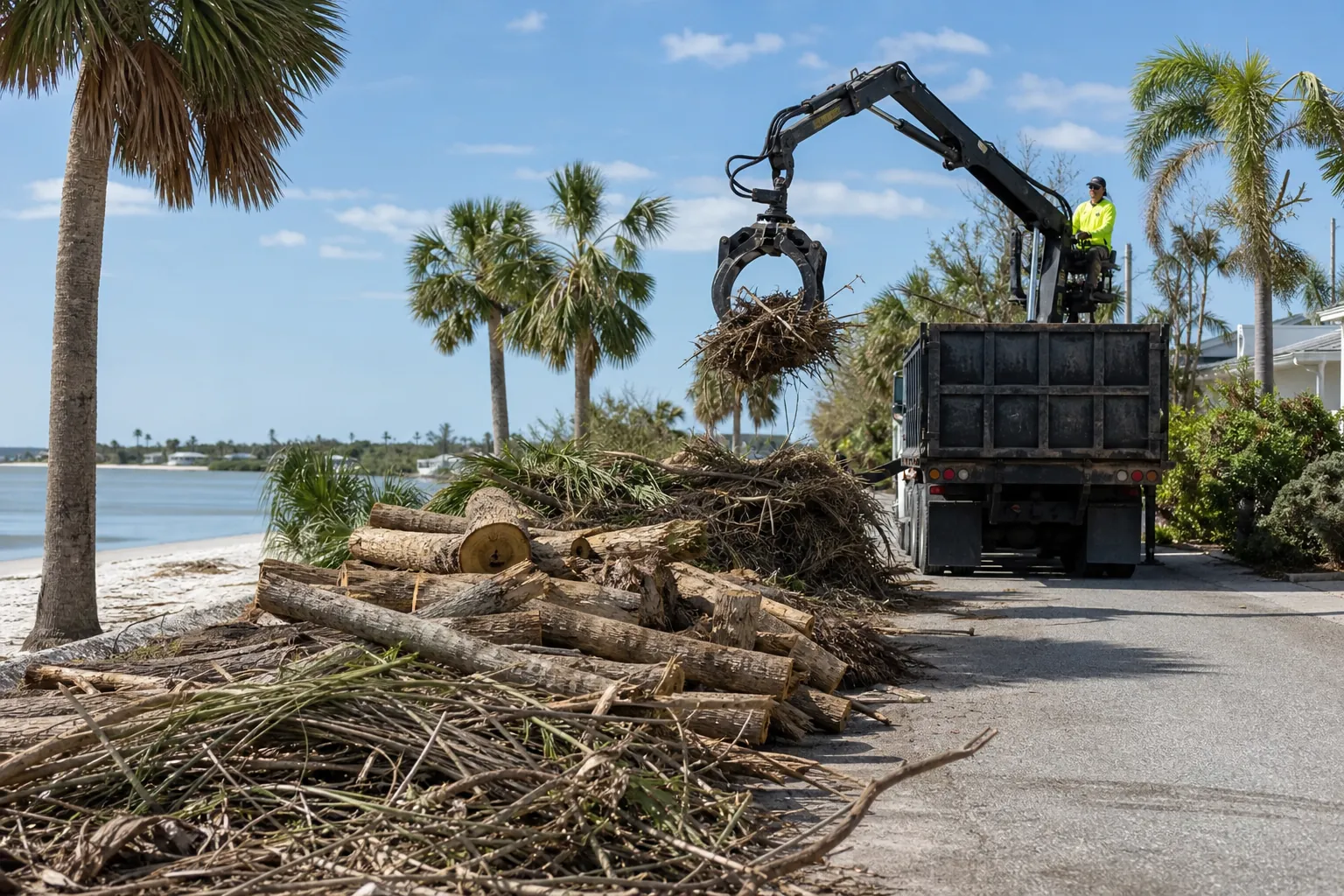
If you're asking how to stage debris for grapple truck pickup, start by confirming accepted materials and the loading spot. Keep debris types separate, leave clear access, and share photos before moving heavy items. In New Smyrna Beach, check current local guidance before placing storm debris near a road.
How should you stage debris for a grapple truck?
Stage debris only after the hauler confirms the material and proposed loading spot. The right setup depends on access, pile contents, and local rules. Start with storm debris cleanup after storms for the broader plan. Use photos for a hauling estimate to show the site before doing extra work.
A grapple truck uses a mechanical grab to lift loose debris. The operator needs room to reach the pile and load it. A pile that looks close to the street may still be hard to reach. Photos help the hauler spot questions before you move material.
First, decide which pickup you plan to use. Public storm collection and privately arranged hauling can have different rules. A local debris notice does not establish what a private hauler accepts. Likewise, a private hauling plan does not confirm that roadside placement is allowed.
Tell the hauler what created the debris and where it sits. Describe branches, fence pieces, household contents, or mixed storm waste in plain terms. Mention buried items if you know about them. Don't assume that everything damaged in one storm belongs in one load.
Ask which parts of the staging plan need approval before work starts. These may include the loading position, material separation, and access across a driveway. Get clear answers before hiring help to move a large pile. This can reduce the chance of moving the same debris twice.
Keep the plan simple enough to share with anyone helping. Mark the agreed pile area only after its use is confirmed. Make sure helpers know which materials must stay apart. If the pile changes, send an update rather than relying on the first description.
Which debris should stay in separate piles?
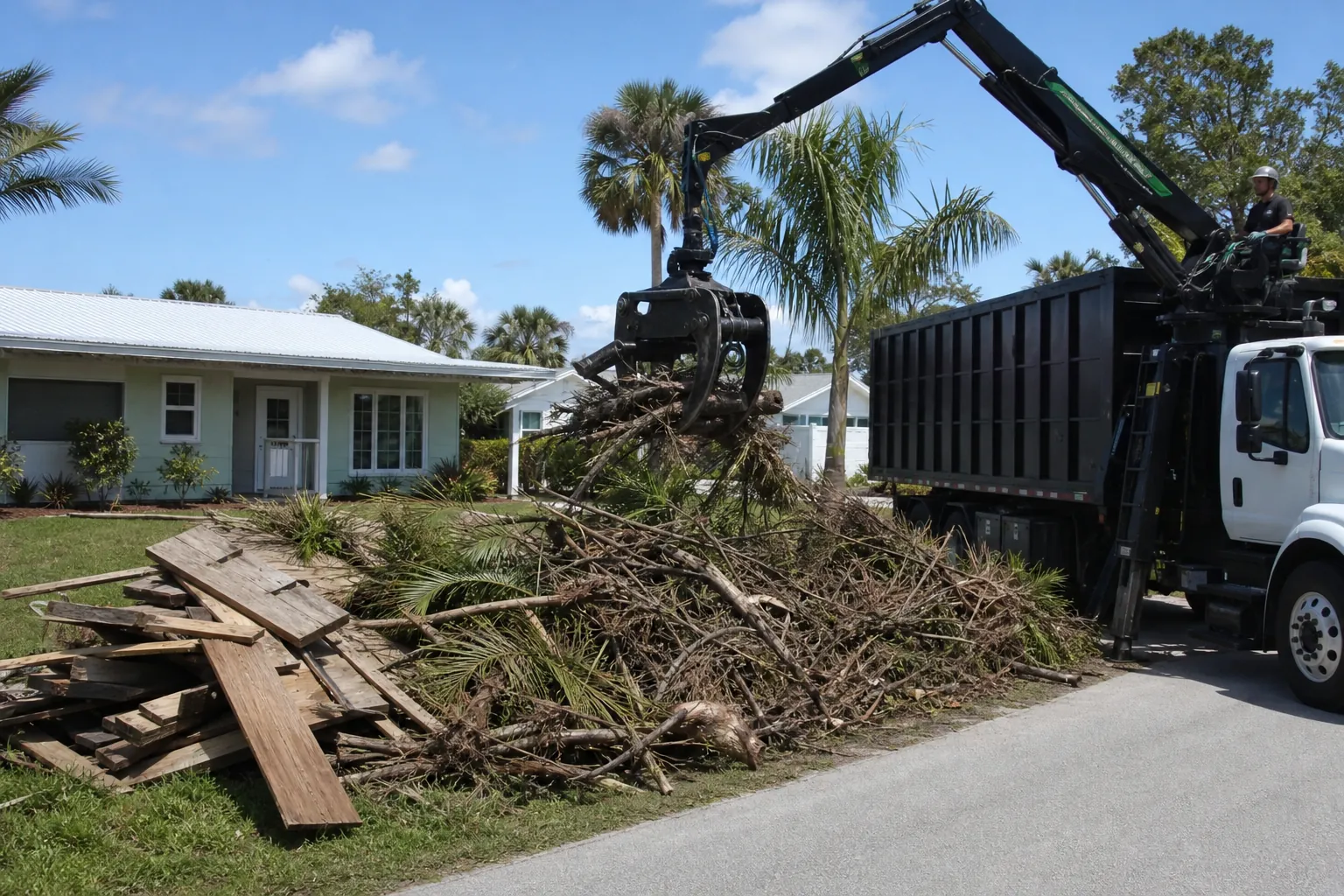
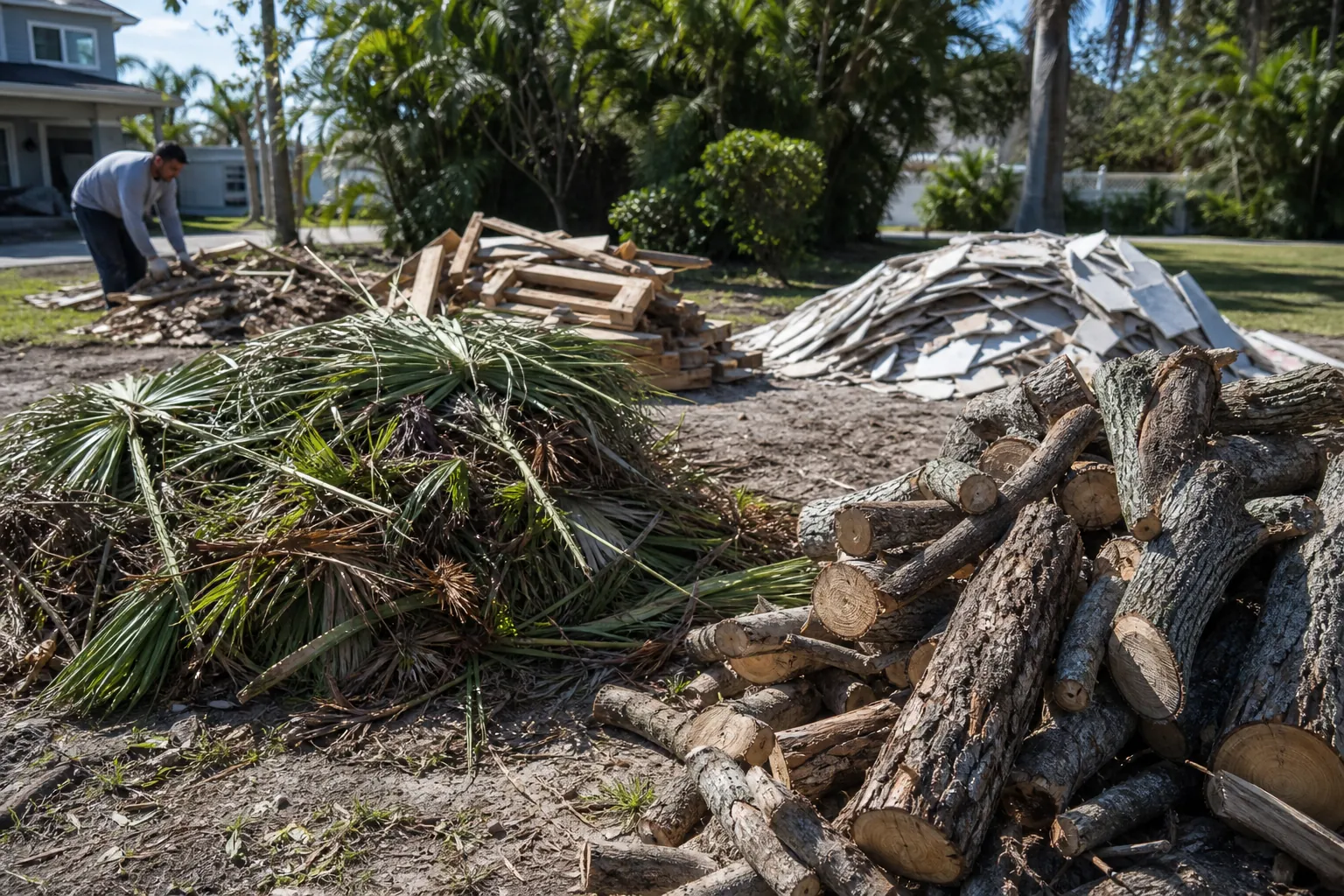
Keep distinct waste types apart until their disposal route is confirmed. Mixed piles can hide items that need separate handling. Follow Volusia County storm debris sorting for sorting context. Then use photos for a hauling estimate to show each group and ask what the hauler can accept.
FEMA's debris removal guidance describes sorting storm debris into separate groups. Those groups help explain why branches, building materials, and household waste should not become one mixed heap. Local rules still control placement and collection. Confirm the current instructions for your address before setting material out.
Begin with broad groups that you can identify without opening containers or handling unknown waste. Tell the hauler about each group, even if one looks small. A few hidden items can change how a pile must be handled. Leave uncertain items out of the main pile.
Use these descriptions when discussing the load. They describe the material rather than claim it qualifies for pickup.
- Keep branches, limbs, and other plant debris apart from building waste.
- Keep damaged furniture and household contents apart from loose yard debris.
- Identify fence boards, roofing pieces, and other repair waste as separate materials.
- Flag paint, fuel, batteries, and unknown containers for separate disposal guidance.
- Ask about appliances and electronics before placing them with other debris.
Where should the debris pile go?
Choose a proposed spot that leaves public access clear and can be reviewed by the hauler. Don't assume the curb is the approved loading point. Consult storm debris cleanup after storms for planning context. Use photos for a hauling estimate to show the pile, road, driveway, and nearby obstacles.
For a New Smyrna Beach property, check current city and county notices. Volusia County's Solid Waste and Recycling guidance covers local waste questions, but rules vary by location and material. Confirm which agency serves your address. A county notice may not settle every city placement question.
Public rights of way, private yards, and shared drives raise different concerns. Ask the appropriate local office about allowed placement near a road. Ask the property owner about use of private land. A hauler's ability to reach a pile does not establish permission to put it there.
Show the proposed spot from several angles before moving debris. Include nearby mailboxes, parked cars, trees, signs, and utility equipment. Tell the hauler about gates, narrow turns, or soft ground. The operator should assess truck access and lifting reach rather than rely on your guess.
Leave sidewalks, entrances, and drainage paths clear while planning the pile. Avoid using a traffic lane as a temporary sorting area. If space is tight, explain that constraint early. The hauler may need to discuss another loading approach or ask for more site details.
Do not invent a setback or clearance distance from an online example. Site conditions and equipment differ. Ask the hauler about loading needs and the local authority about placement rules. Both questions matter, and one answer cannot replace the other.
How should you arrange branches and bulky pieces?
Keep the pile easy to inspect, with separate material groups and no hidden waste. Ask the hauler about size limits before cutting or rearranging heavy pieces. Review grapple trucks versus storm dumpsters if the loading method is undecided. Use photos for a hauling estimate to confirm the proposed arrangement.
There is no single pile shape that suits every truck and property. Reach, material weight, ground conditions, and available space all matter. Don't build a tall mound simply to save ground space. Let the hauler review the pile before you invest more work.
Long branches can extend beyond the pile's visible center. Show their full length in photos, along with thick trunks or root balls. Describe large pieces separately from small brush. Don't assume that an item can be lifted because smaller pieces of the same material can.
Ask before bagging, bundling, or cutting material into set lengths. A rule for routine yard collection may not fit a grapple pickup. Avoid adding loose bags to conceal mixed contents. The hauler needs a clear account of what is being loaded.
Keep these points in mind while discussing the pile layout.
- Keep each material group visible rather than burying it beneath branches.
- Show large logs and root balls clearly in the site photos.
- Ask about long pieces before spending time cutting them shorter.
- Keep small loose items out of gaps within larger debris.
- Update the hauler if more waste is added after the first review.
What hazards should you flag before moving debris?
Flag anything that makes the pile unsafe to approach or hard to identify. Stop staging when damaged utilities or unknown substances are involved. Use storm debris cleanup after storms to keep the broader task in view. Consult Volusia County storm debris sorting before mixing unusual waste into a load.
Storm debris may hide sharp metal, broken glass, or unstable pieces. Don't climb into a pile to improve its appearance for photos. Describe what you can see from a clear location. Leave uncertain handling tasks for people qualified to assess them.
Stay away from downed wires and debris touching electrical equipment. Contact the utility or emergency services as appropriate. A hauling discussion cannot determine that damaged electrical equipment is safe. Do not move debris around it while waiting for a pickup plan.
Unknown liquids, leaking containers, and chemical smells need separate attention. Contact the local waste authority for disposal guidance rather than testing or mixing contents. Tell the hauler these items are present. Do not hide them in bags, furniture, or a brush pile.
The U.S. EPA's disaster debris planning guidance treats waste types and handling needs as key planning issues. That supports identifying unusual material before removal. It does not establish that a particular hauler accepts it. Confirm the right disposal route for each questionable item.
Building damage can create risks beyond the pile itself. If a wall, tree, or roof section may shift, pause the staging work. Seek an assessment from the appropriate qualified professional. A clearer roadside pile is not worth entering an unstable area to retrieve more debris.
What photos help the hauler review your setup?
Send wide views of the site and closer views of each debris group. Include the planned truck approach and anything that may limit loading. Follow photos for a hauling estimate for photo preparation. Pair that information with Volusia County storm debris sorting so the material descriptions stay clear.
Start with a view that shows the whole pile and its surroundings. Take it from a safe, clear spot. The photo should show where the debris sits relative to the road or driveway. A tight shot of branches alone gives little access context.
Next, show the pile from another side if you can do so safely. Include large pieces, mixed areas, and any items partly hidden by brush. Explain what the photo cannot show. For example, note known fence boards underneath leaves rather than leaving the hauler to guess.
Show the route a truck would use to approach the loading area. Include gates, turns, overhead obstructions, and nearby parked vehicles. Mention shared access or limits on when an entrance can be used. Photos help raise questions, but they do not replace the operator's site judgment.
Add a short written summary with the photos. State the address, material types, pile location, and known access concerns. If you provide rough dimensions, label them as estimates. Avoid climbing the pile or crossing unsafe ground to obtain a measurement.
Ask what still needs review after the photos are seen. The hauler may need another angle or an on-site assessment. Send fresh images if weather shifts the pile or more debris arrives. An old photo can leave the loading plan based on conditions that no longer exist.
What should you confirm before pickup day?
Confirm the material list, loading spot, access needs, and work scope before pickup. Make sure everyone uses the same current pile description. Review storm debris cleanup after storms for the full cleanup plan. Revisit photos for a hauling estimate if the pile or site has changed since the first discussion.
Ask what the hauling work includes and what remains your responsibility. Loading a staged pile may differ from gathering scattered waste across a yard. Do not assume sweeping, hand cleanup, or moving debris from behind a fence is included. Clarify those tasks before the visit.
Check that the agreed approach will still be open. A parked trailer, delivery, or locked gate can change access. Tell the hauler about any new limits as soon as you know. Don't move the pile to an unapproved spot just to clear the driveway.
Keep public collection plans separate from private hauling arrangements. If you have a public pickup notice, share it when relevant. Ask the local authority about any conflict over pile placement. Do not assume that one plan automatically cancels or replaces another.
Use this short check before the planned pickup.
- Confirm that the current material list matches what the hauler reviewed.
- Verify that the proposed loading spot remains allowed and accessible.
- Send updated photos if the pile size or contents have changed.
- Clarify which cleanup tasks are included and which remain separate.
- Share any new gate, parking, or access limits before arrival.
Questions about next steps? Call Daytona Grapple Trucks at (386) 481-7913 or review debris.
Frequently Asked Questions
Should I cover a staged debris pile before rain?
Ask the hauler before covering the pile. A cover can hide mixed contents and may need removal before loading. Local guidance may treat loose waste differently from large branches. If a cover is needed, discuss who will remove it and when. Don't climb onto an unstable pile to secure one.
Can I combine my debris with a neighbor's pile?
Confirm permission and the hauling scope before combining piles. Shared debris can make ownership, accepted materials, and payment duties less clear. Local placement rules may apply to each property. Tell the hauler which homes contributed material and who can approve the work. Keep unrelated waste out of the agreed pile.
Can a grapple truck pick up debris behind a fence?
That depends on the site, truck, and agreed work scope. Don't assume the equipment can reach over a fence or enter a yard. Send photos showing the fence, gate, pile, and approach. Let the operator assess access. Ask about alternatives before moving heavy debris or removing any fence sections.
How early should I move debris toward the road?
Check current placement rules and confirm the pickup plan first. Public collection notices may set timing rules that differ from private hauling arrangements. Leaving debris out early can block access or allow others to add waste. Ask the local authority about roadside timing and the hauler about staging needs.
What if someone adds trash to my staged pile?
Tell the hauler before loading and send updated photos. New material can change the disposal route or agreed scope. Don't handle unknown waste just to restore the original pile. Ask the local waste authority how to report dumped material when needed. Keep a record of what changed and when you noticed it.
Sources
- Solid Waste and Recycling, Volusia County
- Planning for Natural Disaster Debris, U.S. EPA
- Debris Removal Guidelines Help You and Your Community, FEMA
Call (386) 481-7913 to talk through next steps.