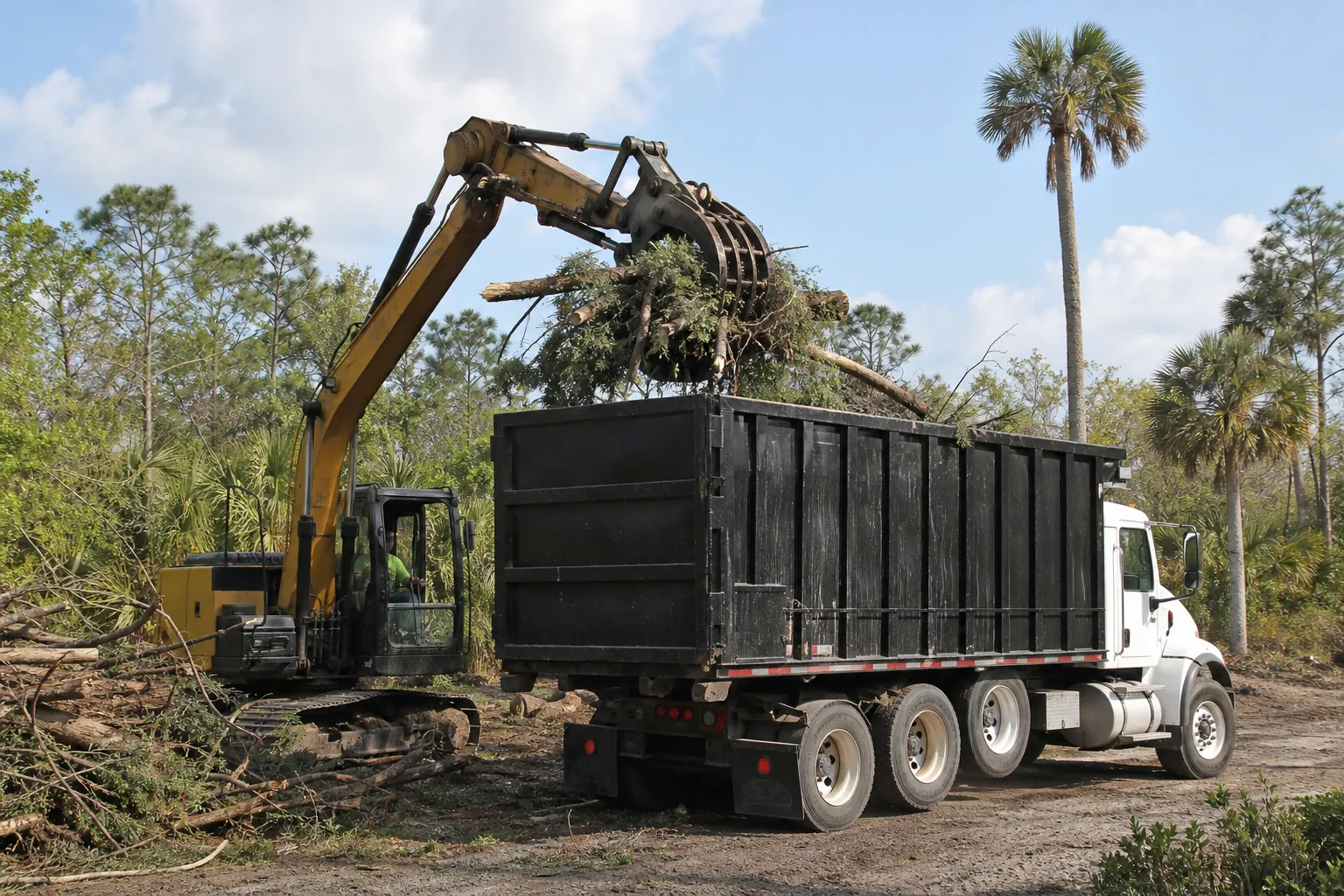
A land clearing debris haul starts with identifying the material, checking truck access, and confirming what the hauling scope includes. For an Ormond Beach property, keep brush separate from other waste. Share clear photos before moving piles, and confirm acceptance rules before loading or scheduling work.
What should land clearing debris hauling include?
A clearing debris haul needs a clear scope for material, loading, access, and final cleanup. Don't assume it includes cutting trees or digging out roots. Review photos for a hauling estimate to document the job, and use Volusia County debris sorting guide to frame questions about separate waste streams.
Start by describing what is already on the ground. A pile of loose branches differs from trees still standing. Roots buried in soil create another task. These details help define the work before anyone discusses a pickup plan.
Hauling and land clearing are separate tasks, even when they share a project. Ask who cuts material, who moves it, and who loads it. Confirm who handles stumps, dirt, and any waste left outside the agreed pile.
Set a clear boundary for the work area. Photos can show where the pile starts and ends. A simple site sketch can mark scattered debris, gates, and nearby structures. Avoid descriptions such as 'everything in the back.'
Ask what condition the site should be in afterward. Bulk removal may leave small twigs, loose bark, or disturbed soil. Fine raking, grading, and lawn repair need their own scope if you want those tasks considered.
These points are questions for the hauler, not a statement of services offered by Daytona Grapple Trucks. Confirm the actual scope before booking. A written description helps both sides spot gaps while changes are still easy to discuss.
- Describe each debris type and note where it sits on the property.
- Identify tasks that must happen before the hauling work can begin.
- Confirm which piles and cleanup tasks belong in the written scope.
- Name the person who can approve changes during the work.
Which materials need separate review before pickup?
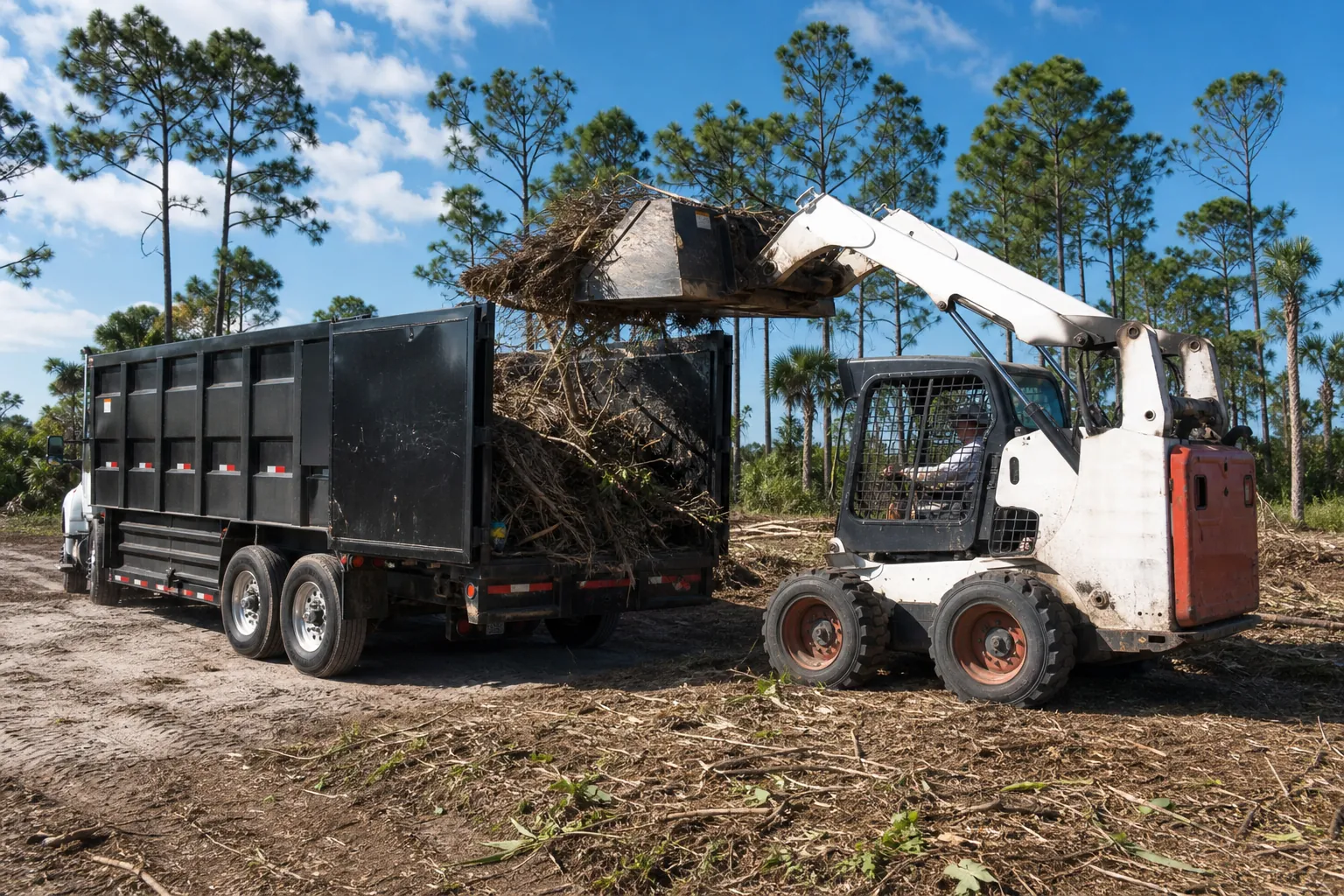
Describe brush, logs, stumps, soil, and mixed waste as separate materials. A single pile can hide items that need different handling. Use Volusia County debris sorting guide for sorting questions and photos for a hauling estimate to show the pile's contents before asking what a hauler will accept.
Loose limbs and leafy brush should be described apart from heavy wood. Give rough dimensions for large logs and stumps. Say if roots still hold soil. Don't assume all plant waste can be loaded or taken to the same place.
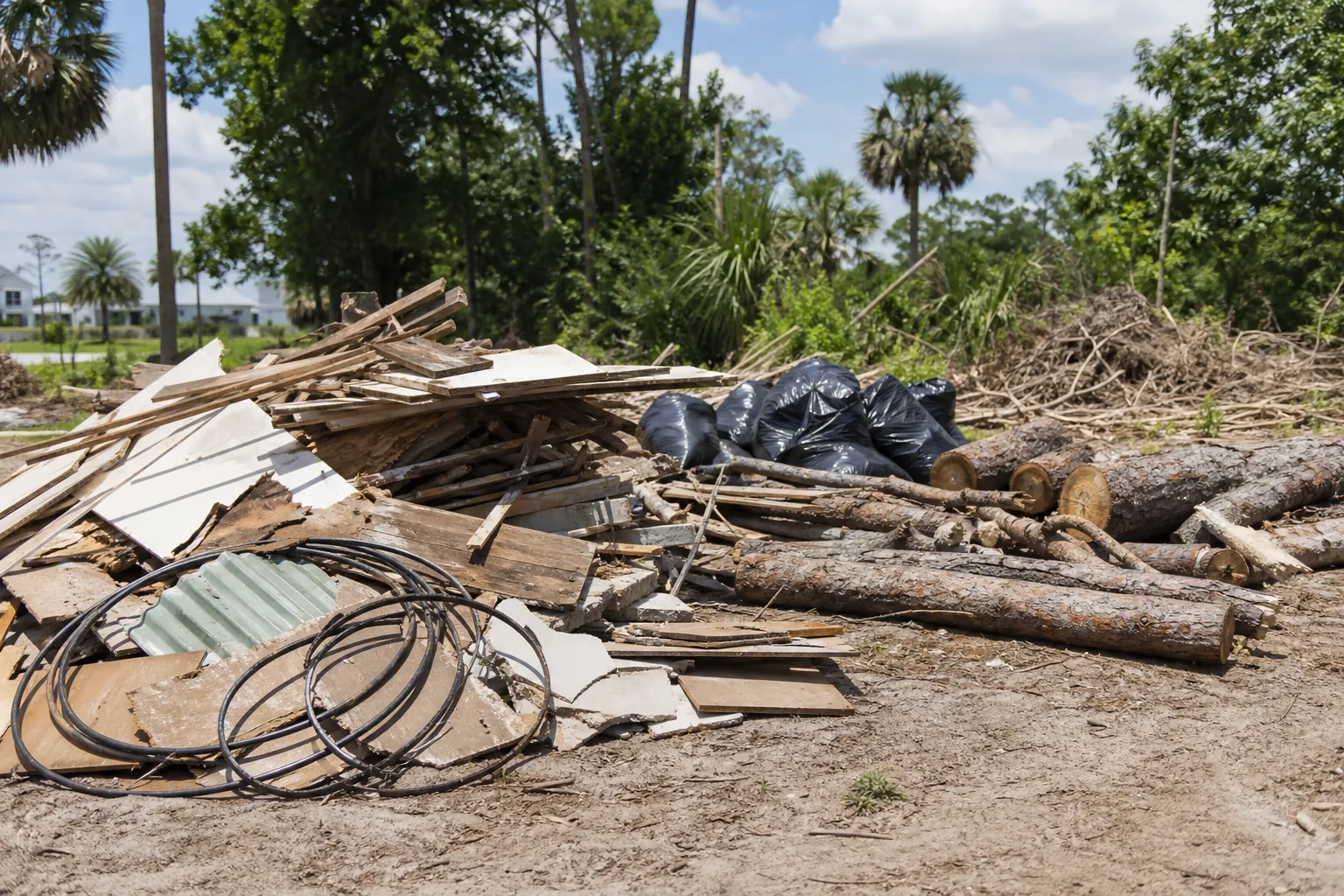
Fence wire, posts, plastic, and scrap metal can become tangled in brush. Tell the hauler about known mixed material before pickup. Don't hide it under branches. Ask how it should be handled without entering or climbing the pile.
Keep household waste and building waste out of a vegetation pile. Old boards may look like wood debris, yet they need separate review. Describe painted or treated wood clearly. The receiving site decides what it can accept under its rules.
- Volusia County's Solid Waste and Recycling guidance is a starting point for local waste questions.
- If you find an unknown container, sharp object, or suspect waste, stop handling it.
- Ask where each accepted material will go and who checks acceptance.
Collection rules vary by material, location, and date. Check the guidance that applies to the property rather than copying a neighbor's past pickup plan.
Seek direction from the proper local authority or a qualified specialist. A debris hauling request should flag the concern without guessing what the item contains.
County guidance does not establish what a private hauler offers. Keep those two questions separate so the plan reflects both the hauler's scope and the receiving site's rules.
How should you check access before moving the pile?
Check the route from the street to the proposed loading area before shifting debris. Show gates, turns, surfaces, and nearby objects in your photos. Photos for a hauling estimate can guide that record, while grapple truck and dumpster comparison helps frame questions about space for equipment and loading. Review photos for a hauling estimate for the related planning details.
A wide entrance does not prove a truck can reach the pile. Turns, slopes, soft ground, and narrow sections can change the plan. Describe the whole route. Ask the operator to review access rather than judging truck clearance yourself.
Include the area above and beside the route in your photos. Tree limbs, wires, roof edges, and signs may matter. Don't suggest a working distance based on a photo. The operator must assess the space for the proposed equipment.
Flag known septic areas, irrigation lines, buried utilities, and weak pavement. Mention recent rain or soft ground when relevant. A surface that supports a car may not suit hauling equipment. Ask how ground conditions could affect access or placement.
Don't move debris onto a sidewalk, road edge, drainage feature, or nearby property without checking permission and local rules. The closest loading point may create other problems. Keep public access and water flow in mind when discussing a pile location.
If access crosses someone else's land, get permission before planning that route. Tell the hauler about shared driveways and gates. Agree on who will open access and keep the route clear when the work takes place.
- Photograph the full approach from the street to the debris pile.
- Measure gate openings from a safe position and label each measurement.
- Point out known soft ground, buried systems, and weak surface areas.
- Ask the operator to confirm access before you relocate heavy debris.
What photos and measurements help define the job?
Send wide views, closer material views, and access photos taken from safe ground. Include rough pile dimensions and explain what the camera cannot show. Start with photos for a hauling estimate, then consult Volusia County debris sorting guide to identify mixed materials that need a separate question before pickup.
Take one wide photo that shows the whole pile and its setting. Add views from more than one side when safe. This helps show the pile's shape. A single close view can make a small pile look much larger.
Record rough length, width, and height without climbing the debris. Label the units and say that the figures are estimates. Irregular piles contain gaps and dense areas. Those rough measurements do not establish the final number of truck loads.
Show large pieces apart from the broad pile view. Include visible stumps, root balls, logs, and soil clumps. State if more material is hidden behind the pile. Fresh photos are more useful than images taken before the clearing work ended.
- Photograph the access route in sequence so each view has context.
- More cutting, rain, or a second crew could change the pile or route.
- Photos support a discussion; they do not replace every site check.
Start at the entrance and move toward the proposed loading spot. Keep house numbers, people, and unrelated private details out of shared images when they are not needed.
Explain what may change before pickup. Tell the hauler when work is still underway. An early estimate should be tied to the conditions it actually describes.
Ask what remains uncertain after the images are reviewed. The useful next step may be more measurements or an on-site review, depending on the job and the hauler's process.
How does planned clearing differ from storm debris?
Planned clearing and storm cleanup can produce similar piles, but their removal routes may differ. Never assume public storm pickup covers private clearing waste. Read Florida storm debris cleanup planning for storm context and Volusia County debris sorting guide for material questions, then verify current local directions for your property.
Tell the hauler why the debris is there. Routine lot work, tree trimming, and storm damage are different project descriptions. A pile's appearance does not explain its origin. That detail can matter when checking collection programs and disposal rules.
The U.S. EPA's Planning for Natural Disaster Debris addresses general disaster debris planning. It does not establish local pickup availability. Use it as background for planning after a storm, not as proof that a specific property qualifies for collection.
For an Ormond Beach property, check current directions from the responsible local authority. Confirm the material type, placement rules, and dates that apply. Don't rely on an old notice or a nearby pile as evidence of current collection rules.
- Keep private hauling arrangements distinct from any public collection plan.
- If work includes storm-damaged trees still standing, removal of the resulting pile is a separate scope question.
- Keep photos and a plain record of the work for your own files.
Ask who is responsible for each pile and each removal step. Avoid moving material to a curb based on an assumed future pickup. Confirm placement before the clearing crew leaves.
Tell the hauling contact what remains to be cut. Ask the qualified tree professional to address tree work and site hazards.
If payment or reimbursement depends on a separate program, ask that program what records it needs. Do not treat a hauling estimate as proof of eligibility.
How should clearing and hauling crews coordinate?
Agree on the pile location, material groups, and handoff point before clearing starts. That can reduce avoidable moves without promising a faster job. Use photos for a hauling estimate to share the proposed setup and grapple truck and dumpster comparison to discuss loading space with the people doing the work.
Choose one person to relay changes between the property owner and crews. Conflicting directions can leave debris in the wrong place. Share the agreed scope with that contact. Make clear who can approve added work or a changed pile location.
Ask the hauling operator about preferred staging before the clearing crew builds a pile. Don't prescribe a height, reach, or loading distance yourself. Equipment and site conditions vary. An agreed staging plan should reflect the actual setup being considered.
Keep the agreed access route free of parked vehicles and stored materials. Tell each crew if the route changes. A new fence panel, delivery, or fresh soil pile can affect a plan made from earlier photos.
Set a clear handoff point in the work sequence. For example, the clearing crew may need to finish moving agreed debris before hauling begins. Confirm that sequence with both parties. Don't assume they have spoken to each other.
If the pile grows beyond the reviewed scope, pause and share new details. Extra material can change loading, acceptance, or access needs. Get the revised scope in writing. This keeps the final plan tied to the work now present.
- Share the site photos and proposed pile location with each crew.
- Confirm separate material groups before the clearing crew starts stacking debris.
- Agree on the handoff point and the person who approves changes.
- Report new debris or access changes before the hauling work begins.
What should you confirm before approving the haul?
Approve a written scope that identifies the debris, loading area, access assumptions, and cleanup limits. Resolve open questions before work begins. Recheck photos for a hauling estimate against current site conditions, and use Volusia County debris sorting guide to prompt any final questions about material separation and acceptance.
Read the scope as though someone new must follow it. Does it identify every included pile? Does it distinguish brush from stumps and mixed waste? Clear terms are more useful than a broad phrase such as 'clean up the lot.'
Check who is responsible for moving debris within the property. Loading from one agreed pile differs from gathering scattered material. Make sure the description matches the job. Ask how the crew will handle items outside that boundary.
Confirm any assumptions about gates, parked vehicles, ground conditions, and owner access. State who will be present or reachable. If access depends on a key or permission, settle that detail before the planned work rather than during arrival.
Ask how changes will be handled if hidden material appears. The response may depend on what is found. There should be a clear pause and approval process. Don't leave decisions about added work to an unspoken assumption.
- Ask about large debris, small scraps, and any separate surface work.
- Before hiring Daytona Grapple Trucks, confirm the requested work, property location, and current terms directly.
- Call Daytona Grapple Trucks at (386) 481-7913 or review debris.
Review the expected finish in plain terms. If you need a cleaner finish than bulk pickup, discuss that need directly instead of assuming the phrase 'debris removal' covers it.
This guide does not establish acceptance, equipment access, or scheduling. Use the questions above to seek a scope that fits the actual site.
Questions about next steps?
Frequently Asked Questions
Does hiring a hauler replace permission to clear land?
No. Hauling debris and getting permission for clearing are separate matters. Before cutting or disturbing land, ask the appropriate local authority about rules for the property and planned work. A hauling estimate does not establish approval. If the site has protected features or unclear boundaries, seek qualified guidance before proceeding.
Can I estimate truck loads from the size of the pile?
Pile size can help describe the job, but it won't establish an exact load count. Loose brush has gaps, while logs and soil can add weight. Truck setup and accepted materials matter too. Share rough measurements and photos, then ask the hauler which details remain uncertain.
Should I cover the debris pile before pickup?
- Ask the hauler before covering or changing the pile.
- Confirm the boundary and ownership before authorizing removal.
- Stop disturbing that part of the pile and keep your distance.
A cover may hide materials that need review, and loose covering can create another handling issue. Don't climb the pile to secure anything. Explain concerns about weather or loose waste so the operator can discuss a suitable plan for that site.
Tell the hauler if branches cross a line or access would use neighboring land. Get needed permission first. If the boundary is disputed or unclear, consult the appropriate qualified professional rather than asking the hauling crew to decide where it lies.
Tell the hauler what you observed without reaching into the debris. Ask the appropriate wildlife authority or a qualified wildlife professional for guidance. Pickup plans may need review before anyone resumes work around the affected area.
Sources
- Solid Waste and Recycling, Volusia County
- Planning for Natural Disaster Debris, U.S. EPA
Call (386) 481-7913 to talk through next steps.