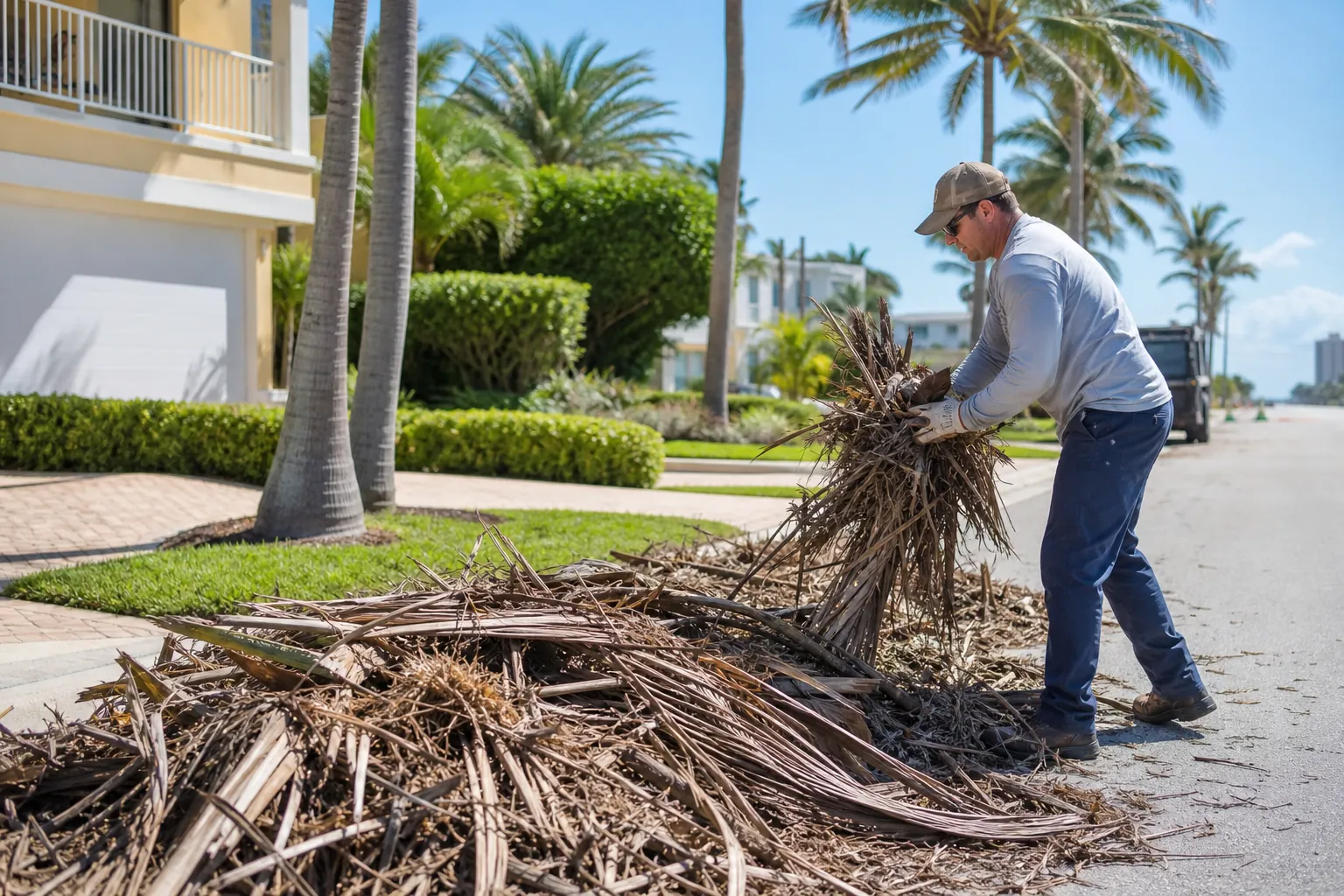
Palm frond debris removal daytona starts with sorting the fronds, checking local disposal rules, and planning safe access to the pile. In Daytona Beach, what can be collected may depend on the debris type and local service rules. Confirm the available hauling service and pickup details before you move or bundle material.
How Do You Plan Palm Frond Debris Removal in Daytona Beach?
Plan palm frond debris removal in Daytona Beach by first identifying the material, estimating the pile, and checking the route to it. Local rules and hauling options can vary, so confirm those details before staging debris. For broader storm planning, read storm debris cleanup guidance and Volusia County debris sorting advice.
Start by deciding what is in the pile. Palm fronds may be mixed with branches, leaves, or other storm debris. Keep unlike materials apart until you know how they should be handled. This makes it easier to describe the job and check the right local rules.
Next, look at the pile as a whole. Note its rough length, width, and height. A clear description can help a hauling provider understand the amount and type of material. Do not assume that a photo or estimate means a pickup has been booked.
Check how a truck or other collection method could reach the debris. Consider gates, parked cars, low branches, soft ground, and overhead wires. Do not move a pile into a road or block a sidewalk. Ask the relevant local authority about public space rules if placement is unclear.
Daytona Beach is the target area for this guide, but the site facts do not confirm a staffed office or a specific service for every address. Ask directly whether the location and debris type can be served. Confirm any limits, access needs, and scheduling steps before staging material.
- Separate palm fronds from other debris when the material types are easy to tell apart.
- Estimate the pile size and note whether it is loose, bundled, or mixed.
- Check access from the street to the pile before moving heavy or sharp material.
- Confirm local disposal rules and service details before arranging a pickup.
What Palm Debris Should You Separate Before Pickup?
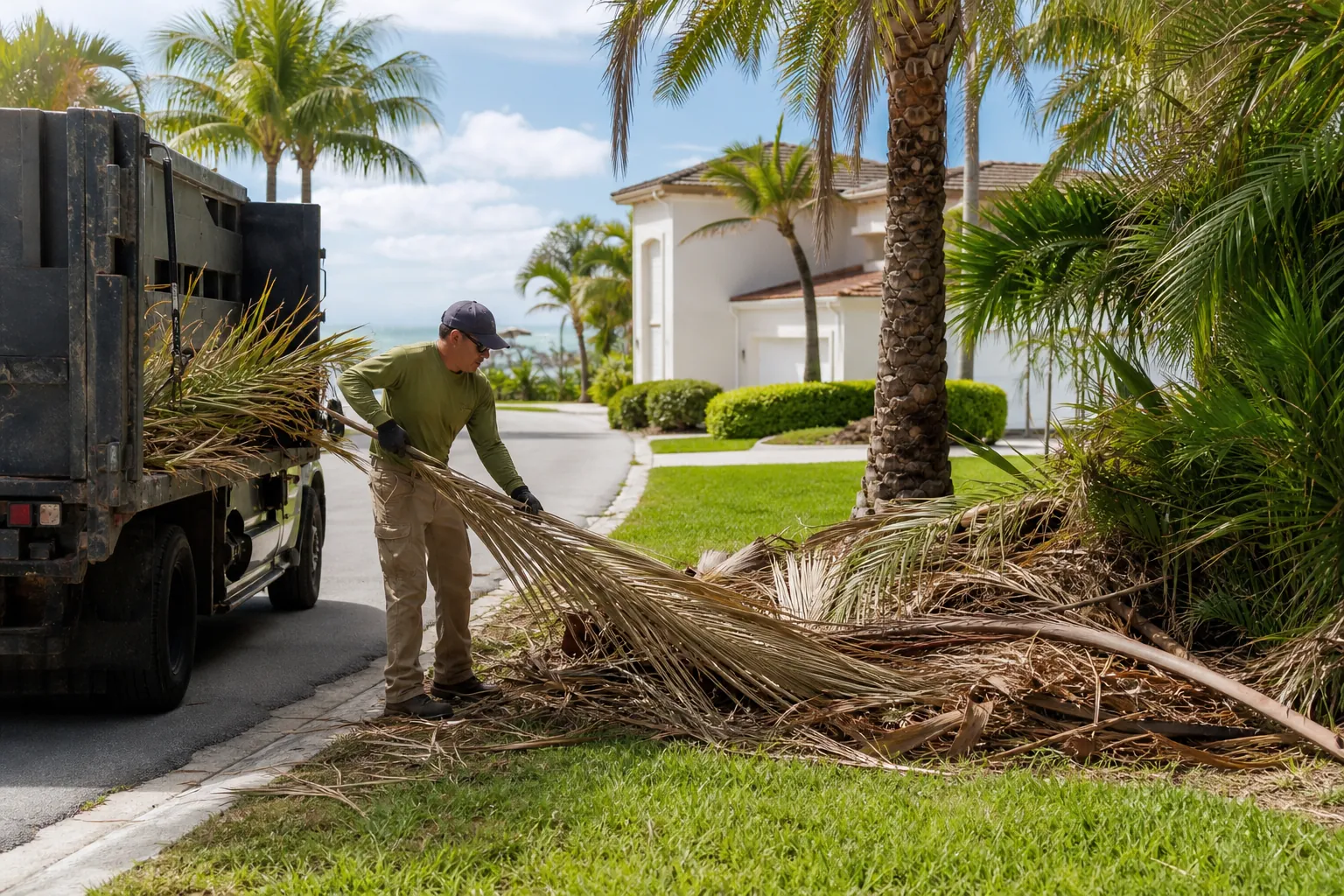
Separate palm fronds from other waste when you can do so safely, then ask how each material should be prepared. Rules can differ by material, location, and date. Use the Volusia debris sorting guide for a planning overview and tree debris removal tips for related yard material.
A palm debris pile may contain long fronds, leaf bases, seed clusters, and pieces of trunk. It may also include branches, leaves, or household waste from cleanup. Do not assume these items all follow the same disposal path. Check with the relevant local waste authority or hauling provider.
Keep household trash and building waste out of a green debris pile unless the collection rules say they can be combined. Mixed material can make a pile harder to assess. It can also lead to a different handling plan than expected.
Volusia County provides waste and recycling guidance, but its rules can vary by material, location, and date. Check current county information for the specific material and address. If the pile is on private property, ask the provider how it must be sorted before collection.
For storm cleanup, pay attention to items that may need special handling. Do not hide sharp, heavy, or unfamiliar items beneath loose fronds. Ask the local authority how to handle items outside ordinary yard debris. Keep children and pets away while you sort.
Keep the pile description specific
When you ask about service, name each material in plain terms. Say whether the pile contains only fronds or also branches, trunk pieces, or other waste. If you are unsure what an item is, describe it rather than guessing.
Share whether the debris came from routine yard work or storm cleanup. The source does not determine the rules by itself, but it can help explain the pile and the timing. Ask what information the provider needs before you make a trip or move material.
Ask before bundling or cutting fronds
Some collection plans may call for loose material, while others may ask for a certain preparation. Do not cut or bundle fronds based on a general assumption. Confirm the requested size and preparation with the provider or local waste authority first.
Palm material can be awkward to handle, especially when it is wet or tangled. Use care and avoid lifting a load that feels too heavy. If the task seems unsafe, leave it in place and ask for qualified help.
How Can You Prepare a Palm Frond Pile for Hauling?
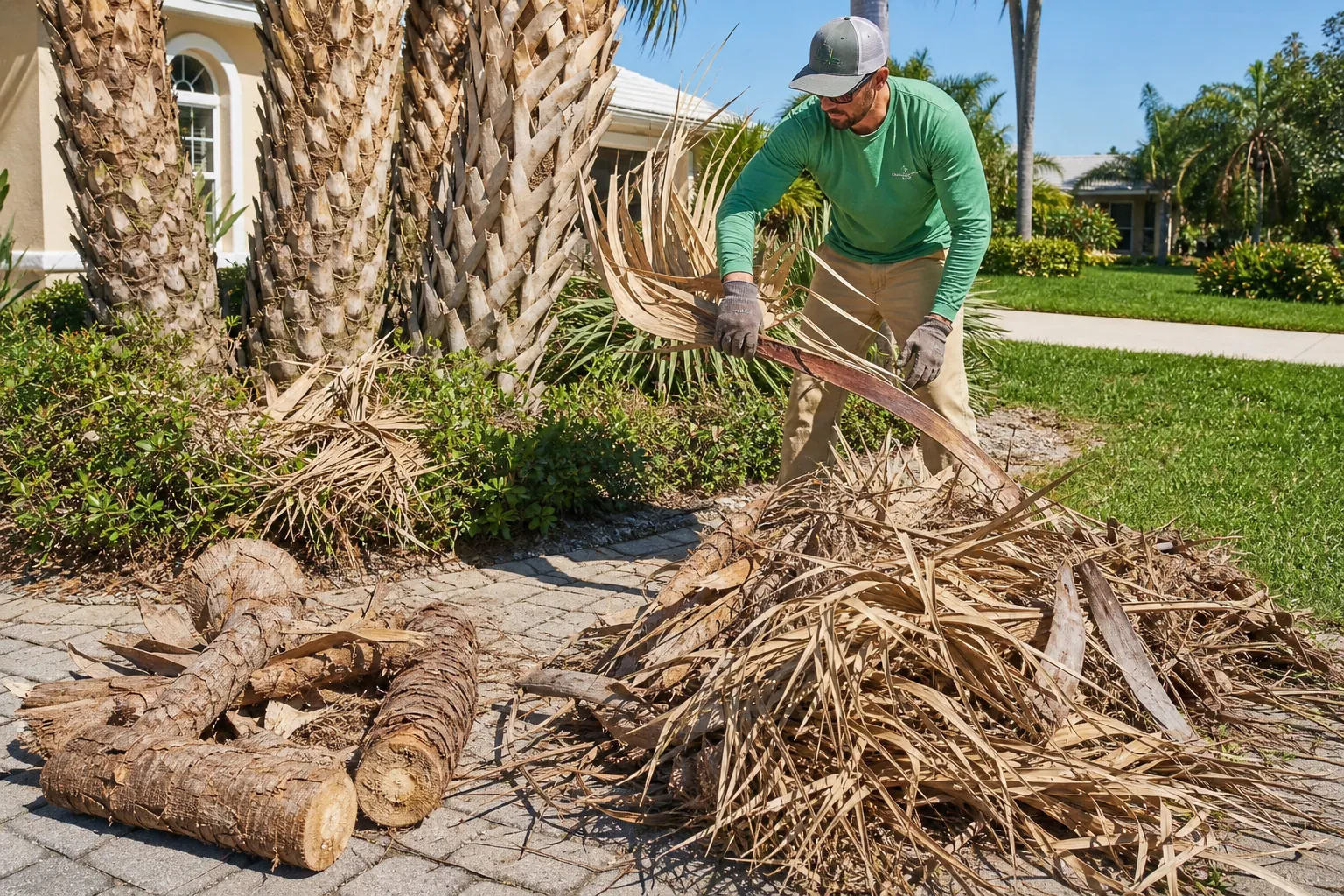
Prepare a palm frond pile by making its edges visible, keeping it clear of access paths, and following the provider's instructions. Do not block public routes or place debris where it creates a hazard. Compare grapple truck and dumpster options and review photos for a hauling estimate before choosing next steps.
A tidy, visible pile is easier to describe than scattered debris. If you can safely gather loose fronds, keep them in one area that does not block a driveway, gate, sidewalk, or street. Avoid placing material beneath low wires or where vehicles need to pass.
Do not lift or drag more than you can manage. Fronds may have sharp edges, and hidden branches can catch clothing or skin. Wear suitable protective gear for the task, and stop if the pile is unstable or hard to move.
Ask the provider what access it needs and whether the pile must be in a particular place. Do not assume that every truck can reach every yard or narrow lane. Share any gates, slopes, soft ground, or overhead obstacles when you discuss the job.
If you are sending photos for an estimate, take clear views of the full pile and the access route. Include enough context to show nearby barriers. Avoid standing in a road or climbing on a pile to get a better view. The provider can tell you if more information is needed.
- Keep the pile away from driveways, walkways, and other routes people need to use.
- Leave room around gates and access points instead of stacking fronds against them.
- Point out low branches, wires, soft ground, or other obstacles when asking about access.
- Take photos from a safe place and show both the pile and its route.
Should You Use a Grapple Truck or Another Debris Option?
The right debris option depends on pile size, material, access, and the collection rules for your address. A grapple truck and a dumpster work in different ways, but the site facts do not confirm current service details. Review grapple truck versus dumpster factors and storm debris cleanup planning before you decide.
A grapple truck may be considered for a pile that can be reached and picked up with the equipment available. A dumpster may suit a different cleanup plan, such as debris that people can load over time. These are general distinctions, not a statement that either option is offered for every Daytona Beach address.
Ask how the provider handles palm fronds and whether other material can be included. Find out what access is needed, how the pile should be placed, and what could change the plan. Get clear answers before moving debris to a new location.
Do not choose by the name of a vehicle alone. The pickup method must fit the debris, site, and local rules. A narrow gate or overhead barrier may affect access. A mixed pile may also need sorting before collection.
If you are weighing choices, compare the practical steps rather than guessing at performance. Ask who places the debris, who loads it, what items are accepted, and how the site must be left. Confirm any cost or timing details directly, since none are provided here.
| Question | Grapple truck | Dumpster |
|---|---|---|
| Who loads debris? | Ask the provider how loading works. | Ask who is expected to load it. |
| What access is needed? | Confirm truck and equipment access. | Confirm delivery and placement access. |
| What material is accepted? | Check rules for fronds and mixed debris. | Check accepted material and sorting rules. |
| What preparation is needed? | Ask where and how to stage the pile. | Ask how to load and arrange material. |
Questions that clarify the choice
Ask if the provider can handle the specific frond pile at your address. Describe the material, pile size, and access route. Then ask whether you need to prepare or move anything before a visit.
Confirm how the provider will tell you about limits or changes. A clear answer helps you avoid moving a pile twice. If the answer is unclear, ask for the requirements in writing before proceeding.
What Local Rules Should You Check Before Removing Debris?
Check current local waste guidance before placing or moving palm fronds, since collection rules can vary by material, place, and date. County information can help with sorting questions, while the provider can explain its own service limits. See Volusia County sorting guidance and Florida construction debris rules.
Start with the authority responsible for the address and the type of waste. Volusia County's solid waste and recycling information is a useful source for county guidance. It does not establish that a specific pickup is available at a particular property.
If debris came from storm damage, check whether local instructions have changed. Storm response plans can differ from routine yard waste rules. Follow current notices from the relevant local authority rather than relying on an old post or a neighbor's experience.
Keep private hauling arrangements separate from public collection rules. A provider may have its own limits for material, access, and preparation. Those limits do not replace local rules. Ask both parties when you need to know what can be placed at the curb or collected privately.
Construction debris is different from palm fronds. If a pile includes lumber, roofing, or other building material, describe it clearly and check the rules that apply. Do not assume a tree debris guide covers construction waste. The linked construction topic offers a separate starting point.
How Do You Get a Clear Hauling Estimate?
A clear hauling estimate starts with a correct description of the debris, pile size, and access. Ask what information is needed and what the estimate includes. Use a photo checklist for estimates and homeowner tree debris tips to prepare details without assuming a price or service outcome.
Describe the pile in everyday terms. Say that it contains palm fronds and name any other material. Give a rough sense of its dimensions, and say whether it is loose or bundled. If you do not know the amount, say so instead of making a precise guess.
Explain where the pile sits and how a vehicle could reach it. Mention gates, fences, steep areas, overhead obstacles, or soft ground. A photo can help show these details, but it cannot replace answers to questions the provider asks.
Ask whether the estimate covers the material and access you described. Find out what might change the estimate and how the provider will tell you. Confirm any fee, scheduling, preparation, or cancellation terms directly before you agree to work.
The site facts identify the business as a grapple truck debris hauling publisher, but list no specific services or terms. Do not read that description as proof that a particular job is available. Confirm the service, address, material, and next steps with the business before relying on an estimate.
- Name the materials in the pile and identify anything you cannot classify.
- Share rough pile dimensions and explain whether the fronds are loose or bundled.
- Describe the route, barriers, and ground conditions that could affect access.
- Ask what the estimate covers and what could change the plan.
Useful photos and details
Take one photo that shows the full pile and one that shows the route from the street, if you can do so safely. Keep the images clear and avoid blocking traffic. You can add a close view if the material mix is hard to see.
Pair photos with a short note about the address area, debris type, and any access limits. Do not include private details that are not needed. Ask how the information will be used and whether the provider needs anything else.
What Is a Safe Next Step After a Storm?
After a storm, first check official local updates and keep people away from unstable or hazardous debris. Do not handle downed wires or unsafe structures. Use Florida storm debris cleanup steps for broad planning and local debris sorting advice to guide questions about disposal.
A storm can leave fronds mixed with broken branches and other debris. Look from a safe place before you approach the pile. If you see wires, a damaged structure, or another urgent hazard, keep clear and contact the proper local authority or emergency service.
Do not climb onto a debris pile or cut material near wires. Avoid moving heavy, sharp, or unstable pieces without suitable help. General guidance from FEMA and the U.S. EPA can help with disaster debris planning, but local directions still matter.
Once the area is safe, make a short list of what needs attention. Note what can be left in place, what must be sorted, and what needs a professional or local authority. Avoid rushing to put debris at the curb before checking current rules.
For a large or mixed pile, ask the responsible authority how to proceed. Explain the material and location, and follow any current public instructions. A private hauling provider can answer questions about its own service, but cannot speak for every local collection program.
Questions about next steps? Call Daytona Grapple Trucks at (386) 481-7913 or review debris.
Frequently Asked Questions
Can palm fronds go out with regular yard waste?
That depends on the rules for the address, material, and collection date. Check current Volusia County guidance or ask the local authority responsible for your area. If you are arranging private hauling, ask the provider whether it accepts loose or bundled fronds and whether other debris must be separated.
Should I cut palm fronds before hauling?
Do not cut them just because you think a smaller pile will be easier to collect. Ask the provider or local waste authority how fronds should be prepared. Cutting can create sharp edges and may add risk, so avoid the task if you lack suitable tools or feel unsure.
What should I do if palm fronds are mixed with storm debris?
Keep the pile undisturbed until you can identify the materials safely. Do not hide sharp, heavy, or unfamiliar items beneath loose fronds. Check current local storm instructions, then ask how each material should be sorted. If the pile has hazards, keep people away and contact the proper authority.
Does an estimate mean a hauling pickup is confirmed?
No. An estimate is not the same as a confirmed booking. Ask the provider to confirm service at your address, accepted materials, access needs, timing, and any terms that apply. Wait for a clear confirmation before moving the pile or making plans that depend on collection.
Sources
- Solid Waste and Recycling, Volusia County
- Planning for Natural Disaster Debris, U.S. EPA
- Debris Removal Guidelines Help You and Your Community, FEMA
Call (386) 481-7913 to talk through next steps.