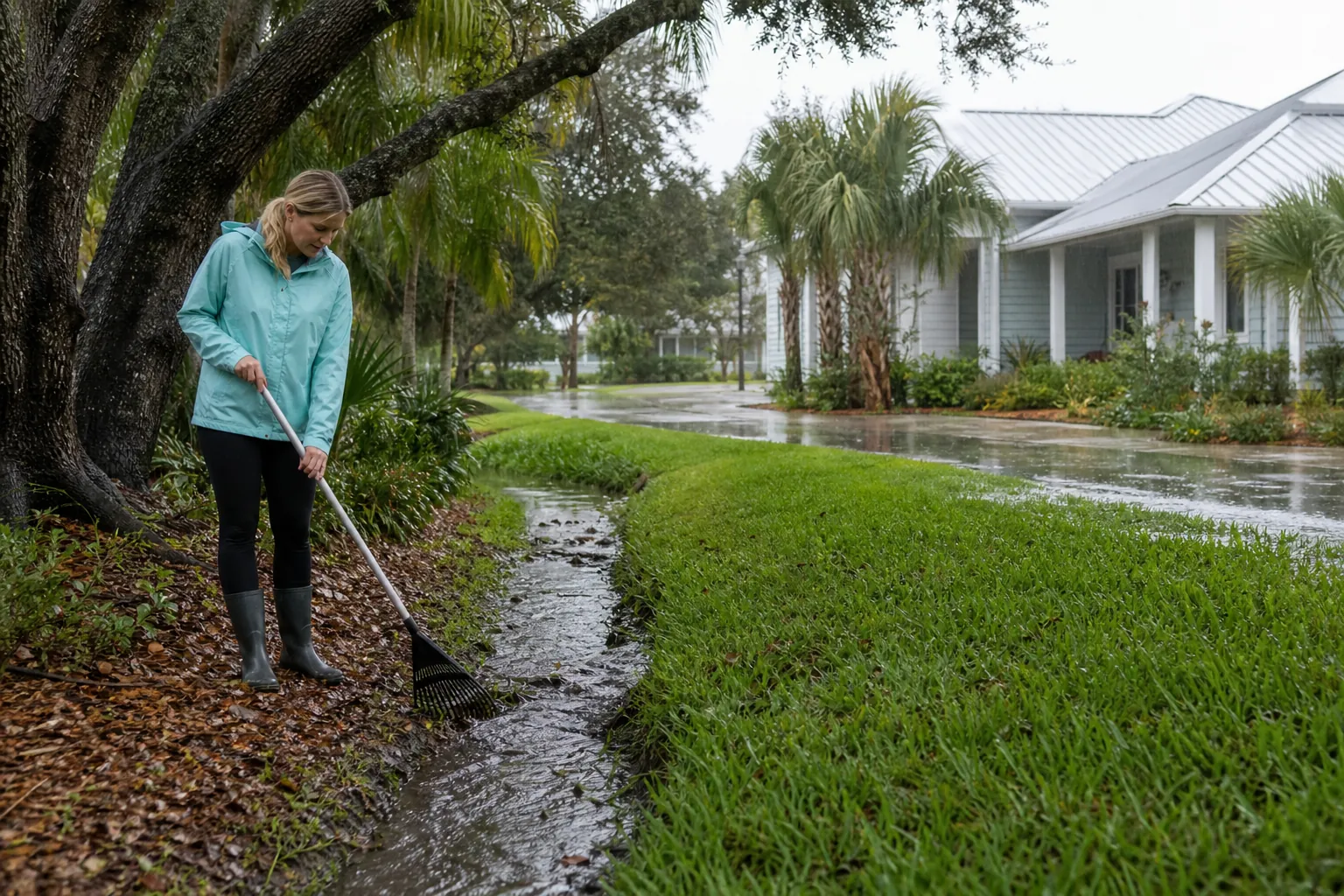
To protect yard drainage paths in New Smyrna Beach, keep leaves, palm fronds, branches, and landscaping debris out of the low areas that carry runoff. Stage material for hauling on a suitable pickup area that does not block a swale, driveway drain, culvert opening, or street inlet. Clearing the route water already uses is usually more useful than simply making the yard look tidy.
For homeowners and property managers, the challenge is often where to put debris while waiting for removal. A pile that seems convenient on a dry afternoon can become a barrier during heavy rain. Daytona Grapple Trucks can help with debris hauling; drainage repairs, grading changes, and buried-pipe problems require a different assessment.
This guide focuses on debris placement and drainage protection, not a current storm forecast. For broader preparation beyond drainage, see our hurricane-season yard readiness guide for Northeast and Central Florida.
Where does water need to move through your yard?
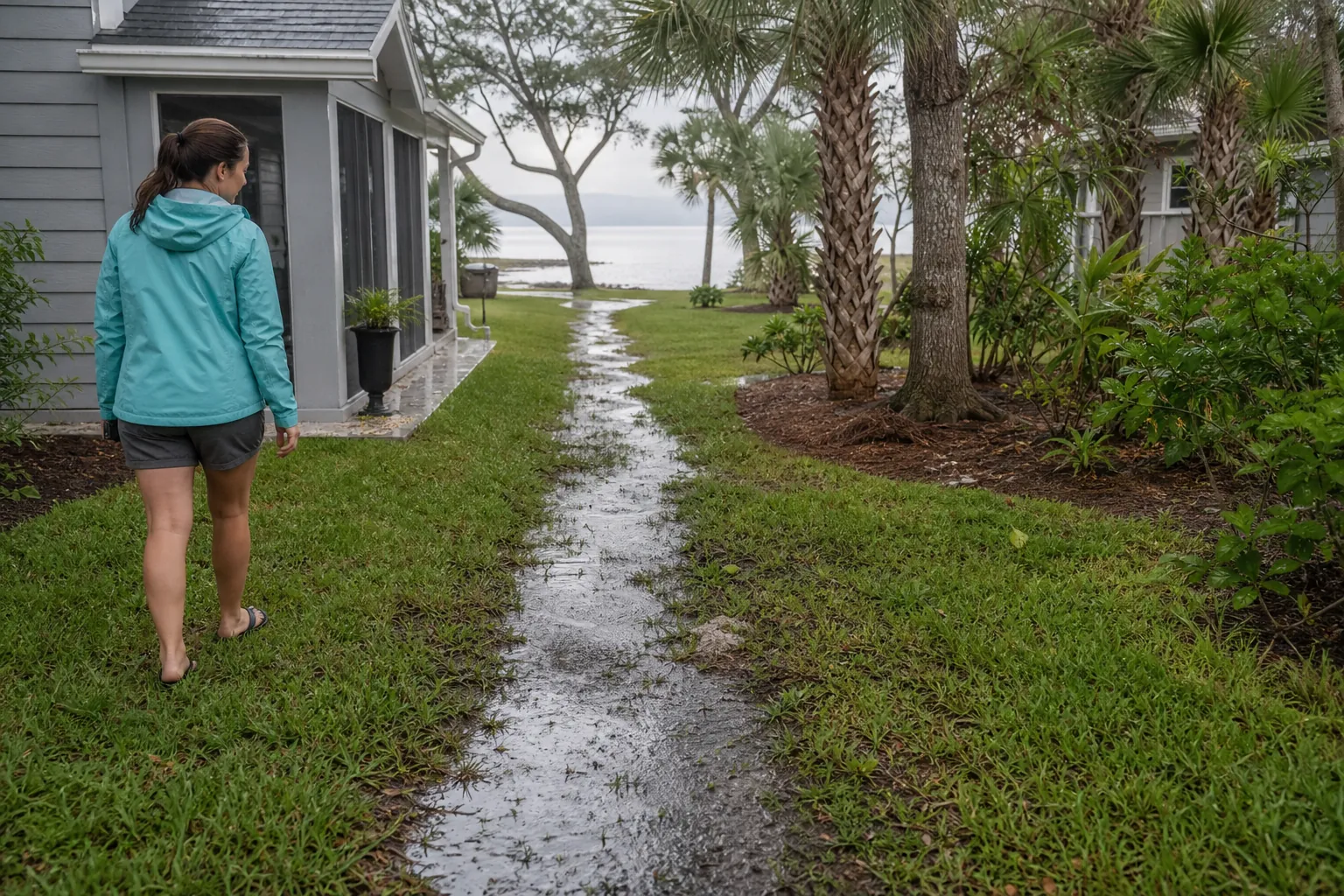
Start by identifying the existing route from higher ground to lower ground. Look for shallow depressions, swales, drain grates, driveway channels, and openings beneath driveway crossings. These features may look insignificant when dry, but piled debris can interrupt their function.
Observe the property during ordinary rain from a safe, sheltered location. Note where runoff travels, where it slows, and whether leaves collect at a particular opening. Do not enter moving water or approach an opening hidden beneath floodwater.
A dry-weather walk can also reveal clues. Lines of deposited leaves, sediment marks, and flattened grass may indicate recurring flow. Treat those signs as reasons to investigate, not proof that a particular feature is designed to drain your property.
- Check whether a shallow roadside depression carries water past your frontage.
- Look for a drain grate near the driveway, patio, or other paved surface.
- Identify low strips between landscape beds where runoff can pass.
- Notice whether existing debris collects against a fence or gate at a low point.
- Keep visible drainage openings accessible for inspection without removing protective covers.
If the route is unclear, avoid changing the grade or digging a new channel. A qualified drainage professional can assess where water should go without redirecting it toward a building or neighboring property.
Which types of yard debris can block drainage?
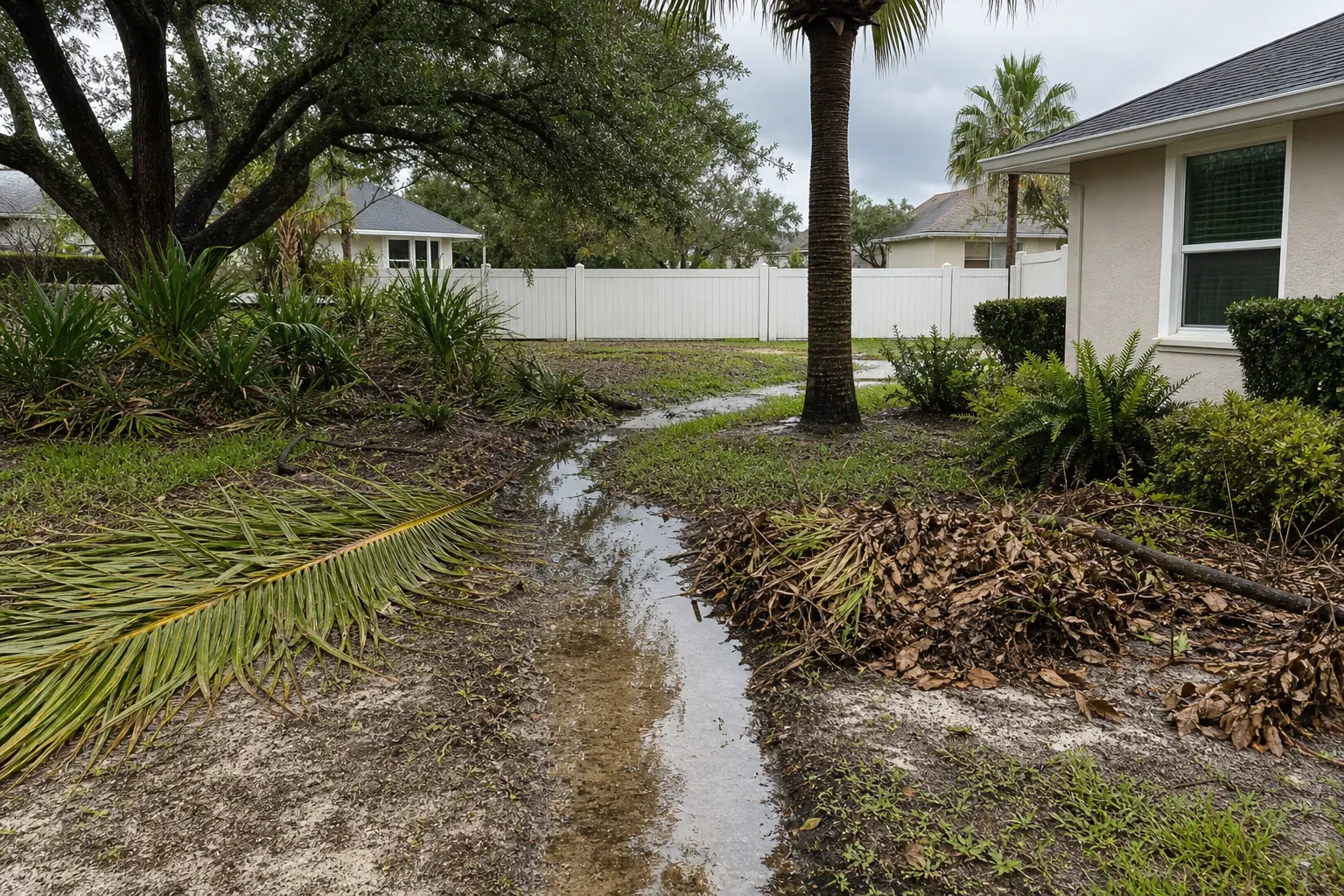
Small, flexible material often creates the first obstruction. Leaves and grass clippings can mat together across a grate or narrow channel. Palm fronds can bridge an opening, allowing smaller debris to collect behind them.
Branches and shrub cuttings create a different problem. A loosely stacked pile may still obstruct shallow runoff, especially when leaves fill the spaces between branches. Large woody pieces can also make an opening difficult to see or reach.
Loose soil and mulch deserve attention too. Material spilled during landscaping can move toward low points. Grapple truck hauling addresses suitable bulk debris, but fine sediment inside a drain may require cleaning by the responsible maintenance party or a drainage contractor.
- Remove loose leaves from accessible surface grates without lifting the grate or entering the structure.
- Keep palm fronds out of swales and away from culvert mouths.
- Move shrub cuttings off low strips rather than compressing them into a smaller barrier.
- Keep bags of yard waste away from locations where runoff could carry them.
For material-specific planning, our New Smyrna Beach palm debris removal guide covers handling bulky fronds and related cleanup needs.
How should you inspect drainage before heavy rain?
Use a short inspection that follows water from the house outward. You are looking for removable surface debris, not trying to diagnose every drainage problem. Complete the work while conditions are safe and before rain makes footing uncertain.
- Check roof-drainage discharge areas from ground level. Confirm that loose debris is not piled where downspouts release water.
- Walk the edges of patios, driveways, and walkways. Clear accessible surface leaves that could collect at nearby drains.
- Follow visible low ground toward the property frontage or another established outlet. Move yard debris out of that route.
- Inspect visible grates and culvert openings from a safe position. Report obstructions you cannot safely reach.
- Choose a pickup location outside the drainage route. Confirm its suitability with the hauling provider before building a large pile.
- Photograph the cleared route and staged debris. Use those images to explain access and remaining concerns.
Do not climb onto a wet roof, enter a drainage pipe, or work beside moving water. If debris is caught under a heavy cover or tangled with utility equipment, stop and contact the appropriate professional.
A checklist also helps separate tasks. Surface cleanup may be manageable, while a broken pipe or persistent low spot needs specialized attention.
Where should you stage debris for grapple truck pickup?
Stage debris where the truck can safely reach it without placing the pile in a drainage path. The right spot depends on access, overhead clearance, nearby structures, utilities, and the material being collected. Ask the hauler to review the proposed location rather than assuming any curbside spot is suitable.
Avoid using a swale as a convenient storage trough. Even when a pile sits above the visible bottom, loose leaves and short branches may fall into the channel. A mound beside an inlet can also shed material directly onto the grate.
- Leave drainage openings visible and unobstructed.
- Keep the pile clear of mailboxes, fences, parked vehicles, and other obstacles.
- Do not place debris beneath overhead lines where lifting equipment may operate.
- Keep material away from utility cabinets and marked utility features.
- Avoid blocking sidewalks, roadway travel, or neighboring access.
- Confirm any applicable placement requirements with the responsible local authority or property manager.
Do not invent a universal setback distance. Properties and pickup conditions differ, and the hauling provider needs enough information to assess the location. Send photographs showing the pile, the street approach, and nearby obstacles.
Our New Smyrna Beach yard waste grapple truck guide provides additional context for preparing bulk yard material for collection.
Can debris hauling fix a flooding problem?
Debris hauling can remove an obstruction or eliminate a pile that might obstruct drainage later. It cannot establish that a yard has adequate drainage capacity, repair a failed pipe, or correct an unsuitable grade.
The distinction matters when water continues pooling after visible debris is gone. Persistent ponding may involve saturated ground, an outlet problem, a blocked underground component, or another condition that needs professional evaluation. Removing branches is useful, but it is not a substitute for diagnosis.
Keep a simple record of what you see. Note the location, how long water remains after rain stops, and whether the issue changed after surface cleanup. Photographs from a safe position can help a drainage professional understand the pattern.
Do not cut a trench toward the street or a neighboring yard as a quick fix. Altering drainage can create new problems and may involve requirements beyond debris hauling. Ask the appropriate local authority or qualified contractor before modifying an established drainage feature.
How can landscaping cleanup preserve drainage routes?
Plan the disposal location before cutting shrubs or clearing overgrown beds. Otherwise, the nearest low spot can become the default dumping area. That creates extra handling and may leave the yard less ready for rain than it was before work began.
Separate the cleanup route from the water route. Move cut material directly toward the approved staging area instead of leaving temporary piles across shallow channels. Check the area again after larger pieces have been removed because small clippings can remain hidden underneath.
- Keep excavated soil separate from woody debris and confirm how each material will be handled.
- Avoid spreading leftover mulch into a swale to make the cleanup area look finished.
- Inspect drain grates after trimming hedges nearby.
- Leave access to drainage features when arranging replacement plants or landscape materials.
For projects that generate dense cuttings, see our shrub removal debris hauling guide for New Smyrna Beach. The hauling plan should support the landscaping work without changing how runoff moves across the property.
What should you check after rain or wind leaves debris?
Wait until conditions are safe, then look for newly displaced material along the established drainage route. A previously clear grate may collect leaves from elsewhere, and a staged pile may spread into a low area.
Begin with a visual check from stable, dry ground. Standing water can hide broken branches, uneven surfaces, and drainage openings. Never reach into murky water to feel for a blockage, and stay away from fallen or low-hanging wires.
If shallow surface debris is safely accessible, remove it without pushing it farther into the drainage system. Keep wet material in the confirmed staging area rather than dragging it into the street.
Before requesting hauling, photograph the pile again. Explain whether access has changed, whether the material is waterlogged, and whether standing water remains nearby. These details help distinguish a straightforward collection from a site that needs further assessment.
If water appears to threaten a building or creates an immediate safety concern, contact the appropriate emergency or property-maintenance resource. Do not wait for a debris pickup to resolve an urgent drainage hazard.
How should shared and commercial properties coordinate cleanup?
Use one staging plan for the entire property. Separate piles created by landscaping crews, tenants, and maintenance staff can unintentionally block different parts of the same drainage route.
Identify who is responsible for inspecting drains and who can authorize a pickup location. On managed properties, confirm the plan with the property manager before crews move material into common areas.
- Mark drainage routes on a simple site sketch for cleanup crews.
- Give crews a designated staging area that preserves access and runoff movement.
- Keep waste containers and loose debris away from loading-area drains.
- Inspect the site after each phase of landscaping or cleanup.
- Record any obstruction that falls outside the hauling crew's scope.
For a related planning example, see our commercial debris staging guide for Daytona Beach. Confirm collection availability and site requirements directly for your property; regional preparation advice does not establish service coverage.
Frequently asked questions about protecting yard drainage
Should I clear the swale or the driveway drain first?
Address the safely accessible obstruction that interrupts the connected drainage route. A clear driveway drain may still back up if its outlet is blocked. Inspect both areas, but leave covered, submerged, or inaccessible components to the responsible maintenance party.
Can I put palm fronds beside a storm drain?
No. Choose a different staging location because fronds can shift across the opening or catch smaller debris. Keep the inlet visible, and confirm the alternative pickup spot with the hauler before moving a large load.
Does a grapple truck clean underground drainage pipes?
Bulk debris hauling is not underground pipe cleaning. If you suspect an internal blockage, ask a qualified drainage professional or the responsible public maintenance office to assess it. Explain whether you have already removed accessible surface debris.
Should I bag leaves or add them to a branch pile?
Ask the hauling provider how loose leaves and bagged material should be prepared. Acceptance and handling can differ by material. Regardless of the method, keep leaves and bags out of runoff routes while awaiting collection.
What if my neighbor's debris blocks a shared drainage area?
Document the obstruction from your own property or a lawful common area, then contact the neighbor or property manager. Do not move material onto another property or modify a shared drainage feature without authorization.
Can I schedule hauling before all trimming is finished?
You can discuss phased collection before the project is complete. Explain what material is ready and what work remains. A coordinated plan can reduce repeated handling without requiring you to store every cutting in one large pile.
What information should I provide when calling?
Provide the property location, debris type, approximate pile dimensions, photographs, and known access concerns. Mention nearby drains, swales, overhead lines, and standing water so the pickup location can be reviewed before collection.
Keep the water route clear before the pile grows
The most practical approach is to identify the drainage route, remove accessible surface obstructions, and stage bulk debris somewhere else. Recheck the route after landscaping and after conditions move material around the yard.
For New Smyrna Beach debris hauling, call Daytona Grapple Trucks at (386) 481-7913. Describe the material and proposed staging area, and ask about collection arrangements. If the concern involves buried drainage, grading, or recurring flooding, arrange a separate drainage assessment rather than relying on hauling alone.
Call (386) 481-7913 to talk through next steps.