
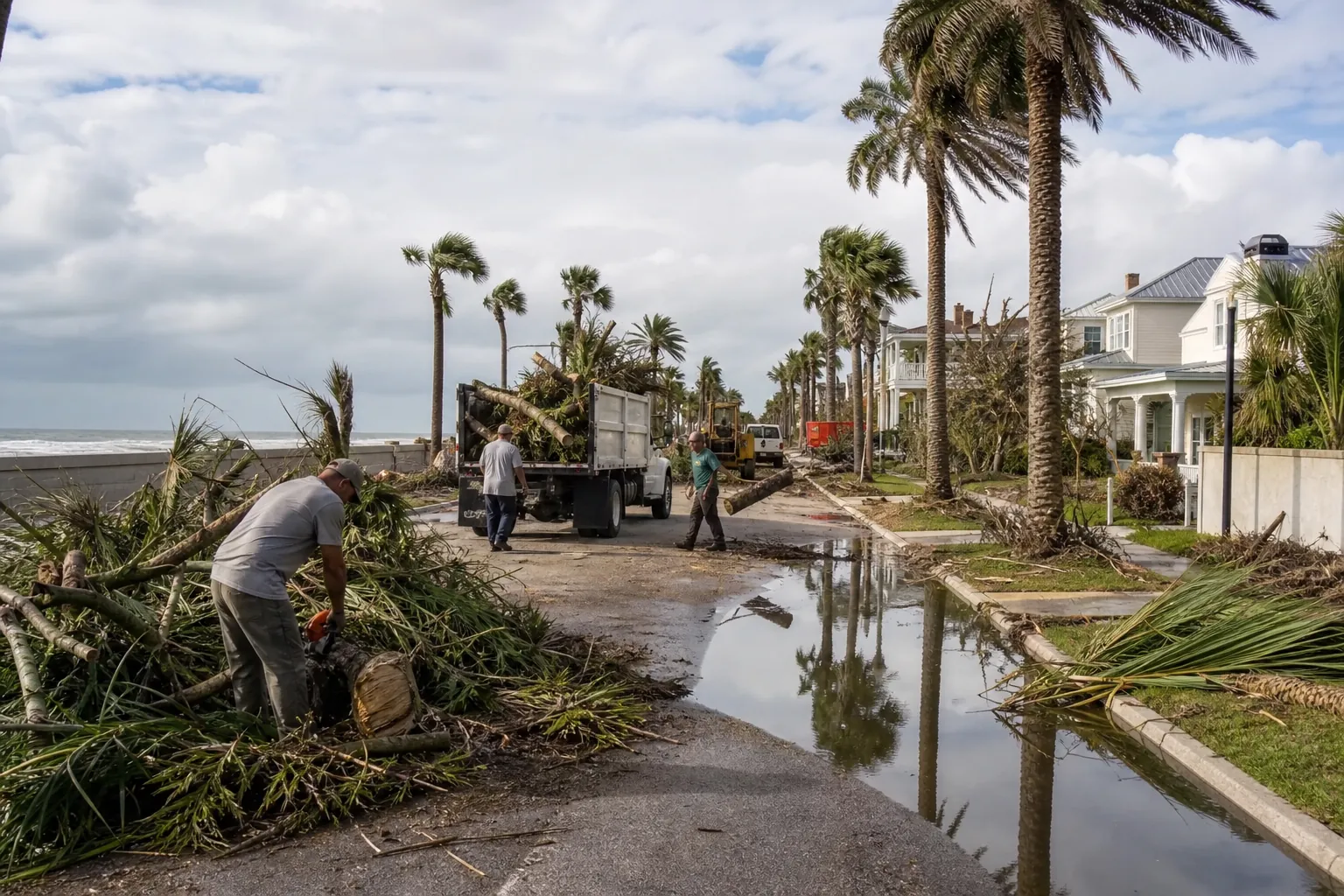
A storm clean up timeline volusia depends on the storm’s impact, debris type, local collection rules, and safe access to each pile. Start by checking official updates, documenting damage, and sorting debris. Then confirm how each material can be removed before arranging hauling. St. Augustine readers should check local guidance rather than assume Volusia rules apply.
How Does a Storm Clean Up Timeline in Volusia Begin?
A useful storm clean up timeline in Volusia begins with reliable updates, safe access, and a clear view of the debris. The first days may involve changing conditions and local instructions. Check official notices before moving material or planning removal, and keep the cleanup plan flexible as new information becomes available.
Start with current instructions from local authorities. Rules and collection plans can vary by place, material, and date. A notice for one area may not apply to another. For St. Augustine, confirm the right local source before treating Volusia County guidance as relevant.
The broader steps are much the same from one storm to the next: assess, sort, confirm, and arrange removal. Read the storm debris cleanup overview for the main planning steps. Use the Volusia debris sorting guide to think through how material types affect cleanup.
A timeline is a planning tool, not a promised pickup date. Crews, access, and local programs may change after a storm. Keep notes on updates and decisions, and revisit the plan when conditions or official guidance change.
- Check current notices from the local government or emergency officials.
- Look for hazards from a safe distance and avoid unstable areas.
- Record the types and locations of debris before planning removal.
- Confirm the local rules for each material before moving it.
What Changes the Time Needed for Storm Debris Cleanup?
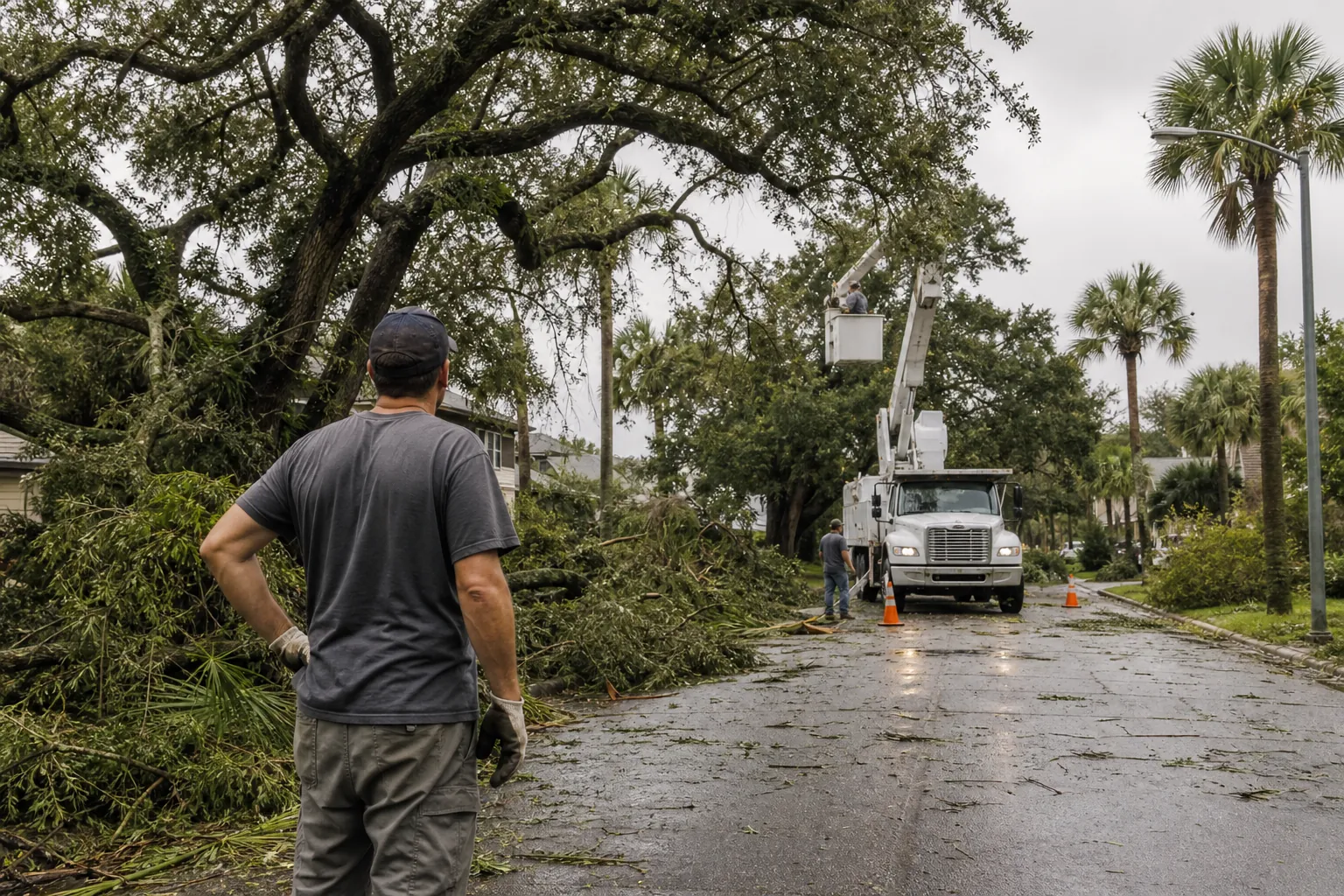
Cleanup time depends on the amount and mix of debris, safe access, and the rules for each material. A single pile of similar items can be simpler to plan than mixed debris spread across several spots. Weather, road access, and changes to local instructions can also affect the order of work.
First, look at what the storm left behind. Branches, building material, household items, and other debris may follow different handling or collection rules. Do not assume one pile can all go through the same removal process.
Next, consider access. A narrow route, blocked driveway, overhead hazards, or unstable ground may affect when and how material can be handled. If a condition seems unsafe, wait for qualified help or direction from the proper authority.
The amount of debris matters, too, but appearance alone does not show what equipment or service is suitable. The grapple truck and dumpster comparison explains planning factors to discuss. For tree material, see the tree debris removal guide before deciding how to stage it.
Local collection programs may set their own rules about where debris goes and how it must be separated. Volusia County's waste guidance is one source for county information, but it does not establish rules for St. Augustine. Check the correct local authority for your location.
| Factor | Why it matters | Useful next step |
|---|---|---|
| Debris mix | Different materials may have different rules. | List material types separately. |
| Access | Blocked or unsafe routes may delay work. | Note access limits without entering hazards. |
| Local guidance | Collection plans can vary by location and date. | Check the proper local authority. |
| Pile location | Several piles may need separate planning. | Record where each pile sits. |
Separate the factors you can plan around
You can often make the work easier to review by listing the material types and noting where they sit. Keep one note for access concerns and another for questions about local rules. This helps prevent an early guess from becoming the whole plan.
Some factors are outside your control. A new storm, blocked roads, or revised public instructions may change the sequence. Build room for a pause, and check for updates before asking anyone to move debris.
What Should You Do Before Moving Storm Debris?
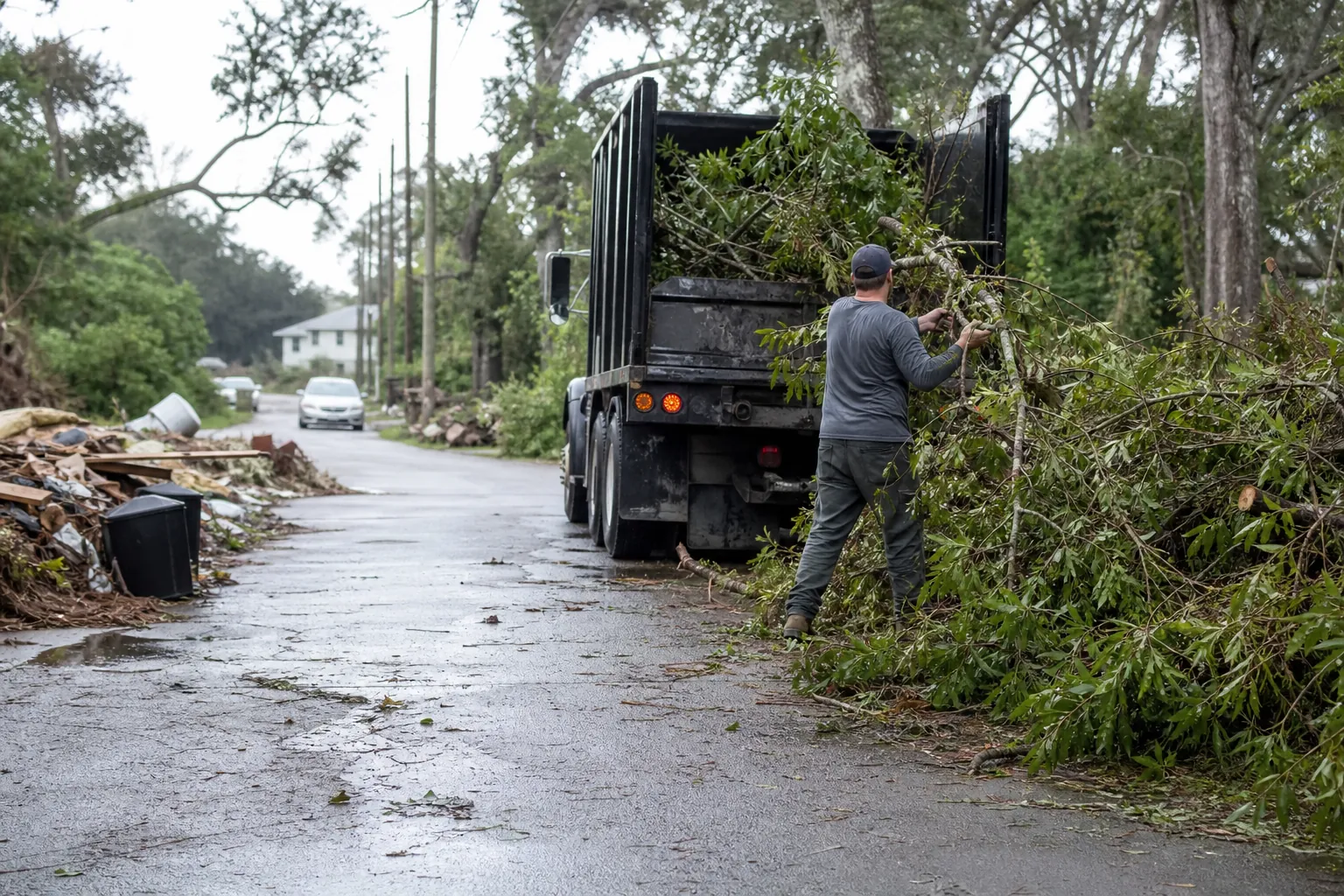
Before moving storm debris, check for current hazards and local directions. Do not enter unstable structures or approach downed lines, damaged trees, or blocked roads. Take notes or photos only from a safe place, then ask the proper authority or a qualified professional about risks that need expert review.
A quick look from a safe spot can help you plan, but it cannot confirm that a site is safe. Storm damage may leave hidden hazards. Keep people away from areas that appear unstable, and follow instructions from emergency officials.
Do not move debris that may be subject to a local inspection or collection plan until you know the rules. The right step can depend on the material and location. Check official guidance before placing items at a curb or combining them in a pile.
When you can do so safely, make a simple record of the debris. Note material types, rough pile locations, and access limits. The photos for a hauling estimate guide covers useful information to gather when seeking an estimate. For sorting ideas, use the Volusia debris sorting guide.
This record can support a clear conversation with a hauler or local program. It is not a substitute for an inspection, a safety review, or official direction. If you are unsure whether a material is hazardous, do not handle it while waiting for qualified guidance.
- Note the material types without handling items you cannot identify.
- Record pile locations and visible access limits from a safe place.
- Save the date and source of any official cleanup instructions.
- Keep people away from areas that may be unstable or unsafe.
Keep a simple cleanup record
Write down when you checked local notices and what they said. Note the source and any later updates. That makes it easier to see when a decision needs to be checked again.
Keep photos focused on the debris and access, if you can take them from a safe location. Avoid stepping over material or going near damaged structures for a better view. Safe observation matters more than a complete record.
How Should You Sort and Stage Different Debris?
Sort debris by material only after checking the local instructions for your location. Separate piles can make questions about collection easier to answer, but local rules decide what must be kept apart and where items may go. Do not mix unknown or potentially hazardous material into a general debris pile.
Begin with the rules, not with a guess about what looks alike. A local program may ask residents to separate certain materials or use specific drop-off options. County guidance can help explain county programs, but it does not settle rules for another city.
Keep different material types distinct when you can do so safely and when local directions allow it. Labeling a pile in your notes can help you describe it. Do not carry heavy, sharp, or unknown items just to make a neater stack.
The Volusia debris sorting guide offers a focused way to consider sorting questions. For items from building work, read Florida construction debris rules and confirm current requirements with the proper local authority.
Staging is also a question of access. Keep routes clear when local rules and site conditions allow. Do not place debris where it could block roads, drains, sidewalks, or emergency access. Follow local direction if a designated location is provided.
Keep uncertain material separate
If you cannot identify an item, do not assume it belongs with yard debris or ordinary household waste. Ask the local waste authority how to handle it. Material-specific instructions can change, so check them near the time you plan removal.
The U.S. EPA and FEMA provide general disaster debris planning and sorting information. Those resources do not confirm local pickup, disposal options, or permission to stage debris at a particular site. Local rules still matter.
How Do You Choose a Removal Option?
The right removal option depends on debris type, pile size, access, and local rules. Compare what each option can handle and what site conditions it needs. Ask clear questions before arranging work, and confirm that the proposed approach fits the material and the instructions that apply where the debris sits.
A dumpster and a grapple truck are different approaches, and neither suits every situation. A container may require space and a safe place for delivery. A truck-based approach may depend on access to the pile and the material being handled.
Do not choose by appearance alone. Ask what debris types are accepted, what needs to be separated, how access affects the plan, and what details are needed to discuss the work. Confirm any local disposal or staging rules on your own with the proper authority.
For a closer comparison, read grapple truck versus dumpster planning. If you are gathering details for an estimate, the photo checklist for hauling estimates can help you prepare useful information.
Daytona Grapple Trucks is described in its current publisher configuration as a grapple truck debris hauling business. The supplied facts do not list specific services, accepted materials, service areas, or availability. Ask the business to confirm those details before making plans.
- Ask which debris types the removal option can handle.
- Describe pile size and access limits as clearly as possible.
- Check whether the material must be sorted before removal.
- Confirm local rules separately when disposal or staging is involved.
| Planning point | Ask about |
|---|---|
| Material | Which types are accepted? |
| Access | What space and route are needed? |
| Sorting | What should stay separate? |
| Local rules | Which authority can confirm disposal directions? |
Questions to ask before arranging removal
Use a short list of questions so key details do not get lost in a rushed conversation. Share the material types, pile locations, and access limits you know. Ask what else the provider needs to assess the request.
Also ask which details remain uncertain. A clear answer may require checking site access, local instructions, or the material itself. Do not treat an estimate discussion as confirmation of official disposal rules.
How Can You Keep the Cleanup Plan on Track?
Keep the cleanup plan current with brief check-ins on local notices, site access, and debris status. Record decisions and open questions in one place. If conditions change, pause and review the plan before moving material or arranging work. A clear record helps you explain what has changed without relying on memory.
A storm response can shift as officials assess damage and set local priorities. Recheck the guidance that applies to your location rather than relying on an old post or a neighbor's experience. The Volusia County waste page covers county guidance, while St. Augustine readers should confirm the city or other authority responsible for their location.
Use one list to track what is done and what still needs an answer. Separate facts from assumptions. For example, note that a pile contains branches only if you have confirmed that, rather than guessing from a distance.
If you are waiting on a safety assessment or local direction, mark that as a hold. Do not treat the pause as a failure. Some decisions need input from an authority or qualified professional before cleanup can continue.
Review the storm debris cleanup overview when you need to revisit the full process. The guide to tree debris removal can help frame questions about tree material, but a professional should assess tree hazards.
Use a short update routine
Check for updates at sensible points, such as before moving debris or arranging removal. Save the date and source of the latest instruction. This makes it easier to spot outdated information in a long cleanup.
After each check, update the list of material, access, and open questions. Share only confirmed details when speaking with a provider or local office. If you do not know an answer, say so and ask how to verify it.
Questions about next steps? Call Daytona Grapple Trucks at (386) 481-7913 or review debris.
Frequently Asked Questions
Does the same storm debris schedule apply in St. Augustine and Volusia County?
No. A cleanup schedule or collection notice for one place may not apply elsewhere. Rules and plans can depend on the local authority, the material, and the date. St. Augustine readers should check current local notices for their address. Use Volusia County information only when it applies to the place and program being discussed.
Should I put all storm debris at the curb?
Do not assume that every type of debris belongs at the curb. Local instructions may set rules for material, placement, or timing, and those rules can change. Check the current notice for your area before moving debris. If a material is uncertain or may be hazardous, ask the proper authority before handling or staging it.
What information should I have ready when asking about hauling?
Be ready to describe the material types, where each pile sits, and what access limits you can see from a safe place. Photos may help if you can take them without approaching hazards. Ask what other details the provider needs. Confirm accepted materials, service availability, and any local disposal requirements directly rather than assuming them.
Can I remove damaged tree limbs myself?
Whether a limb can be handled safely depends on its condition and the site. Damaged, leaning, or tangled trees may pose risks that are hard to judge from the ground. Keep clear of hazards and contact a qualified professional or the proper authority when expert review is needed. Follow local directions for debris handling.
What if local cleanup instructions change after I make a plan?
Pause and check the new instruction before moving or staging debris. Save the date and source, then update your notes about material, location, and next steps. If a provider is involved, share the change and ask whether the plan still fits. For unclear rules, ask the local authority responsible for your area.
Sources
- Solid Waste and Recycling, Volusia County
- Planning for Natural Disaster Debris, U.S. EPA
- Debris Removal Guidelines Help You and Your Community, FEMA
Call (386) 481-7913 to talk through next steps.