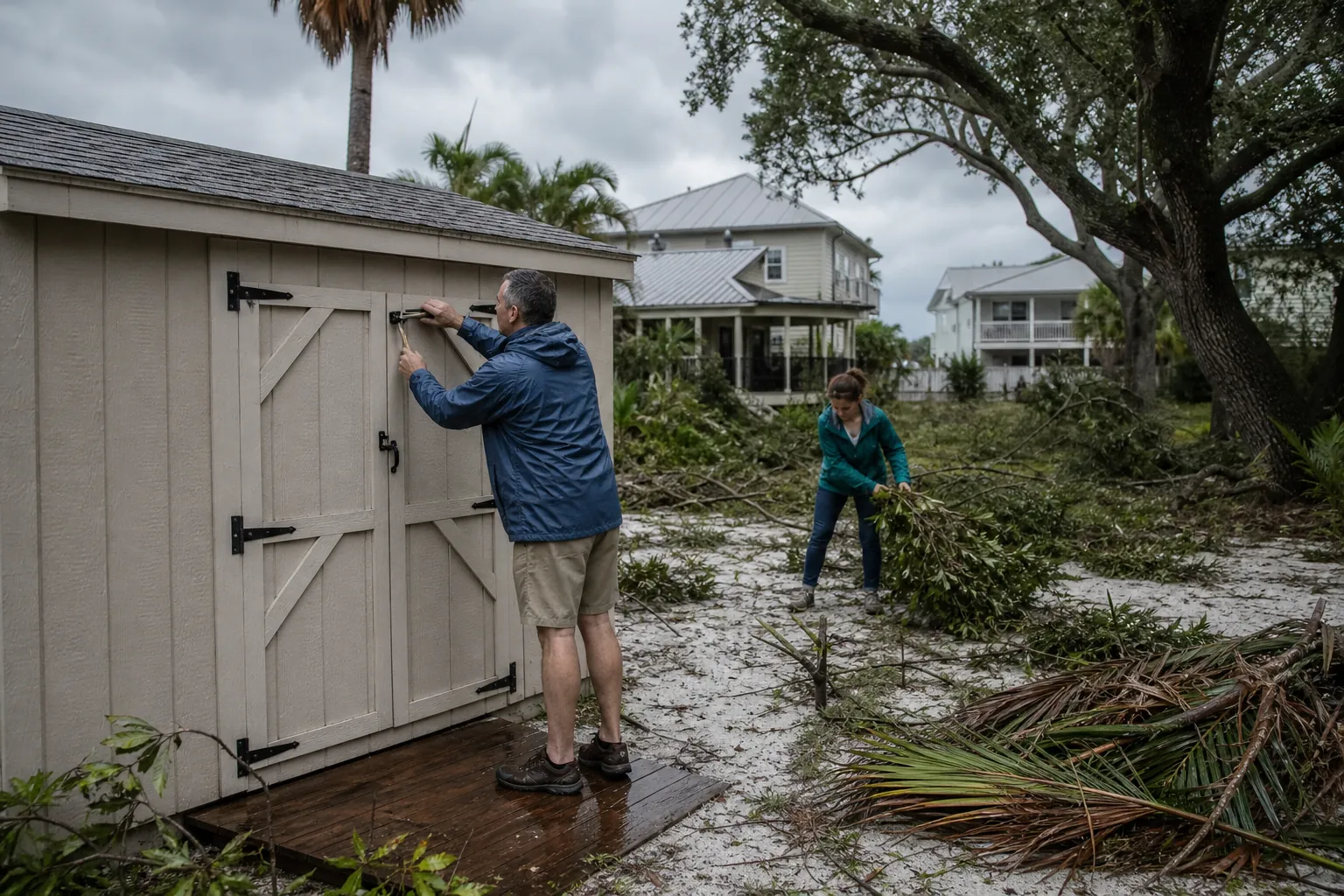
Shed door storm readiness in Jacksonville starts with a simple check: the door should close squarely, latch securely, and remain attached to sound framing. Next, clear loose material around the shed, protect stored supplies, and plan where cleanup debris can go without blocking drainage or access.
A secure door is only one part of a safer property. Rotten branches, discarded boards, broken fencing, and overflowing storage areas also deserve attention before hurricane season. This guide focuses on the shed opening and its immediate surroundings, rather than a whole-property storm checklist.
Daytona Grapple Trucks provides debris-hauling information for Florida property owners. Jacksonville and the other corridor locations discussed here receive regional preparation advice, not a promise of local service availability. Call (386) 481-7913 to ask whether hauling is available for your property and material type.
This is an evergreen preparation guide, not a current weather briefing. Check official forecasts and local emergency instructions before starting outdoor work, and stop preparation when conditions become unsafe.
What Should You Check On A Shed Door First?
Check the frame, hinges, latch, and door panel before adding any reinforcement. A stronger lock cannot compensate for loose hinge screws, a split jamb, or a door that no longer fits its opening.
Open and close the door slowly. Watch for sagging, rubbing, cracked edges, and movement where the hinges attach. On double doors, check both leaves and the point where they meet. A door that needs lifting or force to latch already needs attention.
Inspect the wood around the hardware, not just the hardware itself. Soft, crumbling, or visibly decayed material may not hold fasteners reliably. Metal sheds can also develop damaged attachment points, bent tracks, or corrosion around fasteners.
- Confirm that each hinge is firmly attached to the door and to sound framing.
- Check that the latch engages fully without pulling the door out of alignment.
- Look for cracks, separated joints, or loose panels on both sides of the door.
- Inspect the threshold for deterioration, accumulated dirt, and signs of repeated water entry.
- Follow the shed manufacturer's instructions for adjustments and replacement hardware.
If the frame moves, the opening is visibly distorted, or the shed leans, treat the problem as structural rather than a simple door repair. Have a qualified repair professional assess it before relying on new hardware.
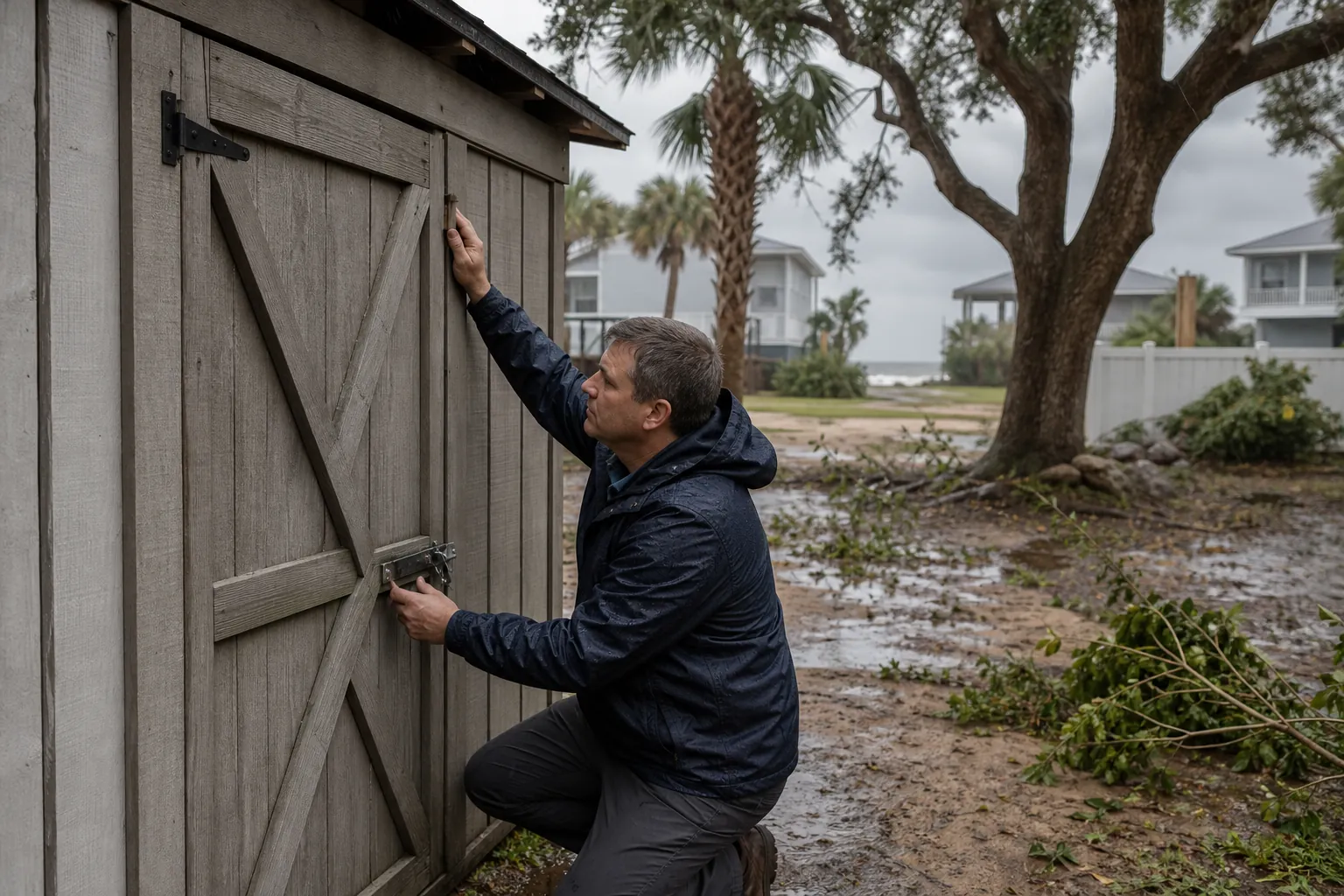
How Can You Secure A Shed Door Without Damaging It?
Use hardware compatible with the shed and repair weak attachment points first. Improvised braces, random screw placement, and heavy objects leaned against the door can create new hazards without fixing the underlying problem.
For a single hinged door, make sure the manufacturer-approved latch or locking mechanism closes completely. For double doors, inspect any top and bottom bolts on the inactive leaf. Their receiving points must also be intact and free of debris.
Sliding and roll-up doors require different checks. Inspect guides, tracks, rollers, and the closure mechanism according to the manufacturer's instructions. Do not assume advice for a wooden swing door applies to a metal roll-up assembly.
Keep this sequence manageable:
- Photograph the door, frame, and hardware so you can compare their condition later.
- Remove dirt and obstructions that prevent the door from closing normally.
- Identify damaged hardware and weak material around attachment points.
- Arrange compatible repairs or replacements before adding optional reinforcement.
- Test the complete closure system, including both leaves of a double door.
- Keep keys and necessary access information somewhere outside the shed.
Do not drill into unfamiliar wall sections or alter a rated assembly without appropriate guidance. If the shed contains wiring, avoid repairs near electrical components until you understand what is behind the surface.
A padlock helps control access, but it is not evidence that the door assembly can withstand severe conditions. The useful goal is a maintained closure system attached to sound material, not a guarantee of storm resistance.
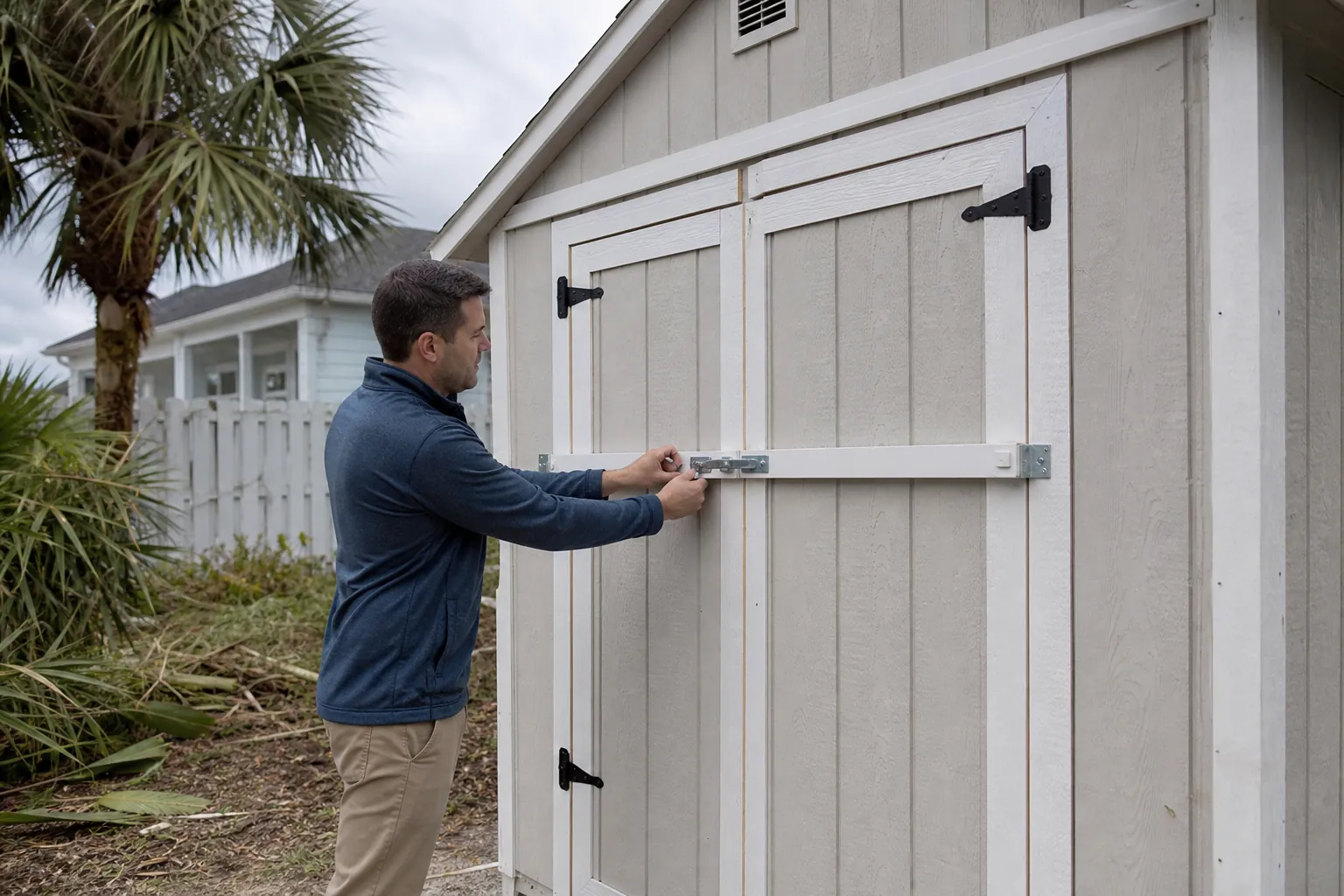
What Should You Move Away From The Shed Before Heavy Rain And Wind?
Remove loose objects, unnecessary debris, and items that block the door or drainage path. Clearing the immediate area makes preparation easier and reduces the amount of scattered material you may need to sort afterward.
Start with objects you can move safely: empty pots, buckets, spare boards, lightweight furniture, and loose garden supplies. Store usable items in suitable enclosed spaces without creating an overloaded or unstable storage arrangement.
Keep a clear approach to the door. You should not have to climb over bags, branches, or equipment to inspect the latch. Leave enough working space to open the door fully without striking a pile.
- Move loose tools and small supplies into appropriate storage before conditions deteriorate.
- Separate unwanted branches and brush from household trash and construction materials.
- Remove scrap lumber with exposed nails from walking routes and handling areas.
- Keep drains, swales, and drainage outlets free of stored material and yard waste.
- Avoid stacking heavy objects against shed walls or door panels.
- Have damaged or overhanging tree limbs assessed by a qualified tree professional.
Do not attempt rushed overhead cutting or climb a ladder to finish last-minute preparations. Tree work, electrical work, and structural repairs are separate tasks from debris hauling.
For the wider yard, see these regional tips on securing outdoor yard items before storms in Jacksonville. Use that checklist alongside the door-specific inspection here.
How Can You Reduce Water Problems At The Shed Entrance?
Maintain drainage around the entrance and address existing leaks before relying on temporary barriers. A closed shed door does not make the building floodproof.
Look for low spots, soil piled against the threshold, clogged gutters, and downspouts that discharge beside the opening. Notice whether ordinary rain leaves standing water at the door. That pattern can help identify a maintenance problem without predicting a future flood depth.
Clear accessible surface debris only when it is safe. Do not enter a drainage structure, disturb buried utilities, or redirect runoff onto neighboring property. Substantial grading or drainage changes deserve professional evaluation.
Inspect door seals and weatherstripping for gaps or deterioration. Use compatible replacement products and avoid sealing openings that the shed design requires for ventilation or drainage.
Inside, move moisture-sensitive belongings away from the floor where practical. Stable shelving or appropriate storage containers may reduce exposure to minor water entry, but they do not guarantee protection from flooding.
- Keep cardboard boxes, documents, and absorbent supplies off the floor where feasible.
- Store fuels, pesticides, and other chemicals according to their labels and applicable safety guidance.
- Keep electrical cords and powered equipment away from damp areas.
- Do not operate generators, engines, or fuel-burning equipment inside the shed.
If water reaches electrical equipment or wiring, do not enter to retrieve belongings or test the equipment. Arrange an appropriate safety assessment first.
When Should You Arrange Debris Hauling Before Storm Season?
Ask about hauling once you know what needs removal, preferably before debris becomes an urgent access problem. An existing brush pile or dismantled shed panel is easier to discuss while the site remains accessible.
Inventory the material rather than requesting a generic cleanup. Note whether the pile contains branches, lumber, roofing, metal, fencing, or mixed waste. Photos can help explain the condition and location, although an on-site assessment may still be needed.
Explain how a truck could approach the property. Mention narrow gates, overhead lines, nearby trees, soft ground, parked vehicles, and any need to cross a lawn. Do not assume a grapple truck can safely reach every backyard pile.
Before staging material, ask the hauler where it should go and which materials are accepted. Do not place debris in the street or public right-of-way based solely on general advice. Follow the instructions that apply to your collection arrangement and location.
For an overview of equipment-based cleanup, read about grapple truck storm debris cleanup in Daytona. That discussion does not establish service coverage for Jacksonville or another corridor city.
If you manage a shared property, identify who can approve removal and who will coordinate access. Keep resident routes and emergency access clear. The guide to storm debris hauling for Volusia County HOAs offers additional planning considerations for community properties.
How Should You Handle A Shed Door That Is Damaged After A Storm?
Assess the area from a safe distance before touching the door or clearing debris. A jammed opening may involve shifted framing, unstable panels, trapped contents, or nearby electrical hazards.
Do not force open a door beneath a sagging roof or beside a leaning wall. Avoid standing where a loose panel could fall or swing. If the building appears unstable, leave it alone until an appropriate professional evaluates it.
Photograph visible damage only from a safe position. Record the door, surrounding frame, nearby debris, and accessible contents before moving material when practical. Follow your insurer's documentation instructions if you intend to file a claim.
- Stay away from downed lines and anything that may be touching them.
- Do not walk into standing water to reach the shed or a debris pile.
- Keep children and pets away from nails, sharp metal, broken glass, and unstable material.
- Use suitable protective equipment for safe ground-level sorting after hazards have been addressed.
- Stop work if the shed shifts, debris moves unexpectedly, or conditions become unsafe.
A grapple truck is a hauling tool, not a substitute for structural assessment or utility clearance. Removal should begin only after the relevant hazards are resolved and an accessible loading location is agreed upon.
If the shed cannot be repaired economically or safely, demolition and removal require a separate plan. See shed demolition debris removal in Volusia for material-handling considerations, without treating that article as authorization to demolish a structure.
How Should Shed Debris Be Sorted And Staged?
Keep material categories separate where practical and confirm the loading arrangement before building a pile. Cleaner sorting helps the hauler understand the job and keeps unsuitable items out of a routine debris load.
Branches and brush should not conceal sharp metal, chemical containers, batteries, or appliances. Damaged shed contents can turn a simple yard pile into mixed waste requiring different handling.
Keep hazardous products in their appropriate containers when safe, and ask the relevant local waste authority about disposal options. Do not burn debris or use an open pile as a disposal shortcut.
Choose a staging location that preserves access and drainage. Keep piles away from utility equipment, overhead obstructions, mailboxes, fences, and the shed itself. Exact placement depends on the truck, site, material, and collection instructions.
Never climb a pile or compress it with a vehicle. Avoid moving heavy panels alone. If a piece is awkward, sharp, contaminated, or tangled with other material, discuss it with the removal provider before handling it.
Commercial properties can use the Daytona Beach commercial debris staging guide to organize site access and loading discussions. Confirm property-specific arrangements rather than copying another site's layout.
What Changes Across Florida's East-Coast Corridor?
The basic door checks remain the same, but site conditions and collection arrangements vary. Use the guidance regionally across Jacksonville and Duval County, St. Augustine and St. Johns County, Palm Coast and Flagler County, Daytona Beach and New Smyrna Beach in Volusia County, and Titusville, Cocoa, and Melbourne in Brevard County.
A backyard shed behind a narrow gate needs a different removal plan from a commercial storage shed beside a paved loading area. Drainage, nearby trees, overhead utilities, and ground conditions matter more than a generic city checklist.
Verify local collection instructions and service availability directly. Mentioning these communities does not establish Daytona Grapple Trucks coverage in each one. For broader seasonal planning, consult the Northeast and Central Florida yard-readiness guide.
Frequently Asked Questions About Shed Door Storm Readiness
Is A Padlock Enough To Secure My Shed Door?
No. A padlock does not repair loose hinges, decayed framing, or a damaged latch. Inspect the whole closure assembly and use compatible hardware attached to sound material.
Should I Leave The Shed Door Open During A Storm?
No. Close and secure it according to the manufacturer's instructions. Do not leave the door open as an improvised pressure-relief measure.
Can I Brace The Door With Scrap Lumber?
Do not assume scrap lumber provides reliable reinforcement. Use manufacturer-supported methods or qualified repair advice, and avoid blocking access or loading weak framing.
Will Weatherstripping Prevent Flooding Inside The Shed?
No. Weatherstripping can help address ordinary gaps, but it does not make a shed floodproof. Drainage, building condition, and water exposure still matter.
Can Damaged Shed Panels Go In The Same Pile As Branches?
Ask the hauler first. Separate wood, metal, roofing, and yard debris when practical, and disclose sharp edges, mixed contents, or potentially hazardous materials before collection.
Does Daytona Grapple Trucks Serve Every City Listed Here?
This guide does not confirm coverage in every listed city. Call (386) 481-7913 with your location, photos, material description, and access details to ask about availability.
Plan The Door Check And The Cleanup Together
Start with a sound door and frame, remove loose material nearby, and preserve a clear drainage and access route. After damage, resolve structural and electrical hazards before sorting or hauling debris.
For debris-removal questions, call Daytona Grapple Trucks at (386) 481-7913. A clear description of your shed materials, pile location, and property access will help you discuss an appropriate next step without assuming coverage or a collection schedule.
Related guide: Get Florida Outdoor Fixtures Ready For Storm Season.
Call (386) 481-7913 to talk through next steps.