
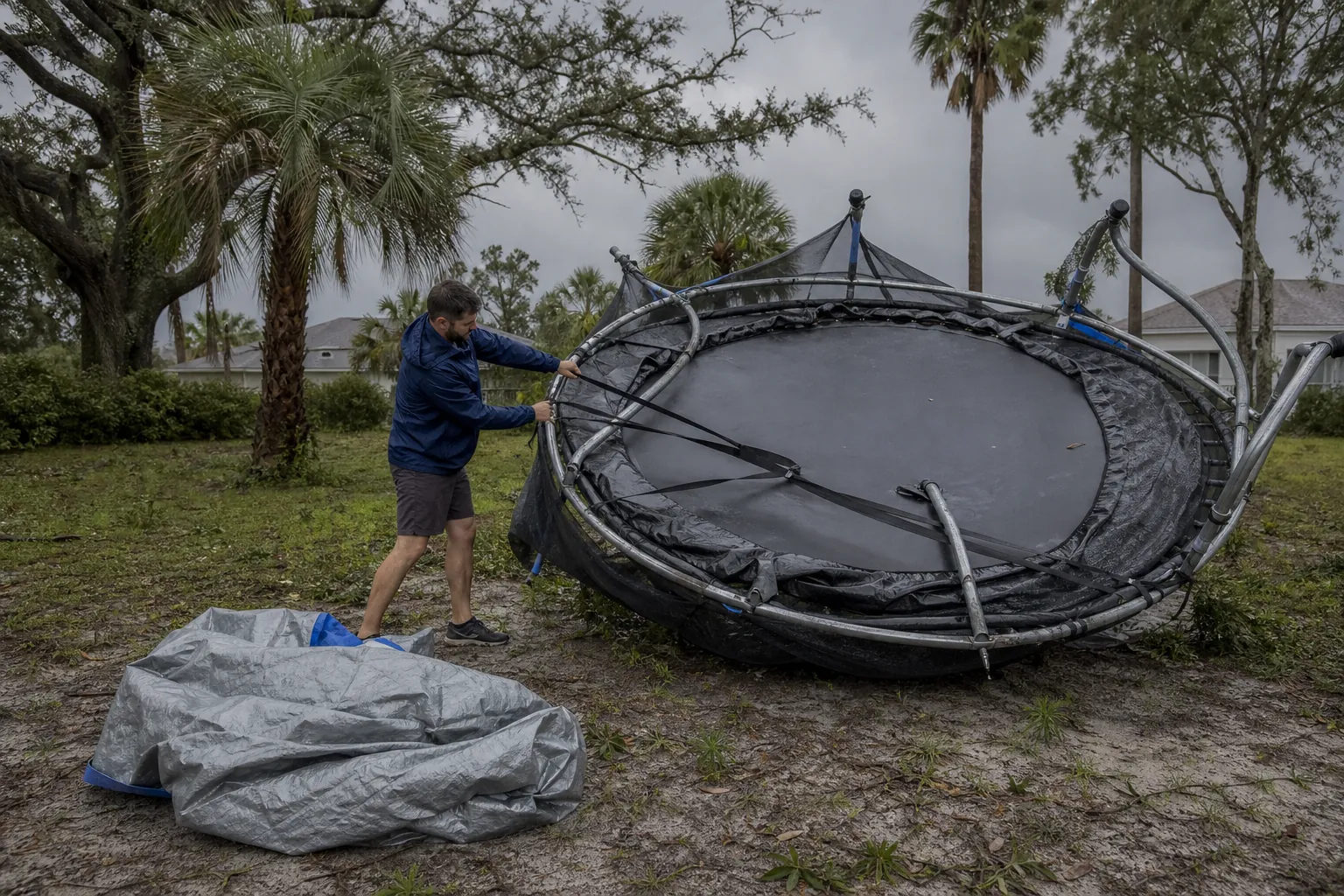
The most useful trampoline hurricane preparation in Palm Coast starts with a plan to take the equipment apart and store it securely before outdoor work becomes unsafe. Follow your model’s instructions, prioritize the enclosure and jumping surface, and do not assume anchors alone make a trampoline storm-ready.
For Florida homeowners, this is also a yard cleanup task. Loose accessories, damaged frame sections, nearby branches, and blocked storage routes can complicate preparation. Daytona Grapple Trucks can discuss debris hauling needs and help you determine what information is needed to assess a potential pickup.
This guide provides evergreen hurricane-season advice, not a current storm forecast. Its focus is the trampoline itself: preparation, storage, damage checks, and responsible debris staging. Use current official weather information and emergency instructions to decide when outdoor work must stop.
What should you do first to prepare a trampoline?
Find the manufacturer’s manual and identify the model before loosening hardware. Trampolines differ in spring arrangements, enclosure connections, anchoring options, and recommended disassembly sequences. A generic shortcut can damage parts or expose someone to a suddenly released spring.
Inspect the equipment while conditions are calm. Look for rusted connections, bent tubes, torn fabric, missing bolts, and anchors that have loosened. These problems affect both disassembly and the decision about whether the trampoline should return to use.
- Photograph the assembled trampoline and its connections so you have a reference for storage and reassembly.
- Locate the correct tools, including any manufacturer-specified spring tool, before beginning work.
- Choose a storage space that can contain long frame pieces without blocking doors or household access.
- Arrange adult help for heavy or awkward sections rather than trying to control them alone.
- Keep children and pets away from the work area while parts are being removed.
Decide early whether the equipment is worth keeping. If the frame is badly corroded or important parts are damaged, arranging removal may be more practical than storing an unsafe trampoline. Confirm acceptance and preparation requirements before placing any material out for hauling.
Are trampoline anchors enough for hurricane preparation?
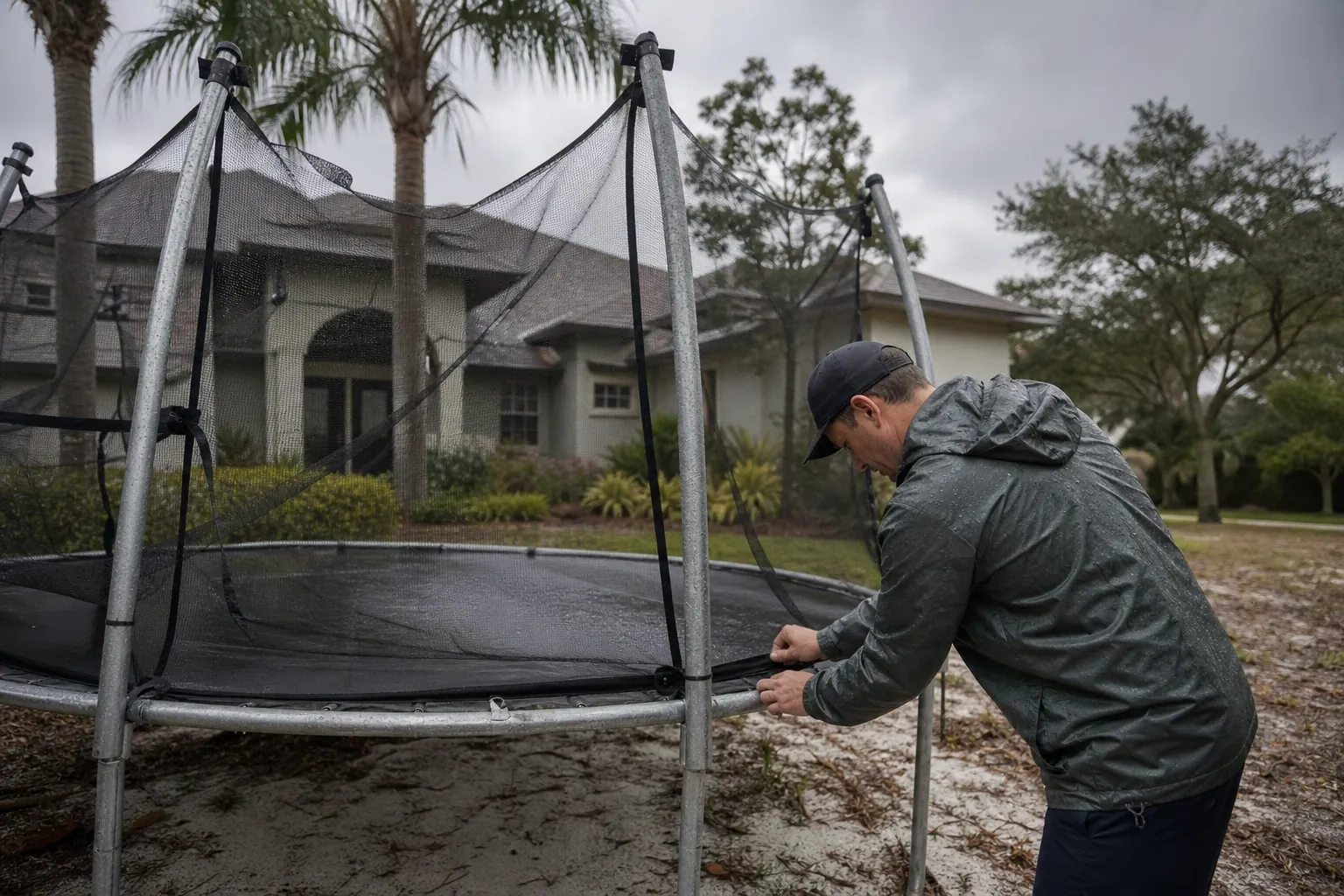
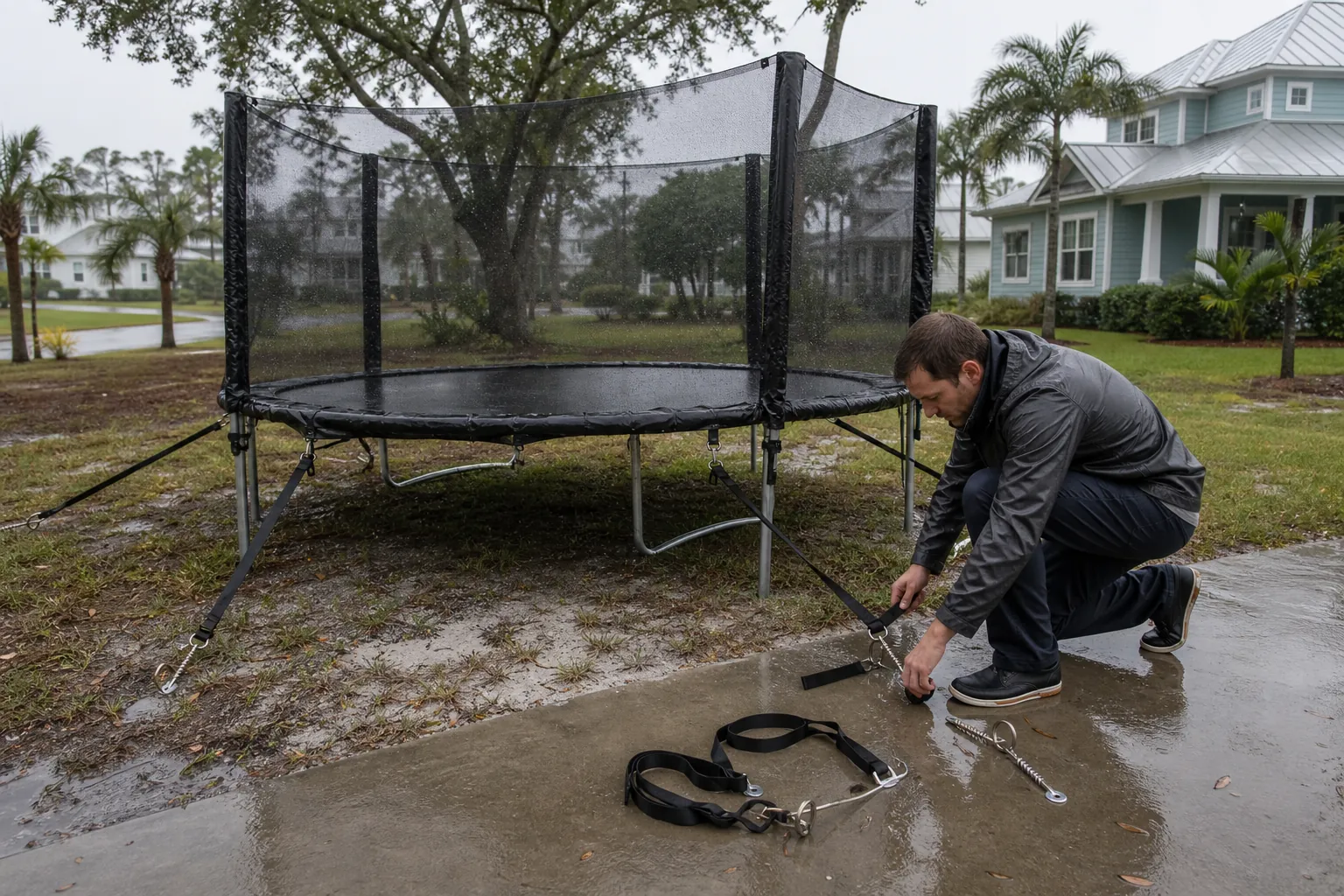
No. Anchors should not be treated as a guarantee against movement or damage. Their suitability depends on the equipment, installation, soil conditions, and manufacturer’s requirements. An anchored frame still has exposed components that can catch wind.
The jumping mat and enclosure create broad surfaces. Removing them according to the manual reduces exposed material, but it does not certify the remaining frame as safe. Manufacturer guidance may call for more extensive disassembly or indoor storage.
Do not improvise by attaching a trampoline to a fence, tree, vehicle, or utility structure. That can transfer force to something never intended to support it. Avoid adding weights or ropes without manufacturer guidance, especially where they create trip hazards or interfere with disassembly.
Ground conditions matter, too. Inspect existing anchors for looseness, corrosion, and visible movement. Do not assume a previously firm installation will remain equivalent after the surrounding soil becomes saturated.
If you cannot complete the recommended preparation, seek appropriate help while the weather is still safe. A debris hauler can discuss unwanted equipment, but hauling advice is not a substitute for product-specific anchoring or assembly instructions.
How should you take apart and store a trampoline?
Use the manufacturer’s sequence rather than a universal removal order. The following checklist organizes the work without replacing that sequence. Stop if a connection is seized, a tube is unstable, or you cannot safely control a component.
- Clear the work zone. Remove toys, furniture, hoses, and other obstacles so helpers can move without stepping over loose items.
- Document the equipment. Take photos of brackets, poles, springs, and frame joints, and label similar-looking sections if necessary.
- Remove accessories as directed. Place ladders, basketball attachments, covers, and removable items into the planned storage area.
- Disassemble the enclosure and jumping components according to the manual. Use the specified tools and keep your face and hands away from spring release paths.
- Organize the hardware. Put bolts, pins, and small fittings into labeled containers so they cannot scatter or disappear.
- Move the components into secure storage. Keep them away from exits, electrical equipment, and areas that need to remain accessible.
- Check the yard again. Look for forgotten straps, tools, packaging, and loose pieces before finishing.
Springs store tension, and long poles can be awkward to handle. Gloves and eye protection can help with ordinary handling hazards, but they do not make a risky procedure safe. Follow the manual’s tool and assistance requirements.
Dry fabric before longer-term storage when practical. If urgent preparation requires packing damp material, inspect and dry it later when conditions allow. Store sharp hardware separately from the mat and net to avoid punctures.
Where should trampoline parts go before heavy rain and wind?
Store components inside a suitable enclosed space whenever the manufacturer’s instructions and your property layout allow. A garage or shed is useful only if the parts fit securely and do not obstruct essential access.
Long frame sections should not lean loosely against a garage door or sit where someone must climb over them. Secure stored pieces against ordinary tipping and rolling. Keep springs and fasteners in closed containers rather than open trays.
- Keep evacuation routes, doorways, and access to emergency supplies clear.
- Place fabric components away from sharp edges, chemicals, and equipment that could damage them.
- Do not put parts into drainage swales, ditches, or low spots as a temporary storage solution.
- Avoid storing loose components under an open porch where they remain exposed.
- Confirm that a proposed storage location does not block access to shutoffs or electrical panels.
A tarp is not equivalent to secure indoor storage. Draping one over an assembled trampoline adds another loose surface unless the product instructions specifically address that arrangement. Do not use a cover as a replacement for recommended disassembly.
If space is limited, measure the longest components before starting. Knowing what will fit prevents a half-disassembled trampoline from becoming an outdoor pile with no safe destination.
What nearby yard hazards should Palm Coast homeowners address?
Clear movable items around the trampoline and inspect the surrounding area before focusing only on the frame. Preparation is easier when the work zone, storage route, and potential debris pickup area are already accessible.
Move lightweight planters, toys, loose decorations, and removable outdoor equipment into appropriate storage. Check for broken branches on the ground and accumulated yard debris that could obstruct drainage or create handling hazards.
Look upward without standing under damaged limbs. Tree concerns require a separate assessment, especially when branches are cracked, hanging, or close to structures. The Palm Coast prestorm tree assessment guide provides a useful companion checklist. Do not attempt overhead cutting simply to finish trampoline preparation.
Keep visible drainage paths clear of your own loose yard material where it is safe to do so. Do not enter moving water, disturb drainage structures, or push debris into a ditch. If a drainage concern is beyond routine yard cleanup, seek guidance from the responsible property manager or public agency.
For broader planning, the Northeast and Central Florida yard readiness guide covers additional outdoor priorities. Regional advice can help households elsewhere along Florida’s east coast, but it does not establish a hauling company’s service area.
When should you stop outdoor preparation?
Stop before conditions make the work unsafe. Do not wait until wind is moving components, lightning is nearby, water is rising, or official instructions require sheltering or evacuation. Equipment can be replaced; completing disassembly is not worth an injury.
Set your preparation schedule around available daylight, helpers, storage, and current official guidance. A calm-weather practice run can reveal stuck bolts or missing tools before urgent work is necessary.
- Stop if a frame section starts moving unpredictably or helpers cannot maintain control.
- Stop if standing water hides the ground, hardware, or electrical hazards.
- Stop if thunder or lightning makes outdoor work unsafe.
- Leave unfinished equipment alone when emergency instructions require you to move to safety.
Do not chase a shifting trampoline or climb onto its mat to hold it down. Do not drive onto a wet lawn to pin the frame in place. These improvised actions create additional hazards without providing a dependable preparation method.
After stopping, stay in the appropriate safe location and follow official instructions. Resume inspection or cleanup only when conditions and access permit.
How should damaged trampoline debris be prepared for hauling?
Keep trampoline material separate from vegetation until the receiving hauler confirms how it should be handled. A trampoline can contain metal tubing, springs, fabric, foam, and plastic. It should not automatically be treated as an ordinary branch pile.
Before requesting pickup, photograph the damaged equipment from a safe position. Include views that show its approximate size, condition, and location. Explain whether it remains assembled, whether pieces have sharp edges, and whether it is tangled with other material.
Grapple equipment needs an accessible pickup arrangement. A pile that looks convenient to a homeowner may be obstructed by wires, parked cars, fences, or soft ground. Ask for staging guidance rather than assuming a truck can reach into a backyard.
- Keep metal sections and fabric separate from branches when the hauler requests material separation.
- Leave access to sidewalks, driveways, mailboxes, and emergency routes unobstructed.
- Identify sharp or protruding pieces and ask how they should be contained.
- Do not place material against utility cabinets, poles, hydrants, or fences.
- Confirm an authorized staging location before moving debris toward a road.
The grapple truck pickup preparation checklist explains useful access and staging considerations. For cleanup after severe weather, review the post-hurricane yard debris staging guide as well. Confirm requirements for your property rather than assuming every location uses the same arrangement.
Call Daytona Grapple Trucks at (386) 481-7913 to discuss debris hauling. Provide your address and material details so service coverage, acceptance, access, and scheduling can be confirmed before you stage a pile.
How do you inspect a trampoline before using it again?
Keep the trampoline out of use until it has been inspected and correctly reassembled. A frame that appears upright can still have bent joints, stretched springs, or damaged enclosure connections.
Wait until the yard is safe to enter. Watch for hanging branches, unstable fencing, hidden sharp objects, and electrical hazards. Do not approach equipment touching a fallen wire, and keep others away while contacting the appropriate emergency or utility service.
Compare the equipment with your preparation photos and the manufacturer’s parts list. Check each structural connection, the mat attachment points, padding, enclosure supports, and anchoring components. Look for damage rather than merely checking whether every piece is present.
Do not straighten bent structural tubing or substitute miscellaneous hardware unless the manufacturer specifically approves the repair. Replace damaged components with appropriate parts, or retire the equipment if it cannot be restored safely.
Reassemble only on a suitable site following the manual’s clearance and ground requirements. Keep children off the equipment during assembly and inspection. If there is uncertainty about structural condition, contact the manufacturer or a qualified assembler before allowing use.
Frequently asked questions about trampoline storm preparation
Should I flip my trampoline upside down?
Do not assume flipping it is a safe preparation method. It can damage the enclosure or frame and leave equipment exposed. Follow the manufacturer’s instructions for disassembly, anchoring, and storage instead of relying on an improvised position.
Can I leave the frame outside after removing the mat?
Only follow an outdoor storage arrangement supported by your model’s instructions. Removing the mat does not guarantee that the frame will stay put. Full disassembly and secure storage may still be necessary.
Should I cut the jumping mat to remove it faster?
No. Cutting is not a substitute for the manufacturer’s removal procedure and may create a poorly controlled release of tension. Use the specified tools and sequence, and stop if you cannot safely handle the components.
Can trampoline metal go into my yard debris pile?
Do not mix it in without approval. Tell the hauler that the load includes trampoline metal, springs, fabric, and any other materials. Keep vegetation separate until acceptance and staging instructions are confirmed.
Will a grapple truck remove an assembled trampoline?
That depends on the equipment, access, condition, and hauler’s requirements. Send photos and describe the location before moving it. Do not assume an assembled trampoline can be lifted safely or that disassembly is included.
Does this guide confirm hauling service throughout the Florida corridor?
No. The preparation advice is regional, but service availability must be confirmed for your exact address. Call Daytona Grapple Trucks at (386) 481-7913 with your location, photos, and material description to discuss the next step.
What is the simplest preparation plan to keep on hand?
Keep the manual, tools, labeled containers, and storage plan ready before urgent preparation begins. Decide who will help, where each component will go, and how unwanted equipment will be evaluated for removal.
For Palm Coast homeowners, a practical plan is straightforward: inspect early, follow the manufacturer’s disassembly instructions, store parts securely, clear nearby loose material, and confirm debris hauling arrangements before staging anything. Stop outdoor work when conditions become unsafe, and inspect the equipment thoroughly before putting it back into use.
Related guide: Get Florida Outdoor Fixtures Ready For Storm Season.
Call (386) 481-7913 to talk through next steps.