
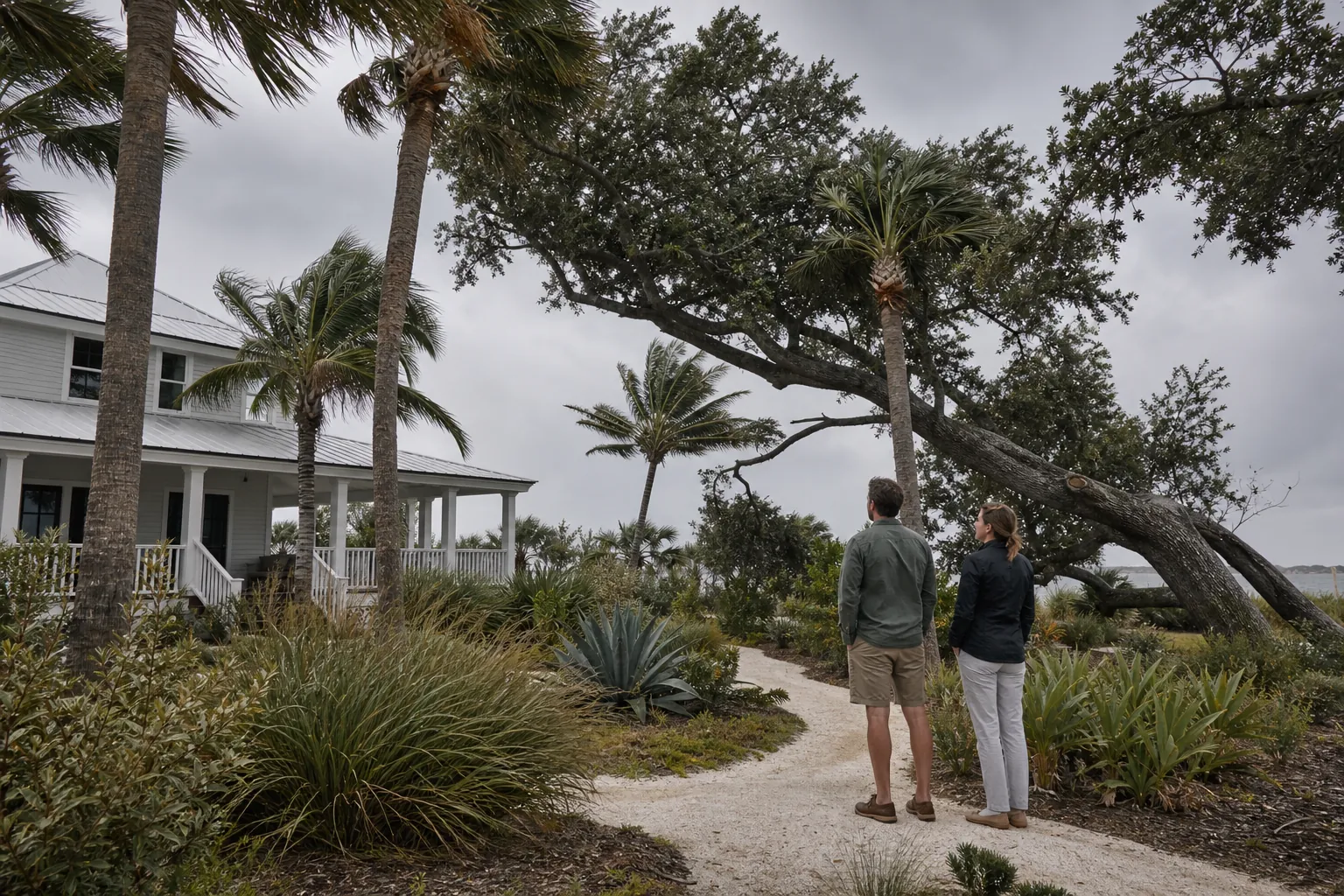
A wind-resistant Florida yard starts with healthy trees, secured outdoor items, open drainage paths, and a practical plan for removing bulky debris. No landscape is stormproof, but thoughtful maintenance can reduce avoidable hazards and make cleanup more manageable.
For property owners researching wind resistant yard planning Florida, the most useful approach combines landscape decisions with hauling logistics. A pile of branches waiting for disposal is still loose material. A cleanup plan that overlooks overhead wires or saturated ground can create another safety problem.
This guide from Daytona Grapple Trucks focuses on preparation, material separation, and grapple truck access. Its recommendations apply broadly across Florida. References to the Jacksonville-to-Brevard corridor provide regional planning context, not a claim that hauling service is available at every location.
What makes a Florida yard more resistant to wind?
A more wind-resistant yard has fewer unsecured objects, trees maintained for structural health, and landscape features selected for the site's conditions. Start with the things you can safely inspect from ground level rather than treating every plant as a problem.
Look for broken branches, visibly cracked limbs, leaning features, loose edging, unsecured pots, and forgotten construction scraps. Do not assume that a tall tree is unsafe or that a short tree is safe. Tree condition, rooting space, and surrounding structures all matter.
Use a qualified tree professional to evaluate significant defects or trees near buildings, parking areas, and utilities. Avoid topping trees as a preparation shortcut. Indiscriminate cutting can leave wounds and weak regrowth rather than create a durable structure.
- Remove fallen branches and accumulated landscape waste before they become a larger storage problem.
- Move lightweight furniture, empty pots, toys, and portable decorations into suitable enclosed storage.
- Inspect trellises, fence panels, shed doors, and landscape screens for loose connections.
- Keep tree work and debris staging away from electrical lines and utility equipment.
- Choose plants suited to the available space, soil, light, and moisture conditions.
Think in terms of manageable exposure, not guarantees. Even a carefully maintained yard may require cleanup after severe weather.
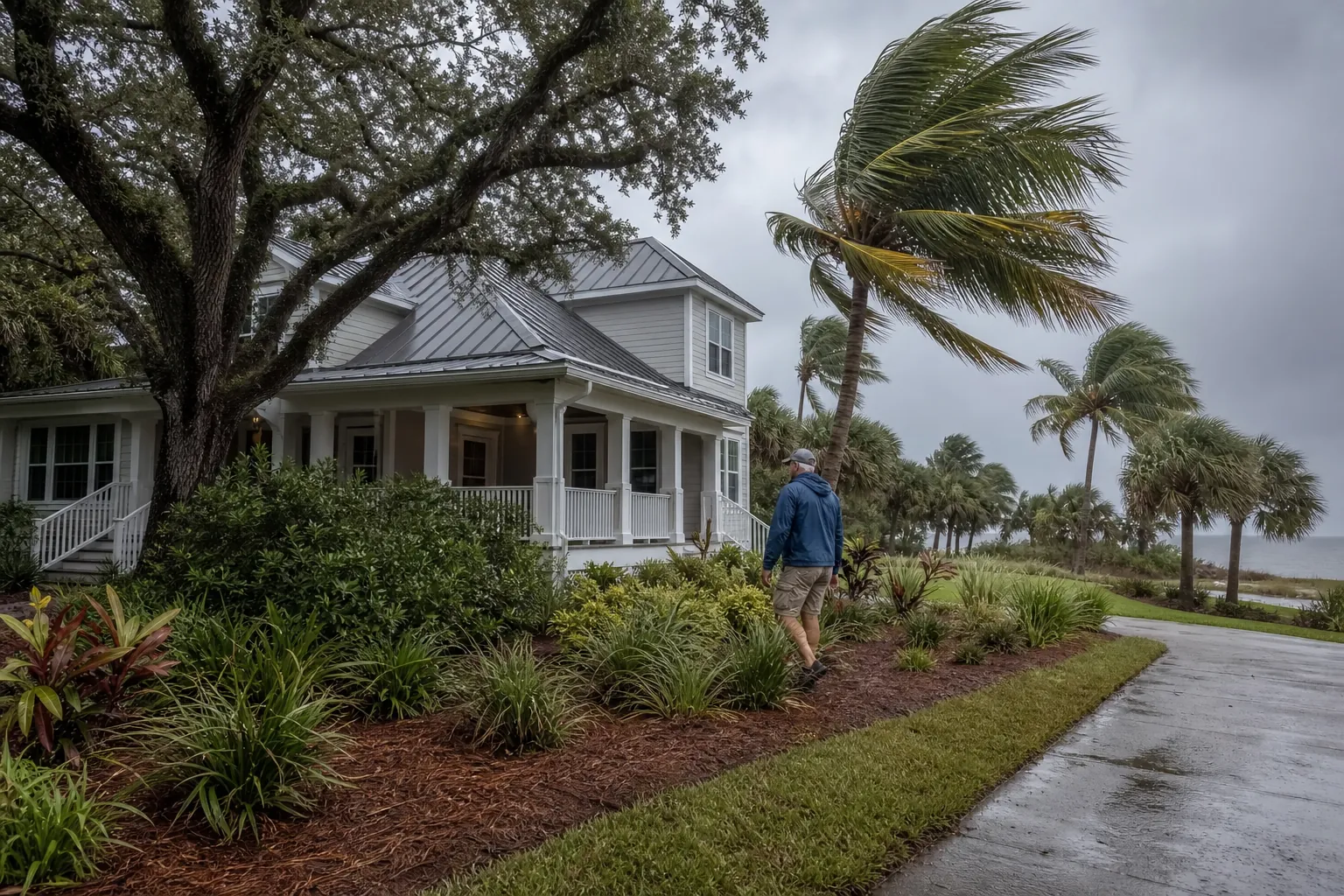
How should you plan trees and planting beds?
Plan planting beds around mature plant size, healthy root development, and access for maintenance. A tree that fits when planted may eventually crowd a roof, driveway, gate, or utility corridor.
Before adding trees, review the space they will occupy above and below ground. Consider buildings, paved surfaces, underground utilities, and the route a future maintenance crew would need. Obtain appropriate utility-location guidance before digging.
Do not rely on a generic list of wind-resistant species alone. Suitability varies with drainage, salt exposure, soil depth, and other site conditions. A locally knowledgeable landscape or tree professional can help match a planting choice to the property.
Keep planting beds from becoming storage areas for branches, spare lumber, or unused edging. Those materials complicate maintenance and may need separate disposal arrangements later. Leave sufficient room to inspect fences and access drainage features without trampling plants.
When renovating a mature landscape, schedule debris removal as part of the work. Our guide to bulk yard waste after landscaping in Edgewater discusses the disposal side of landscape projects. It is a project-specific resource, while this page addresses whole-yard planning.
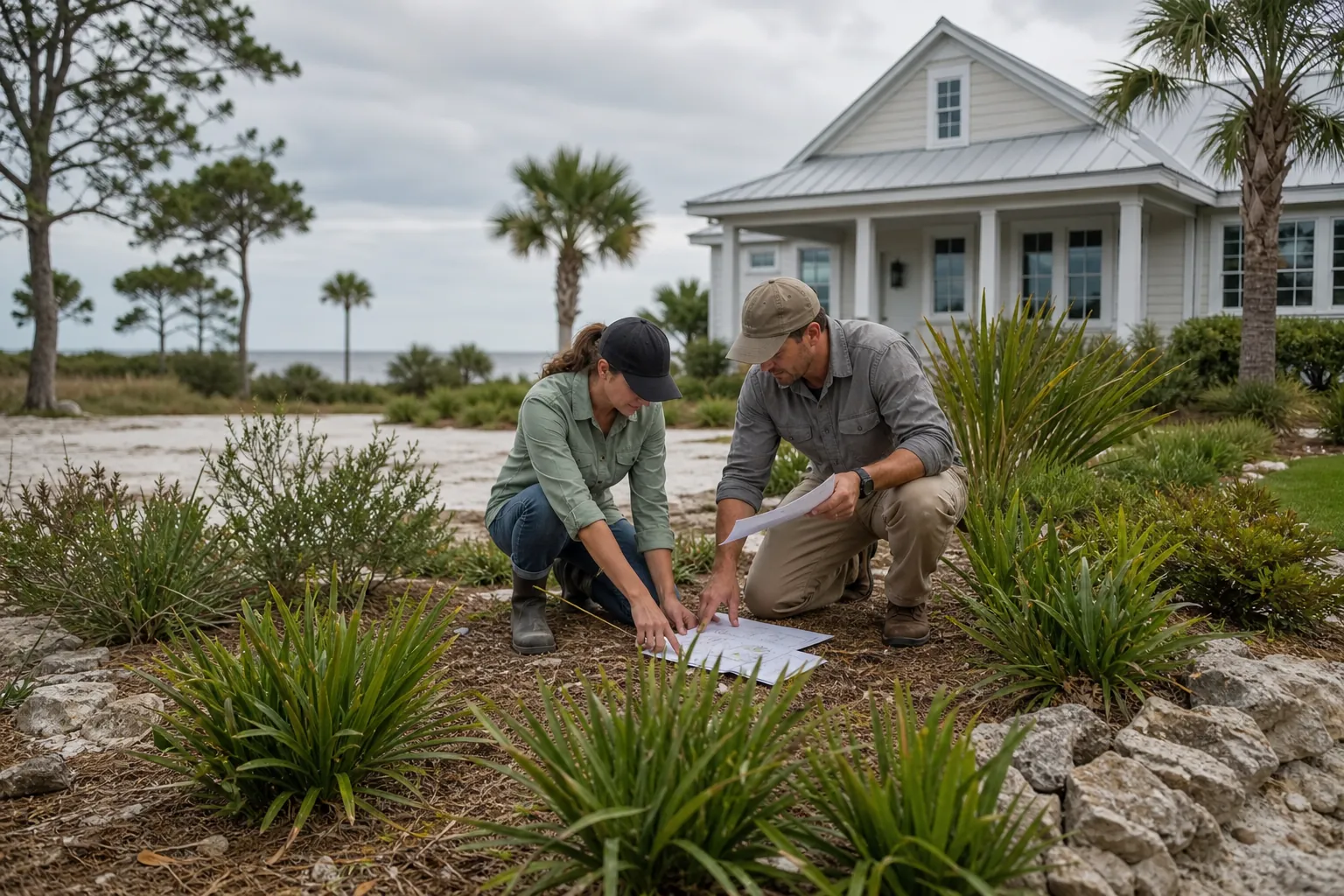
How can yard planning help drainage during heavy rain?
Yard planning helps drainage by keeping existing water pathways clear and avoiding debris piles where runoff needs to travel. It does not fix every flooding problem, and hauling debris is not a substitute for evaluating an underlying drainage defect.
Observe the property during ordinary rainfall from a safe location. Note where water collects, whether downspouts discharge against stored materials, and whether leaves gather near visible inlet openings. These observations help identify maintenance needs before a larger cleanup becomes necessary.
Keep loose leaves, grass clippings, mulch stockpiles, and branches out of drainage swales and away from inlet openings. Do not push debris into a ditch or onto neighboring property. Avoid changing grades or redirecting runoff without appropriate professional advice.
- Clear accessible surface debris only when the area is safe and the task does not involve entering moving water.
- Store bagged materials and landscape supplies away from known low spots.
- Keep downspout outlets visible so blockages are easier to notice.
- Report blocked public drainage infrastructure to the responsible local agency instead of attempting repairs yourself.
Floodwater can conceal sharp objects, unstable ground, and electrical hazards. For cleanup boundaries and precautions, read flooding and yard debris safety for Florida property owners.
What should you do before hurricane season?
Before hurricane season, complete routine maintenance, decide where portable objects will be stored, and establish a debris removal plan. Preparation is easier when it is spread across ordinary maintenance visits instead of concentrated into a last-minute work session.
The Atlantic hurricane season runs from June 1 through November 30. Readiness should support official safety instructions, not compete with evacuation preparations or emergency needs.
- Walk the property and document existing damage, loose objects, and areas where debris tends to collect.
- Arrange professional assessment of questionable trees and repairs to unstable outdoor structures.
- Remove accumulated branches and landscape project leftovers through an appropriate collection or hauling option.
- Identify enclosed storage for portable yard items and confirm that doors and latches function.
- Choose a possible debris staging area that avoids drains, utilities, sidewalks, and essential access routes.
- Record your collection contacts and check their material and access requirements before scheduling work.
- Review the plan when landscaping, fencing, parking arrangements, or household needs change.
If hazardous conditions are approaching, do not begin risky pruning or operate equipment outdoors simply to finish the checklist. Follow current official instructions and prioritize personal safety.
For a separate seasonal checklist, see hurricane-season yard readiness in northeast and central Florida. That guide focuses on seasonal preparation rather than long-term landscape layout.
Where should debris go before grapple truck pickup?
Place debris only in an agreed staging area that the hauling operator can safely reach. The best location is not necessarily the nearest roadside spot, and permission to use a location should never be assumed.
A grapple truck needs space for the truck and its lifting equipment. Overhead wires, low branches, soft ground, parked vehicles, fences, and nearby structures can limit pickup. Share site photos and describe these obstacles when discussing the job.
Keep piles clear of utility poles, electrical equipment, hydrants, drainage features, and pedestrian routes. Never stack branches against a wire or beneath a line simply because the area is otherwise open. Our debris pile and utility-line safety guide explains why separation matters.
Do not move a heavy pile repeatedly to guess at a workable location. Confirm the plan first, particularly on a small lot or beside a busy road. Avoid staging on newly landscaped ground or surfaces whose load capacity is uncertain.
Gated properties require more than a rough opening measurement. Turning space, overhead clearance, ground condition, and equipment configuration also matter. Review grapple truck access and gate-width considerations before assuming a truck can enter.
Which materials should stay separate during cleanup?
Separate vegetative debris from construction materials, household waste, and anything potentially hazardous. Material separation helps a hauling provider assess the job and determine appropriate handling and disposal arrangements.
Branches, brush, and other landscape waste should not become a catchall pile for fence hardware, damaged furniture, paint containers, or renovation scraps. Tell the provider exactly what is present, including items buried beneath the visible surface.
- Keep branches and brush apart from concrete, bricks, and masonry fragments.
- Place drywall and other renovation waste in a separate agreed area rather than mixing them into vegetation.
- Set aside containers of fuel, pesticides, paint, and other chemicals for appropriate disposal guidance.
- Disclose sharp metal, broken glass, embedded fasteners, and unusually heavy pieces before pickup.
- Ask about acceptance requirements for stumps, root balls, soil, and treated lumber instead of assuming they match ordinary brush.
Different materials introduce different handling questions. See the guides to concrete and masonry debris and drywall debris hauling for those specific waste streams.
If the contents are uncertain, avoid digging through an unstable pile yourself. Photographs and a clear description can help start the assessment, but concealed materials still need to be disclosed when identified.
How does planning differ across Florida's east-coast corridor?
The same basic principles apply across the corridor, but each property's layout and surroundings determine the useful details. County names alone do not establish tree suitability, drainage behavior, access conditions, or hauling availability.
In Jacksonville and Duval County, as elsewhere, distinguish between private drainage features and public infrastructure. For St. Augustine and St. Johns County properties, check the actual staging space rather than assuming a street frontage will accommodate equipment.
In Palm Coast and Flagler County, assess gates, planting beds, and nearby utilities before selecting a pickup spot. Daytona Beach, New Smyrna Beach, and other Volusia County properties likewise need site-specific checks of parking, overhead clearance, and ground stability.
For Titusville, Cocoa, Melbourne, and other Brevard County locations, use the same process: inspect the individual site, confirm the responsible collection provider, and agree on material placement. These are regional planning recommendations, not promises of Daytona Grapple Trucks service throughout the corridor.
Where coastal exposure, limited space, or recurring wet ground affects a property, discuss those conditions with the appropriate professional. Do not infer a storm impact or a service boundary from a regional planning guide.
What should commercial properties include in their plan?
Commercial properties need a debris plan that protects customer access, employee routes, delivery operations, and emergency access. Assign responsibility before cleanup begins so landscaping crews and property managers do not create conflicting piles.
Identify where materials can be staged without blocking accessible routes, loading areas, fire access, or drainage. Confirm any use of shared space with the responsible party. Keep tenants informed when landscaping or hauling changes normal access.
Separate ongoing maintenance waste from cleanup debris and renovation materials. A contractor removing damaged fencing should not automatically add it to a brush pile prepared by a landscape crew.
Maintain a simple record of pile locations, material types, site restrictions, and the person authorized to approve pickup arrangements. The commercial property debris hauling guide addresses those operational concerns in more detail.
What are the answers to common yard-planning questions?
Can any Florida yard be completely windproof?
No. Planning can reduce unsecured materials and address avoidable hazards, but no yard design guarantees that trees, structures, or outdoor objects will withstand every weather event.
Should I prune every tree before hurricane season?
No. Pruning should respond to tree condition and appropriate maintenance needs. Have questionable trees assessed rather than using aggressive cutting as a universal preparation method.
Can a grapple truck collect debris from behind my fence?
Possibly, but only after the operator confirms safe reach or access. Fence height, gate openings, utilities, obstacles, and ground conditions all affect whether the arrangement is workable.
Should I pile branches beside a storm drain?
No. Choose another agreed location that leaves the drain and runoff path clear. Loose material near an inlet can obstruct drainage and complicate safe collection.
Can wet yard debris be hauled?
Ask the provider about the specific materials and site conditions. Wet debris may be heavier, and saturated ground may prevent safe truck access even when the material itself is acceptable.
Can I mix broken fencing with tree limbs?
Do not mix them without the provider's approval. Fencing may contain nails, metal, or treated wood and can require different handling from ordinary vegetative debris.
Does this guide confirm service throughout northeast and central Florida?
No. The corridor discussion is regional advice only. Contact Daytona Grapple Trucks to confirm whether your address, debris type, and site conditions fit available service.
How do you turn the plan into a practical cleanup request?
Start with a clear description of the materials, their location, and the access constraints. Provide the property address, approximate pile dimensions, photos, and details about gates, wires, parked vehicles, and soft ground.
Explain whether the pile is routine landscape waste, debris from a yard renovation, or storm cleanup material. Mention mixed contents and any items that may need separate handling. Avoid estimating volume so confidently that hidden material gets overlooked.
A useful yard plan connects maintenance with removal: keep trees appropriately cared for, secure portable objects, protect drainage routes, and arrange disposal before debris accumulates. Revisit the plan after property changes and major landscape work.
To discuss storm debris hauling, grapple truck cleanup, or removal of accumulated yard waste, call Daytona Grapple Trucks at (386) 481-7913. Confirm service availability, acceptable materials, and a safe staging location before moving debris.
Call (386) 481-7913 to talk through next steps.