
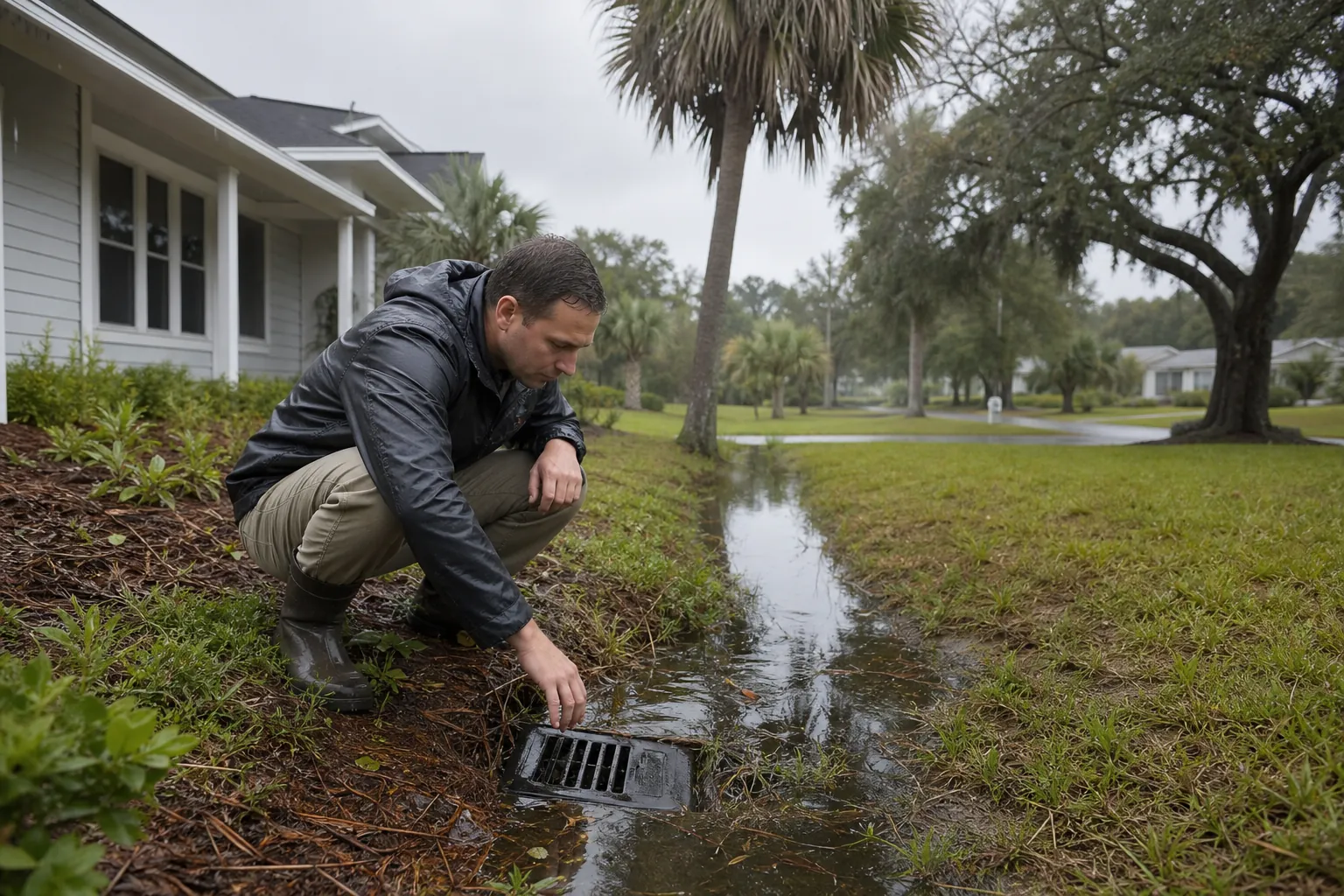
A yard drainage inspection before heavy rain in St. Johns County should start with one practical question: can water move through your property without running into loose debris, blocked openings, or an unsafe pickup pile? Walk the yard while conditions are dry, identify existing drainage routes, and remove accessible loose material without changing grades or disturbing drainage structures.
This guide focuses on the connection between yard debris, drainage access, and grapple truck cleanup planning. It is evergreen preparation advice, not a current storm advisory or a forecast for St. Johns County. Check current National Weather Service guidance before outdoor work, and stop when weather or ground conditions become unsafe.
For residents around St. Augustine and elsewhere in St. Johns County, the goal is to identify problems early and match them to the right help. Daytona Grapple Trucks can discuss debris hauling needs and confirm whether service is available at your address. A hauling conversation does not replace a drainage evaluation.
What Should You Check First Before Heavy Rain?
Check the places where water enters, crosses, and leaves your yard before inspecting individual debris piles. These locations reveal whether loose branches, leaves, or landscaping waste could interfere with an existing drainage route.
Start at the house and work outward. Look at downspout outlets, the edges of patios and driveways, low lawn areas, visible drain openings, and any existing swales. A swale is a shallow channel intended to convey water. Do not assume every low spot is a drainage channel or that every pipe opening belongs to your property.
Use previous observations as evidence. Where did water collect during ordinary rain? Did it disappear after the rain stopped, or remain long enough to soften the ground? Did leaves gather against a fence or at a driveway edge? These clues are useful, but they do not establish the cause of a drainage problem.
- Look for loose leaves and twigs covering accessible surface openings without lifting grates or reaching into pipes.
- Check whether branches, mulch bags, or landscape clippings sit across a visible drainage route.
- Note downspouts that discharge toward the foundation or directly into an existing debris pile.
- Identify low spots that would make poor staging areas for material awaiting pickup.
- Keep children and pets away from unstable piles, open structures, and areas with uncertain footing.
Leave buried infrastructure alone. If an opening is damaged, unusually deep, or difficult to identify, photograph it from a safe position and ask the appropriate property manager, drainage professional, or public agency who is responsible for it.
How Can You Inspect The Yard Without Creating A New Problem?
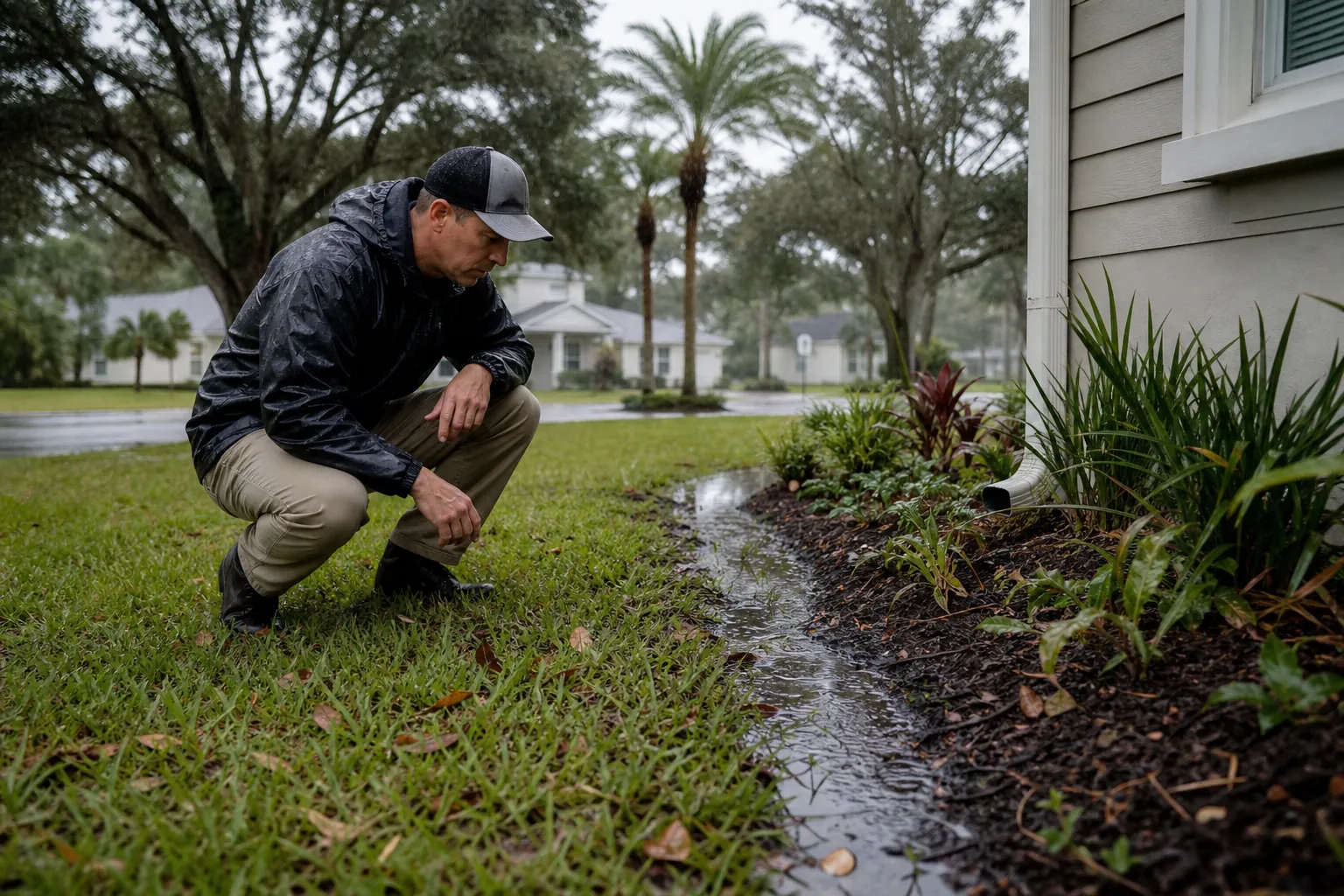
A useful inspection documents conditions and removes simple surface obstructions. It does not involve excavating channels, redirecting runoff toward a neighbor, or entering standing water to investigate a hidden blockage.
Choose daylight and dry footing. Wear sturdy shoes and gloves when handling small loose debris. Stay away from damaged trees, hanging limbs, utility lines, unstable fences, and sharp waste. Do not work outside during lightning or other hazardous weather.
Follow this sequence so your inspection produces a usable plan rather than a scattered collection of observations.
- Photograph the yard from several fixed viewpoints, including downspout outlets, low areas, and existing drainage routes.
- Walk the perimeter and identify accessible surface debris that could move into those routes.
- Record where water has previously collected, noting whether the observation followed irrigation, ordinary rain, or another identifiable source.
- Separate small hand-removable material from large limbs, heavy logs, mixed waste, and items that need professional handling.
- Choose a possible pickup location on firm ground that does not cover a drain or interrupt an existing flow path.
- Contact the appropriate hauling or drainage provider with photographs, an approximate volume, and access details.
- Recheck the yard after safe cleanup to confirm that relocated material has not created another obstruction.
Keep measurements simple. An estimated pile length, width, and height is usually more informative than calling it a large pile. Explain whether material is loose, tangled, bagged, or mixed with nonvegetative waste. Do not climb onto a pile to measure it.
For a documentation-focused approach, see the guide to recording yard conditions before hurricane season. Its recordkeeping method is useful regionally, while its Flagler County focus remains separate from this St. Johns County inspection guide.
Which Yard Debris Can Interfere With Drainage?
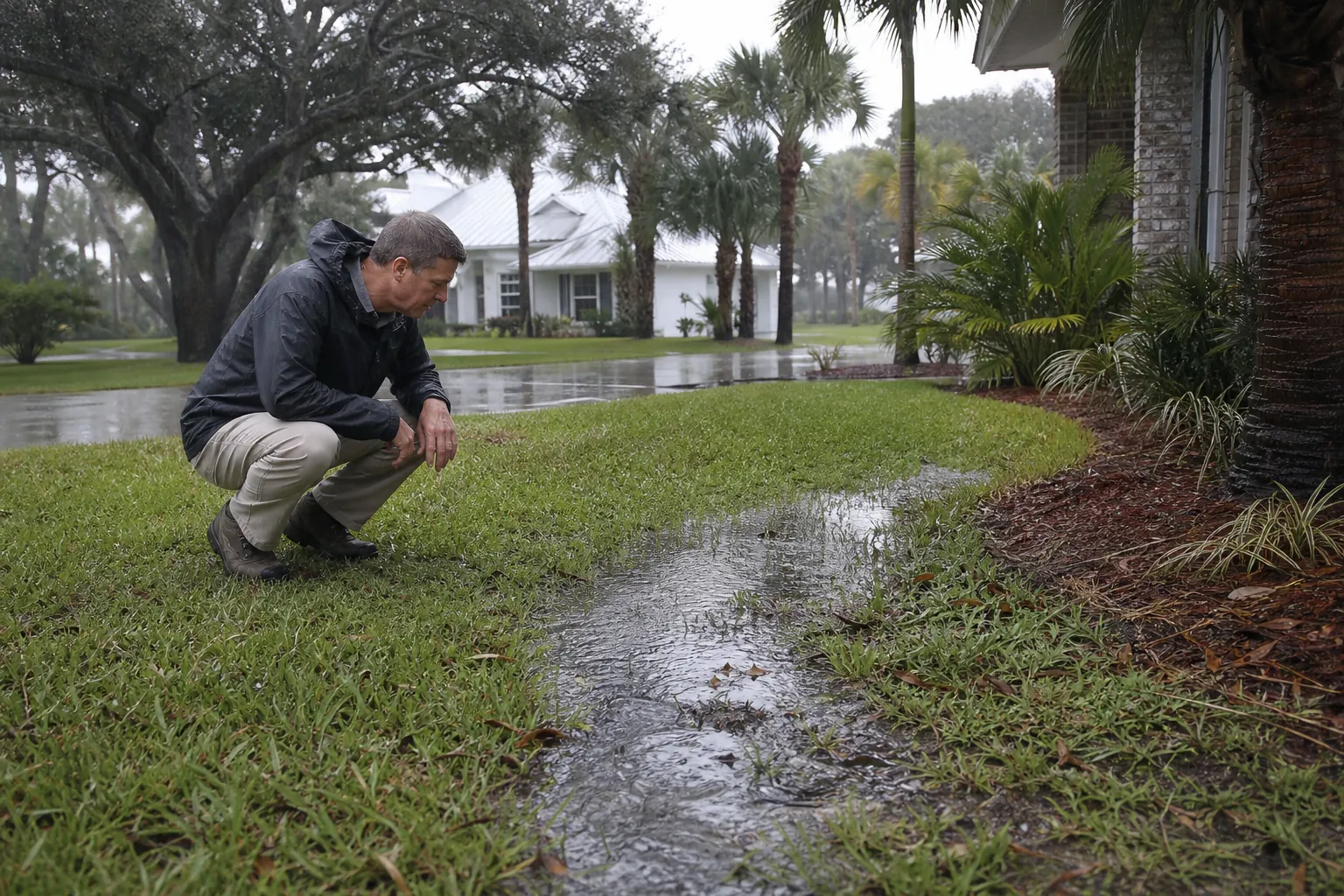
Leaves, small branches, cut vegetation, and poorly placed piles can obstruct surface flow or collect against drainage openings. Removing those materials may restore access to an existing route, but it cannot correct every cause of standing water.
Pay attention to how material is arranged. A thin layer of scattered leaves differs from a compacted mat covering an opening. A branch lying beside a swale differs from a tangled brush pile spanning it. Photograph both the material and its relationship to the drainage feature.
- Move manageable loose branches away from existing swales and accessible drain entrances.
- Collect clippings that have accumulated along a driveway edge where water normally passes.
- Keep bagged yard waste out of low areas where bags could shift or break apart.
- Separate soil, concrete, fencing, household items, and other mixed waste from vegetation until a hauler confirms acceptance.
- Ask about handling requirements for long, tangled, or bulky vegetation rather than assuming every load is equivalent.
Fresh landscaping work deserves a second look. New mulch, removed shrubs, and trimming piles can change how a previously clear route functions. Do not solve this by scraping away established soil or altering the slope of the property.
The Edgewater guide to bulk yard waste after landscaping covers project-generated material. For difficult vegetation, the Volusia County bamboo debris hauling guide addresses a more specific material-handling problem. Neither replaces inspection of your own drainage routes.
Where Should Debris Be Staged For Grapple Truck Pickup?
Stage debris only in a location approved for the planned pickup that preserves drainage and allows safe equipment access. The most convenient place for carrying branches is not always suitable for a grapple truck.
A grapple truck uses a mechanical loading arm to handle bulky material. Its operator needs to evaluate the pile, surrounding obstacles, overhead clearance, and the place where the truck would work. A homeowner should not assume that the truck can enter a wet lawn or reach over every fence.
Before building a pile, send photographs of the proposed location. Include the street approach, driveway, nearby trees, visible wires, fences, parked vehicles, and drainage features. Ask whether material should be moved to a different location before pickup is arranged.
- Keep the pile clear of visible drains, swales, and places where water already collects.
- Do not place material beneath utility lines or against poles, meters, hydrants, or utility equipment.
- Keep sidewalks, roadway sightlines, and access routes unobstructed.
- Identify septic areas, irrigation equipment, and other sensitive features when discussing access.
- Do not place debris in a roadway, public drainage area, or shared property without confirming the applicable requirements.
- Tell the hauler about soft ground, narrow entrances, and any changes in access conditions.
If moving a heavy limb requires entering a ditch, crossing unstable ground, or working near wires, leave it in place and explain the situation. Safe staging may require a different plan or another qualified professional.
For scheduling and material organization rather than drainage diagnosis, read the prestorm yard debris hauling plan for Volusia County. Pickup availability, accepted material, and site access still need address-specific confirmation.
When Is Standing Water A Drainage Issue Rather Than A Hauling Issue?
Standing water needs further evaluation when it persists despite a clear surface route, repeatedly approaches a structure, or appears connected to a damaged drain, grading problem, or another unresolved condition. A debris hauler removes accepted material; a drainage professional investigates water-management problems.
Do not assume that a visible brush pile explains every puddle nearby. Saturated soil, roof runoff, compacted ground, and blocked or damaged infrastructure can produce similar-looking symptoms. Removing debris is one part of an inspection, not proof that the underlying condition is resolved.
Record the location and approximate extent of water from a dry, safe position. Note whether nearby accessible openings appear covered, whether a downspout discharges into the area, and whether the same location has collected water before. Avoid testing an unknown drain by forcing water into it.
- Contact a drainage professional when repeated ponding remains after accessible loose debris is removed.
- Ask the responsible agency or property manager about drainage features outside your ownership or control.
- Keep away from water near electrical equipment, damaged structures, or suspected sewage.
- Do not walk through opaque water to search for branches, holes, or drain covers.
The Brevard County guide to hidden yard debris in standing water explains why submerged material deserves caution. The same basic safety distinction applies here: inspect from stable ground and leave concealed hazards alone.
How Should You Plan Around Hurricane Season And Regional Weather?
Prepare during safe weather instead of waiting for a specific storm forecast. A repeatable inspection and hauling plan is more useful than rushed trimming or last-minute pile relocation.
Keep routine vegetation maintenance separate from emergency cleanup. Large tree work, work near utility lines, and removal of hanging limbs require appropriate professionals. Creating a fresh pile shortly before unsafe weather can leave more material to manage if pickup has not been confirmed.
This regional guidance applies to property preparation along the Jacksonville, St. Augustine, Palm Coast, Daytona Beach, New Smyrna Beach, Titusville, Cocoa, and Melbourne corridor. It does not establish Daytona Grapple Trucks service coverage in any particular city or county.
For weather decisions, consult the National Hurricane Center and the appropriate local forecast office: NWS Jacksonville or NWS Melbourne. These links are monitoring resources, not evidence of a current storm threat in this article.
Use the Brevard County hurricane yard preparation calendar for seasonal task planning. For keeping established flow routes accessible, the New Smyrna Beach drainage-path guide offers a narrower companion topic.
What Should You Tell Daytona Grapple Trucks Before Calling?
Provide your address, debris type, approximate pile dimensions, photographs, and access constraints. Those details support a practical conversation about hauling without implying that pickup is available everywhere or under every condition.
Explain whether the material comes from routine trimming, landscaping, or cleanup. Mention mixed waste, heavy pieces, wet ground, and nearby drainage features. Ask what material is accepted and whether the proposed staging location works before relocating the pile.
If nonvegetative items are involved, review the Volusia County bulk waste pickup guide to help distinguish waste categories. Acceptance still requires direct confirmation.
Call Daytona Grapple Trucks at (386) 481-7913 to discuss debris hauling and confirm service availability for your property. If your main concern is recurring standing water rather than removable debris, arrange a drainage evaluation as well.
Frequently Asked Questions
Will Removing Yard Debris Prevent Flooding?
No. Removing debris can clear an existing surface route or opening, but it cannot guarantee flood prevention. Rainfall, soil conditions, grading, and drainage infrastructure also matter. Treat hauling as debris management, not a complete drainage solution.
Can I Clear A Drain By Reaching Through Its Grate?
No. Keep your hands and tools out of unknown drainage structures. Remove only accessible loose surface material when it is safe to do so. Report damaged covers or suspected internal blockages to the responsible party.
Should I Put A Pickup Pile At The Lowest Point Of My Yard?
No. A low area may collect water or serve as part of an existing flow route. Discuss a firm, accessible staging location with the hauler, and avoid covering drainage features or placing material where it could shift.
Does A Grapple Truck Repair Yard Drainage?
No. Grapple truck hauling handles accepted bulky debris. Drainage design, excavation, pipe repair, and diagnosis are separate tasks. Ask a drainage professional to evaluate persistent ponding or runoff approaching your home.
What If Rain Starts Before My Debris Is Picked Up?
Stop outdoor work if conditions become unsafe. Do not enter rising water or move heavy material on unstable ground. From a safe location, tell the hauler whether the pile, access route, or ground conditions have changed.
Is Daytona Grapple Trucks Available Throughout St. Johns County?
Availability must be confirmed for your specific address. Call (386) 481-7913 with your location and debris details. Regional advice in this guide should not be interpreted as a promise of service coverage.
A good inspection ends with three clear outcomes: accessible drainage routes remain unobstructed, debris has a safe handling plan, and unresolved water problems go to the appropriate professional. That is a useful preparation goal even when no particular storm is forecast.
Call (386) 481-7913 to talk through next steps.