
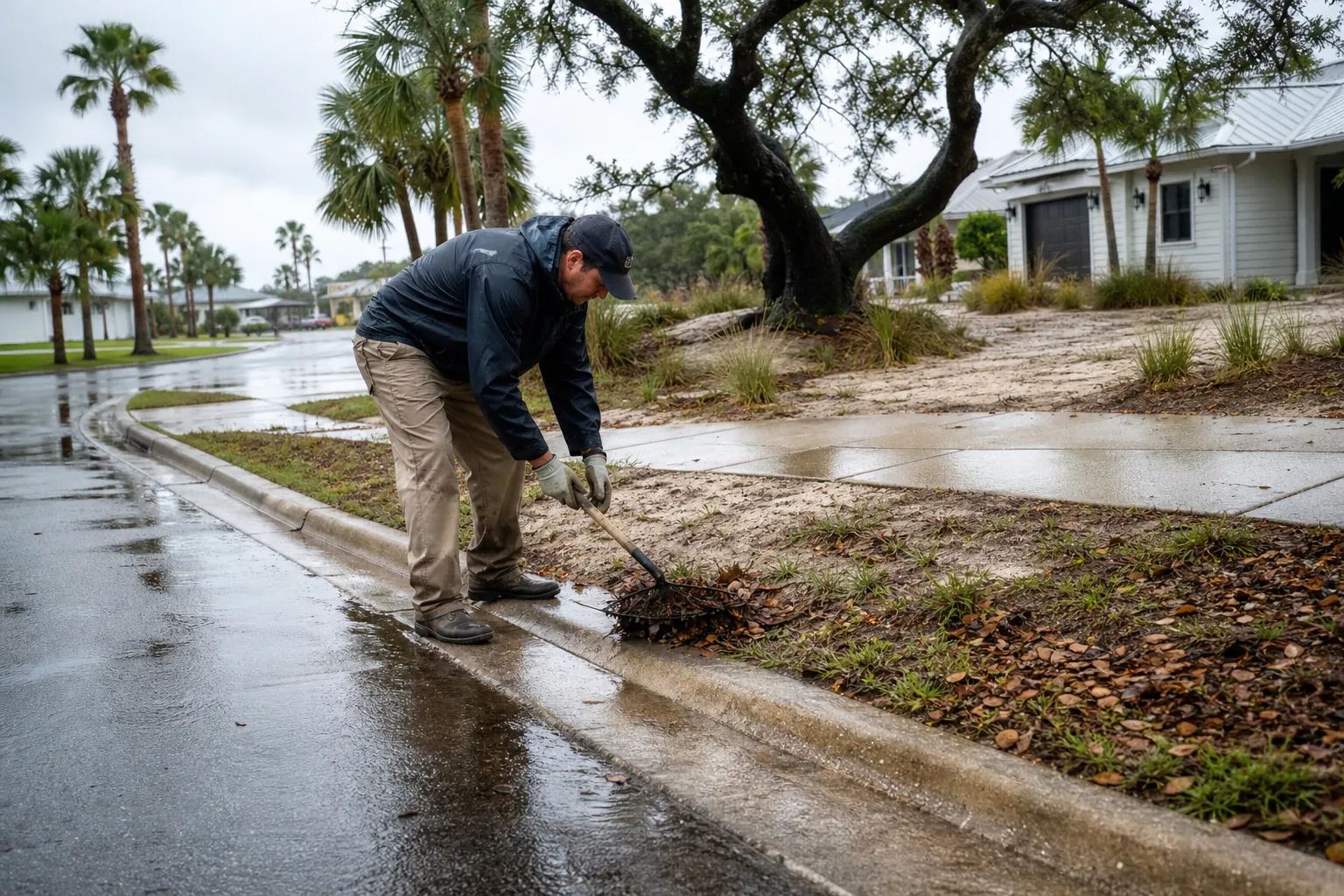
The simplest way to keep yard debris from interfering with rain runoff is to remove loose material before heavy rain and keep any remaining piles outside drainage paths. Leaves, palm fronds, branches, and grass clippings can collect at curb openings, driveway culverts, and low spots. Once water starts moving, even a small pile can become a blockage somewhere downstream.
For Florida property owners, prevention starts with where debris lands after mowing, pruning, or clearing. Daytona Grapple Trucks provides grapple truck debris hauling for bulky piles that are difficult to remove through routine yard cleanup. Hauling removes accumulated material; it does not repair drainage systems, resolve flooding, or replace tree work.
This guide to rain runoff yard debris prevention in Florida explains what to check, where to stage material, when to arrange removal, and how to avoid creating new hazards during hurricane-season preparation.
Why Does Yard Debris Interfere With Runoff?
Yard debris interferes with runoff when it narrows or blocks the route water normally follows. Loose leaves can cover a grate, while branches and fronds can catch smaller material and form a temporary dam. Water may then spread across a driveway, back into landscaping, or collect beside a building.
Florida properties use different drainage arrangements. Some rely on roadside swales and culverts; others have curb inlets, neighborhood retention systems, or shallow landscaped channels. A location that looks like unused space during dry weather may be an important water route during rain.
Debris removal reduces one preventable source of obstruction, but it cannot guarantee a flood-free yard. Saturated soil, elevated downstream water, damaged pipes, grading problems, and limited drainage capacity can all cause standing water even when the surface is clear.
Look for repeat patterns rather than assuming every puddle has the same cause. If water consistently collects after ordinary rain despite clear drainage paths, contact the appropriate drainage authority or a qualified contractor. Do not dig a new channel toward a neighboring property as a quick fix.
What Should You Check Before Rain Arrives?
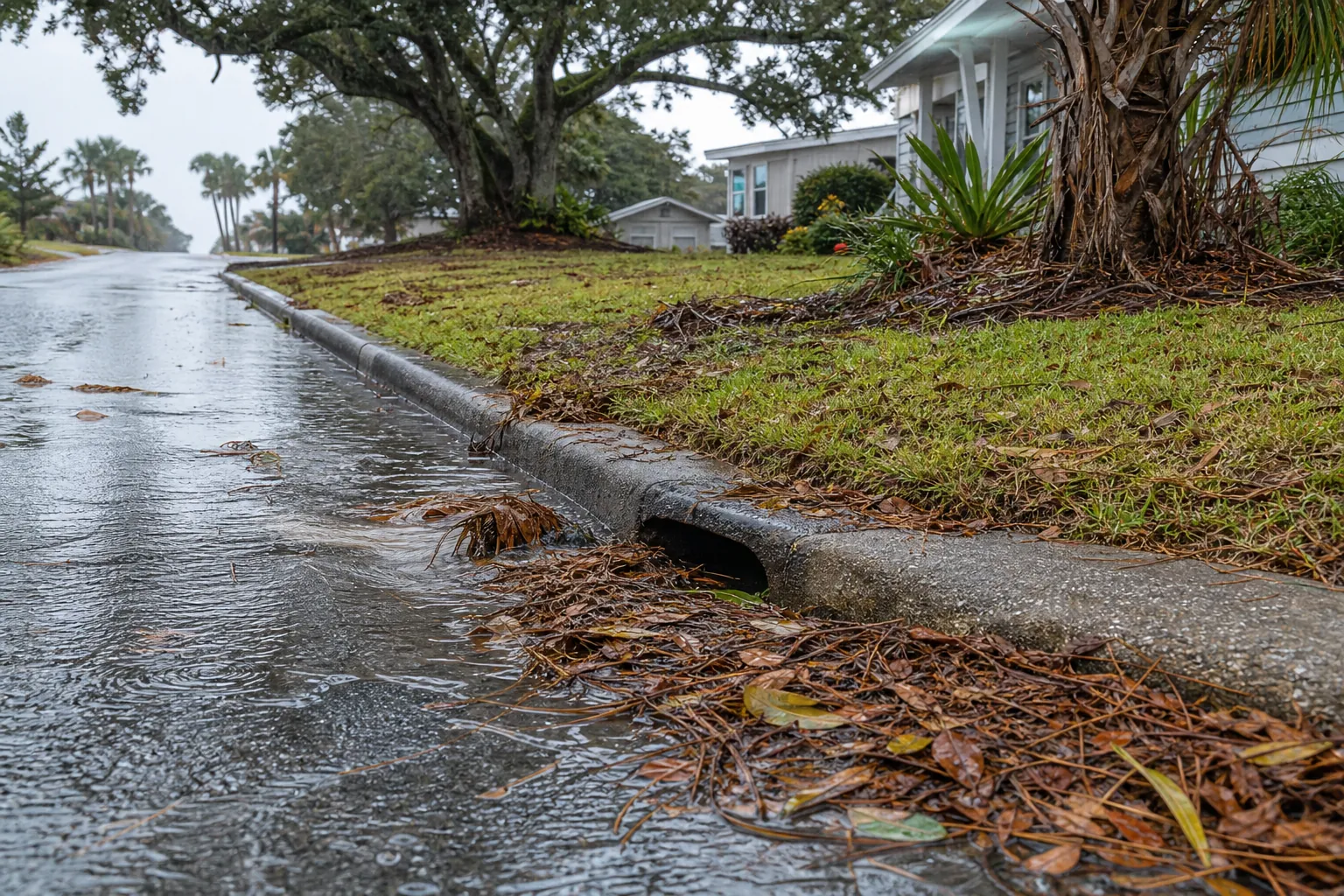
Check the places where water enters, crosses, and leaves your property. A short walk in dry conditions often reveals loose debris that can be moved safely before it becomes wet, heavy, or scattered.
Start uphill from obvious low spots. Material beside a fence, under shrubs, or along a driveway edge can wash toward a drain even if it is not directly beside the opening. Pay particular attention after mowing, trimming palms, removing hedges, or completing a large landscaping project.
- Check visible curb openings and nearby pavement for loose leaves, clippings, and small sticks.
- Look at driveway culvert entrances from stable ground, without reaching into the pipe or entering a ditch.
- Inspect swales for piles of cut vegetation that interrupt the shallow channel.
- Check downspout discharge areas for debris that traps water beside the building.
- Look along fences for branches and fronds that could shift into a drainage route.
- Identify a pickup location that keeps material away from drains and allows safe truck access.
Only collect loose surface debris where conditions are safe and local rules allow it. Do not lift drainage grates, enter stormwater structures, or attempt to clear buried pipes yourself. Public drainage maintenance may belong to a city, county, association, or another responsible entity.
Photographs can help document recurring problems and explain a proposed hauling location. Take them from a safe position, showing the pile, nearby drainage features, overhead lines, and the street approach.
Where Should You Put A Yard Debris Pile?
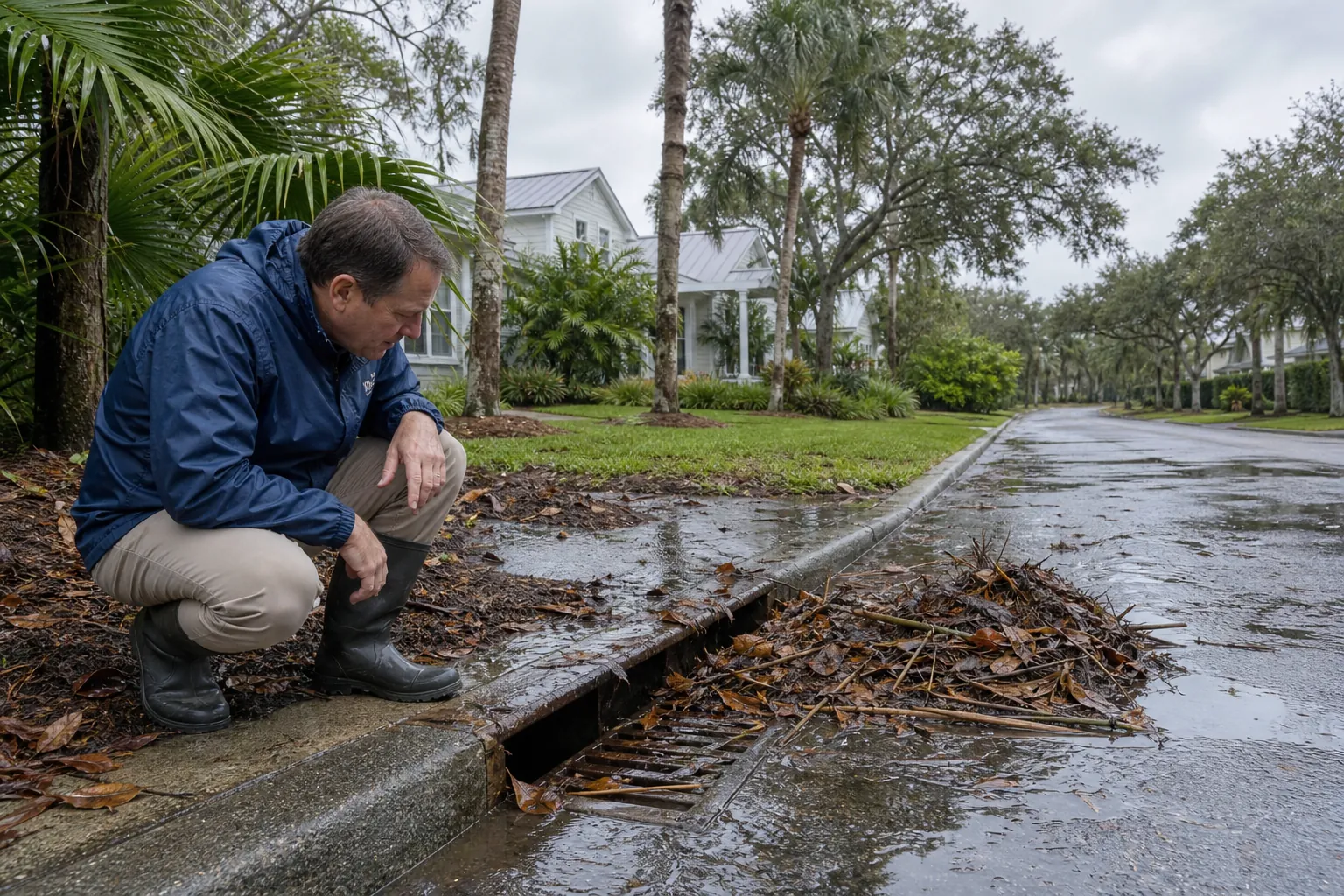
Place a yard debris pile on an approved, accessible area outside the path of runoff. Keep it away from storm drains, culvert mouths, swales, sidewalks, road travel lanes, and utility equipment. Confirm placement requirements before moving a large volume of material.
A convenient curbside location is not automatically a safe one. If the curb carries runoff toward an inlet, branches extending into the gutter can catch leaves and restrict flow. A pile in a shallow roadside depression can also interfere with drainage without covering any visible grate.
Choose firm ground where the material can remain stable and the truck can reach it safely. Pickup access depends on the equipment, road layout, overhead clearance, and site conditions. Do not assume a truck can drive onto a lawn or across a soft drainage shoulder.
- Keep the entire pile outside the drainage route, including projecting limbs and loose fronds.
- Leave fire hydrants, mailboxes, driveways, and pedestrian routes unobstructed.
- Keep material away from utility poles, service boxes, guy wires, and overhead lines.
- Use a compact pile rather than a long scattered row that crosses multiple drainage features.
- Confirm property boundaries and permission before using shared or association-managed space.
- Ask the hauling provider to review access before staging a difficult or oversized load.
There is no single setback distance that works for every property and utility layout. The safest approach is to identify the specific hazards and confirm the pickup arrangement. Read the debris pile utility line safety guide before placing material near overhead or ground-level utilities.
How Should You Handle Leaves, Fronds, And Branches?
Handle small loose material first because it can move quickly with runoff. Rake leaves from pavement and drainage approaches, collect mowing residue, and move detached fronds out of channels. Then consolidate larger branches in the agreed pickup area.
A grapple truck is useful for bulky landscaping debris, but that does not mean every scattered clipping should be added loosely to a roadside pile. Discuss how small material should be contained or prepared. Municipal collection rules and private hauling arrangements may differ.
Do not blow leaves or grass clippings into the street. That moves the cleanup problem toward public drainage rather than solving it. Also avoid placing bags or containers where they could float, roll, or obstruct runoff.
- Collect clippings from hard surfaces instead of leaving them to wash into the gutter.
- Move fallen palm fronds away from culvert entrances before adding them to the pickup pile.
- Keep branches compact and within the staging area rather than extending across sidewalks.
- Follow the provider's instructions for bagged leaves, small trimmings, and unusually large pieces.
- Leave suspended limbs and unstable tree sections for a qualified tree professional.
Routine pruning should be planned, not rushed in unsafe weather. Avoid overpruning healthy trees simply to produce less debris, and do not attempt overhead cutting near power lines. Once appropriate tree or landscape work is complete, arrange removal so the cut material does not become a long-term drainage obstacle.
For larger trimming projects, the grapple truck landscaping debris guide explains why pile preparation and equipment access matter.
How Can You Prepare During Hurricane Season?
Prepare throughout hurricane season by keeping drainage routes clear and arranging removal as debris accumulates. Waiting until severe weather is close can leave too little time for tree work, pile preparation, and pickup.
A manageable routine is more useful than a last-minute cleanup. Review the yard after landscaping work, remove loose material from hard surfaces, and check whether stored branches are drifting into low areas. Include rental properties and vacant lots in the same routine.
When hazardous weather is possible, follow official safety guidance and local instructions. Do not assume private hauling or municipal collection will continue under unsafe conditions. Confirm scheduling directly rather than relying on a normal collection day.
- Schedule bulky debris removal before a pile becomes difficult to keep clear of drainage features.
- Ask landscape contractors where cut material will be placed and who will remove it.
- Keep an alternative approved staging location in mind if the usual area becomes inaccessible.
- Secure movable yard items separately instead of mixing them into a vegetation pile.
- Stop outdoor preparation when lightning, rising water, strong winds, or other hazards make work unsafe.
If pickup cannot occur before unsafe weather, ask about appropriate next steps for your site. Moving a pile may help only if it can be done safely and without blocking another drainage route. A tarp is not a substitute for removal and can itself become loose debris if poorly secured.
Use the hurricane-season yard readiness guide to organize ongoing preparation rather than relying on a single cleanup day.
What Is Safe After Heavy Rain?
After heavy rain, wait for safe conditions before inspecting or moving debris. Standing water can conceal sharp objects, unstable ground, damaged utilities, and contaminated material. Never enter flowing water to pull a branch from a drain.
Inspect from dry, stable ground first. Look for displaced piles, erosion, downed wires, hanging limbs, and water crossing the access route. Keep people and pets away from suspicious wires, including wires touching trees, fences, vehicles, or standing water.
If a public drain appears blocked, report it to the responsible authority rather than opening the structure. If water is approaching a building or creating an immediate hazard, prioritize personal safety and appropriate emergency assistance over debris collection.
- Wear sturdy footwear, gloves, and eye protection when handling debris in safe conditions.
- Use tools for visible sharp material rather than reaching blindly into a wet pile.
- Do not climb unstable piles or work beneath damaged trees.
- Separate questionable materials for review instead of concealing them inside vegetation.
- Recheck the hauling access route because previously firm ground may now be saturated.
Wet branches and tangled fronds can be heavier and harder to move than expected. Do not force manual handling of a large pile simply to improve its appearance. Ask whether the current placement can be serviced or whether limited repositioning is necessary once conditions improve.
For more precautions, review yard debris safety around flooding. The post-hurricane debris staging guide also covers organizing cleanup material for pickup.
Keep Vegetation Separate From Other Cleanup Waste
Keep yard vegetation separate from construction debris, household waste, and potentially hazardous materials. Mixed piles are harder to assess and may require different handling or disposal arrangements. Clear separation also helps identify what is actually obstructing drainage.
Fence pieces, roofing scraps, drywall, concrete, and household contents should not be hidden under branches. Tell the hauling provider what is present before requesting pickup. Acceptance depends on material type, disposal requirements, and the agreed service scope.
- Set aside concrete and masonry rather than mixing heavy fragments into a vegetation load.
- Identify drywall and other renovation debris before arranging removal.
- Keep paints, chemicals, batteries, fuel containers, and similar materials out of the yard debris pile.
- Report sharp metal, glass, or unknown containers so handling needs can be discussed.
Consult the guides to concrete and masonry debris and drywall debris hauling when cleanup includes building materials. Do not assume a vegetation pickup includes every material found on the property.
How Can Commercial Properties Prevent Debris Blockages?
Commercial properties can reduce debris-related drainage problems by coordinating landscaping, inspections, and hauling. The key is to avoid leaving cut material beside parking lot inlets, loading areas, or roadside drainage between contractor visits.
Assign responsibility for checking staging areas after mowing and trimming. A grounds crew may finish its work while another vendor handles removal, so the handoff should specify the pile location, material type, and expected pickup arrangement.
Keep customer access and emergency routes clear, and review truck access before placing a pile behind gates or parked vehicles. A brief photo record helps property managers track recurring debris buildup without assuming that every drainage problem is a maintenance failure.
The commercial property debris hauling guide offers additional planning considerations for managed sites.
Frequently Asked Questions
Will removing yard debris stop my yard from flooding?
Not necessarily. Removal helps prevent debris-related obstructions, but flooding can also result from saturated soil, grading, restricted pipes, or downstream water levels. Persistent problems need evaluation beyond hauling.
Can I put branches in a roadside swale for pickup?
Avoid placing branches in a swale because it may carry runoff. Confirm local placement rules and agree on an accessible staging area that does not interrupt drainage.
Should I clear a blocked storm drain myself?
You may be able to collect loose surface leaves from safe, dry ground where permitted. Do not remove grates, enter drainage structures, or work in flowing water. Report inaccessible or hazardous blockages to the responsible authority.
Can a grapple truck collect debris from a flooded yard?
Do not assume it can. Standing water, soft ground, hidden hazards, and limited reach may prevent safe access. Describe conditions to the provider and wait for a confirmed pickup plan.
When should I arrange hauling after landscaping?
Arrange it during project planning whenever possible. Coordinating pile placement and removal before cutting begins reduces the time debris sits near drainage routes.
Arrange Debris Removal Before Piles Become A Problem
Effective prevention combines clear runoff routes, careful staging, and timely removal. Keep small material off pavement, place bulky vegetation outside drainage channels, and verify safe access before pickup.
For help arranging grapple truck debris hauling, call Daytona Grapple Trucks at (386) 481-7913. Describe the material, approximate pile size, location, and nearby access or utility concerns. A clear description helps establish a practical removal plan without treating hauling as a substitute for drainage repairs.
Call (386) 481-7913 to talk through next steps.